Key takeaways
- Amp draw at full speed: Look for units pulling under 2A. A 3A fan running eight hours overnight eats roughly 24Ah — meaningful on a single 100Ah battery. Reversible DC motors with brushless designs tend to be the most frugal.
- Mounting depth and blade sweep: Measure ceiling height before blade span. A 7″ ultra-slim housing clears heads in a travel trailer where a standard 12″ downrod does not. Match sweep to the room: 42″ for open living areas, 30″ for a bunkhouse or covered patio.
- Vent versus circulator: A 14×14 roof fan pulls hot air out through the existing vent cutout, which is what you want for cooking heat and humidity. A ceiling fan moves air across skin for evaporative comfort. Serious builds run both.
- Rain sensor and lid control: Auto-closing lids justify their cost the first time a storm arrives while you’re at the trailhead. Confirm the sensor operates independently of the remote so a dead battery in the fob doesn’t leave the roof open.
- Light quality and switching: Check for separate control of fan and light. Integrated LEDs should offer a warm option near 3000K for evening use; multi-color ambiance modes are a bonus, not a substitute for real task lighting.
What's inside
Twelve-volt airflow is its own engineering problem. A fan that works beautifully in a bedroom draws too much current for a battery bank, hangs too low for a 6’6″ ceiling, and hums at a frequency you notice at 2 a.m. with the compressor off. Anyone shopping for a 12v RV ceiling fan with light runs into the same wall: half the listings are household AC units mislabeled, and the other half are roof vents that move air but leave you reaching for a separate lamp. Meanwhile the actual constraint — amp draw against a finite house battery — barely gets mentioned.
This guide sorts the category into its two real families: flush-mount 12v ceiling fans that circulate interior air, and powered roof vents that exhaust it, several of which now include integrated LED lighting. I’ve weighted picks by current draw, mounting depth, noise at mid-speed, and whether the light is genuinely usable or a token amber glow. Below you’ll find selection criteria, individual assessments, and answers to the questions that come up after installation rather than before.
As an Amazon Associate we earn from qualifying purchases.


How to Choose a 12v Rv Ceiling Fan With Light (2026)
- Amp draw at full speed: Look for units pulling under 2A. A 3A fan running eight hours overnight eats roughly 24Ah — meaningful on a single 100Ah battery. Reversible DC motors with brushless designs tend to be the most frugal.
- Mounting depth and blade sweep: Measure ceiling height before blade span. A 7″ ultra-slim housing clears heads in a travel trailer where a standard 12″ downrod does not. Match sweep to the room: 42″ for open living areas, 30″ for a bunkhouse or covered patio.
- Vent versus circulator: A 14×14 roof fan pulls hot air out through the existing vent cutout, which is what you want for cooking heat and humidity. A ceiling fan moves air across skin for evaporative comfort. Serious builds run both.
- Rain sensor and lid control: Auto-closing lids justify their cost the first time a storm arrives while you’re at the trailhead. Confirm the sensor operates independently of the remote so a dead battery in the fob doesn’t leave the roof open.
- Light quality and switching: Check for separate control of fan and light. Integrated LEDs should offer a warm option near 3000K for evening use; multi-color ambiance modes are a bonus, not a substitute for real task lighting.
The Best 12v Rv Ceiling Fan With Light (2026)s Reviewed
DC 12V 42″ Low Profile Flush Mount Ceiling Fan
The largest sweep in this group and the best choice for open-plan Class A saloons or a fifth-wheel living area, with a flush housing that keeps blades well above head height. The DC motor stays genuinely quiet through the middle of its range, and black blades hide dust better than the white finishes that dominate the category.
Upgraded 14″ Remote Roof Vent Fan with Rain Sensor
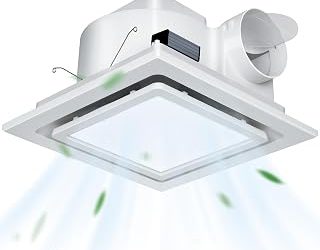
Ten speeds and reversible airflow make this the most controllable exhaust option here, letting you dial in a whisper-level trickle for overnight humidity management. The rain sensor closes the lid on its own, which is the feature that separates a considered upgrade from a bargain replacement.
14×14 Roof Vent Fan with 4-Color LED Ambiance Light
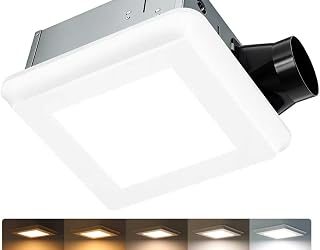
The only pick that pairs a proper reversible roof fan with tunable colored lighting, making it a strong single-appliance solution for a compact van or teardrop ceiling. Its 24V tolerance also suits lithium systems that run higher resting voltage than a flooded bank.
Lumitronics 12V LED Bunk Light and 2-Speed Fan Combo
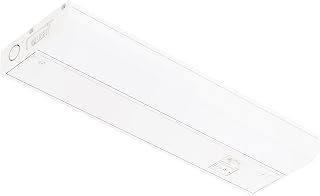
Purpose-built for bunks and berths where a ceiling fan simply won’t fit, combining a removable-lens dome light with a low-draw two-speed fan in one shallow fixture. The quiet motor and minimal current make it the practical answer for kids’ bunks and rear cabins.
14″ Deluxe RV Roof Vent Fan with LED Light
Four reversible speeds and touch controls built into the trim ring mean no remote to misplace, a fair trade for anyone who prefers physical switches. The manual white dome keeps the mechanism simple and serviceable, which matters on a rig that sees hard seasonal use.
Frequently Asked Questions
Can I run a 12v ceiling fan directly off my house battery?
Yes, that’s the design intent. Wire through a fused circuit sized to the fan’s rated draw and use appropriately gauged wire for the run length. Never connect a 12v DC fan to an inverter output.
How much power will a 12v RV fan actually use overnight?
A 1.5A fan running ten hours consumes about 15Ah, roughly 15% of a 100Ah lead-acid bank’s usable capacity. Running at mid-speed rather than maximum often halves that figure.
Will a roof vent fan fit my existing opening?
Most RV roof vents use a standard 14″ x 14″ cutout, so replacements drop in with fresh butyl tape and sealant. Verify your opening dimensions and check that ceiling thickness falls within the unit’s specified range.
Should the fan blow up or down?
Downward for direct cooling airflow in warm weather, upward to circulate warm air off the ceiling when the furnace is running. For roof vents, exhaust when clearing cooking heat and intake when pulling in cool evening air.
Final Thoughts
For most rigs, the Upgraded 14″ Remote Roof Vent Fan with Rain Sensor delivers the widest speed range and the most useful automation for the money. If you need one fixture doing both jobs, the 14×14 Roof Vent Fan with 4-Color LED Ambiance Light is the smarter buy, while larger coaches with real ceiling height should start with the 42″ flush-mount DC ceiling fan and add a vent fan later.