Key takeaways
- Structural load: Mature wisteria and other woody twiners can exceed several hundred pounds and will crush thin lattice or vinyl. Reserve them for pressure-treated timber, cedar, or steel with solid post footings; lighter vines like jasmine and thunbergia suit slimmer frames.
- Shade timing: Deciduous climbers drop their leaves and let winter sun reach your patio doors, which matters if the pergola is attached to the house. Evergreen options hold cover year-round but also hold shade you may not want in January.
- Speed versus manners: Fast growers fill a canopy in two or three seasons and then need pruning twice a year to stay off gutters and shingles. Slower vines take longer to establish but demand far less of your Saturday mornings.
- Scent placement: Fragrant vines pay off directly above a dining table or seating group where the perfume drifts down at dusk. Position heavy-scented varieties away from grills and outdoor kitchens, where the aroma competes.
- Start format: Live rooted plants give you a visible canopy far sooner and are worth the premium if the pergola is already built. Seeds cost a fraction and suit patient gardeners planning ahead, though germination rates vary and the first year is mostly root development.
What's inside
A pergola gives you the bones of an outdoor room, but bare rafters don’t do much on a July afternoon. Slats alone cast thin, striped shade, and most homeowners discover by their second summer that the structure they invested in still bakes at midday. The fix isn’t a bigger canopy or another shade sail — it’s a living roof. The right climbing vine turns an open frame into a genuinely cool, scented, usable space, and it does the job better each season instead of fading and fraying like fabric.
The catch is that vines are not interchangeable. Some twine politely around a post; others put on forty pounds of woody growth and start prying at your joinery. Some flower for two weeks in spring; others carry color into autumn. This guide looks at the climbers that actually earn a spot on a residential pergola, what each one asks of you in return, and how to match a vine to your climate, your structure, and how you plan to use the space underneath it.
As an Amazon Associate we earn from qualifying purchases at no extra cost to you. Product prices and availability are accurate as of the date shown and are subject to change.


🛒 Best Price Today on Amazon
Prime members get fast, free shipping on everything above, plus member-only deals. New members get a 30-day free trial — cancel anytime.
How to Choose a Pergola Plant (2026)
- Structural load: Mature wisteria and other woody twiners can exceed several hundred pounds and will crush thin lattice or vinyl. Reserve them for pressure-treated timber, cedar, or steel with solid post footings; lighter vines like jasmine and thunbergia suit slimmer frames.
- Shade timing: Deciduous climbers drop their leaves and let winter sun reach your patio doors, which matters if the pergola is attached to the house. Evergreen options hold cover year-round but also hold shade you may not want in January.
- Speed versus manners: Fast growers fill a canopy in two or three seasons and then need pruning twice a year to stay off gutters and shingles. Slower vines take longer to establish but demand far less of your Saturday mornings.
- Scent placement: Fragrant vines pay off directly above a dining table or seating group where the perfume drifts down at dusk. Position heavy-scented varieties away from grills and outdoor kitchens, where the aroma competes.
- Start format: Live rooted plants give you a visible canopy far sooner and are worth the premium if the pergola is already built. Seeds cost a fraction and suit patient gardeners planning ahead, though germination rates vary and the first year is mostly root development.
The Best Pergola Plants for 2026, Reviewed
Climbing Jasmine Seeds (410 Seeds)
Jasmine is the classic choice for a pergola over a seating area — evergreen cover, white starry flowers, and an evening fragrance that reads as luxury without any effort from you. The generous seed count gives you room to overplant and thin, which is the smart approach when starting a canopy from scratch.
Thunbergia Grandiflora Blue Trumpet Vine (Pack of 2)
Sky vine is the one to reach for when you want coverage this season rather than next. It climbs vigorously through summer heat and delivers soft blue trumpet flowers against dense foliage, making it equally effective as a privacy screen along one side of the pergola. Worth noting: it’s tender, so treat it as an annual in colder zones or overwinter it under cover.
Wisteria Floribunda Live Plants (3-Pack)
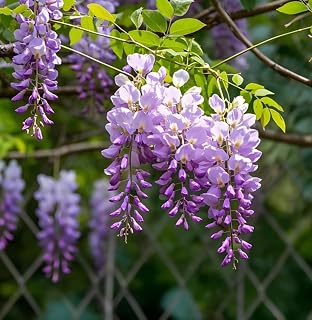
Three well-rooted starts is the right quantity for a standard 10 x 12 pergola, letting you train one vine per corner post and meet in the middle. Japanese wisteria produces the long, dramatic flower racemes people picture when they imagine a pergola in bloom, and these plants arrive at a size that establishes quickly.
Wisteria Seeds (20 Heirloom Non-GMO)
The budget entry point into wisteria, and a reasonable one if your pergola is still a plan on paper. Expect a longer runway to first bloom than with rooted plants, but heirloom seed gives you sturdy, adaptable stock and the satisfaction of growing your canopy from the ground up.
Wisteria Floribunda Live Plants (2-Pack)
The two-plant option fits smaller structures, corner pergolas, and single-side plantings where three vines would compete for the same rafters. Same fast-growing Floribunda stock as the larger pack, and the pair also trains well onto an adjacent trellis or arbor.
Frequently Asked Questions
How long until a vine actually shades my pergola?
Live plants typically give meaningful cover in the second season and a full canopy by the third. Thunbergia is the exception and can cover a frame within a single warm summer. Seed-grown vines add one to two years to that timeline.
Will wisteria damage my pergola?
It can, if the structure isn’t built for it. Wisteria stems thicken into woody trunks that exert real pressure, so anchor it to substantial timber, keep it off downspouts and siding, and prune twice yearly — once after flowering, again in winter.
Can I grow these in containers?
Jasmine and thunbergia adapt well to large containers, which is the practical route on a deck or rooftop. Wisteria strongly prefers ground planting; container specimens stay small and are better handled as bonsai than as canopy plants.
How many plants do I need?
Plan on one vine per pergola post for even coverage, so two for a compact structure and three to four for a standard patio-sized frame. Overplanting leads to tangled, unmanageable growth rather than faster shade.
Final Thoughts
For most homeowners with a solid timber pergola, the Wisteria Floribunda 3-pack is the strongest investment — dramatic bloom, genuine shade, and decades of life once established. If you want cover by the end of this summer, the Thunbergia Grandiflora pair is the fastest route there, and the Climbing Jasmine seeds remain the best value for anyone building a fragrant, evergreen canopy over a dining or lounge zone.