Key takeaways
- Airflow (CFM) sized to the room: The working rule is one CFM per square foot, with a floor of 50 CFM. Bump it up for ceilings over eight feet, enclosed shower stalls, or a jetted tub. Undersizing is the single most common mistake I see in remodels.
- Sound rating in sones: Anything at 1.0 sones or below reads as background hum, comparable to a refrigerator across the room. At 2.0 sones you’ll hear it clearly. Quiet units also get used more, which is the whole point.
- Light quality, not just lumens: Look for selectable color temperature (3CCT or 5CCT) and dimming. Around 3000K flatters skin tones for grooming; 4000K and up is better for cleaning and makeup detail.
- Sensors and controls: Humidity sensing is the upgrade most people underrate. It runs the fan when steam spikes and shuts it off once the room dries, which beats relying on anyone to flip a switch and wait.
- Duct and housing fit: Confirm duct diameter (4 inch versus 6 inch), housing depth for shallow joist bays, and whether the unit is rated for installation over a tub or shower on a GFCI circuit.
What's inside
Spend enough seasons building screened porches and outdoor kitchens and you develop a sixth sense for moisture. Cedar cups, fasteners bloom rust, and paint lifts wherever air stops moving. A bathroom is the same physics in a smaller box: roughly two gallons of water vapor a week from showers alone, trapped behind a closed door with nowhere to go. The difference is that outdoors, nature eventually clears the air. Indoors, that job belongs entirely to a single ceiling unit most people never think about until the grout goes gray and the drywall above the shower starts to feel soft.
The good news is that this category has quietly caught up to the rest of the home. The fan-and-light combos worth buying in 2026 move real air at whisper volume, throw genuinely usable LED light instead of a dim yellow glow, and increasingly decide when to run on their own. This guide covers what actually matters in the spec sheet, then walks through the units I’d put in a client’s primary bath, guest bath, or a compact powder room off a pool deck.
As an Amazon Associate we earn from qualifying purchases.



How to Choose a Bathroom Ceiling Fan With Light (2026)
- Airflow (CFM) sized to the room: The working rule is one CFM per square foot, with a floor of 50 CFM. Bump it up for ceilings over eight feet, enclosed shower stalls, or a jetted tub. Undersizing is the single most common mistake I see in remodels.
- Sound rating in sones: Anything at 1.0 sones or below reads as background hum, comparable to a refrigerator across the room. At 2.0 sones you’ll hear it clearly. Quiet units also get used more, which is the whole point.
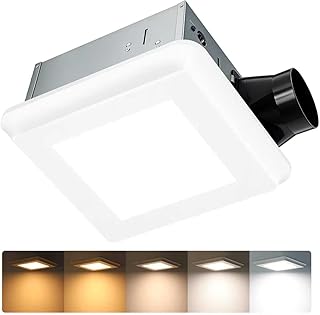
- Light quality, not just lumens: Look for selectable color temperature (3CCT or 5CCT) and dimming. Around 3000K flatters skin tones for grooming; 4000K and up is better for cleaning and makeup detail.
- Sensors and controls: Humidity sensing is the upgrade most people underrate. It runs the fan when steam spikes and shuts it off once the room dries, which beats relying on anyone to flip a switch and wait.
- Duct and housing fit: Confirm duct diameter (4 inch versus 6 inch), housing depth for shallow joist bays, and whether the unit is rated for installation over a tub or shower on a GFCI circuit.
The Best Bathroom Ceiling Fan With Light (2026)s Reviewed
Panasonic WhisperFit Ceiling Mount Fan with Dimmable LED, FV-0511VFL1
Panasonic’s Pick-A-Flow switch lets you set 50, 80, or 110 CFM at install, so one unit covers most bathrooms in a house without reordering. The shallow housing suits retrofits with tight joist clearance, and the motor is the quietest I’ve worked with in this price bracket.
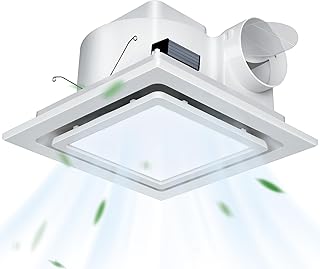
130 CFM Fan with Light & Humidity Sensor, 5CCT
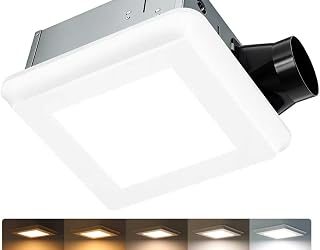
This is the set-it-and-forget-it option: the humidity sensor catches shower steam and clears it without anyone touching a switch, and 130 CFM handles large or high-ceilinged baths comfortably. Five color-temperature settings and ETL certification round out a genuinely complete package.
Ultra Quiet Exhaust Fan with Light, 120 CFM, 1.0 Sones
A strong value play at 1.0 sones with 1000 lumens of output, which is bright enough to serve as the room’s primary fixture in a mid-sized bath. The 10-inch square ceiling footprint drops neatly into standard framing and the install is refreshingly straightforward.
Broan-NuTone Fan with Heater, 80 CFM, 3-Level CCT
The heating element earns its keep in tiled baths, basement bathrooms, and anywhere a north-facing wall makes winter mornings unpleasant. At 80 CFM it’s aimed at standard-sized rooms, and running ventilation plus heat on one unit saves a second ceiling cutout.
110 CFM Fan with Light & Nightlight, Black Round
The matte black round trim is a natural fit for modern and transitional baths where a white square would look like an afterthought. Dimmable shower lighting plus a low-glow nightlight makes it a smart choice for a primary suite.
Frequently Asked Questions
How long should the fan run after a shower?
Give it 15 to 20 minutes past the last drip. A timer switch or humidity sensor handles this far more reliably than memory.
Can these replace my existing ceiling light?
Often yes, if the box is in a workable spot and you can route duct to an exterior vent. Never terminate that duct in an attic or soffit cavity.
Do I need an electrician?
Swapping a like-for-like unit is manageable for a confident DIYer. New circuits, added heaters, or fresh duct runs are worth a pro and a permit check.
Are humidity sensors worth the premium?
In any bath used daily, yes. Consistent moisture removal protects paint, grout, and framing, and that easily outvalues the extra cost.
Final Thoughts
For most bathrooms, the Panasonic WhisperFit is the safest all-around specification thanks to its adjustable airflow and low-profile housing. If you want automation, the 130 CFM humidity-sensing unit does the thinking for you, and the Broan-NuTone with heater is the one I’d choose for a chilly tiled bath where comfort matters as much as ventilation.