
Key takeaways
- Check the jump between settings, not just the top number. A bell that leaps from 20 to 35 pounds is fine for swings and deadlifts but brutal for single-arm presses, where 5-pound steps matter. Map the increments against the lifts you actually program.
- Grip width beats grip texture. Powder coating gets talked about endlessly, but the dimension that decides whether you can rack the bell comfortably is the inside window of the handle. Too narrow and your wrist gets pinched on cleans; too wide and the bell wanders during overhead work.
- Test the lock, then shake it. Any adjustable design has a seam. Set the weight, hold the handle upside down, and shake hard. If you hear or feel movement, that movement will find your wrist at the bottom of a swing.
- Measure the footprint before you commit. Adjustable bells sit in a cradle or base that stays behind when you lift. That base needs floor space, and its height affects how far you have to hinge to reach the handle from the ground.
- Decide whether the bell shape matters to you. Selectorized units are boxier than cast iron competition bells. If your training centers on Turkish get-ups or bottoms-up work where the bell rests on your forearm, handle a unit in person first — geometry, not weight, is what makes those movements comfortable.
What's inside
A kettlebell swing lives or dies on two things: whether the handle stays put in your palm at the top of the arc, and whether the bell’s mass sits where you expect it when gravity takes over. Adjustable kettlebells complicate both. Every dial, pin, and locking collar adds material between your hand and the load, and cheap versions announce that fact with a rattle at the bottom of every rep. The BowFlex SelectTech 840 is the rare unit that solves the mechanical problem without turning the bell into a science project — a single dial at the base steps you through six weights, from a warm-up 8 pounds to a working 40, and the shell stays clamped tight while you move.
I’ve spent enough time with adjustable equipment to know the failure modes. Plates that shift a quarter inch mid-set. Handles molded so thick that a woman with smaller hands can’t hook her fingers around them. Bases so tall the bell clips your forearm on a clean. The 840 sidesteps most of that with a squat, wide-mouth handle and a dial that clicks into discrete positions rather than floating between them. Below you’ll find the pick itself, a spec breakdown, and the criteria I’d weigh before spending money on any adjustable bell.
As an Amazon Associate we earn from qualifying purchases at no extra cost to you. Product prices and availability are accurate as of the date shown and are subject to change.

#2 Pick
#3 Pick
#4 Pick

#5 Pick

#6 Pick
#7 Pick

As an Amazon Associate we earn from qualifying purchases at no extra cost to you. Product prices and availability are accurate as of the date shown and are subject to change.

Quick Comparison
| Model | Weight Range | Increments | Adjustment Method | Handle Style | Best For |
|---|---|---|---|---|---|
| BowFlex SelectTech 840 Adjustable Kettlebell | 8–40 lb | 6 settings: 8, 12, 20, 25, 35, 40 lb | Base-mounted turn dial | Wide single-piece grip, coated finish | Home circuits, swings, presses, progressive overload without a rack of bells |
How to Choose
- Check the jump between settings, not just the top number. A bell that leaps from 20 to 35 pounds is fine for swings and deadlifts but brutal for single-arm presses, where 5-pound steps matter. Map the increments against the lifts you actually program.
- Grip width beats grip texture. Powder coating gets talked about endlessly, but the dimension that decides whether you can rack the bell comfortably is the inside window of the handle. Too narrow and your wrist gets pinched on cleans; too wide and the bell wanders during overhead work.
- Test the lock, then shake it. Any adjustable design has a seam. Set the weight, hold the handle upside down, and shake hard. If you hear or feel movement, that movement will find your wrist at the bottom of a swing.
- Measure the footprint before you commit. Adjustable bells sit in a cradle or base that stays behind when you lift. That base needs floor space, and its height affects how far you have to hinge to reach the handle from the ground.
- Decide whether the bell shape matters to you. Selectorized units are boxier than cast iron competition bells. If your training centers on Turkish get-ups or bottoms-up work where the bell rests on your forearm, handle a unit in person first — geometry, not weight, is what makes those movements comfortable.
Top Picks Reviewed
BowFlex SelectTech 840 Adjustable Kettlebell
The 840 replaces six separate bells with one unit roughly the size of a large watermelon. Adjustment happens through a dial at the base: rotate it to your target number, lift, and internal plates disengage from the cradle in whatever combination the setting calls for. There’s no threading, no pin to lose, no collar to tighten. From 8 pounds to 40, the change takes about three seconds — fast enough to run a descending ladder without breaking rhythm, which is the whole argument for owning one of these.
Grip is where it earns its place. The handle is a single continuous piece with a matte coating that keeps friction reasonable once your palms get damp, and the opening is generous enough for a chalked double-hand grip on swings. The bell hangs slightly differently than cast iron because the mass distributes across stacked plates rather than a solid sphere, so the center of gravity sits a touch higher. Practically, that means the 840 feels marginally lighter than an equivalent traditional bell on swings and marginally more top-heavy on presses. Neither difference is disqualifying; both take a session or two to adapt to.
Where you’ll notice its limits is at the ceiling. Forty pounds is a real working weight for presses, snatches, windmills, and most complexes, but a lifter who already swings a 24 kg bell comfortably will outgrow the top setting on hinge patterns. The other honest caveat is bulk: the flat-sided shell and the base it docks into occupy more room than a stack of cast iron, and the shape doesn’t lend itself to bottoms-up holds or extended forearm rests. If your training is circuit work, unilateral pressing, carries, and moderate-load ballistics, those tradeoffs are cheap. If you’re chasing heavy swings, treat this as your light-to-medium bell and buy one heavy cast iron unit alongside it.
Frequently Asked Questions
Can I drop an adjustable kettlebell?
No. Selectorized bells have plastic shells, internal plate mechanisms, and a docking base, none of which tolerate impact. Set the bell down deliberately at the end of a set. If your programming involves releasing the bell from overhead or dropping between snatch reps, use cast iron instead.
Is 40 pounds enough to build strength?
For most people, for most kettlebell movements, yes — for a while. Forty pounds covers single-arm presses, rows, goblet squats, get-ups, suitcase carries, and high-rep swing work for the vast majority of trainees. Two-hand swings and heavy deadlifts are the first lifts to outgrow it, and you extend the runway considerably by adding tempo, pauses, and single-leg variations before adding load.
Does the handle feel different from a traditional kettlebell?
Somewhat. It’s wider at the shoulders and the coating is smoother than raw powder-coated iron, so it slides a little more when your hands are wet and abrades your palms a little less over long sets. Most lifters adapt within a session. If you compete in kettlebell sport, the handle diameter and window won’t match your competition bell, so keep the two separate in your training.
How much floor space does it need?
Plan for roughly a two-foot-square patch, including the base and enough clearance to lift the bell straight up without knocking it. It fits in a closet, under a desk, or beside a bookshelf, which is the practical selling point over a rack holding six individual bells.
Final Thoughts
An adjustable kettlebell is a space-and-money trade, and the SelectTech 840 makes that trade about as cleanly as the format allows: six usable weights, a dial that locks without rattle, and a handle wide enough for real two-hand work. It is not a competition bell and it is not built for drops, but for anyone running full-body circuits in a spare room — pressing light, swinging heavy, and needing to change loads mid-workout without walking anywhere — it removes the friction that keeps home training from happening. Buy it as your primary bell if 40 pounds is your ceiling, or as your adjustable workhorse alongside one heavy piece of cast iron if it isn’t.
FAQ
Can I drop an adjustable kettlebell?
Is 40 pounds enough to build strength?
Does the handle feel different from a traditional kettlebell?
How much floor space does it need?
8 Best Kettlebell Weights for Men: How to Pick the Right Size
Best kettlebell weight for men is the decision that quietly settles whether...
8 Best Kettlebell Ab Exercises: 6 Adjustable and Fixed Picks
Best kettlebell ab exercises rarely share a single weight. A loaded carry,...
Best Kettlebell Core Exercises: 6 Picks for Floor Space
Best kettlebell core exercises tend to be floor-based or overhead, which makes...
8 Best Kettlebell Exercises for Abs: 5 Bells for Long Holds
Best kettlebell exercise for abs options nearly all involve holding load away...
8 Best Kettlebell Ab Workouts: 6 Bells Sized for Circuit Work
Best kettlebell ab workout equipment is chosen for sustained rounds, not for...
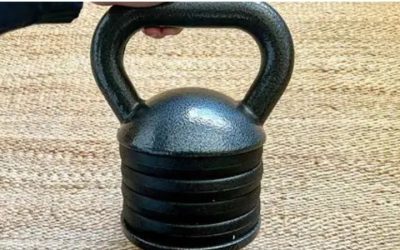
Best Kettlebell Weight: How to Size It Plus 6 Top Picks
Best kettlebell weight is not one number, because a swing, a press...
8 Best Kettlebell Routines: How to Pick the Right Bell Weight
Best kettlebell routine arguments usually skip the one decision that determines whether...
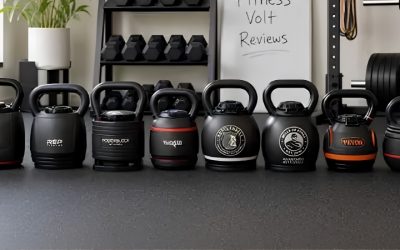
8 Best Kettlebell Routines: 6 Bells Matched to Each Format
Best kettlebell routines fail more often on equipment than on programming. A...
8 Best Kettlebell Trainings: 6 Bells to Build a Progression
Best kettlebell training runs into a hardware problem early: the traditional weight...
8 Best Workout Kettlebells: 6 Bells Matched to Your Training
Best workout kettlebell choices depend entirely on the session you plan to...
Write Your Review
No reviews yet. Be the first to share your experience!