Key takeaways
- Look at lumens, not wattage: Aim for 2,500 lumens minimum for a bedroom or bistro-sized patio, and 3,000 or more if the fan is the only light source over a dining table or outdoor kitchen. Wattage tells you nothing useful on modern LED fixtures.
- Insist on selectable color temperature: A 3000K–6500K range lets you run cool white for prep work and drop to warm white for lingering after dinner. Fixed 4000K light looks clinical on a wood-clad porch ceiling.
- Match the rating to the exposure: Damp-rated fans belong under solid, roofed porches with good overhang. Anywhere blowing rain reaches, you need a wet-rated fixture, and no indoor-only fan should be pressed into patio duty.
- Check mounting height before span: Low ceilings, pergola beams, and sloped porch roofs favor flush-mount fandeliers. A 52-inch spread only pays off when you have the clearance for it, ideally 8 to 9 feet from the floor to the blades.
- Prioritize DC motors for long runtimes: Reversible DC motors draw considerably less power, run quieter, and offer more speed steps, which matters when the fan is on for six hours straight on an August evening.
What's inside
Ask anyone who spends real time on a covered porch what kills an evening faster than mosquitoes, and the honest answer is bad light. A fan moves air beautifully at 8 p.m., then the sun drops and you’re left squinting at a dim amber puck while the grill still needs attention. Most fan-light combos were engineered around the blades first and the lumens second, which is why so many patios, sunrooms, and screened porches end up with a string of extra lights tacked to the rafters just to compensate.
This guide flips that priority. I’ve focused on ceiling fans where the light output genuinely carries a room or a covered outdoor space, judged on lumen output, color temperature range, dimming behavior, glare control, and whether the housing can handle humidity and temperature swings. Below you’ll find the standout picks for 2026, a short buying framework, and answers to the questions that come up most often once installation day arrives.
As an Amazon Associate we earn from qualifying purchases.


How to Choose a Ceiling Fan With Brightest Light (2026)
- Look at lumens, not wattage: Aim for 2,500 lumens minimum for a bedroom or bistro-sized patio, and 3,000 or more if the fan is the only light source over a dining table or outdoor kitchen. Wattage tells you nothing useful on modern LED fixtures.
- Insist on selectable color temperature: A 3000K–6500K range lets you run cool white for prep work and drop to warm white for lingering after dinner. Fixed 4000K light looks clinical on a wood-clad porch ceiling.
- Match the rating to the exposure: Damp-rated fans belong under solid, roofed porches with good overhang. Anywhere blowing rain reaches, you need a wet-rated fixture, and no indoor-only fan should be pressed into patio duty.
- Check mounting height before span: Low ceilings, pergola beams, and sloped porch roofs favor flush-mount fandeliers. A 52-inch spread only pays off when you have the clearance for it, ideally 8 to 9 feet from the floor to the blades.
- Prioritize DC motors for long runtimes: Reversible DC motors draw considerably less power, run quieter, and offer more speed steps, which matters when the fan is on for six hours straight on an August evening.
The Best Ceiling Fan With Brightest Light (2026)s Reviewed
52″ Modern Ceiling Fan with Light and Remote
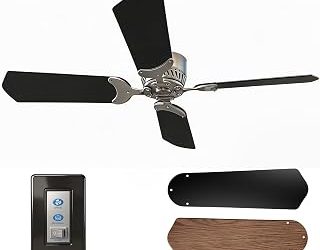
This one hits the sweet spot for a covered patio or open living space: a full 52-inch sweep for real air movement, a noiseless reversible DC motor, and 3CCT lighting that shifts from task-bright to relaxed without a separate dimmer. If you want one fixture doing both jobs over a seating area, start here.
PACOVY 20″ Flush Fandelier
At 3200 lumens, this is the brightest pick in the group and the obvious choice for low ceilings, three-season rooms, and compact porches where a big blade span simply won’t fit. The six-speed copper motor stays quiet, and app control means you can dim it from the table without getting up.
VOLISUN 27.6″ Bladeless Fandelier
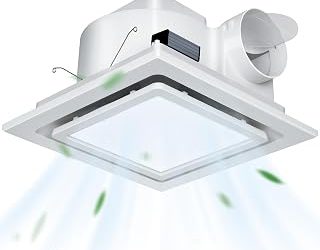
The bladeless, flush-mount design reads more like a modern light fixture than a fan, which makes it an easy fit for enclosed porches and sunrooms where you don’t want visual clutter overhead. It comes in black and white, both with the same 3000K–6500K dimmable output, so you can match trim rather than fight it.
Passky 52″ Black Sleek Ceiling Fan
Built with covered outdoor areas in mind, this fan pairs a quiet reversible DC motor with three-color dimmable light, a timer, and setting memory so it returns to your preferred brightness every time. The matte black finish holds up visually against dark pergolas and painted porch ceilings.
OJX 52″ Ceiling Fan with Light
A strong all-rounder for kitchens, living rooms, and sheltered patios, with 3CCT dimmable light, app and remote control, and a DC motor that reverses for winter circulation. It’s the most versatile of the 52-inch options if you want one model repeated across several spaces.
Frequently Asked Questions
How many lumens do I need for a patio ceiling fan?
Plan on roughly 2,000 to 2,500 lumens for a small seating area and 3,000-plus for dining or cooking zones. Dark-stained ceilings absorb light, so size up if your porch has wood or deep paint overhead.
Can I install an indoor fan under my covered porch?
Not safely. Indoor fans lack the sealed housing and corrosion-resistant hardware needed for humidity, and moisture intrusion can damage the motor and create a shock hazard. Choose damp- or wet-rated instead.
Does warmer light really attract fewer insects?
Warmer, lower-color-temperature light is less attractive to many flying insects than cool blue-white light. That’s a practical argument for selectable CCT: run 6500K while you cook, then switch to 3000K once you sit down.
Are bladeless fandeliers powerful enough outdoors?
They move less air than a 52-inch fan, so treat them as a solution for enclosed porches, sunrooms, and low-clearance spots rather than wide-open patios where you want a strong breeze.
Final Thoughts
For most covered outdoor spaces, the Passky 52″ and the OJX 52″ deliver the best balance of airflow, quiet DC operation, and adjustable brightness. If ceiling height is your limiting factor, the PACOVY 20″ Fandelier and its 3200 lumens is the brightest, most space-efficient answer of the group.