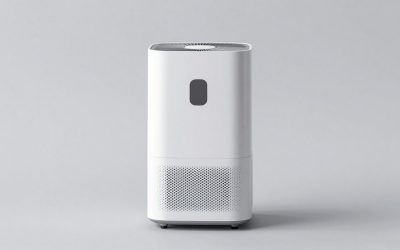
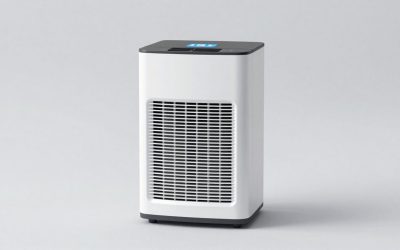
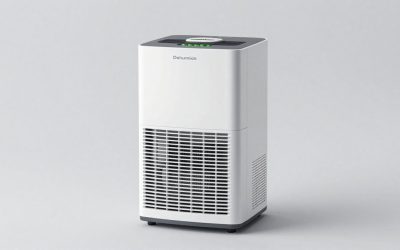
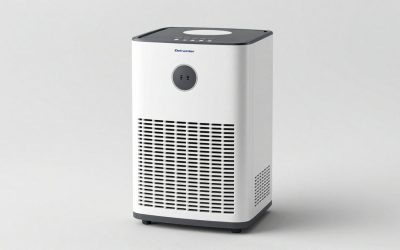
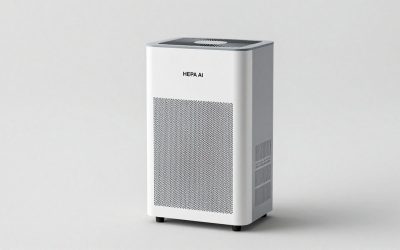
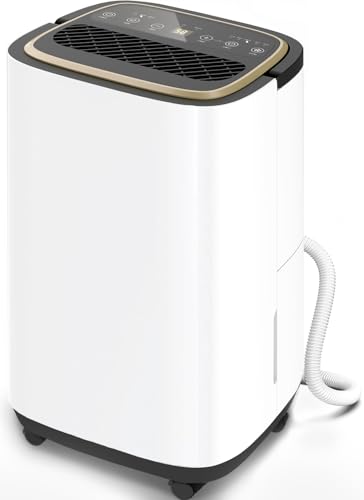
The best overall dehumidifier for garages and workshops is the 5000 Sq.Ft Dehumidifier for Basement with Drain Hose, with the Dravonic 2,000 Sq.Ft Dehumidifier as the runner-up for smaller, well-sealed shops. Both pull serious moisture out of unconditioned space and drain continuously, which is exactly what a garage needs.
Garages and workshops are the hardest rooms in the house to keep dry. They’re rarely insulated, the slab wicks moisture up from the ground, and every wet vehicle, kayak, or bag of potting soil that comes through the door adds more humidity. The result is flash-rusted table saw tops, seized hand tools, musty patio cushions, warped plywood, and mildew on camping gear you stowed away last fall. This guide covers how much capacity you actually need for garage-sized square footage, why continuous gravity drainage matters more here than anywhere else in the home, how low-temperature operation affects performance in an unheated shop, and which specific units earn their space along the wall.
Our top picks



As an Amazon Associate we earn from qualifying purchases at no extra cost to you.
Quick Comparison
| Product | Best For | Standout Feature | Rating |
|---|---|---|---|
| 5000 Sq.Ft Dehumidifier with Drain Hose | Two- and three-car garages | High extraction plus continuous drain | Excellent |
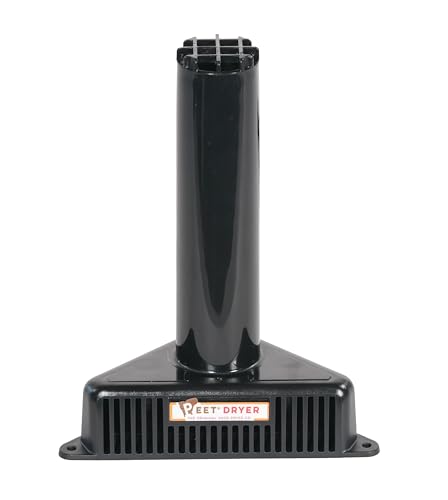
| PEET SafeKeeping Dehumidifier | Gun safes, tool chests, cabinets | Silent, no-tank desiccant design | Very good |
| Dravonic 2,000 Sq.Ft Dehumidifier | Finished or insulated workshops | Refined controls and quiet operation | Excellent |
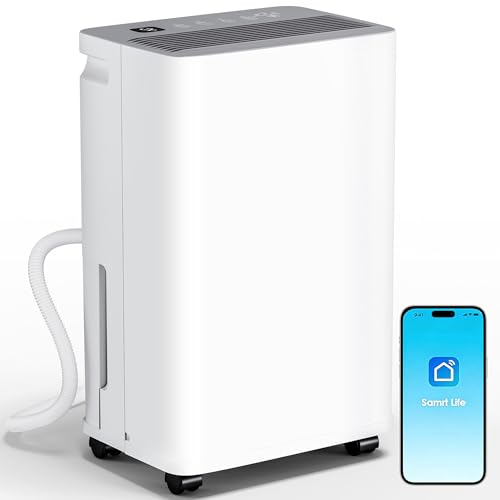
| 2500 Sq.Ft Dehumidifier with Drain Hose | Single-bay garages and sheds | Right-sized capacity, simple setup | Very good |
| Max 100 Pint/Day 5000 Sq.Ft Dehumidifier | Damp slabs and coastal humidity | Top-tier daily moisture removal | Excellent |
How to Choose a Dehumidifier for Garages and Workshops
- Oversize the capacity: Coverage ratings assume conditioned, sealed rooms. In a garage with an uninsulated door and a bare slab, choose a unit rated for at least double your actual square footage.
- Insist on a drain hose: Nobody empties a bucket in a workshop twice a day. Gravity drainage to a floor drain, utility sink, or downhill doorway makes the unit truly set-and-forget.
- Check the low-temperature rating: Compressor units lose efficiency below roughly 41°F. If your shop dips near freezing, look for auto-defrost, or use a desiccant unit for cold-season protection.
- Match the target to the material: Aim for 45–50% relative humidity to stop rust and mildew without over-drying lumber. A built-in humidistat with auto shut-off does this without babysitting.
- Plan for dust and airflow: Sawdust clogs filters fast. Choose a washable filter, keep the intake clear of walls by six inches or more, and place the unit away from the miter saw’s discharge path.
The Best Dehumidifiers for Garages and Workshops Reviewed
Best Overall: 5000 Sq.Ft Dehumidifier with Drain Hose
This is the safest pick for a typical attached two-car garage that doubles as a workshop, because the generous capacity rating gives you headroom when the door opens and humid outside air floods in. Best for homeowners who want one unit running year-round with a hose to a floor drain and no ongoing maintenance.
Best Budget: PEET SafeKeeping Dehumidifier
Rather than drying the whole room, this compact desiccant unit protects up to 300 cubic feet inside a gun safe, tool chest, or storage cabinet, and it runs silently with nothing to empty. Best for anyone whose real problem is rust on firearms, chisels, or precision measuring tools inside enclosed storage.
Best Premium: Dravonic 2,000 Sq.Ft Dehumidifier
The Dravonic brings polished controls and notably quiet operation, which matters if your shop shares a wall with a bedroom or you spend long sessions at the bench. Best for insulated, finished workshops and hobby studios where noise and precise humidity control outrank raw extraction volume.
Best for Single-Bay Garages: 2500 Sq.Ft Dehumidifier with Drain Hose
A sensible middle capacity that won’t short-cycle in a one-car garage, detached shed, or lawn-and-garden storage room. Best for buyers protecting outdoor furniture, cushions, and seasonal gear in a modest footprint without overspending on capacity they’ll never use.
Best for Extreme Damp: Max 100 Pint/Day 5000 Sq.Ft Dehumidifier
With up to 100 pints per day of removal, this one is built for genuinely wet conditions: coastal climates, below-grade garages, or a slab that sweats every spring. Best for workshops where standard units have already failed to hold humidity down.
Frequently Asked Questions
What humidity level should I keep in a garage workshop?
Target 45–50% relative humidity. That range stops rust and mold growth while keeping lumber and glue joints stable. Below 35% you risk checking and shrinkage in hardwood stock.
Will a dehumidifier work in an unheated garage in winter?
Compressor models slow dramatically once air drops below about 41°F, even with auto-defrost. In cold shops, a compressor unit handles spring through fall, and desiccant protection inside cabinets covers the freezing months.
Do I need to seal the garage first?
Yes, for best results. Weatherstrip the overhead door, seal wall penetrations, and consider a vapor barrier on a bare slab. Otherwise you’re dehumidifying the outdoors, and even an oversized unit will run constantly.
Where should I position the unit?
Central, on a level surface, with clearance on all sides and a slight downhill run for the drain hose. Keep it off the floor if the slab floods, and away from sawdust-producing tools.
Final Thoughts
For most garages and workshops, the 5000 Sq.Ft Dehumidifier with Drain Hose is the pick that solves the problem outright, while the Dravonic 2,000 Sq.Ft unit is the better choice for quieter, insulated shops. Add a PEET SafeKeeping Dehumidifier inside your tool chest or safe, and consider the KEGIAN 55 Pint/Day model if you want a quieter whole-shop compressor alternative.