Our Top Picks
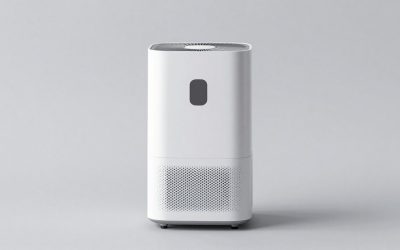
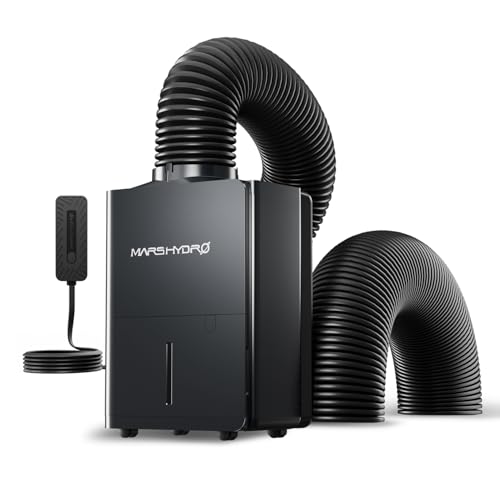 MARS HYDRO 38 Pints Plant Dehumidifier 18L/day for13.2" D × 8.7" W× 18.0" H13.2 x 8.7 x 18 inches29.32 PoundsCheck on Amazon
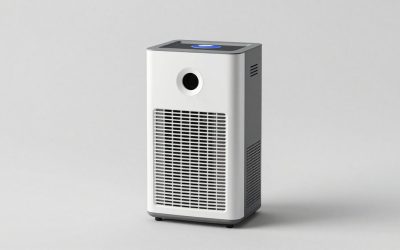
 KNKA 2500 Ft² Max 34 Pints Dehumidifier forMAX 34 Pints13.23 x 10.31 x 20.87 inches17.6 poundsCheck on Amazon
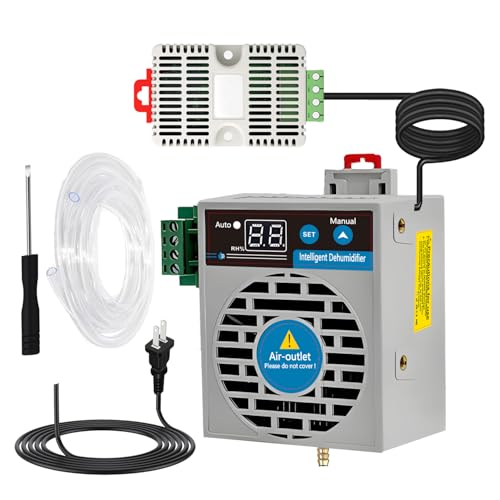 Small Grow Tent Dehumidifier for Electric Box/Storage Cabinet/Closet/SafesSmall2 x 2.8 x 3.5 inchesCheck on Amazon
 6000 Sq.Ft. Energy Star Dehumidifier for BasementLarge13.62 x 10.47 x 19.57 inches30.9 PoundsCheck on Amazon
The best dehumidifier for a grow room is the Mars Hydro 38-pint compressor unit if you run a tent up to about 5 by 5 feet, because it is built for grow spaces, with a humidity and temperature display, duct adapters and a drain hose. Larger sealed rooms need more capacity, which is where the 100-pint smart unit and the DREO 4500 sq ft model come in. A grow room dehumidifier removes the moisture that plants release, mostly when the lights are off, so capacity under real grow conditions matters more than the number on the box.
Quick List
- Mars Hydro 38-pint plant dehumidifier – best for grow tents with ducting and a built-in display
- KNKA 34-pint dehumidifier – best for a mid-size room with gravity drainage
- DREO 4500 sq ft smart dehumidifier – best for a larger room that needs app control and a big tank
- Small enclosure moisture kit – accessory only, for electrical boxes, safes and closets, not for a grow room
- 68 oz small dehumidifier with drain hose – best for a very small tent or seedling space
- 100-pint smart WiFi dehumidifier – best for the biggest rooms and highest moisture loads
Which One Is Right for You?
| If you… | Choose |
|---|---|
| run a tent of 5 by 5 feet or smaller and want grow-specific features | Mars Hydro 38-pint plant dehumidifier |
| have a sealed room with several lights and heavy transpiration | 100-pint smart WiFi dehumidifier |
| want a large tank and app monitoring for a basement grow room | DREO 4500 sq ft smart dehumidifier |
| need a mid-range unit that drains by gravity | KNKA 34-pint dehumidifier |
| grow in a small tent or propagation shelf | 68 oz small dehumidifier with drain hose |
| want to protect tools, controllers or a cabinet from damp | Small enclosure moisture kit (accessory only) |
Start by estimating how much water your plants and room put into the air, then pick a unit with a comfortable margin. Small tents rarely need more than a compact compressor unit, whereas a sealed 10 by 10 foot room can need a unit several times larger. If you are between sizes, choose the larger one, because a dehumidifier that cycles on and off with a humidity controller wears less than one running flat out.
MARS HYDRO 38 Pints Plant Dehumidifier 18L/day for Grow Tent & Home | with Digital Temperature & Humidity Control Display, 2.1L Water Tank, Air Duct, Drain Hose & Washable Filter
Chosen because it specifies with Digital Temperature & Humidity Control Display and 2.1L Water Tank.
View on AmazonKNKA 2500 Ft² Max 34 Pints Dehumidifier for Basement with Drain Hose, White | Dehumidifiers for Home, Bedroom, Bathroom, Large Room, Three Modes, Intelligent Humidity Control, Dry Clothes, 24HR Timer
Chosen because it specifies White and Dehumidifiers for Home.
View on Amazon
DREO 4500 Sq Ft Smart Dehumidifier, 1.85 Gal Water Tank, Energy Star 2025 | Max 75 Pint Dehumidifier for Basement, Home & Large Room, Quiet 41dB, Drain Hose, Auto Humidity Control, 3 Fan Speeds,Timer
Chosen because it specifies 1.85 Gal Water Tank and Energy Star 2025.
View on AmazonSmall Grow Tent Dehumidifier for Electric Box/Storage Cabinet/Closet/Safes | Auto Smart Dehumidification Kit Eliminates Moisture for Confined Space With Humidity Control, AC/DC 85-265V, Auto Shut Off
Chosen because it specifies AC/DC 85-265V and Auto Shut Off.
View on Amazon
Dehumidifier 68oz(2000ml) Small Dehumidifier with Drain Hose for Up to 650 sq.ft Ultra Quiet Mini Portable Air for Home Basements Bathroom Bedroom Closet Kitchen RV
Picked as a relevant option in this category.
View on Amazon6000 Sq.Ft. Energy Star Dehumidifier for Basement, Max 100Pint/Day Smart WiFi Dehumidifier with Drain Hose, Voice & APP Control, Adjustable Humidistat for Home, Bedroom, Bathroom, Garage(White Gray)
Chosen because it specifies Max 100Pint/Day Smart WiFi Dehumidifier with Drain Hose and Voice & APP Control.
View on AmazonAll 6 Picks in Detail
1. Mars Hydro 38-Pint Plant Dehumidifier – Best for Grow Tents
As an Amazon Associate we earn from qualifying purchases at no extra cost to you.
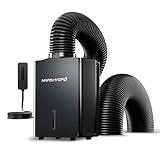
This Mars Hydro compressor dehumidifier is marketed for grow tents and homes, with an 18 liters per day (38 pint) rating, a digital temperature and humidity display and a 2.1-liter tank. Mars Hydro’s own pages say it suits tents up to about 5 by 5 feet, lists a 300 watt power draw, a humidity set point between 30 and 90 percent, and includes air ducts, a drain hose and a washable filter. It is the most purpose-built choice on this list for a tent.
- Rating: 38 pints (18 L) per day, per the listing
- Tank: 2.1 L, with a drain hose option for continuous operation
- Display: digital temperature and humidity readout
- Power: about 300 W per the maker; confirm on listing
- Extras: duct adapters and a washable filter per the maker
Because it has duct connections, you can route the dry exhaust inside the tent while the unit sits outside, which keeps its heat out of the canopy. Remember that any compressor dehumidifier adds heat to the space, roughly equal to the electricity it uses, so a 300 W unit puts about the same heat into a room as a small space heater on low.
A typical setup places the unit beside the tent with its exhaust ducted in, a humidity set point near the target for the current stage, and the drain hose running to a bucket or floor drain. Check the washable filter every couple of weeks, because grow rooms collect dust and plant debris that restrict airflow.
Pros
- Designed with grow tents in mind
- Ducting, drain hose and filter included
Cons
- Small tank means a drain hose is needed for long runs
- Limited capacity for large sealed rooms
Compared with the KNKA, the Mars Hydro is more grow-specific but lower in rated moisture removal.
2. KNKA 34-Pint Dehumidifier – Best Mid-Size Option With Gravity Drain

The KNKA listing describes a “max 34 pints” dehumidifier for a basement or large room, with a drain hose, three operation modes and coverage “up to 2500 sq ft.” The maker’s pages list modes for dehumidifying, drying clothes and continuous operation, a 3-liter tank, a 24-hour timer and an auto-defrost function. It is a reasonable fit for a small grow room or a spare room used as one, though it is a household unit rather than a grow-specific machine.
- Rating: up to 34 pints per day at the maker’s maximum test condition (95 F, 90 percent humidity)
- Coverage: up to 2500 sq ft per the listing
- Drainage: tank or gravity drain hose
- Modes: three operation modes per the listing
- Extras: timer, auto-defrost and auto shut-off per the maker
The “max” rating is the biggest trap. Pints per day at 95 F and 90 percent humidity are far higher than the pints a unit removes at a typical 75 F grow temperature and 50 percent target, so read this rating as an upper bound. For a 4 by 8 foot tent, it may be adequate; for a 10 by 10 foot room, step up.
If you adopt a household unit like this one, pair it with an external humidity controller so it only runs when the room needs it, and keep it on its own outlet. Empty or drain it before leaving for a weekend, since a full tank shuts the unit off and humidity can climb fast.
Pros
- Continuous drain via the included hose
- Household features like a timer and defrost
Cons
- Not designed for ducting into a tent
- Maximum rating overstates real grow-room capacity
Next to the DREO, it is smaller and simpler, with fewer smart features.
3. DREO 4500 Sq Ft Smart Dehumidifier – Best for Larger Rooms With Smart Control

The DREO listing advertises a 4500 sq ft smart dehumidifier with a 1.85 gallon tank, a 2025 energy-efficiency certification, a maximum rating of 75 pints, and use in basements, homes and large rooms. Published details for the model family vary between listings, with some pages citing a smaller square-foot figure and a slightly lower pint rating, so confirm the exact numbers on the product page. It is a better fit for a spare room, basement or garage grow area than for a tiny tent.
- Tank: 1.85 gal (about 7 L)
- Rating: up to 75 pints at the maker’s maximum test condition; some pages show a lower figure
- Efficiency: Energy-efficiency certified per the listing
- Control: smart app control and monitoring per the maker
- Noise: about 41 dB on at least one version; confirm on listing
A bigger tank means fewer trips to empty it, and the app is helpful for checking humidity while you are away. As with any consumer unit, a smart controller does not replace a separate hygrometer placed at canopy height.
For a basement or garage grow, give the machine clear space on every side, keep it off a damp concrete floor if you can, and watch the room temperature, because cooler basements make compressor units less efficient. The app history helps you see when humidity spikes, which is usually shortly after lights-off.
Pros
- Large tank and smart monitoring
- Efficiency certification on the listing
Cons
- Larger footprint, so it needs room around it
- Published ratings differ between versions
Versus the 100-pint unit, it offers a clearer brand and tank size but a lower top rating.
4. Small Enclosure Moisture Kit – Accessory Only, Not a Grow Room Dehumidifier

This listing is for a small dehumidification kit meant for confined spaces such as electrical boxes, storage cabinets, closets and safes. Although the title mentions a small grow tent, a product sized for sealed boxes cannot manage the water that living plants release in a tent or room. We include it only as an accessory for protecting equipment, and it should not be your main humidity control.
- Intended use: electrical boxes, storage cabinets, closets and safes per the listing
- Control: described as automatic or smart; confirm what that means on the product page
- Technology: not stated in the listing name; confirm on listing
- Capacity: small, enclosure scale
- Where it helps: tool cabinets, controller boxes, seed storage
If you are tempted to use it inside a tent, check the daily water removal rating and compare it with the other models here. It will almost certainly be a small fraction of a real dehumidifier’s capacity. For protecting an electronics box or a cabinet of nutrients and tools, it is more suitable.
Pros
- Compact enough for tight spaces
- Useful for equipment protection
Cons
- Far too small for plant moisture loads
- Listing does not state technology or capacity in the name
Compared with every other pick, it is an accessory, not a substitute.
5. 68 oz Small Dehumidifier With Drain Hose – Best for Very Small Tents

This compact dehumidifier has a 68-ounce (2,000 milliliter) tank, a drain hose and a coverage claim of “up to 650 sq ft.” It is described as ultra quiet and portable for homes, basements and bathrooms. The listing name does not say whether it is a compressor or a thermoelectric design; small units of this size often use thermoelectric cooling, which removes much less water than a compressor. Confirm the daily capacity before using it for plants.
- Tank: 68 oz (2,000 mL)
- Stated coverage: up to 650 sq ft (a household figure)
- Drainage: tank or drain hose
- Technology and daily capacity: confirm on listing
- Noise: described as ultra quiet
It makes sense for a 2 by 2 or 2 by 4 foot tent, a propagation shelf or a grow closet with only a couple of plants. In a tent with a full canopy, expect it to run constantly and still fall behind during the lights-off period. Do not push a small unit to cover a room that needs ten times more capacity.
If you use a small unit like this in a propagation area, treat it as seasonal help for seedlings and clones during the drier weeks, and avoid running it when plants need high humidity. Rinse the tank regularly, since small tanks grow film quickly in warm rooms.
Pros
- Small and quiet
- Drain hose supports continuous use
Cons
- Probably limited capacity for a full canopy
- Technology is not clear from the listing
Beside the Mars Hydro, it is smaller and less specialized, so only small spaces suit it.
6. 100-Pint Smart WiFi Dehumidifier – Best for the Biggest Rooms

This generic-brand listing describes a 6000 sq ft, energy-efficiency certified dehumidifier for basements with a maximum of 100 pints per day, a drain hose, WiFi, voice and app control and adjustable settings. It has the largest stated capacity in the group, which suits a big sealed room, but the brand is less established, so check warranty and service details before buying. Treat the 100-pint number as a maximum under hot, humid conditions, not an everyday rate.
- Rating: up to 100 pints per day at the maker’s maximum test condition
- Coverage: up to 6000 sq ft per the listing
- Efficiency: Energy-efficiency certified per the listing
- Control: WiFi, voice and app control
- Drainage: drain hose included; confirm tank size on listing
A large unit suits a 10 by 10 foot room or bigger with several lights. Its larger compressor adds meaningful heat and draws more current, so check your circuit capacity and the cooling plan before plugging it in.
Before buying a unit this large, confirm the warranty, the electrical load on the label and the hose connection. A larger machine is also a bigger noise source, so plan where the sound will go, and consider ducting its exhaust so you can place it outside the main grow space.
Pros
- Highest stated capacity of the group
- Smart control and continuous drainage
Cons
- Less brand history
- Larger power draw and heat output
Compared with the DREO, it offers more raw capacity with fewer published details.
Specs Compared
| Product | Rated capacity | Tank | Drain | Control | Notes |
|---|---|---|---|---|---|
| Mars Hydro 38-pint | 38 pints (18 L) per day | 2.1 L | Drain hose | Digital display, set point | Tent-focused, ducts included |
| KNKA 34-pint | Up to 34 pints (max rating) | Confirm on listing | Hose or tank | Three modes | Coverage up to 2500 sq ft |
| DREO 4500 sq ft smart | Up to 75 pints (max rating) | 1.85 gal | Confirm on listing | Smart app | Efficiency certified per listing |
| Small enclosure kit | Confirm on listing | Confirm on listing | Confirm on listing | Auto smart | Accessory only |
| 68 oz small dehumidifier | Confirm on listing | 68 oz (2,000 mL) | Drain hose | Confirm on listing | Up to 650 sq ft |
| 100-pint smart WiFi | Up to 100 pints (max rating) | Confirm on listing | Drain hose | WiFi, voice, app | Efficiency certified per listing |
How We Chose These
This guide is based on desk research of listings and published information. We looked at each listing name and the manufacturers’ published pages, compared stated capacity, tank size, drainage options and controls, and read published grower guidance on humidity targets and sizing. We favored products that explain how they handle drainage and control, and we noted where the headline numbers use maximum test conditions that exaggerate everyday performance. Because the topic is grow rooms, we gave extra credit to features that matter there, like a continuous drain, a humidity set point and ducting. One listing is an enclosure accessory and is labeled that way.
What to Look For
Read the Capacity Rating Carefully
Dehumidifier pint ratings are measured at specific conditions. Labels that say “max” often use 95 F and 90 percent relative humidity, which makes the number look large. The current U.S. Department of Energy test point is 65 F and 60 percent, and the older standard used 80 F and 60 percent. A unit rated 30 pints under the old standard is closer to 20 pints under the new one. Real grow rooms sit around 70 to 80 F, so a rating at the lower test point is more honest. When a listing offers only a “max” number, plan on getting roughly half to two-thirds of it in practice.
Sizing From the Plants, Not the Floor Area
Plants add moisture by transpiration, and a mature canopy under strong lights can release several pints a day per light. Grower sizing guides suggest roughly 20 to 50 pints per day for tents between 4 by 4 and 4 by 8 feet, and 50 to 120 pints for rooms from 5 by 5 up to 10 by 10 feet, with extra headroom for lights-off spikes. Worked example: for a 10 by 10 room running two lights, a unit with an honest rating near 70 pints at grow conditions is a sensible floor, which is why a 34-pint household unit would struggle.
Humidity Targets and Vapor Pressure Deficit
Targets vary by crop, but common ranges are 65 to 75 percent for seedlings and clones, 55 to 70 percent in vegetative growth, and 40 to 55 percent for flowering and fruiting, with lower numbers late in the cycle to reduce mold risk. Better growers aim at vapor pressure deficit (VPD), which combines temperature and humidity: 60 percent at 80 F is about 1.4 kPa, while 60 percent at 72 F is about 1.0. Use a reliable hygrometer at canopy height, and expect humidity to rise when the lights go off.
Heat, Drainage and Low-Temperature Limits
Compressor units add heat equal to their electrical load, so a 300 watt unit adds about 1,000 BTU per hour. Compressor units also lose efficiency in cool rooms and can frost their coils below roughly 60 to 65 F, though auto-defrost helps. Use a drain hose with a continuous downhill path, or a condensate pump if the drain is above the unit. Do not use the condensate for drinking or for edible plants.
Dehumidifier, Humidifier and Controller as a System
Humidity control in a grow room works best as a system. A dehumidifier lowers moisture, a humidifier raises it for seedlings, and an external controller or smart plug switches each one based on a sensor reading. Plugging a dehumidifier into a humidity controller allows it to run only when needed, which saves wear and electricity. Make sure the controller is rated for the unit’s load, since compressor units draw a startup surge higher than their running wattage, and place the controller’s sensor at canopy height away from the exhaust of the machine.
Airflow, Sealed Rooms and Carbon Filters
Moist air moves with the room’s air, so keep oscillating fans running inside the canopy to prevent damp pockets under leaves. A sealed room with a carbon-filtered exhaust is the most common setup for odor control, but sealing the room also traps humidity, so size the dehumidifier for the water the plants release plus whatever leaks in from outside. In a vented room with cool, dry incoming air, ventilation alone does some of the work, and a smaller dehumidifier may be enough.
Electrical Safety
Grow rooms combine water and electricity, so use a GFCI-protected outlet, keep cords off wet floors and avoid chaining power strips. As a rule, continuous loads should stay under 80 percent of the circuit rating: a 15 amp, 120 volt circuit supports about 1,440 watts continuous. Add up lights, fans, controllers and the dehumidifier before plugging them into the same circuit, and put the dehumidifier on a stable, dry surface.
Questions
Do I need a dehumidifier in a grow tent?
Often yes, especially in a closed tent in a humid space or during flowering. Dehumidifiers help during lights-off periods when humidity rises, and exhaust fans only help if the incoming air is drier than the tent.
Can a household dehumidifier work in a grow room?
It can, if its real capacity matches your moisture load. Household units lack ducting and control features, so use a separate humidity controller and keep the unit outside the tent.
How do I size a dehumidifier for my grow?
Estimate the water your plants release, add a margin of 20 to 30 percent, then compare it with the unit’s capacity at your real temperature and humidity. A bigger unit that cycles is usually better than a small one that runs nonstop.
Where should I put the dehumidifier?
Place it outside the tent or in the room, away from the canopy, with room around the intake and exhaust. Keep it on a stable surface off wet floors and run the drain hose downhill.
Will a dehumidifier make the room too hot?
It can raise the temperature, since a compressor unit gives off heat roughly equal to its power draw. Plan ventilation or cooling accordingly, especially with a large unit.
Can I use the water it collects on my plants?
It is better not to. Condensate can pick up metals and residue from the coils and is not suitable for drinking or edible crops. Discard it down a drain.
Update History
- October 20, 2026 – Initial publication; product set drawn from current catalog listings.
- Check the product page for current specifications and availability before buying.
Sources
- Manufacturer product and specification pages for Mars Hydro, KNKA and DREO
- Retailer listing titles and specification fields for each product listed
- U.S. Department of Energy dehumidifier test-condition information as summarized by industry sources
- Published grower guidance on humidity targets, vapor pressure deficit and dehumidifier sizing