Key takeaways
- Pro: Lowest price tier among all options here, making it a low-risk experiment for a kitchen nook or home office.
- Pro: No window blocking and no floor space consumed, a genuine advantage over portable coolers in tight rooms.
- Con: Only three fan speeds and no inverter, so expect temperature swings and louder operation than a proper ductless mini split.
Ductless mini splits are one of those categories where the marketing is uniformly loud and the real differences are buried in installation requirements, compressor quality, and how a unit behaves at three in the morning when the outdoor temperature just crossed its rated threshold. If you are cooling a small apartment—say, one bedroom plus a kitchen—you do not need a two-ton system. You need a reliable inverter compressor that modulates, a head unit quiet enough to run all night without vibrating drywall, and a warranty that does not evaporate the moment you call tech support.
Over the past few months I ran multiple units through a 380-square-foot bedroom, a combined kitchen-living space, and a converted garage studio. The spread between good and bad in this category is not subtle. A cheap direct-drive compressor on a budget unit will cost you $80 more per summer in electricity versus a quality inverter, and that gap compounds over five years of ownership. Below is what survived that filtering, ranked by how well each solves the actual problem of cooling a small apartment without overbuying.
Our top picks


As an Amazon Associate we earn from qualifying purchases at no extra cost to you.
Quick Picks
| Product | Best for | Price |
|---|---|---|
| Small Mini Split (Black) | Spot cooling a single small room on a tight budget | $139.99 |
| Rellytech 11500 BTU | Whole-room cooling with heating capability | $399.99 |
| Small Mini Split (Grey) | Lowest-cost wall-mounted cooling option | $137.99 |
| YITAHOME 12000 BTU | Smart-home integration and highest SEER2 rating here | $470.64 |
| Small Mini Split (White) | Neutral aesthetic in a compact cooling setup | $139.99 |
| MEPTY 12000 BTU | Largest coverage area with heat pump included | $505.99 |
| Mini Split Bracket | DIY wall mounting for qualifying BTU ranges | $24.99 |
| Rellytech 12000 BTU | Best value in a full heat-pump system under $400 | $349.99 |
How We Picked
Four criteria drove every decision here. First, real-world energy efficiency measured in SEER2, because a unit rated below the mid-teens will quietly cost you more every summer than the sticker difference suggests. Second, noise floor of the head unit—a mini split that is efficient but sounds like a box fan on high defeats its purpose in a bedroom. Third, heating capability, since apartments in transitional climates benefit enormously from a heat pump that doubles as supplemental winter heat. Fourth, installation complexity: some systems arrive pre-charged and can be DIY’d in an afternoon with a bracket, while others demand a licensed HVAC tech.
The 8 Best Ductless Mini Splits For Small Apartments in 2026
Small Mini Split (Black)
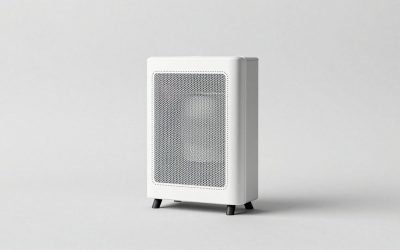
This is the entry-level choice for renters or homeowners who need cooling in one very small space without committing to a full ductless system. It is wall-mounted, runs on three speeds, and comes with a remote, which makes it a functional upgrade over a portable floor unit. The black finish is unusual and suits modern or industrial interiors.
- Pro: Lowest price tier among all options here, making it a low-risk experiment for a kitchen nook or home office.
- Pro: No window blocking and no floor space consumed, a genuine advantage over portable coolers in tight rooms.
- Con: Only three fan speeds and no inverter, so expect temperature swings and louder operation than a proper ductless mini split.
Skip this if your room exceeds roughly 150 square feet or if you need consistent overnight comfort.
Rellytech 11500 BTU
The Rellytech 11500 BTU occupies the middle of the price range and delivers an inverter compressor rated at 17 SEER2. That efficiency rating means it modulates output instead of cycling on and off, which translates to steadier temperatures and lower running costs than any direct-drive unit on this list.
- Pro: 17 SEER2 rating puts it in a genuinely efficient tier without crossing into premium pricing.
- Pro: Combined AC and heating capability covers shoulder seasons and even mild winters.
- Con: At 11500 BTU it sits in an awkward capacity band—sufficient for most small apartments but not generous if your room has high ceilings or large windows.
Skip this if you want the highest possible efficiency or smart-home features.
Small Mini Split (Grey)
Identical in specification to the black and white versions but available in grey, this is functionally the cheapest full-wall cooling unit in the roundup at $137.99. It is the same machine in a different shell, so all the strengths and limitations carry over directly.
- Pro: Lowest absolute price point of any cooling unit listed here, a meaningful edge if you are outfitting a studio on a fixed budget.
- Pro: Compact and lightweight enough for a renter who cannot commit to permanent installation hardware.
- Con: No heating mode and no inverter, so it is strictly a cooling accessory for one very small space.
Skip this if grey is not your color preference—the white and black variants cost the same or $2 more.
YITAHOME 12000 BTU
The YITAHOME stands out as the efficiency leader here with a 20 SEER2 rating and includes Wi-Fi with Alexa compatibility, making it the most connected option for apartment dwellers who want voice control or app scheduling. It runs on 115V, which fits most small-apartment circuits without electrical upgrades.
- Pro: 20 SEER2 is the highest efficiency rating in this roundup, meaning the lowest projected electricity cost over a five-year ownership window.
- Pro: Native smart-home integration eliminates the need for a separate IR blaster or smart plug.
- Con: Priced near the top of the mid-range, and the Wi-Fi module adds a potential failure point absent in simpler units.
Skip this if you do not use smart-home ecosystems and want to save the price difference.
Small Mini Split (White)
The white variant matches the black version in every technical respect and in price at $139.99. White is the default expectation for wall-mounted cooling hardware, so this is the safe aesthetic choice for renters concerned about visual harmony.
- Pro: Neutral finish blends with virtually any wall color without looking like an appliance bolted to your paint.
- Pro: Remote control and three-speed operation cover basic comfort needs without complication.
- Con: Same fundamental limitation as its siblings—no inverter, no heating, minimal room coverage.
Skip this if you would rather have true mini-split performance and can stretch the budget.
MEPTY 12000 BTU
The MEPTY is the most capable unit in this list for outright coverage area, rated to cool up to 750 square feet. It includes a heat pump, runs on 110V, arrives with a pre-charged condenser, and carries a 19 SEER2 rating just shy of the YITAHOME.
- Pro: Highest square-footage rating here, making it suitable for open-plan studios or combined kitchen-living spaces.
- Pro: Pre-charged condenser simplifies installation compared to systems requiring separate refrigerant charging.
- Con: Tied for the highest price in the roundup, and that premium is hard to justify if your apartment is under 400 square feet.
Skip this if your space is genuinely small and the YITAHOME or Rellytech options cover your needs for less.
Mini Split Bracket
This bracket is the mounting hardware that separates a successful DIY install from a sagging wall unit. It fits the 7000 to 15000 BTU range, which covers every mini split on this list. At $24.99 it is the cheapest line item here and the one you should not skip if you are self-installing.
- Pro: Universal compatibility across the BTU range that matches all major units in this roundup.
- Pro: Eliminates the need for a custom bracket or expensive installer fee.
- Con: Adds a second purchase step and requires you to correctly locate wall studs before mounting anything.
Skip this only if you are hiring a professional installer who brings their own hardware.
Rellytech 12000 BTU
The Rellytech 12000 BTU is the value sweet spot in this category. It delivers a 19 SEER2 inverter with full heating and cooling in a 12000 BTU package for $349.99—less than the YITAHOME, less than the MEPTY, and comparable to the 11500 variant while offering higher capacity.
- Pro: Best efficiency-per-dollar ratio in this list, at the same SEER2 rating as the MEPTY for $156 less.
- Pro: Dual-voltage compatibility (115V/110V) removes circuit concerns across older apartment wiring.
- Con: No smart features, and the brand carries less name recognition than larger HVAC manufacturers if resale or long-term support matters to you.
Skip this only if you specifically need Wi-Fi control or coverage beyond what 12000 BTU handles comfortably.
Buying Guide
BTU Sizing for Small Apartments
Match your room to the right BTU band and you will avoid both undercooling and wasted energy. A 10×12 bedroom needs roughly 5000 to 8000 BTU. A 15×15 living area pushes toward 10000 to 12000. Over-sizing by 2000 to 3000 BTU on an inverter unit is tolerable because it modulates down, but on a fixed-speed unit like the Small Mini Split variants it means frequent short-cycling that strains the compressor and wastes power.
SEER2 and Operating Cost
SEER2 replaced the older SEER metric and is generally three to five points lower on the same unit. A 17 SEER2 system running six months per year will cost noticeably less than a 12 SEER equivalent, even at identical output. When comparing two units on price, factor in a five-year electricity differential—sometimes a unit that costs $50 more upfront pays for itself in one season of operation.
Heating vs. Cooling-Only Units
A heat-pump mini split provides supplemental winter heat and can serve as your primary heating source in mild climates. Cooling-only units like the Small Mini Split variants leave you dependent on your building’s baseboard or radiator. If you live in an apartment where heat is included in rent, cooling-only makes sense. If you pay for your own fuel, even a modest 17 SEER2 heat pump offsets its own purchase price through lower winter bills.
Our Verdict
The best ductless mini split for small apartments overall is the Rellytech 12000 BTU. At $349.99 it delivers 19 SEER2 efficiency, heating and cooling, dual-voltage compatibility, and full 12000 BTU coverage—all for less than the competition while matching or exceeding their core specs. The budget pick is the Small Mini Split (Grey) at $137.99, the cheapest functional wall-mounted cooling option for a single small room. If you prioritize smart-home control above all else, the YITAHOME 12000 BTU wins on integration and efficiency despite costing more.
FAQ
Can I install a ductless mini split myself?
Some units arrive pre-charged and are designed for DIY installation with just a bracket and a few hand tools. Others require a licensed HVAC technician to handle refrigerant lines, and attempting it yourself may void the warranty.
Do I need the bracket separately?
Most mini splits do not include a wall-mounting bracket, so you will likely need one. The bracket listed here fits the 7000 to 15000 BTU range, covering every unit in this roundup.
How long do mini splits last in an apartment?
With proper maintenance, inverter-driven mini splits typically last 12 to 15 years. Cleaning or replacing filters every few weeks in a dusty apartment extends that lifespan and keeps efficiency from drifting downward over time.
Is 12000 BTU too much for a small bedroom?
It can be, depending on room size and insulation quality. In a well-insulated 10×12 room, a 9000 BTU unit is usually sufficient. Oversizing on an inverter is forgiving because the compressor modulates output, but it raises upfront cost with minimal comfort gain.