Key takeaways
- Mesh density: Standard mosquito netting runs around 1,000 holes per square inch and stops mosquitoes fine. If you camp near water, in the Southeast, or anywhere biting midges live, insist on no-see-um mesh — the finer weave is the only thing that keeps them out.
- Length and fit: Measure your hammock end to end, including the gathered ends. An 11-foot net over an 11-foot hammock leaves no slack for the suspension, so err longer. Extra width matters too, since a net pressed against your face all night defeats the purpose.
- Zipper design: Dual-sided or diagonal zippers let you get in and out from either side without gymnastics. Single short zippers force you to enter from one fixed angle, which is genuinely annoying in the dark.
- Weight and pack size: Backpackers should look for sub-12-ounce nets in ripstop-compatible stuff sacks. For a deck or campsite you drive to, weight barely registers and you can prioritize durability and roominess instead.
- Standalone versus integrated: A separate net slides over the hammock you already own and can be removed on cool, bug-free nights. An integrated hammock-and-net combo is lighter overall and never shifts out of position, but you’re committed to that one setup.
What's inside
Anyone who has drifted off in a backyard hammock on a warm July evening knows how quickly that peace evaporates. The temperature drops, the light goes gold, and the mosquitoes clock in for their shift. Add no-see-ums along a lakeshore or gnats in a shaded tree line, and a hammock that felt like a private retreat at 6 p.m. becomes unusable by 8. Bug spray helps for a while, but it wears off, it stains fabric, and it does nothing about the insects landing on your ankles through the mesh of an open-weave hammock.
A dedicated bug net solves the problem structurally instead of chemically. It builds a sealed pocket of air around you, suspended off your body by a ridgeline, so nothing bites through the fabric and nothing crawls in from the sides. This guide covers what actually matters when shopping in 2026: mesh density, sizing against your hammock’s length, zipper placement, packed weight, and whether you should buy a standalone net or a hammock with netting already sewn in. Below are the models worth your money, from featherweight backpacking setups to sturdy patio-and-porch options.
As an Amazon Associate we earn from qualifying purchases at no extra cost to you. Product prices and availability are accurate as of the date shown and are subject to change.


🛒 Best Price Today on Amazon
Prime members get fast, free shipping on everything above, plus member-only deals. New members get a 30-day free trial — cancel anytime.
How to Choose a Hammock Bug Net
- Mesh density: Standard mosquito netting runs around 1,000 holes per square inch and stops mosquitoes fine. If you camp near water, in the Southeast, or anywhere biting midges live, insist on no-see-um mesh — the finer weave is the only thing that keeps them out.
- Length and fit: Measure your hammock end to end, including the gathered ends. An 11-foot net over an 11-foot hammock leaves no slack for the suspension, so err longer. Extra width matters too, since a net pressed against your face all night defeats the purpose.
- Zipper design: Dual-sided or diagonal zippers let you get in and out from either side without gymnastics. Single short zippers force you to enter from one fixed angle, which is genuinely annoying in the dark.
- Weight and pack size: Backpackers should look for sub-12-ounce nets in ripstop-compatible stuff sacks. For a deck or campsite you drive to, weight barely registers and you can prioritize durability and roominess instead.
- Standalone versus integrated: A separate net slides over the hammock you already own and can be removed on cool, bug-free nights. An integrated hammock-and-net combo is lighter overall and never shifts out of position, but you’re committed to that one setup.
The Best Hammock Bug Nets Reviewed
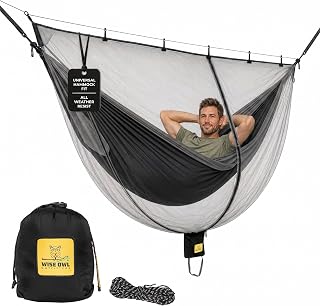
Wise Owl Outfitters Hammock Bug Net
A reliable slip-over net that fits nearly any single or double hammock and packs down small enough to live permanently in your gear bin. The build quality is consistent with the brand’s straps and hammocks, making it an easy pairing if you already own their kit.
XL No-See-Um Bug Net, 11 x 4.6 ft
The extra width is the headline here — 4.6 feet of interior space keeps mesh off your face and gives you room to read or shift positions. The dual-sided diagonal zipper is the most practical entry system on this list, and the fine polyester weave genuinely blocks midges, not just mosquitoes.
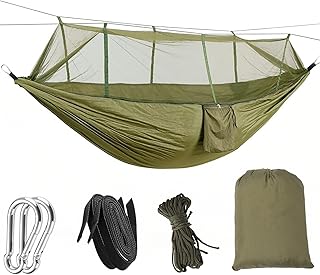
Camping Hammock with Mosquito Net and Rain Fly
A complete shelter in one purchase: hammock, integrated netting, and a fly for overnight drizzle. It’s the sensible pick for anyone building a first backcountry sleep system rather than piecing one together over several seasons.
Onewind 11ft Ultralight Camping Hammock with Mosquito Net
Built for thru-hikers who count grams — 40D hexagon ripstop nylon, a structural ridgeline for consistent sag, and a 64-inch single-wide panel that sleeps flatter than the numbers suggest. The no-see-um bugnet is sewn in and stays put, which is exactly what you want at 2 a.m.
500 lb 2-in-1 Double/Single Hammock with Mosquito Net
The most versatile option for home use, with a 500-pound capacity, included tree straps, and a design that flips between single and double configurations. It’s equally at home between two porch posts or two pines.
Frequently Asked Questions
Do I need a ridgeline for my bug net?
Yes. Without a ridgeline the mesh collapses onto you and mosquitoes bite straight through the contact points. Most nets include a cord, but a 2mm Dyneema line is a worthwhile upgrade.
Will a bug net make the hammock hotter?
Barely. Mesh restricts airflow slightly, but the difference is small enough that most people never notice it. In humid climates, orient your hammock to catch a cross breeze.
Can I use one net on different hammocks?
Standalone nets are sized generously and typically fit anything from an 8-foot single to an 11-foot double, so one net can cover multiple hammocks in the same household.
How do I store and clean it?
Hand wash with mild soap, air dry fully, and store loosely rather than compressed. Mesh takes creases badly and mildew ruins it faster than any amount of use.
Final Thoughts
For most buyers, the XL No-See-Um net at 11 x 4.6 feet is the best all-around choice — roomy, genuinely midge-proof, and easy to get in and out of. Backpackers should go with the Onewind ultralight hammock for its integrated netting and low weight, while anyone hanging on a deck or in the backyard will get more out of the 500-pound 2-in-1 hammock with its included straps and generous capacity.