Key takeaways
- Material: Polypropylene and recycled-plastic rugs are popular because they resist moisture, clean readily, and generally dry faster than natural-fiber alternatives.
- Weather exposure: For an uncovered patio, prioritize UV and fade resistance, while a sheltered porch gives you more flexibility with texture and color.
- Drainage: Flatweave and woven-plastic constructions allow water and debris to move through or off the surface more easily than dense, absorbent piles.
- Comfort: Textured synthetic rugs provide a softer visual finish, but plastic straw mats are often better suited to utility areas, camping, and high-moisture locations.
- Maintenance: Choose a rug that can be shaken, swept, hosed, or spot-cleaned without special products, particularly if it will be used beneath outdoor dining furniture.
What's inside
An outdoor rug has to do more than make a patio look finished. It may sit in full sun, collect grit, absorb moisture, and endure muddy shoes, pet traffic, spilled drinks, or repeated folding. The wrong material can fade quickly, hold water against a deck, or become difficult to clean after one busy season.
This guide focuses on the practical differences between common outdoor-rug materials, including woven polypropylene and recycled plastic. We look at drainage, drying speed, comfort, UV resistance, cleaning effort, portability, and the settings where each style makes the most sense—from a covered porch to an exposed campsite.
As an Amazon Associate we earn from qualifying purchases at no extra cost to you. Product prices and availability are accurate as of the date shown and are subject to change.



🛒 Best Price Today on Amazon
Prime members get fast, free shipping on everything above, plus member-only deals. New members get a 30-day free trial — cancel anytime.
How to Choose a Material For An Outdoor Rug (2026)
- Material: Polypropylene and recycled-plastic rugs are popular because they resist moisture, clean readily, and generally dry faster than natural-fiber alternatives.
- Weather exposure: For an uncovered patio, prioritize UV and fade resistance, while a sheltered porch gives you more flexibility with texture and color.
- Drainage: Flatweave and woven-plastic constructions allow water and debris to move through or off the surface more easily than dense, absorbent piles.
- Comfort: Textured synthetic rugs provide a softer visual finish, but plastic straw mats are often better suited to utility areas, camping, and high-moisture locations.
- Maintenance: Choose a rug that can be shaken, swept, hosed, or spot-cleaned without special products, particularly if it will be used beneath outdoor dining furniture.
The Best Material For An Outdoor Rug (2026)s Reviewed
Unique Loom Casual Transitional Flatweave Rug
This light gray and ivory flatweave is a practical choice for balconies, porches, and seating areas that need a restrained foundation. Its synthetic indoor/outdoor construction is easier to maintain than natural fibers, while the low-profile design helps chairs move without catching on a thick pile. The compact 4-by-6-foot format also suits smaller outdoor layouts.
JONATHAN Y Estrella Boho Medallion Rug
The Estrella uses a textured synthetic weave to bring more visual pattern and tactile interest to a patio or porch. Its non-shedding, pet-friendly positioning makes it appealing for busy households, and the 8-by-10-foot size can define a substantial conversation or dining zone. As with any outdoor rug, allowing the underside and surrounding surface to dry fully helps prevent trapped moisture.
JONATHAN Y Ourika Moroccan Geometric Rug
With an orange-and-cream geometric design, the Ourika is a strong option when an outdoor arrangement needs warmth rather than another neutral gray. Its woven synthetic construction is intended for high-traffic areas and regular cleaning, making it suitable for patios, porches, and family spaces. Use furniture pads beneath heavy legs to reduce stress on the weave and protect the surface below.
Mykonos Recycled Plastic Rug
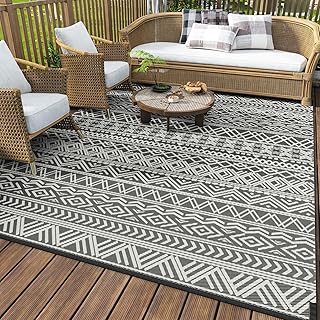
The Mykonos is made from 100% recycled plastic and has the weather-resistant qualities many buyers want for exposed outdoor use. Its reversible gray-and-white design lets you change the look or turn the rug over when one side becomes visibly dusty. Water, stain, fade, and UV resistance make this a sensible pick for decks, RVs, campsites, and other areas where convenience matters more than a plush feel.
MontVoo Reversible Plastic Straw Rug
This reversible 5-by-8-foot mat takes a lightweight, utility-first approach to outdoor flooring. The plastic-straw construction is waterproof and portable, making it useful for camping, picnics, beach trips, RV living, balconies, and patios where quick setup and easy sweeping are priorities. It will not feel as soft as a textured decorative weave, but that tradeoff is valuable in damp or frequently moved settings.
Frequently Asked Questions
What is the best material for an outdoor rug?
For most patios and porches, polypropylene or another woven synthetic material offers the best balance of weather resistance, color options, cleanability, and comfort. Recycled plastic is particularly useful when water resistance and portability are more important than softness.
Are outdoor rugs better made from plastic or fabric?
Plastic-based rugs usually handle rain, spills, and stains more easily, while synthetic fabric-like weaves can provide a more decorative appearance and comfortable texture. In either case, look for a low-profile construction designed for outdoor use rather than an ordinary indoor rug.
Can an outdoor rug stay outside in the rain?
Many outdoor rugs can tolerate rain, but the surface underneath still needs airflow. Lift or reposition the rug periodically, especially on wood decking, and let both the rug and the floor dry after prolonged wet weather.
How do you clean an outdoor rug?
Start by shaking or sweeping away loose dirt, then follow the care label. Many plastic and polypropylene rugs can be rinsed with water and left to dry completely, while spills should be treated promptly to reduce staining.
Final Thoughts
For a polished patio, the JONATHAN Y Estrella and Ourika rugs combine practical synthetic construction with expressive pattern. For maximum versatility in wet, sunny, or mobile settings, the reversible Mykonos recycled-plastic rug is a particularly dependable choice.