Our Top Picks
The best mechanical watches for most buyers are a self-winding automatic with a stainless-steel case, at least 100 metres of water resistance, a sapphire crystal and roughly 38–80 hours of power reserve; choose a hand-wound dress watch for slimness, or a higher-grade movement and precious-metal case when heirloom value matters most.
Best mechanical watches by buying situation
| Situation | Best choice | Useful specification | Typical market range |
|---|---|---|---|
| First everyday mechanical watch | Automatic field, dive or sports watch | Stainless steel, sapphire crystal, 100–200 m water resistance, 40–80 hours of reserve | Usually $300–$1,000 |
| Office and formal wear | Automatic or hand-wound dress watch | 36–39 mm case, 30–50 m water resistance, leather strap, 40+ hours of reserve | Usually $500–$3,000 |
| Outdoor use and travel | Rugged automatic field or dive watch | 39–42 mm case, screw-down crown, 100–300 m water resistance, strong lume | Usually $400–$2,000 |
| Long-term heirloom | Well-supported Swiss or Japanese automatic | Serviceable movement, sapphire crystal, robust steel or precious-metal case, 60+ hours of reserve | Usually $2,000–$15,000+ |
What makes a mechanical watch a good buy?
A mechanical watch stores energy in a wound mainspring and releases it through a balance and escapement. An automatic model winds itself as you wear it, while a hand-wound model requires regular winding from the crown. Neither type matches quartz for absolute accuracy, but mechanical watches offer a repairable, tactile construction that can remain in use for decades when serviced.

Fossil Men's Watch, Townsman Automatic Stainless Steel and Leather Two-Hand Skeleton Watch for Men, Color: Silver, Brown
Chosen because it specifies Color: Silver and Brown.
View on Amazon
BERNY Titanium Automatic Watch, 10ATM Waterproof Men's Military Field Watch
Chosen because it specifies 10ATM Waterproof Men's Military Field Watch.
View on Amazon
Invicta Men's Pro Diver 40mm Steel and Gold Tone Stainless Steel Automatic Watch with Coin Edge Bezel, Two Tone/Blue (Model: 8928OB)
Chosen because it specifies Two Tone/Blue (Model: 8928OB).
View on Amazon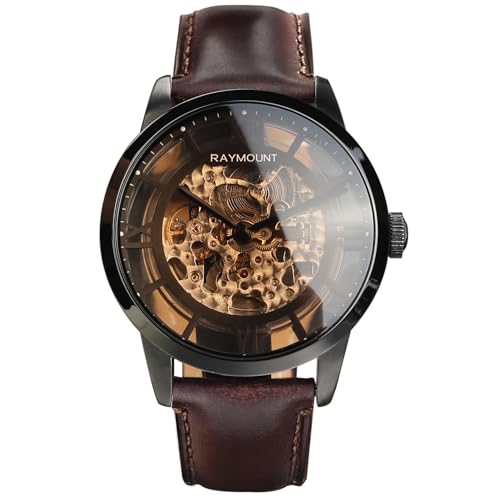
FORSINING Men's Automatic Watch with Mechanical Movement, Skeleton Dial and Leather Band
Chosen because it specifies Skeleton Dial and Leather Band.
View on AmazonLook beyond the brand name. The movement, case construction, crystal, water resistance and service support determine whether a watch suits your actual routine. A beautifully finished dress watch may be a poor choice for swimming, while a thick 300-metre dive watch can feel awkward under a shirt cuff.
Movement type: automatic versus hand-wound
Automatic movements
Automatic watches are the easiest mechanical option for daily wear. A rotor winds the mainspring as your wrist moves, so the watch continues running while worn. Many modern automatic movements provide approximately 40–80 hours of power reserve. If you own several watches, however, an automatic will stop after its reserve runs out unless you wear it or wind it manually.
Good examples of the category include the Seiko Presage and Seiko Prospex lines, the Orient Bambino and Kamasu, the Tissot Gentleman and PRX Powermatic 80, the Hamilton Khaki Field Automatic, and the Longines Spirit. These ranges cover dress, everyday and outdoor use without requiring luxury-level spending.
Hand-wound movements
Hand-wound watches are often thinner because they do not need a rotor. That makes them especially attractive for formal clothing and smaller wrists. The trade-off is routine: you may need to wind the watch every day or every few days, depending on its power reserve.
Choose hand-winding if interacting with the watch is part of the appeal and you normally wear one watch at a time. Avoid it if you want to grab a watch without checking whether it is running. A 36–39 mm hand-wound watch with a restrained dial is usually more versatile with tailoring than a large sports model.
Case material and construction trade-offs
| Material | Advantages | Limitations | Best use |
|---|---|---|---|
| 316L stainless steel | Strong, corrosion-resistant, repairable and relatively affordable | Scratches with normal wear; polished surfaces show marks quickly | Daily wear, travel and sports watches |
| Titanium | Very light and comfortable; useful for larger cases | Can scratch more visibly and may feel less substantial | Outdoor watches and people sensitive to weight |
| Ceramic | Highly scratch-resistant and visually stable | Can chip after a hard impact and is more expensive to replace | Bezel inserts and premium sports watches |
| Gold | Prestigious, corrosion-resistant and appropriate for heirloom pieces | Soft, heavy and expensive; dents more easily than steel | Formal wear and long-term collecting |
| Bronze | Develops a distinctive patina over time | Patina is unpredictable and may irritate sensitive skin | Casual, nautical and vintage-inspired watches |
For a first mechanical watch, steel is usually the safest material. A brushed finish hides small scratches better than a fully polished case, and a steel bracelet can often be replaced with leather or fabric later. Titanium is worth considering when a 42 mm watch feels too heavy, while gold makes more sense when appearance and sentimental value outweigh practicality.
Water resistance: the number is not a swimming guarantee
Water-resistance ratings describe pressure tested under laboratory conditions, not every real-world activity. A watch marked 30 metres is generally suitable for splashes but is not a sensible swimming choice. For routine handwashing and rain, 50 metres offers more margin. Choose 100 metres for swimming and everyday versatility, and 200 metres or more for frequent water use, diving-style construction or extra reassurance.
- 30 m: splashes and careful daily use; avoid submersion.
- 50 m: rain, handwashing and occasional shallow-water exposure.
- 100 m: the practical target for a general-purpose mechanical watch.
- 200–300 m: swimming, water sports and robust dive-watch construction, provided the crown is secured.
Water resistance is not permanent. Gaskets age, crowns can be left unscrewed and impacts can affect seals. Have a regularly submerged watch pressure-tested according to the manufacturer’s schedule, and do not operate the crown underwater.
Power reserve, accuracy and servicing
A 40-hour reserve is adequate when you wear the watch daily. A 60–80-hour reserve is more convenient because the watch can remain running through much of a weekend off the wrist. This feature is particularly useful if you rotate between a work watch and a dress watch.
Mechanical accuracy is commonly expressed as seconds gained or lost per day. Entry-level movements may vary by several seconds daily, while regulated or certified movements can perform more consistently. COSC-certified watches are tested to a defined chronometer standard, but certification does not make a watch immune to magnetism, temperature changes or knocks.
Budget for periodic servicing rather than treating the watch as maintenance-free. Service intervals vary by movement and manufacturer, but a mechanical watch may need professional attention roughly every five to ten years. Typical servicing can cost from several hundred dollars for an accessible movement to well over $1,000 for complicated or luxury models. A movement with widely available parts is usually easier and less expensive to maintain.
Size, thickness and daily comfort
Case diameter is only part of fit. Lug-to-lug length determines how far the watch extends across the wrist, while thickness affects whether it catches on a cuff. As a practical starting point, wrists under about 6.5 inches often suit 36–39 mm cases; wrists around 6.5–7.5 inches can usually wear 38–41 mm; larger wrists can accommodate 41–44 mm when the lug length is controlled.
These are guidelines, not rules. A 40 mm field watch may wear smaller than a 40 mm chronograph because the dial and bezel use space differently. For office wear, a case around 10–12 mm thick is easier under a shirt cuff. Dive watches commonly exceed that thickness because of their seals, rotating bezels and crystal construction.
Strong picks by budget and purpose
Value-focused daily wear
Look at Seiko, Orient and Citizen mechanical ranges when keeping the budget around $200–$600. Orient’s dress and dive-style watches are known for offering automatic movements at accessible prices. Seiko provides broad choices from simple dress watches to capable Prospex sports models. Check the exact crystal and water-resistance specification, since models within one family can differ considerably.
One-watch versatility
Tissot’s Powermatic 80 models and Hamilton’s Khaki Field Automatic are strong candidates around $600–$1,200, depending on configuration. They commonly combine automatic winding, useful reserves and designs that work with casual clothing or an office wardrobe. A steel bracelet plus a second strap can make one watch cover much of the week.
Premium everyday and heirloom options
Longines, Oris, Tudor and Omega offer progressively higher levels of movement specification, finishing, bracelet quality and brand service. Longines models often suit buyers wanting restrained Swiss design and extended power reserves. Oris is a compelling choice for distinctive independent design and robust sports watches. Tudor and Omega generally move further into luxury pricing, with stronger anti-magnetism, certification or proprietary movement features on selected models.
Rolex remains a major heirloom-oriented option, but its price and availability place it in a different budget category. The most important heirloom quality is not simply prestige: it is a durable design, documented ownership, dependable service network and a watch you will still want to wear years later.
A practical buying checklist
- Measure your wrist and compare lug-to-lug length, not only case diameter.
- Choose 100 metres of water resistance if you want one watch for varied daily use.
- Prefer sapphire crystal when scratch resistance matters; accept mineral crystal to reduce cost.
- Select at least 60 hours of power reserve if the watch will share time with other watches.
- Check whether the bracelet has micro-adjustment holes or a tool-free clasp.
- Confirm the local service route and approximate maintenance cost before buying.
- For an heirloom, keep the purchase record, spare links and service documentation.
The best mechanical watch is therefore the one whose compromises match your routine: an automatic steel watch with 100 metres of resistance for dependable daily wear, a thin hand-wound model for dress occasions, or a highly serviceable, carefully finished movement for a future heirloom.