Our Top Picks
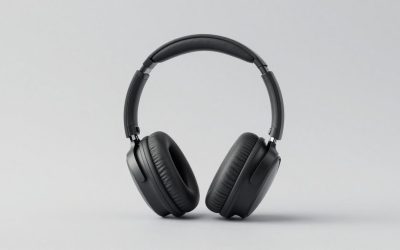
 Razer BlackShark V2 X Gaming Headset: 7.1 Surround3.5 mm7.6 x 6.76 x 3.86 inches0.5 PoundsCheck on Amazon
The Direct Answer
The best surround sound headphones for most homes in 2026 are closed-back wireless models with on-board spatial audio and head tracking — the Sony WH-1000XM series, the Bose QuietComfort Ultra Headphones, and the Apple AirPods Max are the three that most people should shortlist first, because they produce convincing front-channel placement without a receiver, an external DAC, or a cable running across the living room floor. If gaming is the priority rather than film, the SteelSeries Arctis Nova Pro Wireless and the Astro A50 X do more with positional cues than any music-first headphone, because they decode the game engine’s own object data instead of upmixing a stereo signal after the fact. If you want the single most convincing cinema experience available without building a treated room, a dedicated processor system such as the JVC XP-EXT1 or the Smyth Realiser A16 beats every headphone-side implementation, at a price and complexity that most households will not want.
Everything below explains why those picks land where they do, and — more usefully — how to work out which one fits your room, your seating, and your source devices.
Razer BlackShark V2 X Gaming Headset: 7.1 Surround Sound - 50mm Drivers - Memory Foam Cushion - For PC, PS4, PS5, Switch - 3.5mm Audio Jack - Black
Chosen because it specifies 50mm Drivers and Memory Foam Cushion.
View on Amazon
Corsair HS65 Surround Wired 3.5mm PC PS5 Xbox Switch Gaming Headset – Black
Chosen because it specifies Black.
View on Amazon
HyperX Cloud II Gaming Headset - 7.1 Surround Sound - Memory Foam Ear Pads - Durable Aluminum Frame - Multi Platform Headset - Works with PC, PS4, PS4 PRO, Xbox One, Xbox One S - Red (KHX-HSCP-RD)
Chosen because it specifies 7.1 Surround Sound and Memory Foam Ear Pads.
View on AmazonWhat Virtual Surround Actually Does
Every “surround” headphone on the market is doing one of two things, and the distinction determines almost everything about how it sounds.
The first method is object-based decoding. A game console or a PC sends the headphone a stream of audio objects with positional metadata — a helicopter at 40 degrees left and 15 degrees above, a footstep behind and to the right. The headphone (or the software driving it) then renders each object into a stereo signal using a head-related transfer function, or HRTF. This is what PlayStation 5’s Tempest 3D AudioTech does, what Dolby Atmos for Headphones does on Xbox and Windows, and what DTS Headphone:X does on PC. It is genuinely spatial information, and it survives the trip to your ears.
The second method is upmixing. A stereo or 5.1 signal is fed through an algorithm that pushes certain frequencies out of phase between the left and right channels, creating the illusion that some content sits outside your head. This is what most “7.1 surround” buttons on budget headsets do, and what Creative’s Super X-Fi and various TV-mode spatializers do to stereo music and film soundtracks. It can be surprisingly effective on film dialogue and ambient effects. It cannot invent a rear channel that was never in the mix.
Neither method is inherently better. What matters is whether the source you actually use supports the first one. If you watch films from a streaming app on a smart TV over Bluetooth, you are almost certainly getting the second. If you play on a PS5 or a Windows PC, you can usually get the first.
The HRTF Problem Nobody Mentions in the Marketing
An HRTF is a mathematical model of how your head, ears, and torso filter sound arriving from a given direction. The catch: it is your head, ears, and torso. Generic HRTFs are averaged from measurement data, and roughly a third of listeners get poor results from any given generic profile — most commonly front-back confusion, where a sound intended to be in front of you appears to be behind you, or vice versa.
This is why head tracking matters so much more than raw processing quality. When the headphones know which way your head is turned, they can rotate the sound field around you, and your brain resolves front-back ambiguity within a second or two of moving. A head-tracked generic HRTF almost always outperforms a static personalized one for film and games, which is why the AirPods Max, the Bose QuietComfort Ultra, the Sonos Ace, the JBL Quantum 910 Wireless, and the Audeze Maxwell all include it, and why the cheaper “7.1” headsets that lack it feel flat by comparison.
Some systems let you personalize: Sony’s 360 Reality Audio can be set up with photographs of your ears through its app, and a few PC solutions offer a short listening test that picks between several HRTF profiles. Personalization helps. It is not a substitute for head tracking.
Positional Accuracy: The Four Cues That Decide It
Positional accuracy is not one property. It is four, and they fail independently.
- Azimuth (left-right). The easiest cue, and the one every headphone gets roughly right. Errors show up as a “three-blob” effect — hard left, centre, hard right — rather than a smooth arc.
- Elevation (up-down). Driven mostly by the shape of your outer ear. This is where cheap implementations collapse; overhead effects in an Atmos mix either float convincingly above you or smear into the front channels.
- Front-back. The hardest cue and the most commonly broken. Without head tracking, a large share of listeners hear a front-centre sound as coming from inside or behind the head.
- Distance. Determined by the ratio of direct sound to reverberation, plus high-frequency rolloff. Headphones reproduce almost no natural reverb, which is why everything sounds like it is happening two inches from your eardrums. Adding crossfeed and a small amount of simulated room reverb — which most good spatial processors do — is what makes a sound field feel like it exists outside your skull.
Open-back headphones have a structural advantage on distance and externalization, because they leak sound and let your brain keep some awareness of the real room. Closed-back headphones with active noise cancellation have the opposite trade-off: better isolation, worse externalization. If you listen in a quiet room and want the widest, most speaker-like stage, an open-back pair fed by a good spatial processor will beat a flagship noise-cancelling model. If you listen next to a running dishwasher, it will not.
Connection Types and the Latency Question
This is the single biggest compatibility decision, and it is the one buyers most often get wrong. A headphone with brilliant spatial processing is useless for film if the audio arrives 200 milliseconds late.
| Connection | Typical end-to-end latency | Best for | Watch out for |
|---|---|---|---|
| Wired analogue (3.5 mm / 6.35 mm) | Under 5 ms | Critical listening, studio work, PC with a DAC | Cable length — most ship with 1.2 m or 3 m; 3 m rarely reaches a sofa |
| Wired digital (USB-C / USB-A) | 5–15 ms | PC, PS5, Mac; on-board DAC and spatial processing | Some models lose spatial features when running wired |
| 2.4 GHz dongle | 20–45 ms | Gaming, TV with a USB transmitter | Occupies a USB port; dongles are model-specific |
| Bluetooth with aptX Low Latency / LC3 | 40–70 ms | Casual TV viewing, phone and tablet | Both ends must support the codec; many TVs do not |
| Bluetooth AAC / SBC | 150–220 ms | Music, podcasts, audiobooks | Visible lip-sync error on film; most TVs have a manual audio delay slider to compensate |
| RF (2.4/5.8 GHz base station) | 15–30 ms | TV in a fixed seat, long range through walls | Base station needs mains power and an optical or analogue feed |
A useful rule: anything under about 40 ms total is imperceptible for lip sync. Between 40 and 80 ms, most viewers notice nothing on film but sensitive gamers will feel a delay in competitive shooters. Above 100 ms, film dialogue visibly desynchronizes, and most televisions offer an audio-delay adjustment in the sound menu specifically to push the picture back into line.
Note the double-counting problem. If your source applies Atmos processing (adds 20–40 ms), then sends it over standard Bluetooth (adds another 150 ms), you are well past the threshold. The fix is either a wired connection, a 2.4 GHz dongle, or a base-station RF system — not a more expensive headphone.
The Room and Furniture Reality Check
Headphones are usually bought because of a room problem, so it is worth measuring the room before you measure the headphones.
Seating distance. In a typical living room, the sofa sits 8–10 ft (2.4–3.0 m) from the television. Most headphones ship with a 1.2 m cable and most premium models include a 3 m cable — which means a wired setup reaches the sofa only if you sit at the very front edge, or run an extension. If you are buying wired headphones for film, budget for a 3 m cable at minimum, or place a small DAC or headphone amp on the side table and run a longer optical or USB cable from the TV instead. Optical cables of 15 ft (4.6 m) are cheap and lossless; a 15 ft headphone cable is not.
Seat height and eye line. Standard sofa seat height is 16–19 in (41–48 cm), which puts most adults’ ears at roughly 40–44 in (102–112 cm) from the floor when seated. That matters if you plan to hang headphones on a stand beside the sofa: a 12 in stand on a 16 in side table puts the headband at 28 in, comfortably below the arm of most sofas, so it will not be knocked off. A stand on the floor beside a low-slung modern sofa will put the cups at ankle height, which is where they get stepped on.
Coffee table clearance. A typical coffee table is 16–18 in (41–46 cm) high, sitting 14–18 in (36–46 cm) in front of the sofa. If you plan to rest a charging case or a headphone amp on the coffee table, check that it is not the piece everyone’s feet land on. Battery cases for spatial headphones are frequently 4–6 in wide and 1–2 in tall; they survive a coffee table far better than they survive a sofa cushion.
Room size and whether you need headphones at all. In a room under about 120 sq ft (11 m²) — a small apartment living room, say 10 x 12 ft — a soundbar at reasonable volume will be heard clearly in the next room and through a shared wall. This, not audio quality, is why most people in apartments buy surround headphones. Above roughly 250 sq ft (23 m²), a modest 5.1 speaker system at low volume produces better positional accuracy than any headphone, and the headphones become a night-time-only tool. If you are somewhere in between, headphones are the pragmatic choice and will stay that way.
Doorways and storage. Standard interior doorways are 30–36 in (76–91 cm) wide. That is not a headphone problem, but it is a furniture problem: if your listening chair is a recliner that needs 6 in of rear clearance to recline and 20 in of front clearance to extend the footrest, and your room is 10 x 12 ft with a sofa already in it, you may not have the 5 ft of depth the recliner needs. Measure the recline footprint before you buy the chair, because the headphones will fit anywhere.
Comfort: The Numbers That Actually Predict It
Comfort is usually described in adjectives. It is better described in grams and millimetres.
| Spec | Comfortable range | What happens outside it |
|---|---|---|
| Total weight | 240–320 g | Above ~350 g, most people feel it after 90 minutes; above 450 g, the crown of the head aches |
| Clamping force | Moderate, ~3–5 N | Too light and the bass leaks and the headphone slides; too tight and you get jaw and temple pressure within 30 minutes |
| Ear pad internal depth | 20–25 mm | Under 18 mm, the driver or its grille touches the ear — the most common cause of “these hurt after an hour” |
| Ear pad opening height | At least 60 mm | Smaller openings press on the outer ear; the pads must clear the helix, not sit on it |
| Pad foam density | Medium — memory foam over a firmer base | Soft-only foam compresses and collapses the seal within months; hard-only foam does not conform and leaks bass |
| Headband pressure area | Wide, with a suspension strap | Narrow bands concentrate force and leave a hot spot on the crown |
Two structural notes. First, planar magnetic drivers — used in the Audeze Maxwell, the HiFiMan Sundara, and the Sony Pulse Elite — are physically large and heavy, which is why planar headphones tend to sit in the 370–500 g range. They buy you faster transient response and cleaner positional cues, and they cost you neck comfort on long sessions. Second, active noise cancellation adds roughly 20–40 g of electronics and battery over a passive equivalent, but it also lets you listen at a lower volume in a noisy room, which reduces fatigue in a different way. In a household with a dishwasher, a heat pump, or a road outside, ANC wins the comfort argument despite the weight.
Microphone Quality: Separating Three Different Things
“Microphone quality” means different things depending on whether you are on a work call, in a game lobby, or recording.
- Boom microphones on gaming headsets sit 1–3 cm from the mouth. That proximity gives them a large signal-to-noise advantage over anything built into an earcup, and it is why a cheap boom mic usually sounds better on a call than an expensive earcup array. Look for a cardioid or bidirectional pickup pattern, a sampling rate of at least 16 kHz for voice (48 kHz if you also record), and a physical mute — flip-to-mute or a button that produces a click you can feel. Software mutes fail silently.
- Beamforming earcup arrays on the Sony WH-1000XM series, the Bose QuietComfort Ultra, the AirPods Max, and the Sonos Ace use multiple microphones and phase cancellation to reject surrounding noise. In a quiet room they are excellent. In a room with a television playing, they degrade noticeably, because the algorithm cannot fully separate your voice from a competing source at similar volume and similar distance.
- Detachable boom modules are the best compromise for a home office, but they add a connector that wears out. If you take calls four hours a day, a headset with a permanently attached boom and a replaceable cable is more durable than a modular one.
One practical measurement: the microphone’s self-noise floor. A headset that produces audible hiss between sentences is usually running an analogue gain stage that is too hot. There is no published spec for this on most consumer models, but it correlates strongly with price in the gaming segment and hardly at all in the music segment.
Platform Compatibility Matrix
| Platform | Spatial technology available | Head tracking? | Practical notes |
|---|---|---|---|
| PlayStation 5 | Tempest 3D AudioTech, built in, no licence needed | No (headphone-side only) | Works with almost any wired headset via the controller jack or USB; quality depends on the headphone, not the console |
| Xbox Series X/S | Dolby Atmos for Headphones or DTS Headphone:X, via a one-off app purchase | Only on headsets with their own tracking | Some headsets include an Atmos licence in the box; check before buying twice |
| Windows PC | Windows Sonic (free), Dolby Atmos, DTS Headphone:X | Headset-dependent | Windows Sonic is free and adequate; Atmos is a paid upgrade and measurably better on elevation |
| macOS | Spatial Audio with head tracking on supported Apple and Beats models | Yes, on supported models | Works best with Apple Music and Apple TV content; other apps vary |
| iPhone / iPad | Spatial Audio with dynamic head tracking | Yes | Personalized HRTF can be set up with a Face ID scan of your ears |
| Android | Vendor-specific; Sony 360 Reality Audio, JBL Spatial, Samsung | On selected models | Fragmented; assume no spatial processing unless the headphone app provides it |
| Smart TVs (Bluetooth) | Usually none — stereo only | No | Most TVs default to SBC or AAC; expect 150–200 ms latency and no spatial layer |
| Nintendo Switch / Switch 2 | Stereo only over Bluetooth | No | Use a 2.4 GHz dongle or wired connection if you care about timing |
The Picks
Sony WH-1000XM5 and its current successor — best all-rounder for film and music
Sony’s flagship noise-cancelling headphone remains the default recommendation for a household that wants one pair to do everything: films at night, music during the day, calls at the desk, and a plane twice a year. It weighs around 250 g, which is at the light end of the flagship class, and the ear pads are deep enough that most adults can wear it for a three-hour film without pressure on the ear itself.
The spatial story is 360 Reality Audio, which Sony implements on the headphone side for supported streaming content and via head tracking on the newest generation. The processing is good rather than exceptional on elevation, and it works best with content mixed for it. What makes the Sony the default is not the spatial engine — it is that everything else is competent. The microphone array is genuinely usable for work calls, the noise cancelling is among the best available, and the app exposes an equalizer, a five-band plus clear-bass control, and a room-feel setting that adds simulated reverb and does more for externalization than any other single toggle in the app.
Expect to pay in the region of $300–$450 depending on generation and sales period. The main limitation is that it is a closed-back, noise-cancelling design: the soundstage is wide but the image is inside your head by default, and only the room-feel setting pushes it out.
Bose QuietComfort Ultra Headphones — best immersive mode out of the box
Bose’s Immersive Audio is the most immediately convincing spatial mode on a mainstream headphone. It applies to any content, not just specially mixed tracks, and it uses head tracking to keep the stage anchored in front of you as you turn. In a side-by-side with most competitors, the Bose puts a stereo recording outside your head more reliably and with fewer artefacts.
The trade-off is tonal. Immersive mode adds a mild colouration and, on some material, a slight softening of the low end. Many listeners leave it off for music and on for film, which is exactly the right way to use it. Weight is around 250 g, the pads are generous, and the clamping force is moderate — this is one of the few flagship headphones that people with larger heads rarely complain about. Battery life is in the low twenties of hours with immersive mode engaged, so budget a nightly charge if you watch a lot.
Rough market range: $350–$450.
Apple AirPods Max — best if you live inside Apple’s ecosystem
Spatial Audio with dynamic head tracking on the AirPods Max is the most seamless implementation available, because it is handled by the operating system rather than an app. Personalized spatial audio, set up with a scan of your ears, measurably improves front-back accuracy compared with the generic profile, and the head tracking is fast enough that the field does not swim when you move.
The cost is weight. At around 385 g, this is a heavy headphone, and the stainless steel and aluminium construction that makes it feel expensive is exactly what makes it tiring after a couple of hours. The clamping force is on the firm side and the mesh canopy spreads load well, but a long film will still make itself known. If you wear glasses, the combination of firm clamp and metal frame is the most likely source of discomfort in this group.
Rough market range: $450–$550. The USB-C revision is the one to look for. It is a poor choice for Xbox or PC gaming, and an excellent one for an Apple TV in a shared living room.
Sonos Ace — best for a Sonos household
The Ace exists to do one thing unusually well: take the front left, centre, and right channels from a Sonos soundbar over a proprietary wireless link and render them to the headphone with head tracking, so you can watch a film at full volume after everyone else has gone to bed without waking the house. That handoff is instant and latency is low enough that lip sync is a non-issue.
As a general headphone it is competent rather than class-leading — around 310 g, comfortable, with good noise cancelling and a clean, slightly polite tuning. As a night-time television tool in a Sonos home it is close to unbeatable, because nothing else integrates with the soundbar you already own. Rough market range: $350–$450.
SteelSeries Arctis Nova Pro Wireless — best for PC and console gaming
The Nova Pro Wireless is the most complete gaming package on the market. The base station handles two USB sources plus a 3.5 mm line-in and a Bluetooth device simultaneously, so you can be on a work call, listening to a game, and hearing your phone, all at once. It ships with two hot-swappable batteries, which solves the single biggest annoyance in wireless gaming headsets — the charging cable.
Spatial audio comes from SteelSeries Sonar on PC, which offers a parametric EQ, a 10-band graphic EQ, and a spatial mode with adjustable width. On PS5 the console’s Tempest engine does the work; on Xbox you need the Atmos licence. The 360-degree spatial audio is generic-HRTF based with no head tracking, so front-back accuracy is good but not class-leading. Weight is around 335 g, which is manageable, and the ski-goggle suspension band distributes it well. Rough market range: $300–$380.
Astro A50 X — best for a living-room console setup
The A50 X is built around an HDMI-passthrough base station that sits between your console and your television. That single design decision makes it the cleanest option for a living room, because it captures the console’s audio before it reaches the TV and sends it wirelessly with very low latency, while still passing 4K video through untouched. It supports PlayStation, Xbox, and PC from one base.
It uses Dolby Atmos on Xbox and Windows and Tempest on PS5, so the spatial decoding is done by the platform rather than by Astro’s own algorithm — which is the right answer, because first-party object rendering beats any third-party upmix. Weight is around 360 g and the headband is fabric-wrapped, which helps. The boom microphone is one of the better ones in the category. Rough market range: $350–$400.
Audeze Maxwell — best positional accuracy under $400
The Maxwell uses 90 mm planar magnetic drivers, which is an unusual choice in a gaming headset and the reason it sounds the way it does: fast, clean, and unusually precise on directional cues. It supports Dolby Atmos on Xbox and Windows, Tempest on PS5, and a virtual surround mode over USB-C. Battery life is exceptional — measured in many tens of hours rather than tens.
The price of all that is weight, at roughly 490 g, which puts it firmly in the “fine for two hours, heavy for five” category. If you have neck or shoulder issues, this is not the headset for you, however good it sounds. It is also a closed-back design, so externalization depends entirely on the processing. Rough market range: $300–$380.
Sony Pulse Elite — best value spatial headset for PS5
The Pulse Elite is Sony’s own PlayStation headset, and it is the only one that uses the console’s Tempest 3D AudioTech with a driver designed in tandem with it. It uses planar magnetic drivers, supports lossless audio over the PlayStation Link dongle, and has a retractable boom microphone. Latency over PlayStation Link is low enough that competitive players will not notice it.
At roughly 315 g it is comfortable for long sessions, and at around $150 it undercuts everything else in this list while outperforming most of it on PS5 positional accuracy specifically. It is not the right choice for Xbox or for music listening — its tuning is tuned for games and its spatial features are console-bound. But for a PS5 in a living room, it is the value pick by a wide margin.
Sennheiser HD 560S — best wired open-back for Atmos on a budget
If you listen in a quiet room and your source is a PC or a console with a decent DAC, an open-back wired headphone beats every closed-back noise-cancelling model on soundstage. The HD 560S is the reference point here: around 240 g, open-back, a nominal 120 ohm impedance that most motherboards and controllers can drive adequately, and a neutral tuning that lets spatial processing do its job without fighting the headphone’s own colouration.
Pair it with Dolby Atmos for Headphones on Windows and the front-back accuracy is better than any wireless gaming headset, because there is no codec, no battery, and no additional digital stage in the path. What it lacks is a microphone, isolation, and any head tracking. Rough market range: $180–$250. The Philips SHP9500 sits below it at roughly $70–$90 and gets you most of the way, with a slightly brighter top end and a lighter build.
HiFiMan Sundara and Edition XS — best soundstage under $500
Planar magnetic open-backs take the open-back advantage further. The Sundara, at around 370 g, and the larger Edition XS deliver a wider, more speaker-like image than any dynamic open-back at the price, and they respond unusually well to crossfeed and room-simulation processing because they have almost no resonance of their own to smear the effect. Neither is a practical television headphone — both are wired, both leak heavily in and out, and both want more amplifier than a controller jack provides.
As a desk-based film and music setup with a modest DAC/amp, they are the best positional accuracy you can buy without going to a dedicated processor. Rough market range: $300–$500.
JVC XP-EXT1 — best dedicated cinema processor system
The XP-EXT1 is not really a headphone in the ordinary sense. It is a 7.1.4 processor in a box with a wireless headphone, and it applies a personalized HRTF derived from photographs of your ears, plus head tracking, to a genuine 7.1.4 decode. It handles Dolby Atmos, DTS:X, and conventional surround, and it is the only consumer system at this price that convincingly places height effects above the listener.
It costs roughly $900–$1,200 and it requires an HDMI connection to your source, which means it goes in the equipment chain rather than on your head. Setup is fiddly, the app-based ear measurement is slower than it should be, and the headphone itself is merely good. But on positional accuracy — particularly elevation and front-back — nothing else at consumer prices comes close. If film is the entire point of the purchase and you have a dedicated seat and a source with HDMI out, this is the answer.
Smyth Realiser A16 — the reference, for a very small audience
The Realiser A16 measures your actual head with microphones placed in your ears, in your actual room, using your actual speakers, and then reproduces that exact transfer function over headphones. It supports up to 24 channels, Dolby Atmos, DTS:X, and Auro-3D, and it is the only consumer product that gets genuinely close to indistinguishable-from-speakers performance.
It costs roughly $4,000 and up depending on configuration, it has a long lead time, and the setup process takes hours. It is included here because it defines the ceiling: when reviewers say a headphone’s spatial audio is “good for a headphone,” this is the standard they are hedging against. Almost nobody should buy one. The people who should — professional mixers, and enthusiasts who have already spent more on speakers than on their car — will already know why.
Sennheiser RS 195 — best RF system for a fixed seat and a television
Radio-frequency systems with a base station solve a problem no Bluetooth headphone solves well: latency and range. The RS 195’s base station takes an optical or analogue feed from the television, charges the headphone on the stand, and transmits with latency low enough that lip sync is a non-issue, through walls, at ranges well beyond Bluetooth. It includes a speech-mode enhancement and a basic surround mode for film.
The headphone itself is around 380 g with a large, over-ear fit that suits listeners who find modern flagships too tight — it is a design aimed at television watching over long periods rather than critical listening. Rough market range: $250–$350. If you have a fixed chair, a television, and a partner who goes to bed earlier than you do, this is a more sensible purchase than any flagship noise-cancelling model.
Audio-Technica ATH-M50x and Beyerdynamic DT 770 Pro — best closed-back wired workhorses
Neither has spatial processing, and both are worth mentioning because they are the most reliable way to get predictable, isolating, wired sound for under $200. The M50x, at around 285 g, folds flat for storage and has a slightly boosted low end that flatters film. The DT 770 Pro, at around 270 g, has a brighter, more analytical top end and famously deep ear pads that clear almost any ear. Both benefit enormously from a spatial processor on the source end — Atmos on Windows, Tempest on PS5 — and neither adds any latency of its own.
Rough market range: $150–$200 for either. If you are building a desk setup with a DAC/amp and want a closed-back pair for late nights, this is the value pairing.
Shure AONIC 50 Gen 2 and Jabra Evolve2 85 — best for calls in a shared house
If the headphone’s main job is work calls, the priorities invert. Microphone array quality, comfort over an eight-hour day, and the ability to connect to a computer and a phone simultaneously matter more than spatial audio, which most conferencing software does not use anyway. The Shure AONIC 50 Gen 2 is built for this: a well-tuned closed-back with a strong microphone and a wired mode that works without power. The Jabra Evolve2 85 goes further with a boom microphone and certified compatibility with the major conferencing platforms.
Both are around 340 g and both are comfortable for a full working day. Rough market range: $250–$400.
Yamaha YH-L700A — the odd one out, and worth knowing about
Yamaha’s approach to spatial audio is unusual: it uses head tracking and a “3D sound field” mode that works on ordinary stereo content, plus a listening-optimizer that measures how the headphone sits on your head and compensates for leakage. It supports both Bluetooth and a wired connection, and the spatial mode works on any source rather than only supported content.
It is around 330 g and roughly $300–$400. It is not the best at any single thing, but it is the most source-agnostic spatial headphone in this list, which makes it a reasonable choice for someone with a mixed collection of devices and no interest in a platform ecosystem.
Creative Sound Blaster GC7 and Super X-Fi — the processor route
Worth flagging because it changes the economics. Instead of buying a new headphone, you can buy a small DAC/amp with Super X-Fi — a headphone holography technology that applies a personalized HRTF derived from a photograph of your ears — and use it with headphones you already own. It supports optical, USB, and Bluetooth inputs, and it has a microphone input with its own processing.
Rough market range: $130–$200. This is the cheapest path to a genuinely personalized HRTF, and if you already own a decent wired headphone it is a better use of money than a mid-range spatial headset. The limitation is that it has no head tracking, so front-back accuracy depends entirely on how well the personalized profile matches your hearing.
Decision Matrix: Match the Situation, Not the Spec Sheet
| Your situation | What matters most | What to choose | Rough budget |
|---|---|---|---|
| Small apartment, shared walls, film after 10 pm | Isolation, low latency, head tracking | Closed-back ANC flagship with immersive mode and head tracking; a soundbar is not an option here | $300–$450 |
| Renter, moves every year or two | Durability, no installation, no HDMI chain | Wireless closed-back with a hard case; avoid processor systems that need a permanent equipment stack | $250–$400 |
| Kids and pets in the house | Replaceable pads, no exposed cable, cheap enough to lose | Mid-range wired or wireless with user-replaceable ear pads; skip open-back (leaks sound both ways) | $150–$300 |
| Neck, shoulder, or jaw pain | Weight under 300 g, light clamp, deep pads | Avoid planar magnetics and the heavier flagships; look at the lightest ANC models and RF television headphones | $200–$350 |
| Wear glasses | Low clamping force, soft pad walls | Fabric or hybrid pads beat leather; avoid firm-clamping metal-frame designs | $200–$400 |
| Dedicated seat, television, fixed room | Latency, range, comfort over hours | RF base-station system, or an HDMI-passthrough console base | $250–$400 |
| Competitive gaming on PC | Positional accuracy, low latency, microphone | 2.4 GHz gaming headset with platform-side Atmos or Tempest; head tracking is a bonus, not a need | $150–$380 |
| Film is the whole point and budget is not | Elevation accuracy, personalized HRTF | Dedicated 7.1.4 processor system with ear measurement | $900–$4,000 |
| Music first, film second | Tuning, comfort, wired option | Open-back wired with a spatial processor at the source | $200–$500 |
| Work calls all day, film at night | Microphone array, all-day comfort, multipoint | Business-oriented ANC headset with a wired mode | $250–$400 |
What Wears Out First
Headphones fail in a predictable order, and knowing it changes what you buy.
- Ear pads, first and always. Foam loses its resilience in 12–24 months of daily use, especially in a warm room or with sunscreen and hair products. The seal degrades, bass drops, and noise cancelling gets worse because the ANC feedback loop depends on a consistent seal. Replaceable pads are the single most valuable feature on a headphone you intend to keep. Pads that are glued on rather than clipped or stretched over a lip effectively write off the headphone.
- Cables and connectors, second. The failure point is almost never the wire but the strain relief at the plug and the swivel at the earcup. A detachable cable with a standard connector turns a fatal failure into a $15 replacement. This is why a detachable-cable design is worth more than a slightly better driver in the same price bracket.
- Battery, third. Lithium cells in headphones typically retain 70–80% of original capacity after 500 full cycles. At one charge every two days, that is roughly three years. A headphone that runs wired without power will outlive one that does not, and this is a genuine argument for a wired pair plus a processor.
- Headband padding, fourth. The foam or mesh under the band compresses and flattens, and the plastic clips that hold it crack. On metal-frame headphones the band can be bent back; on plastic frames it usually cannot.
- Hinges and sliders, fifth. The folding joint and the size slider are the highest-stress mechanical parts. Metal sliders outlast plastic ones by a wide margin, and a non-folding design with a hard case usually outlasts a folding one that lives in a bag.
- Electronics, rarely. Drivers and circuit boards are the most reliable parts of a headphone. If a headphone dies young, it is usually the battery or a connector, not the driver.
Setting It Up: Getting Real Surround Out of What You Already Own
Before buying anything, it is worth checking whether your current setup is already leaving spatial audio on the table.
- On Windows: right-click the volume icon, open Spatial sound, and check whether Windows Sonic, Dolby Atmos for Headphones, or DTS Headphone:X is enabled. It is off by default. Windows Sonic is free and instantly improves elevation cues. Atmos requires a one-off purchase and is a genuine step up.
- On Xbox: the Dolby Atmos for Headphones app includes a 30-day trial; some headsets bundle a permanent licence. Enable it in Settings, General, Volume and audio output, Headset audio. Without it you are hearing stereo.
- On PS5: Tempest 3D AudioTech is on by default for headphones. Go to Settings, Sound, Audio Output, and confirm Output Device is set to Headphones, then adjust the 3D audio profile — there are five presets and the correct one depends on the shape of your ears, not on your taste.
- On a television over Bluetooth: find the audio delay or lip-sync setting and dial in 150–200 ms of delay on the picture if you cannot get a lower-latency connection. It is a workaround, not a fix, but it makes Bluetooth film watching tolerable.
- Everywhere: turn the volume down before enabling spatial processing. Spatial modes often raise the perceived loudness of effects, and fatigue sets in faster than you expect.
- Room feel and crossfeed: if your headphone or app has a room-simulation or crossfeed control, try it before deciding the headphone has a narrow stage. It is the single most effective setting for moving the image out of your head, and most people never turn it on.
Frequently Asked Questions
Do I need a special headphone for surround sound?
No. Any stereo headphone can reproduce a binaural signal. What you need is a spatial processor — in the console, in the operating system, in a DAC, or in the headphone itself. A better headphone improves the result, but it cannot create spatial information that the source never produced.
Is Bluetooth good enough for surround sound?
For music, yes. For film and games, usually not, because standard Bluetooth codecs add 150–200 ms of latency and most televisions do not apply spatial processing over Bluetooth at all. Use a wired connection, a 2.4 GHz dongle, or an RF base station if timing matters.
Does head tracking actually make a difference, or is it a gimmick?
It makes a real difference, and specifically to front-back accuracy, which is the cue most listeners struggle with. A head-tracked generic HRTF is usually more convincing than a static personalized one, because your brain resolves ambiguity as soon as the field moves with your head.
Can I use gaming headphones for films?
Yes, and often with better results than music headphones, because gaming headsets are built around low-latency wireless and platform-side object decoding. Their weakness is tuning — most are bass-forward and slightly bright — which matters more for music than for dialogue.
How much should I spend?
Around $150–$250 buys a genuinely good spatial gaming headset or a wired open-back plus a processor. $300–$450 buys a flagship noise-cancelling headphone with immersive audio and head tracking, which is the sweet spot for most households. Above $900 you are buying a dedicated processor system, and the returns are real but narrow.
Will spatial audio make me motion sick?
It can, particularly with aggressive head tracking and high volume. If you are prone to it, start with head tracking off and the spatial mode set to a fixed position, then add tracking gradually. Reducing the spatial width setting also helps.
The Bottom Line
For most homes, the decision comes down to three questions in order. First, what is your source? If it is a PlayStation 5 or a Windows PC, you already have object-based audio available and you should buy a low-latency headset that gets out of the way — the Sony Pulse Elite at the value end, the SteelSeries Arctis Nova Pro Wireless or the Astro A50 X above it. Second, what is your room? If it is a small apartment or a shared wall, closed-back noise cancelling with head tracking is worth more than any improvement in driver quality, and the Bose QuietComfort Ultra or the Sony WH-1000XM family is the answer. Third, how serious are you? If film is the reason you are reading this and you have a fixed seat and an HDMI source, the JVC XP-EXT1 is the only consumer system that delivers convincing height and front-back placement — and the Smyth Realiser A16 is the only one that goes further.
Everything else is a variation on those three. Buy for the source, buy for the room, and check the ear pad depth before you check the frequency response — because the headphone you can wear for three hours will always beat the one you take off after forty minutes.