Key takeaways
- Glide and swivel hardware: This is the part that fails first. Look for a sealed ball-bearing swivel base and a glide track that moves without lateral play. Rock the chair side to side in the showroom or read reviews from the 12-month mark, not week one — early reviews never catch mechanism wear.
- Recline style: Manual pushback recliners are quieter, cheaper, and have fewer failure points. Power recliners let you adjust without jostling a sleeping baby, which is genuinely worth the premium if you plan to feed and transfer in the chair. Power units need an outlet within reach, so plan placement first.
- Upholstery you can actually clean: Chenille and performance-woven fabrics resist abrasion and hide wear better than smooth velvet, which shows pressure marks and pet hair. Bouclé looks superb but its looped face snags on Velcro and nails. Whatever you pick, check whether cushions have removable covers.
- Certifications and off-gassing: A nursery is a small room with a small occupant. GREENGUARD Gold certification means the chair has been tested for low chemical emissions; FSC certification covers responsible wood sourcing. Both are worth prioritizing when the chair sits three feet from a crib.
- Footprint and recline clearance: Measure the wall clearance a full recline needs, plus the swivel radius. Oversized models are the ones people love most for sleeping in and regret most in a 9×10 room. Compact models trade nap comfort for door swing.
What's inside
Spend enough seasons speccing porch swings and deep-seat gliders and you develop a bias: a chair lives or dies by its mechanism, not its cushion. That bias transfers straight to the nursery. A glider recliner takes thousands of cycles in its first year alone, often at 3 a.m., often with a sleeping infant in the balance. Most shoppers focus on how a chair looks in the corner of the room and discover too late that the glide has developed a click, the fabric pills where a forearm rests, or the seat is too shallow to nap in. The furniture that survives outdoor duty earns its keep through joinery, bearing quality, and fabric that shrugs off abuse — and those are exactly the traits worth hunting for indoors.
This guide applies that durability-first lens to the 2026 nursery glider recliner market. We look at swivel and glide hardware, recline styles (manual versus power), upholstery performance under real feeding-and-spit-up conditions, certifications that matter for air quality in a small closed room, and the footprint numbers that decide whether a chair fits beside a crib or blocks the door. Below are the models worth your attention, followed by a buying framework and answers to the questions that come up most.
As an Amazon Associate we earn from qualifying purchases.


How to Choose a Nursery Glider Recliner (2026)
- Glide and swivel hardware: This is the part that fails first. Look for a sealed ball-bearing swivel base and a glide track that moves without lateral play. Rock the chair side to side in the showroom or read reviews from the 12-month mark, not week one — early reviews never catch mechanism wear.
- Recline style: Manual pushback recliners are quieter, cheaper, and have fewer failure points. Power recliners let you adjust without jostling a sleeping baby, which is genuinely worth the premium if you plan to feed and transfer in the chair. Power units need an outlet within reach, so plan placement first.
- Upholstery you can actually clean: Chenille and performance-woven fabrics resist abrasion and hide wear better than smooth velvet, which shows pressure marks and pet hair. Bouclé looks superb but its looped face snags on Velcro and nails. Whatever you pick, check whether cushions have removable covers.
- Certifications and off-gassing: A nursery is a small room with a small occupant. GREENGUARD Gold certification means the chair has been tested for low chemical emissions; FSC certification covers responsible wood sourcing. Both are worth prioritizing when the chair sits three feet from a crib.
- Footprint and recline clearance: Measure the wall clearance a full recline needs, plus the swivel radius. Oversized models are the ones people love most for sleeping in and regret most in a 9×10 room. Compact models trade nap comfort for door swing.
The Best Nursery Glider Recliners of 2026, Reviewed
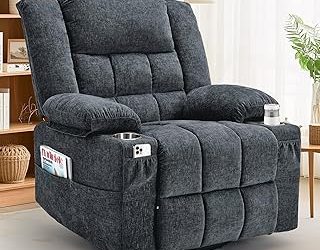
Korser 360° Swivel Rocker Recliner with Massage and Heating
The most feature-dense pick here: massage, lumbar heat, cup holder, and a full 360° swivel over a manual pushback recline. The heat function earns real credit during winter night feedings, and the fabric upholstery handles daily contact better than a slick finish would.
Carter’s by DaVinci Arlo Recliner
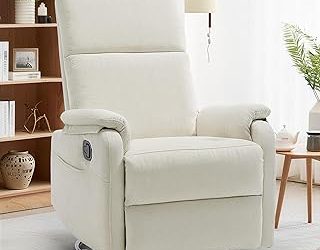
The one I’d hand to a first-time buyer who wants to stop researching. GREENGUARD Gold and FSC certified, with a smooth 360° swivel and a glide that stays quiet, in a cream that reads clean without looking clinical. Conservative styling, sound engineering, minimal fuss.
Power Glider Recliner with USB Charging Port
Power recline is the correct call if you’ll be transferring a sleeping baby, and the integrated USB port removes one more cord from the floor. The bouclé is comfortable and current, though it demands a bit more care around snag hazards than a tighter weave.
Evolur Raleigh Upholstered Manual Glider Recliner
Evolur’s glide mechanism is the standout: long, smooth travel with no detectable slop, paired with GREENGUARD Gold and FSC certification. The Light Sand finish transitions easily to a living room or reading corner once the nursery years are over.
YuuYee Oversized Nursery Glider Recliner
Genuinely oversized, and that’s the point — this is the model you can fall asleep in without regret, with a phone holder for the long stretches. Confirm your clearance measurements first, because the recline and swivel envelope is substantial.
Frequently Asked Questions
Is a glider or a rocker better for a nursery?
Gliders move on a fixed horizontal track, which keeps the base stable and eliminates the pinch and tip risks of a curved rocker runner. For a room where a toddler will eventually be underfoot, gliding hardware is the safer geometry.
Do I need power recline, or is manual fine?
Manual is fine for most people and has fewer things to break. Choose power if you expect to recline and rise repeatedly with a baby asleep on you, since pushback recliners require a body movement that often wakes them.
Which fabric holds up best?
Chenille and performance weaves are the durability leaders. Velvet feels luxurious but marks under pressure, and bouclé is beautiful but snag-prone. Prioritize removable, washable covers over any single fiber type.
Will the chair still work after the nursery years?
The neutral, low-profile models transition best. A cream or sand chair with clean arm lines reads as a living-room recliner; a heavily contoured nursing-specific silhouette does not.
Final Thoughts
For most nurseries, the Carter’s by DaVinci Arlo is the balanced choice — certified for low emissions, quietly engineered, and easy to relocate later. Choose the Evolur Raleigh if glide quality and long-term room versatility top your list, or the Korser 360° Swivel with massage and heating if you want the most comfort features working for you during those long overnight stretches. If you have the floor space and plan to sleep in the chair, the oversized YuuYee is the one to measure for.