Key takeaways
- Can sit unassisted on the floor for at least 1-2 minutes without toppling
- Has strong head control with no head lag when pulled to sit
- Meets both the minimum and maximum weight for the swing seat, not just age
- Has outgrown infant reflux that worsens when semi-reclined and moving
What's inside
The best outdoor swing for 6 month old is a high-back, reclined bucket swing with a 3-point or 5-point harness, a weight minimum of 15 lbs or less, and a T-bar or crotch restraint that prevents slumping, but most pediatricians recommend waiting until your baby can sit unassisted for extended periods before using any outdoor swing.
If your 6-month-old is not yet sitting steadily without support, a standard upright bucket swing is not safe, even with a harness. A reclined infant swing seat with a 30 to 45-degree back angle is the only style designed to support a younger infant’s head and trunk outdoors, and it should only be used for short, supervised periods on a dedicated swing frame or swing set, never hung from a tree branch with rope.

Little Tikes Snug 'n Secure Blue Swing with Adjustable Straps, 2-in-1 for Baby and Toddlers Ages 9 Months - 4 Years
Included for 'Best Outdoor Swing for 6 Month Old: Safe First Swings for Infants' because the listing specifies 2-in-1 for Baby and Toddlers Ages 9 Months and 4 Years, details this guide uses to compare options.
View on Amazon
2-in-1 Snug 'n Secure Swing - Red with White Bar, Ages 9 Months to 4 Years
Included for 'Best Outdoor Swing for 6 Month Old: Safe First Swings for Infants' because the listing specifies Red with White Bar and Ages 9 Months to 4 Years, details this guide uses to compare options.
View on Amazon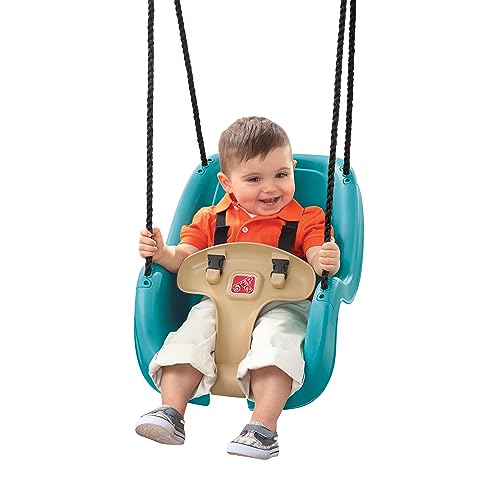
Step2 Infant to Toddler Swing, Baby Outdoor Swing, Backyard Bucket Style Swing Seat, Secure Harness, Outside Weather-Resistant Rope, Attach to Playset, For Toddlers 9 Months -3 Years Old
Included for 'Best Outdoor Swing for 6 Month Old: Safe First Swings for Infants' because the listing specifies Baby Outdoor Swing and Backyard Bucket Style Swing Seat, details this guide uses to compare options.
View on Amazon
Swing-N-Slide WS 4001-G Plastic Infant Swing with Nylon Rope Swing Set Attachment, Green w/Yellow
Included for 'Best Outdoor Swing for 6 Month Old: Safe First Swings for Infants' because the listing specifies Green w/Yellow, details this guide uses to compare options.
View on AmazonWhen Can a Baby Use an Outdoor Swing?
Pediatricians and physical therapists typically advise that bucket swings are appropriate once a baby has achieved independent sitting, usually between 6 and 9 months. The skill matters more than the month. Independent sitting means the baby can hold the head steady, keep the trunk upright without propping on hands, and recover briefly if they tilt, which indicates enough neck and core strength to handle the gentle motion of a swing.
At 6 months, many infants are still tripod sitting or sitting with support. In that stage, an upright 90-degree bucket forces the baby to work hard to stay centered. If they slump sideways or the head flops forward, the airway can be compromised and the harness will not correct posture. A reclined bucket reduces this risk by distributing weight along the back and headrest instead of requiring active sitting balance.
Check these readiness signs before buying:
- Can sit unassisted on the floor for at least 1-2 minutes without toppling
- Has strong head control with no head lag when pulled to sit
- Meets both the minimum and maximum weight for the swing seat, not just age
- Has outgrown infant reflux that worsens when semi-reclined and moving
If your baby does not meet these yet, wait 4-6 weeks and practice floor sitting. An outdoor swing will be used for years, so buying it a month later does not waste the investment.
What Makes an Outdoor Swing Safe at 6 Months
1. Recline Angle and Bucket Shape
For a 6-month-old, look for a bucket seat with a fixed recline, not a vertical toddler bucket. The seat back should be 12 to 14 inches high with side wings and a head support area that cradles rather than perches the baby upright.
Two types are sold as infant outdoor swings:
- Reclined infant bucket with T-bar: One-piece plastic shell with a high recline, leg holes, and a front T-bar that locks to the harness. This is the correct type for the youngest users.
- Convertible 2-in-1 bucket to toddler swing: Starts as a high-back bucket with T-bar and harness, then the T-bar removes for older toddlers. Useful if you want one seat from 6 months to 3 years.
Avoid flat strap swings, fabric glider swings, or open toddler buckets with only a chain and waist strap. They require full independent sitting and offer no head support.
2. Harness Fit: 3-Point vs 5-Point
At 6 months a 3-point harness (two shoulder straps meeting at a crotch buckle) is sufficient if the T-bar is present. A 5-point harness (shoulders, waist, crotch) is more secure for smaller or active babies who try to lean.
Fit check: With the baby in the seat and harness buckled, you should be able to slide only one flat finger under the shoulder straps. If you can fit a fist, the harness is too loose. The crotch strap should sit snug against the body, not gapped, to prevent sliding down or submarining. Straps should be adjustable without rethreading through slots while installed.
3. Weight Minimums and Limits Are Not Optional
Many parents focus on the maximum weight, but the minimum matters more at 6 months. A seat rated for 25 to 50 lbs may be too deep and wide for a 16 lb baby, causing unsafe slumping even if the baby is technically under the max.
| Seat Type | Typical Weight Range | Seat Width (Inside) | Seat Depth | Back Height |
|---|---|---|---|---|
| Reclined Infant Bucket with T-bar | 15–50 lbs | 9–10 inches | 9–10 inches | 13–15 inches |
| Convertible 2-in-1 Bucket | 15–50 lbs (with T-bar), up to 50 lbs (without) | 10–11 inches | 9–11 inches | 12–14 inches |
| Standard Toddler Bucket (upright) | 20–50 lbs | 11–12 inches | 11–12 inches | 11–12 inches |
| Fabric Pod / Nest Swing | 40–150 lbs | 24–40 inches diameter | – | – |
Measure your baby’s seated shoulder height. If the harness slots sit more than 1 inch above the shoulders on the lowest setting, the seat is too large. Wait or choose a different model with lower slots.
Real Space and Clearance You Need Outdoors
An outdoor infant swing is not just the seat. You need safe swing arc clearance and level ground, whether you use a dedicated A-frame or attach to an existing swing set beam.
Use these measurements when planning your yard, patio, or deck:
| Measurement | Minimum Required | Why It Matters |
|---|---|---|
| Front and back clearance from swing seat at rest | 6 feet in front and behind | Prevents collision with fences, walls, or playsets during arc |
| Side clearance from posts or other swings | 4 feet each side / 8 feet between swings | Prevents entrapment and side impact |
| Overhead beam height for infant bucket | 7–8 feet | Ensures gentle arc; too low creates steep, jerky motion |
| Ground fall zone surfacing | 6 feet in all directions over mulch, rubber, or grass, never concrete | Reduces injury from falls or tip-overs |
| Flat, level pad for A-frame legs | 5 x 6 feet footprint, plus fall zone | A-frames can walk or sink on uneven ground |
For small yards or patios, a single-seat metal A-frame with a footprint of about 55 x 62 inches fits where a full swing set will not. If you are renting or need to store the swing, choose a foldable A-frame that collapses to under 8 inches deep and weighs 20 to 35 lbs in the box.
Material and Construction Trade-Offs
Outdoor swings for infants are exposed to UV, rain, and temperature swings. Material choice affects how hot the seat gets, how long hardware lasts, and how much maintenance you will do.
| Material | Pros | Cons | Best For |
|---|---|---|---|
| Rotomolded solid plastic bucket (HDPE) | UV resistant, will not splinter, easy to clean, stays cooler than metal | Can fade after 2-3 seasons; flexible if thin-walled | Infants and toddlers; low maintenance families |
| Fabric / Canvas pod swing | Soft, enclosed feeling for older toddlers | Not for 6-month-olds; holds moisture, mildew risk, no head support | Ages 2+ only, covered porches |
| Powder-coated steel frame and chains | Strong, stable, 150–200 lb frame capacity | Gets hot in sun, can rust at welds if coating chips | Permanent backyard setup |
| Rope / Polypropylene suspension | Lightweight, quiet | UV degrades faster than chain; requires knotted adjustment | Temporary or indoor / covered outdoor use |
| Galvanized or vinyl-coated chain | Durable, pinch-free if coated, precise height adjustment | Heavier, vinyl can crack in extreme cold | Infant buckets where exact seat height matters |
For a 6-month-old, prioritize a solid plastic reclined bucket with vinyl-coated chain or heavy-duty rope with metal quick-links. Check that all hardware is rust-resistant and that chain links are closed. S-hooks that can open under load are a common failure point on low-cost seats.
Choosing By Your Situation
The best outdoor swing for 6 month old depends on your space, how long you want to use it, and who will be pushing.
| Your Situation | Best Choice | Why |
|---|---|---|
| Baby is 6 months, just learning to sit, you want the safest start | Reclined infant bucket with T-bar + 3-point harness on low A-frame | Recline supports trunk, T-bar blocks forward slump |
| You want one purchase to last to age 3-4 | Convertible 2-in-1 bucket | Use with T-bar now, remove later; usually $40–$90 for seat only, $120–$250 with frame |
| Small apartment patio or rental, no permanent set | Foldable single A-frame + reclined bucket | Sets up in 15 minutes, stores flat, no anchors needed on level ground |
| Already own a backyard swing set with open beam | Reclined bucket seat as add-on with adjustable chains | Reuse existing structure; ensure beam is 7–8 feet high and rated to 200+ lbs |
| Grandparents / caregiver with back pain, will push often | Bucket height adjustable to 24–28 inches off ground | Less bending to load baby; higher seat reduces stooping but shortens arc, so push gently |
| Hot, sunny climate with no shade | Light-colored HDPE bucket, vinyl-coated chain, add canopy or shade sail | Dark plastic can reach 140°F+ in direct sun; burns are a real risk |
Assembly, Moving and What Wears First
Outdoor infant swings are simple to assemble, but a few realities are rarely listed:
- Box weight and doorways: A single A-frame ships at 25 to 40 lbs in a 48 x 12 x 10 inch carton. A full swing set frame can be 90 to 150 lbs in two cartons and will not fit through a 30-inch interior doorway.
- Assembly time: A single A-frame plus bucket takes 20 to 40 minutes with two wrenches and a socket driver. A 4-leg wooden set takes 3 to 6 hours with two adults.
- Adjustment: You will re-adjust chain height 2 to 3 times in the first year as the baby grows. Coated chain with carabiners is faster than knotted rope.
- What wears first: The harness buckle and T-bar lock, then the chain coating at the top hook from friction, then UV fading of the plastic. Rinse the buckle monthly with water to keep sand out of the latch.
- Storage: Leaving the plastic bucket out year-round is fine, but bring the harness straps indoors in winter. Cold makes plastic buckles brittle and more likely to crack.
Before first use, hang the seat empty and check: the seat should hang level, not tilted, and should sit 12 to 16 inches off the ground when loaded. Push it empty; it should not twist or wrap the chains. If it does, the beam hooks are too close together – space them at least as wide as the seat, typically 16 to 20 inches apart.
Safety Checklist For Every Push
- Always use the harness and T-bar, even for a quick push. Never allow standing or leaning out to reach the ground.
- Push gently from the front or side, not from behind where you cannot see the face. The arc should be small, under 2 feet forward travel.
- Stay within arm’s reach for a 6-month-old. Do not use the swing for unsupervised napping; if the baby falls asleep and the head flops, remove them to a flat crib.
- Check seat temperature with your hand before placing the baby. Shade the seat when not in use.
- Limit sessions to 10 to 15 minutes. Long periods restrict movement needed for hip and spine development.
- Inspect monthly for cracks in the bucket, loose bolts, rust, and frayed ropes. Discontinue use if the seat is warped or the harness no longer holds tension.
Frequently Asked Questions
Can a 6 month old use a regular park bucket swing?
Most park bucket swings are upright toddler buckets rated from 20 lbs and designed for babies who sit well unassisted. They lack recline and often have only a waist chain. A 6-month-old who cannot sit steadily can slump and is safer in a reclined infant bucket on a low frame at home.
What is the difference between a 3-point and 5-point harness for a baby swing?
A 3-point secures at both shoulders and between the legs. A 5-point adds waist straps for a more snug fit around the hips. Either is safe if the T-bar is used and the harness is tight, but a 5-point is better for a smaller baby under 18 lbs who has space around the hips in the bucket.
How long can a 6 month old stay in an outdoor swing?
Keep outdoor swing time brief and interactive, typically 10 to 15 minutes at a time, once or twice a day. Swings are not a substitute for floor time, tummy time, or sleep on a firm flat surface, and prolonged semi-reclined positioning is not recommended for infants.