Our Top Picks




Concrete is forgiving but hard to keep clean. Its porous texture traps tire marks, oil drips, rust spots from metal furniture, algae in shaded corners, and years of ground-in dirt that a garden hose barely touches. A pressure washer matched to concrete solves that problem by combining high pressure with enough flow to lift grime out of the pores and rinse it away in one pass.
Not every pressure washer is a good fit for a concrete patio, though. Light-duty electric models built for washing cars can take all afternoon on a stained slab, while a machine with strong cleaning units, a turbo nozzle, and surface cleaner compatibility can restore a whole patio in one session. The five models below span that range, from 3,100–3,200 PSI gas machines to capable electric options for smaller patios.
Each pick below lists the specifications that matter for concrete work — pressure, flow, engine or motor, nozzle set, and hose length — with notes on the jobs it suits best.
Disclosure: As an Amazon Associate, we earn from qualifying purchases.
SIMPSON Cleaning MSH3125 MegaShot 3200 PSI Gas Pressure Washer
Specs
- Maximum pressure: 3,200 PSI at 2.5 GPM
- Engine: Honda GC190 premium residential gas engine
- Pump: OEM Technologies axial pump with maintenance-free crankcase
- Hose: MorFlex 1/4-inch x 25-foot hose, non-marring, flexible, and abrasion resistant
- Nozzles: 5 stainless steel quick-connect nozzle tips
- Wheels: 10-inch premium pneumatic tires; item weight 66 pounds
The MegaShot pairs one of the strongest cleaning outputs in this group with an engine known for easy starting, which makes it a natural first choice for large concrete patios and driveways. That 3,200 PSI and 2.5 GPM combination gives the water stream enough force and volume to strip dark tire tracks, weather staining, and embedded dirt from textured concrete without endless repeat passes. The five quick-connect tips include the narrow patterns used for spot work on oil stains and the wider fan patterns used for general slab cleaning.
Build details suit outdoor work on hard surfaces. The MorFlex hose resists kinks and abrasion as it drags across concrete edges, and the pneumatic tires roll over expansion joints and gravel without jarring. Simpson lists the machine for driveways, patios, siding, and paint preparation, so it also covers the fences, steps, and walkways around a patio.
Westinghouse WPX3200 Gas Pressure Washer
Specs
- Maximum pressure: 3,200 PSI at 2.5 GPM
- Engine: 212cc 4-stroke Westinghouse OHV gas engine with low-oil shutdown
- Pump: axial cam pump
- Nozzles: 5 quick-connect tips — 0°, 15°, 25°, 40°, and soap
- Detergent: onboard soap tank for applying cleaner at low pressure
- Wheels: 12-inch never-flat wheels; weight about 66 pounds
The WPX3200 matches the Simpson on headline cleaning power — 3,200 PSI and 2.5 GPM — and adds the convenience of an onboard soap tank, which matters on concrete because detergent dwell time is what loosens oil spots and mildew before the high-pressure pass. Apply cleaner with the soap nozzle, let it sit, then switch to the 15° or 25° tip and rinse the stain out of the pores. The 0° tip concentrates the stream for pinpoint work on rust spots and paint drips, used carefully and kept moving.
Westinghouse builds the machine on a steel frame with never-flat wheels, so it rolls out over rough ground without a flat tire slowing the job down. The engine’s low-oil shutdown protects it if the oil level drops. For patios that share duty with fences, siding, and vehicles, the WPX3200 covers the full range with a single nozzle set.
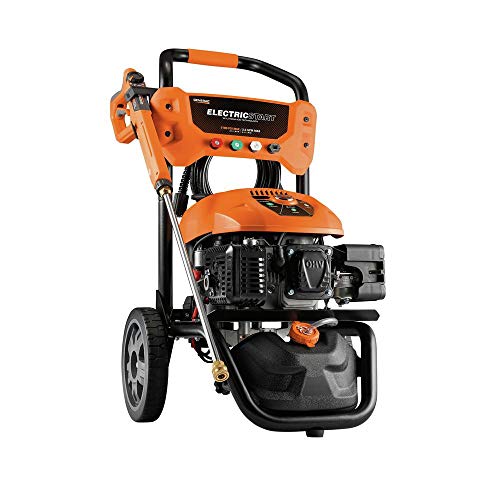
Generac 7132 3100 PSI Gas Pressure Washer with Electric Start
Specs
- Maximum pressure: 3,100 PSI at 2.5 GPM, with a 2,100 to 3,100 PSI operating range
- Engine: Generac 173cc OHV gas engine with lithium-ion electric start and pull-start backup
- Spray gun: PowerDial gun with four settings — car, wood, concrete, and soap
- Pump: aluminum axial cam pump
- Hose: 25-foot PVC hose; quick-change nozzle tips included
- Detergent: onboard 0.5-gallon detergent tank; welded steel frame; weight about 58 pounds
The Generac 7132 stands out for control. Its PowerDial spray gun adjusts pressure at the gun itself, with a dedicated concrete setting that delivers the full force needed for slabs and a soap setting for laying down detergent, so there is no walking back to the machine or swapping tips every time the task changes. That matters on a real patio, where the work shifts between blasting the open slab, easing off near paver joints or furniture, and applying cleaner to a grease spot by the grill.
Starting is the other headline feature: a push-button electric start powered by a removable lithium-ion battery, with a recoil pull as backup — a real convenience for anyone who finds pull cords frustrating. At 3,100 PSI and 2.5 GPM the cleaning output sits right in the concrete sweet spot. Choose this model when ease of use matters as much as raw output.
Sun Joe SPX3000 Electric Pressure Washer
Specs
- Maximum pressure: 2,030 PSI at 1.76 GPM
- Motor: 14.5-amp electric motor with Total Stop System that shuts the pump off when the trigger is released
- Detergent: dual removable detergent tanks for switching between cleaners
- Nozzles: 5 quick-connect spray tips — 0°, 15°, 25°, 40°, and soap
- Reach: 20-foot high-pressure hose, 35-foot power cord with GFCI protection, 34-inch extension wand
- Weight: about 31 pounds
The SPX3000 is the electric option for smaller concrete patios, townhouse slabs, and routine maintenance cleaning rather than heavy restoration. Its 2,030 PSI will not match the gas machines on deep oil stains, but for the seasonal film of dirt, pollen, mildew, and foot-traffic grime that dulls a patio every year, it has enough force — especially when paired with the 15° tip held at a steady distance and a detergent pass first. The dual tanks are genuinely useful here: fill one with a concrete cleaner and keep the second for a general-purpose solution, then swap without rinsing mid-job.
Electric ownership is simpler in every way: no fuel to store, no oil to change, and no pull cord. The Total Stop System extends pump life by running the motor only while the trigger is pulled, which also keeps the work area quieter between passes. At roughly half the weight of the gas models, it stores on a shelf and suits households that clean a modest patio a few times a year.
Kärcher K5 Premium Electric Pressure Washer
Specs
- Maximum pressure: 2,000 PSI at 1.4 GPM
- Motor: water-cooled induction motor for longer service life
- Pump: non-corrosive N-COR pump
- Wands: Vario Power spray wand with twist pressure adjustment, plus a Dirtblaster rotary wand
- Hose: 25-foot kink-resistant hose on an onboard pressurized hose reel
- Detergent: onboard removable detergent tank with adjustable flow dial; weight about 32 pounds
The K5 Premium is the premium electric choice, and its Dirtblaster wand is the reason it belongs in a concrete guide. The Dirtblaster produces a rotating pencil jet that combines the impact of a narrow stream with the coverage of a fan, which is exactly the pattern that scrubs algae, dark staining, and ground-in dirt off concrete and pavers efficiently. For general work, the Vario Power wand adjusts pressure with a twist, moving from a gentle rinse to full force without a tip change.
Kärcher’s water-cooled induction motor is designed to last considerably longer than a standard universal motor, and the N-COR pump resists corrosion. The pressurized hose reel keeps the 25-foot hose stored neatly and pays it out smoothly. Pick the K5 Premium for a medium patio where electric convenience is preferred but stubborn staining still needs a purpose-built tool.
How to Choose a Pressure Washer for Concrete Patios
Start with cleaning units, the simple product of pressure and flow (PSI multiplied by GPM). Concrete is hard and porous, so it rewards both: pressure breaks the bond between stain and surface, while flow carries the loosened dirt away. As a working guide, look for at least 2,000 PSI for light seasonal cleaning of a small patio, and 2,800 PSI or more with 2.3 GPM or higher for large slabs, driveways, and stains that have built up over years. The gas models in this guide sit around 7,750 to 8,000 cleaning units, which is the range where concrete work stops feeling slow.
Decide between gas and electric based on patio size and storage. Gas machines deliver the strongest output and suit big patios and long driveways, but they need oil changes, fuel stabilizer, and ventilated storage. Electric models start instantly, run quietly, and need almost no maintenance, suiting small to medium patios. If the patio is large but a gas engine is unappealing, a premium electric model with a rotary wand closes much of the gap on surface grime.
Pay close attention to nozzles and attachments, because they shape the result as much as the machine does. A 25° fan tip is the everyday choice for concrete slabs, a 15° tip handles stubborn patches, and a 0° tip should be reserved for tiny, tough spots and kept moving to avoid etching. A turbo or rotary nozzle spins a narrow jet in a cone pattern and cuts cleaning time on large flat areas dramatically. For the fastest, most even finish on a big patio, check that the machine accepts a surface cleaner attachment, which glides over concrete and prevents the streaky stripes a wand alone can leave.
Detergent handling deserves a look as well. Oil, grease, and mildew respond far better when a concrete cleaner or degreaser is applied at low pressure and given several minutes to work before rinsing. An onboard tank, like those on the Westinghouse, Generac, and Sun Joe models above, makes that step effortless. Plan the workflow — detergent, dwell, wash, rinse — rather than relying on pressure alone.
Finally, consider the practical details: hose length determines how far the machine can sit from the work, wheel type decides how easily it crosses lawns and gravel, and weight matters if it must be carried up steps. Match the machine to the largest concrete job on the property, and every smaller task becomes easy.
Frequently Asked Questions
How much PSI is needed to clean a concrete patio?
For routine dirt and mildew on a residential patio, 2,000 to 2,500 PSI with a 25° fan tip is enough. Heavily stained concrete, oil spots, and driveway work go faster at 2,800 to 3,200 PSI, especially when flow is 2.3 GPM or higher. Keep the wand moving at a consistent distance of roughly 8 to 12 inches, and let detergent do the chemical work on grease rather than moving the tip closer.
Can a pressure washer damage concrete?
Yes, if the stream is too concentrated or held too close. A 0° tip at close range can etch lines into concrete, and any nozzle can chip soft or already-cracked surfaces and blast out the material between pavers. Use the widest fan pattern that still cleans, start from a distance of about two feet and move closer gradually, and keep the wand in motion. Newer concrete should cure fully — generally at least a month — before its first pressure wash.
Is a surface cleaner attachment worth it for a patio?
For a patio of any real size, yes. A surface cleaner uses a rotating spray bar inside a flat housing to clean a wide path evenly, avoiding the zebra-striping a wand can leave and finishing a large slab in a fraction of the time. It also keeps overspray contained. Check that the attachment’s pressure and flow requirements match the machine and that the connector fits the wand or gun.
Should concrete be treated with detergent before washing?
For oil, grease, rust, and mildew stains, applying a concrete cleaner or degreaser first makes a visible difference. Apply it at low pressure with the soap nozzle or tank, let it dwell for five to ten minutes without drying on the surface, then wash with a fan tip. Plain water handles loose dirt and pollen film, but set-in stains almost always need the chemical step to release from the pores.
Conclusion
The best pressure washers for concrete patios combine strong cleaning units with the right nozzles for flat, porous surfaces. The SIMPSON MegaShot and Westinghouse WPX3200 lead on output for large slabs and driveways, the Generac 7132 adds electric start and pressure control at the gun, and the Sun Joe SPX3000 and Kärcher K5 Premium bring electric simplicity to smaller patios — with the K5’s Dirtblaster wand punching above its pressure figure on stained concrete. Choose by patio size, stain severity, and tolerance for engine upkeep, and a gray, weathered patio can return to its original color in a single afternoon.
More from Amazon
Programs that pair well with the guide above. Offers and eligibility are set by Amazon and may change.
Collect the home and kitchen items you want in one registry that guests can shop from.
Create a wedding registrySet up recurring deliveries of everyday items on eligible products. Terms and savings are set by Amazon.
Explore Subscribe & SaveFree shipping on eligible items, Prime Video and more. Eligible new members can start with a free trial.
Start a Prime free trialAudiobooks and podcasts to listen to on the go. Eligible new members can start with a free trial.
Try Audible freeAs an Amazon Associate we earn from qualifying purchases.