Our Top Picks
 Westinghouse ePX3100 Electric Pressure Washer2300 Max PSI14 x 13.5 x 16.5 inches19.8 poundsCheck on Amazon



A patio works hard all year. Rain drives dirt into the joints between slabs, algae turns shaded corners green, and mud, leaves and barbecue splashes slowly dull the surface. A garden hose can rinse away loose debris, but it rarely lifts the ground-in grime that builds up on concrete, stone, block paving and decking. That is exactly the gap a pressure washer fills: a focused jet of water that scrubs flat surfaces clean in a fraction of the time scrubbing would take.
For everyday patio care, a corded electric pressure washer is usually the sensible choice. Electric models start at the push of a button, run quietly enough for a weekend morning, need no fuel or oil, and store easily in a garage corner or shed. The machines in this guide sit in the homeowner-friendly range, roughly 1,800 to 2,300 PSI, which is strong enough to lift algae, moss and embedded dirt from patio slabs while staying manageable on decking, outdoor furniture and fences when the right nozzle is fitted.
The five washers below cover the main shapes this class takes, from a featherweight carry-around unit to a wheeled open-frame model with a long hose. Each entry lists the specifications that matter for patio work, including pressure, water flow, hose length and the nozzles in the box, so the differences are easy to compare before choosing.
Disclosure: As an Amazon Associate, we earn from qualifying purchases.
Greenworks 2000 PSI Electric Pressure Washer (GPW2003)
Specs
- Maximum pressure: 2,000 PSI
- Water flow: 1.2 GPM
- Motor: 14-amp electric
- Hose: 25-foot kink-resistant high-pressure hose
- Power cord: 35 feet with inline GFCI protection
- Nozzles: four quick-connect tips (25-degree, 40-degree, soap and turbo)
- Frame: open steel frame on 10-inch never-flat wheels, with an onboard soap tank
The Greenworks GPW2003 is built around an open steel frame that keeps the pump and motor easy to reach and gives the whole unit a sturdy, workshop feel. Its 2,000 PSI and 1.2 GPM output sits right in the middle of the electric class, which suits routine patio washing: strong enough to strip algae film and joint dirt from slabs, yet easy to soften with the wider 40-degree tip for timber decking. The 25-foot hose and 35-foot cord combine into generous reach, so the machine can stay parked while the wand covers a medium patio. A turbo nozzle is included for stubborn patches, and the onboard soap tank lets detergent be applied without a separate bottle clipped to the wand.
Westinghouse ePX3100 Electric Pressure Washer
Specs
- Maximum pressure: 2,300 max PSI (1,900 PSI working pressure)
- Water flow: 1.76 max GPM (1.24 GPM working flow)
- Hose: 25-foot easy-coil nylon braided hose
- Soap tank: 20-ounce onboard detergent tank
- Nozzles: five quick-connect tips (0-degree, 15-degree, 25-degree, turbo and soap)
- Wand: pro-style steel extendable wand, 17.5 inches
- Weight: 19 pounds, on four quick-lock wheels with 360-degree steering
- Pump control: Total Stop System, which shuts the pump off when the trigger is released
The ePX3100 takes a different approach to mobility: instead of standing tall on two wheels, it sits low on four small casters that swivel in every direction, so the unit trails along behind the user and resists tipping when the hose is tugged. At 19 pounds and just 16.5 inches tall, it stores on a shelf or in a cupboard rather than claiming floor space. The five-nozzle set is the widest in this guide, and the turbo tip plus the higher flow figure help rinse loosened dirt off slabs quickly instead of pushing it around. A 20-ounce onboard soap tank covers a full patio session with detergent, and the Total Stop System keeps the motor from running whenever the trigger is idle.
CRAFTSMAN 2100 PSI Electric Pressure Washer (CMEPW2100)
Specs
- Maximum pressure: 2,100 PSI
- Water flow: 1.2 GPM
- Hose: 25-foot kink-resistant hose
- Soap tank: integrated onboard soap tank
- Nozzles: three quick-connect tips, including a turbo nozzle
- Wheels: 10-inch wheels for rolling over grass and gravel
- Power source: corded electric, cold water
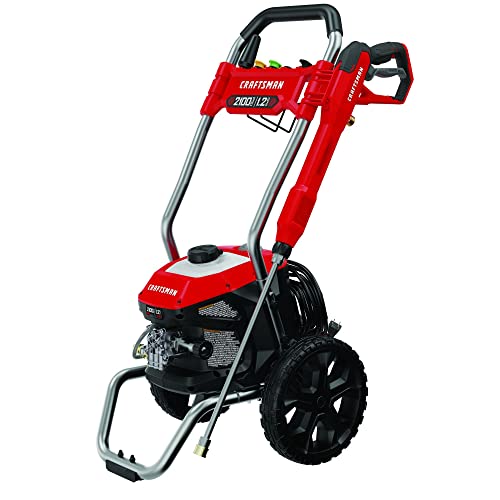
The CRAFTSMAN CMEPW2100 is a conventional upright washer with big 10-inch wheels and a tall handle, a layout that rolls comfortably from a garage, across a lawn and onto the patio without being carried. Its 2,100 PSI output is the second highest here, which gives it extra bite on weathered concrete and block paving where dirt has settled deep into the surface texture. The integrated soap tank feeds detergent through the wand for a pre-soak pass, useful on greasy patches near grills and on green algae that needs a minute to loosen. With a 25-foot hose on board, the washer can stay at the edge of a typical patio while every corner is reached.
Kärcher K3 Power Control Electric Pressure Washer
Specs
- Pressure: 1,800 PSI working pressure (2,100 max PSI)
- Water flow: 1.45 GPM
- Hose: 26-foot kink-resistant hose
- Wands: Vario Power wand with twist pressure adjustment, plus a DirtBlaster wand for hard surfaces
- Trigger gun: Power Control gun with an LED display showing the selected pressure level
- Detergent: 24-ounce onboard detergent tank
- Pump: non-corrosive N-COR pump
- Weight: 12.2 pounds
The K3 Power Control is the lightest machine in this guide and the only one that adjusts pressure at the wand rather than by swapping tips. Twisting the Vario Power wand steps the jet up or down, and the LED display on the trigger gun shows which level is selected, which makes it simple to drop the force before moving from stone slabs to a wooden bench or a fence panel. The second wand, the DirtBlaster, concentrates the jet into a rotating pencil spray for ground-in dirt on concrete and paving. Flow is a healthy 1.45 GPM, higher than most of the class, so rinsing a washed patio goes quickly. At just over 12 pounds with a compact upright body, it is easy to carry between a front path and a back patio and simple to store.
RYOBI 1800 PSI Electric Pressure Washer (RY141820VNM)
Specs
- Maximum pressure: 1,800 PSI
- Water flow: 1.2 GPM
- Motor: 13-amp electric
- Hose: 20-foot high-pressure hose
- Nozzles: three quick-connect tips (15-degree, turbo and soap)
- Weight: 16 pounds
- Dimensions: 12.5 x 10 x 9 inches
The RYOBI 1800 PSI is the compact option, a small cube of a machine that can be carried in one hand and stored on a shelf. That size suits smaller patios, balconies, apartment terraces and anyone who washes outdoor furniture and fences more often than large paved areas. The 1,800 PSI output is the gentlest in this guide, which is an advantage on painted wood, older mortar joints and delicate surfaces where a stronger jet needs careful handling anyway. Three nozzles cover the core jobs: a 15-degree fan for general slab washing, a turbo tip for concentrated grime, and a soap tip for detergent application. The 20-foot hose is shorter than the others here, so plan on moving the unit once or twice across a bigger patio.
How to Choose a Pressure Washer for Patio Cleaning
Start with pressure and flow together rather than chasing the biggest PSI number on the box. Pressure (PSI) describes how hard the jet hits, and flow (GPM) describes how much water moves across the surface to carry dirt away. For routine patio work, somewhere between 1,800 and 2,300 PSI paired with at least 1.2 GPM handles algae, moss, mud and general discoloration on concrete, stone and block paving. Higher flow, like the 1.45 GPM of the Kärcher above, speeds up the rinsing stage, which is where a lot of patio cleaning time actually goes.
Match the machine to the surfaces in the garden. Hard paving tolerates a strong jet, but timber decking, painted furniture, soft stone and older mortar joints can be marked by a concentrated stream held too close. A washer that includes a wide fan tip (40-degree) or an adjustable wand makes it easier to soften the spray for delicate areas, while a turbo nozzle should be kept for bare concrete and stone. If the patio mixes several materials, pressure adjustment at the wand is worth more than a small difference in headline PSI.
Think about reach before anything else, because it decides how often the machine gets moved. Add the hose length and the power cord length together: a 25-foot hose on a 35-foot cord covers most patios from one position, while compact units with 20-foot hoses need repositioning. Wheels matter on rough ground, so look for larger wheels if the washer must cross grass or gravel, and consider a low four-wheeled design if tipping over on uneven slabs is a concern.
Check how detergent is handled. An onboard soap tank is the tidiest arrangement and lets a cleaning solution be sprayed at low pressure, left to loosen algae and grease, then rinsed off. This pre-soak step does much of the real work on a green or greasy patio, so a tank large enough for the whole area, around 20 ounces or more, saves refilling mid-job.
Finally, consider storage and upkeep. Electric washers need little maintenance compared with fuel-powered machines: no oil changes, no stale fuel, just a drained hose and frost-free storage in winter. Compact models under 20 pounds suit shelves and small sheds, while framed models on wheels trade a bigger footprint for easier movement. A total stop system, which switches the pump off whenever the trigger is released, reduces wear and noise during pauses and is worth having for stop-start patio work.
Frequently Asked Questions
How much PSI is right for cleaning a patio?
For most patio slabs, concrete and block paving, 1,800 to 2,300 PSI is a practical range. It lifts algae, moss and embedded dirt without being difficult to control. Use a wide fan nozzle and keep the wand moving on decking, soft stone and older mortar, and reserve turbo nozzles for bare concrete and stubborn patches.
Can a pressure washer damage patio slabs or decking?
Yes, if the jet is too concentrated or held too close. A 0-degree tip or a turbo nozzle at close range can etch concrete, raise the grain on timber and blast out weakened mortar. Keep the wand at least 30 cm from the surface, start with a wide fan tip, and test on a hidden corner before working across the whole area.
Is detergent necessary for patio cleaning?
Plain water handles loose dirt and light algae, but detergent helps on greasy areas near grills and on established green growth. A washer with an onboard soap tank applies the solution at low pressure; let it sit for a few minutes to loosen the grime, then rinse with a fan nozzle. Choose a cleaner that suits the surface and nearby plants.
How often should a patio be pressure washed?
Once or twice a year suits most patios, typically in spring to clear winter algae and again in autumn if leaves and moisture have left the surface slippery. Shaded, north-facing patios grow algae faster and may benefit from an extra wash. Regular sweeping between washes slows the build-up of dirt in the joints.
Conclusion
Every washer in this guide can turn a dull, slippery patio back into a clean surface in a single session; the differences are in size, reach and how pressure is controlled. The Greenworks GPW2003 offers the classic wheeled-frame layout with long hose and cord reach, the Westinghouse ePX3100 adds the widest nozzle set and a follow-along four-wheel base, and the CRAFTSMAN CMEPW2100 brings upright convenience with the second-highest pressure here. The Kärcher K3 Power Control stands out for wand-based pressure adjustment in the lightest body, while the compact RYOBI suits small patios and storage-tight homes. Match the machine to the size of the patio and the mix of surfaces in the garden, and routine cleaning becomes a quick, satisfying job rather than a yearly chore.
More from Amazon
Programs that pair well with the guide above. Offers and eligibility are set by Amazon and may change.
Collect the home and kitchen items you want in one registry that guests can shop from.
Create a wedding registrySet up recurring deliveries of everyday items on eligible products. Terms and savings are set by Amazon.
Explore Subscribe & SaveFree shipping on eligible items, Prime Video and more. Eligible new members can start with a free trial.
Start a Prime free trialAudiobooks and podcasts to listen to on the go. Eligible new members can start with a free trial.
Try Audible freeAs an Amazon Associate we earn from qualifying purchases.