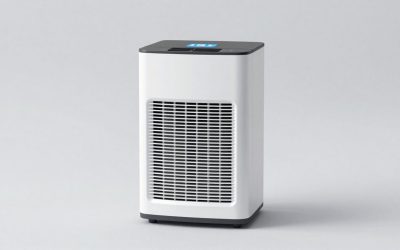
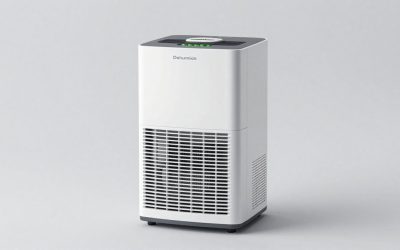
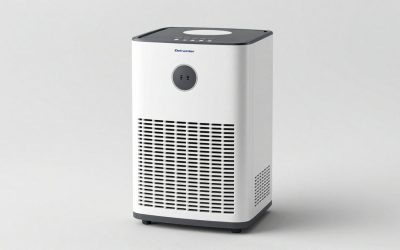
The best overall pick is the ALORAIR Helios MP35 70-Pint Crawl Space Dehumidifier with Pump, with the Moiswell 155 Pint Commercial Dehumidifier as the runner-up. Both attack the root cause of crawl space contamination — standing humidity — rather than treating the symptoms after mold has already taken hold.
Here is the honest framing you deserve before spending money: a UV-C lamp alone will not sanitize a damp crawl space. UV-C only disinfects air and surfaces that pass directly in front of the lamp, and it does nothing to stop the moisture that lets mold, mildew, and wood rot regenerate within days. As someone who spends most of my working life in the transition zone between outdoors and in — decks, porch foundations, vented piers, and the dirt floors beneath them — I can tell you that every crawl space “smell” problem I have solved started with a hygrometer, not a light bulb. The genuine fix is holding relative humidity under 55%, which starves spores of the water they need. This guide covers the five moisture-control units I would actually deploy under a house, when a UV-C add-on makes sense as a secondary layer, and how to size equipment for your square footage.
Our top picks



As an Amazon Associate we earn from qualifying purchases at no extra cost to you.
Quick Comparison
| Product | Best For | Standout Feature | Rating |
|---|---|---|---|
| ALORAIR Helios MP35 (70 Pint) | Sealed and encapsulated crawl spaces | Built-in condensate pump for vertical lift | See card above |
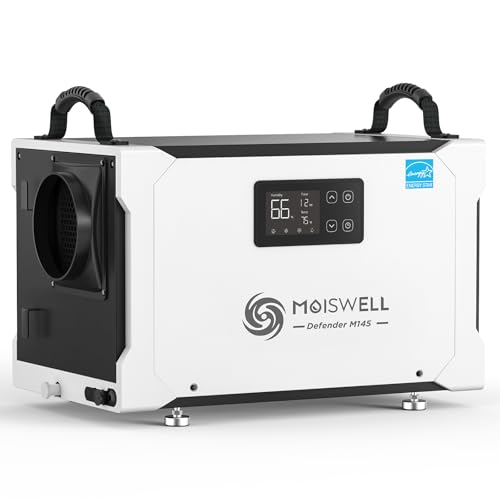
| Moiswell 155 Pint Commercial | High-capacity drying on a budget | 155-pint output with gravity drain hose | See card above |
| LDHTHOPI 145 Pint Commercial | Large or multi-bay crawl spaces | Coverage up to 6,000 sq. ft. plus auto defrost | See card above |
| 145 Pint Commercial Restoration Unit | Active water damage and flood recovery | Memory starting after power loss | See card above |
| LDHTHOPI 145 Pint with Directional Wheels | Contractors moving between sites | Included directional wheel kit | See card above |
How to Choose a UV-C Sanitizing Unit for Damp Crawl Spaces
- Moisture removal first: Match pint capacity to your footprint and dampness. A tight 1,200 sq. ft. crawl space is fine on 70 pints per day; a vented, dirt-floor space in a humid climate needs 145 pints or more.
- Drainage strategy: If your crawl space sits below the exterior grade, you need an integrated condensate pump. Gravity drain hoses only work when there is a lower discharge point outside the vapor barrier.
- Low-temperature performance: Crawl spaces run cold. Auto defrost keeps the coil from icing over and stalling the unit through fall and winter.
- Unattended reliability: Memory starting matters more than any feature on this list. When a summer storm cuts power, the unit should resume on its own instead of sitting idle for three humid weeks.
- UV-C as a secondary layer: Add a UV-C lamp only after humidity is controlled, and mount it in the airflow path near the duct or intake. Never rely on it as your primary defense, and never expose skin or eyes to the lamp.
The Best UV-C Sanitizing Units for Damp Crawl Spaces Reviewed
Best Overall: ALORAIR Helios MP35 70 Pint Crawl Space Dehumidifier
This is the unit I recommend to homeowners with an encapsulated or partially sealed crawl space, because the internal pump pushes condensate up and out without you trenching a drain line. It is purpose-built for the low, awkward clearances that defeat consumer dehumidifiers.
Best Budget: Moiswell 155 Pint Commercial Dehumidifier
Best for anyone who wants maximum extraction per dollar and already has a viable gravity drain path. The 155-pint rating gives you real headroom in a humid Southeastern or Gulf Coast climate.
Best Premium: LDHTHOPI 145 Pint Commercial Dehumidifier
A serious choice for sprawling crawl spaces, walkout basements, or homes with multiple foundation bays, thanks to coverage rated up to 6,000 sq. ft. Auto defrost makes it a genuine year-round installation rather than a summer-only appliance.
Best for Water Damage Restoration: 145 Pint Commercial Restoration Dehumidifier
Built for the aftermath of a burst pipe, a failed sump, or storm intrusion under a porch slab. Memory starting means it keeps drying through breaker trips while you are away from the property.
Best for Contractors and Portability: LDHTHOPI 145 Pint with Directional Wheels
The included wheel kit makes this the practical pick if you rotate one machine between crawl spaces, rental units, or outbuildings. Same 145-pint performance, far less strain moving it across gravel and vapor barrier.
Frequently Asked Questions
Does UV-C actually kill mold in a crawl space?
It inactivates spores that pass directly in front of the lamp at sufficient dose and dwell time. It does not penetrate dust, wood, or insulation, and it will not stop regrowth while humidity stays above 60%.
What humidity level should I target?
Aim for 50–55% relative humidity. Below 50% you risk over-drying framing lumber; above 60% you are effectively running a mold incubator.
Should I seal my crawl space vents?
In most humid climates, yes. Outdoor air hitting cool crawl space surfaces condenses. Encapsulation plus a dedicated dehumidifier consistently outperforms passive ventilation.
Can I leave these units running unattended?
That is exactly how they are designed to operate. Pair continuous drainage with memory starting, then inspect the filter and drain line seasonally.
Final Thoughts
For most homes, the ALORAIR Helios MP35 is the right answer because its integrated pump removes the single biggest installation obstacle in a crawl space. If you need more raw capacity, the Moiswell 155 Pint delivers it affordably, and the LDHTHOPI 145 Pint handles large or multi-bay footprints with year-round auto defrost. Control the water first; treat UV-C as the finishing touch, not the foundation.