Choosing the perfect outdoor furniture is often more complicated than picking out a living room sofa. Indoors, your only enemies are occasional spills and pet dander. Outdoors, your furniture must battle torrential rains, baking UV rays, high winds, and freezing winters. When shopping for metal dining setups, the decision almost always comes down to a classic head-to-head: cast aluminum vs wrought iron outdoor patio chairs.
At first glance, both metals look sturdy, elegant, and ready for your backyard barbecue. However, they behave completely differently under real-world conditions. The way these metals are manufactured dictates how they perform in your yard. We see similar material differences in kitchenware; for example, the lightweight, highly heat-conductive cast aluminum used in the IMUSA Traditional Caldero made in Colombia with Lid, 4.8 Quart (priced at $21.55) or the larger IMUSA 7.5 Quart Traditional Natural Made in Colombia Caldero with Lid for Cooking and Serving (priced at $19.97) showcases how cast metals distribute temperature and resist structural decay. When applied to patio furniture, these metallurgical traits determine whether your chairs will blow away in a storm, rust on a humid afternoon, or scald your legs on a hot summer day.
Our top picks


 SUNCROWN 5-Piece Outdoor Wrought Iron Chairs and
- 🌵Modern Patio Dining Set-Suncrown outdoor dining sets provides…
- 🌵High-Quality Material-The patio furniture set is made from…
- 🌵Ergonomic Design-This outdoor dining set was built with…
As an Amazon Associate we earn from qualifying purchases at no extra cost to you.
As we curate our outdoor living spaces for 2026, finding the right balance between longevity, weight, and style is more critical than ever. Let’s break down the practical differences so you can invest in the right set for your home.
Quick Verdict
If you live in a coastal or highly humid environment and want low-maintenance, rust-free furniture that is easy to rearrange, choose cast aluminum. It is completely impervious to rust and lightweight enough for anyone to move. If you live in an exceptionally windy area, want a heavy-duty chair that will never tip over, and prefer a classic, heavy, solid-metal feel, choose wrought iron. Just be prepared to occasionally touch up the paint to prevent rust.
Side by Side
To help you visualize the core differences, here is a direct comparison of how these two popular patio materials match up across key ownership categories:
| Feature | Cast Aluminum Patio Chairs | Wrought Iron Patio Chairs |
|---|---|---|
| Comfort | Stays cooler in direct sunlight; often contoured to the body during the molding process. | Heats up quickly in the sun; rigid frames usually require thick cushions for long-term sitting. |
| Durability | Highly durable; naturally rust-resistant; will not degrade when exposed to moisture. | Extremely strong and impact-resistant; highly susceptible to rust if the protective coating chips. |
| Price Range | Typically higher upfront ($150 to $400+ per high-quality chair). | Broad range ($40 to $200+ per chair); great budget-friendly multi-piece sets are common. |
| Maintenance | Virtually maintenance-free; requires simple soap-and-water cleaning. | Moderate; requires periodic inspections for rust, paint touch-ups, and seasonal waxing. |
| Space Needed / Portability | Lightweight (10–18 lbs per chair); easy to stack, move, or store in a shed for winter. | Heavy (25–45 lbs per chair); difficult to move frequently; takes up permanent footprint. |
| Aesthetic / Look | Can feature highly intricate, seamless, solid designs or sleek, ultra-modern profiles. | Classic, handcrafted, thin-profile elegance with visible welds and timeless scrollwork. |
| Resale Value | Excellent; holds value well due to lack of corrosion and ease of transport. | Moderate; value depends heavily on the current state of rust and paint wear. |
| Best For | Coastal homes, rainy climates, poolside decks, and homeowners who like to rearrange layouts. | Windy plains, open decks, traditional gardens, and high-traffic family yards. |
Where Cast Aluminum Wins
Cast aluminum is the undisputed king of wet, humid, and coastal environments. Unlike iron, aluminum does not contain iron molecules, meaning it cannot rust. When aluminum is exposed to air, it naturally forms a microscopic layer of aluminum oxide that protects the underlying metal from further oxidation. This makes cast aluminum chairs ideal for poolside placement or salt-air ocean decks where wrought iron would quickly dissolve into orange flakes.
Weight is another major victory for cast aluminum. A typical cast aluminum dining chair weighs between 12 and 18 pounds. This is heavy enough to feel substantial and resist moderate breezes, yet light enough that children or elderly family members can pull their chairs up to the table without straining. If you like to pack your patio furniture away in a garage or basement during the winter months, your back will thank you for choosing aluminum.
Finally, the casting process allows for incredibly detailed, seamless designs. Liquid aluminum is poured into sand molds, meaning manufacturers can create intricate, solid-backed chairs with fluid curves, hollow spaces, and decorative motifs without the need for weak weld points. This process produces a chair that feels unified, solid, and structurally sound.
Where Wrought Iron Outdoor Patio Chairs Wins
Wrought iron’s primary advantage is its sheer, unyielding weight. If you live on an open plain, a high-rise balcony, or a hillside deck that experiences sudden, violent wind gusts, lightweight furniture is a liability. A wrought iron dining chair easily weighs 30 to 45 pounds. It is not going to blow into your swimming pool or over your deck railing during a summer storm.
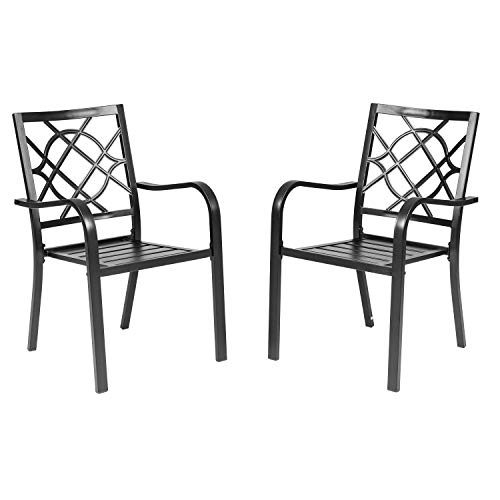
This weight also translates to incredible structural stability. Wrought iron patio chairs have a high weight capacity—often safely supporting 300 to 400 pounds without flexing or bending. If you look at options like the Incbruce 300lbs Patio Chairs Set of 2 Outdoor Dining Chairs (priced at $85.98), you get a heavy, stackable wrought iron frame with armrests designed specifically to handle heavy-duty use poolside or on a hard backyard deck without wobbling.
Wrought iron also wins on traditional, timeless elegance. The hand-forged, slender profiles of wrought iron look right at home in lush, green English gardens or brick-paved courtyards. Multi-piece sets, such as the SUNCROWN 5-Piece Outdoor Wrought Iron Chairs and Table Patio Dining Furniture Set (priced at $249.98), offer a cohesive, classic dining aesthetic where the heavy steel-slat bistro table and four stackable metal chairs anchor the space visually and physically, creating a permanent outdoor dining room destination.
Cost Over 5 Years
When buying outdoor furniture, the initial price tag is only half the story. You must calculate the cost of ownership over time, factoring in maintenance, protective gear, and replacement cycles.
Cast Aluminum: While high-quality cast aluminum chairs have a higher initial purchase price (averaging $600 to $1,000 for a set of four), their 5-year maintenance cost is practically $0. You do not need to buy rust-converting primers, special paints, or professional restoration services. You only need a bucket of soapy water and a sponge once a year. Because they do not rust, cast aluminum chairs easily last 15 to 20 years without structural degradation, making them the more cost-effective long-term investment.
Wrought Iron: Wrought iron is often cheaper upfront, with excellent entry-level sets available. However, to keep them looking pristine over five years, you must invest in maintenance. If the powder coating chips—which can happen if chairs are stacked, bumped by lawnmowers, or scraped against stone pavers—moisture will penetrate the iron and create rust. Over five years, you will likely spend $50 to $100 on wire brushes, rust-inhibiting spray paint, and protective furniture covers. If neglected, wrought iron can structurally fail at the weld points within 5 to 7 years, requiring complete replacement.
Which One for Your Home?
Small Apartment or Balcony
For high-rise balconies or tight apartment patios, space optimization is key. Cast aluminum is generally the better choice here because the chairs are easier to lift, stack, and move out of the way when you need to sweep or use the balcony for other purposes. However, if your balcony is on a high floor that acts as a wind tunnel, a heavy, stackable wrought iron set like the Incbruce 2-piece set is safer, ensuring your furniture won’t crash into your glass sliding doors during a storm.
Family with Kids and Pets
If you have active children and pets running around the backyard, stability is crucial. Wrought iron chairs are incredibly difficult for a toddler or large dog to accidentally tip over when climbing or bumping into them. On the other hand, wrought iron gets incredibly hot under direct sunlight and can cause minor burns on bare legs. Cast aluminum dissipates heat much faster, making it a friendlier option for sunny, uncovered pool decks where kids run around in swimsuits.
Rental or Vacation Property
For a rental property, you want furniture that is completely bulletproof and requires zero tenant maintenance. Tenants will not wipe down wet iron chairs or paint over scratches. Cast aluminum is the clear winner for rentals. It can sit in puddles, handle salty air, and endure years of neglect without showing a single speck of orange rust, protecting your investment property’s curb appeal.
Long-Term Home
If you are furnishing your forever home, base your decision on your geography and climate. If you live in a rainy, humid, or coastal region (such as Florida, the Pacific Northwest, or the Gulf Coast), cast aluminum will save you years of maintenance headaches. If you live in a windy, dry, or tornado-prone region (like the Great Plains or West Texas) where wind resistance is your number-one priority, high-quality, powder-coated wrought iron is the superior structural choice.
FAQ
Does cast aluminum rust like wrought iron?
No, cast aluminum does not rust. Rust is chemically defined as the oxidation of iron. Because aluminum contains no iron, it cannot form red rust. It does undergo a natural oxidation process that creates a dull white or grey protective barrier, but this does not compromise the metal’s strength or stain your patio floor.
Which metal gets hotter in the summer sun?
Both metals will absorb heat in direct sunlight, but wrought iron has a much higher thermal mass and retains heat far longer. Wrought iron chairs can become painfully hot to the touch on a 90-degree day. Cast aluminum conducts heat quickly but also dissipates it much faster, cooling down rapidly once a shadow passes or a breeze blows.
How do you prevent wrought iron patio chairs from scratching concrete or wood decks?
Because wrought iron is heavy and hard, sliding it across a deck can gouge wood or scratch stamped concrete. To prevent this, always install heavy-duty plastic, rubber, or silicone glider caps (often called patio chair feet inserts) on the bottom of the chair legs. Check these caps annually, as they eventually wear down from friction.
Can you leave cast aluminum and wrought iron outside during the winter?
Yes, both can stay outside, but they require different preparation. Cast aluminum handles freezing temperatures easily, though you should cover it to protect the finish from dirt and snow buildup. Wrought iron must be thoroughly dried and covered; if water gets trapped inside hollow frame tubes and freezes, the expanding ice can split the metal tubes from the inside out.