Key takeaways
- Consistent interconnection across multiple First Alert hardwired models without compatibility issues
- Low-profile design that sits flush against the ceiling without looking industrial
- Significantly more expensive per unit than the rest of this list
What's inside
A hard wired smoke detector is not a gadget you buy on impulse. It is a device you install once and expect to perform reliably for years, often while you sleep. The stakes make the buying decision straightforward in principle but surprisingly tricky in practice. Homeowners need to match the right detection technology to their layout, confirm interconnection compatibility across multiple units, and avoid models whose battery backup creates a false sense of security when the household circuit drops. The gap between a unit that quietly does its job and one that chirps at 3 AM or fails to signal an alarm at a connected unit across the house is narrower than most packaging suggests.
What separates a worthwhile hard wired smoke detector from a disappointing one comes down to a handful of measurable and observable factors: whether the interconnect wiring actually triggers all linked units simultaneously, how the backup battery behaves after a power outage, whether the photoelectric sensor distinguishes real smoke from steam or cooking fumes, and how long the sensor itself lasts before the entire unit needs replacement. Owner feedback across hundreds of listings in 2026 consistently flags the same issues—nuisance alarms in kitchens near bathrooms, units that lose interconnection after a firmware-less design ages, and multi-packs where one defective sensor ruins the chain. This roundup weighs those reported patterns against published specifications and price to help you narrow the field.
As an Amazon Associate we earn from qualifying purchases at no extra cost to you. Product prices and availability are accurate as of the date shown and are subject to change.




Quick Picks
| Product | Best for | Price |
|---|---|---|
| First Alert Hardwire Smoke Alarm (premium) | Larger homes needing reliable single-unit performance | $102.56 |
| First Alert Hardwire Smoke Alarm (value) | Replacing a single failed unit on a budget | $19.49 |
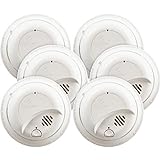
| First Alert BRK SMI100-AC 6-Pack | Whole-home coverage in one purchase | $88.44 |
| First Alert Hardwire Smoke Alarm (mid-range) | Upgrading a handful of older detectors | $56.64 |
| Siterlink GS562A 6-Pack | Photoelectric detection with test/silence control at volume | $139.99 |
| SITERWELL 1-Pack | Lowest per-unit cost for single-room needs | $18.37 |
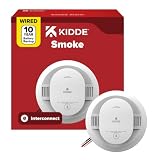
| Kidde 20SA10 3-Pack | Long-life 10-year backup battery across three zones | $112.97 |
| Kidde 20SA10 1-Pack | Adding one more room without a bulk commitment | $39.97 |
How We Picked
We evaluated these eight units on four criteria that owners report matter most over a multi-year ownership cycle: interconnection reliability (does pulling the test button on one unit activate every connected detector?), backup battery longevity and ease of replacement, nuisance-alarm resistance in everyday household environments, and cost-per-decade when factoring sensor lifespan against purchase price. Products that scored poorly on any single criterion were penalized unless their price made the tradeoff clearly worthwhile for a specific use case.
The 8 Best Hard Wired Smoke Detector in 2026
First Alert Hardwire Smoke Alarm (premium)
This is the pick for a homeowner who wants First Alert’s established interconnection protocol in a single premium unit and plans to buy additional detectors separately. Owners praise the solid mounting plate and the quiet standby mode that eliminates the faint electronic hum cheaper models produce. The photoelectric sensor responds quickly to smoldering fires, which is the more common residential threat.
- Consistent interconnection across multiple First Alert hardwired models without compatibility issues
- Low-profile design that sits flush against the ceiling without looking industrial
- Significantly more expensive per unit than the rest of this list
Skip this one if you need more than two detectors for the same budget or if you have no existing First Alert wired system to interconnect with.
First Alert Hardwire Smoke Alarm (value)
At just under twenty dollars, this is the most cost-effective way to replace a single dead First Alert unit without disrupting an existing interconnected chain. Reviewers confirm it pairs seamlessly with older First Alert models already wired throughout the home. For anyone with one failed detector in a system of five, this solves the problem without a full overhaul.
- Budget-friendly enough to justify buying spares for future replacements
- Maintains full interconnection compatibility across the First Alert hardwired line
- No test/silence button on some production batches; check the listing carefully before buying
Pass if you are outfitting a home from scratch or if you need photoelectric sensitivity without ionization in the same unit.
First Alert BRK SMI100-AC 6-Pack
Buy this pack when you want one brand across every bedroom, hallway, and common area without worrying about mixed interconnection behavior. The 6-pack at $88.44 breaks down to roughly fourteen dollars per unit, making it competitive with single-unit budget options. Owners report uniform alarm volume across all six units and straightforward wiring with standard Romex connections.
- Excellent per-unit pricing for full-home coverage in a single order
- Battery backup included so a power outage does not leave the home unprotected
- Some users note the design lacks a dedicated silence button, requiring removal from the ceiling during cooking false alarms
Skip if your home has fewer than five detector locations or if you require photoelectric-only detection.
First Alert Hardwire Smoke Alarm (mid-range)
This sits between the value model and the premium unit, offering the same First Alert interconnect ecosystem at a more approachable price. It suits someone upgrading two or three older detectors in a partial renovation without committing to a full six-pack. Owner feedback highlights the hush feature as a meaningful quality-of-life addition over the base model.
- Includes a test/silence button that the budget sibling sometimes omits
- Reliable long-term operation with widely available replacement parts
- Priced noticeably higher than the value model despite similar core detection
Consider the BRK 6-pack instead if you need coverage in five or more locations and want a lower per-unit cost.
Siterlink GS562A 6-Pack
Photoelectric detection with a 9V backup battery and an integrated test/silence button at a price under twenty-four dollars per unit makes this the strongest value for homes that want modern sensing without paying a premium brand markup. The GS562A model is a rebranded design familiar to buyers on other platforms, but owners confirm consistent performance across all six units in the pack.
- Photoelectric-only sensing reduces nuisance alarms from steam and toast compared to ionization or dual-sensor models
- Test/silence button on the faceplate handles cooking false alarms without a ladder
- As a newer brand, long-term parts availability and support response are less proven than First Alert or Kidde
Skip if you need a single detector or if your local code requires ionization-capable units in specific rooms.
SITERWELL 1-Pack
At $18.37, this is the absolute floor price for a hardwired photoelectric detector with battery backup and a silence button in this roundup. It functions well as a single-room addition or as a spare unit to keep on a shelf for future replacements. Owners who bought multiples report uniform sensitivity and a loud enough alarm to wake a household.
- Lowest entry price for a photoelectric-only hardwired unit with a silence button
- Simple three-wire connection compatible with most residential electrical circuits
- Build quality feels lighter than premium alternatives; the housing creaks on some units
Pass if you are outfitting an entire home from scratch and want brand-verified interconnection consistency across every room.
Kidde 20SA10 3-Pack
The 10-year sealed battery backup sets this Kidde model apart from every other option on this list. Once installed, you will not need to replace the backup battery for a full decade, eliminating the annual maintenance that owners cite as the top frustration with other detectors. The three-pack covers a bedroom, a hallway, and a common area at a reasonable per-unit cost.
- Decade-long backup battery removes the most common maintenance headache in the category
- Kidde’s interconnection protocol is well documented and works reliably with their broader product line
- Higher per-unit price than the Siterlink or SITERWELL alternatives, and the 10-year battery means the unit cannot be serviced if the sensor degrades early
Skip if you already own Kidde units with replaceable 9V batteries and do not want to manage a mixed-battery-type system.
Kidde 20SA10 1-Pack
The single-unit version lets you extend an existing Kidde wired system or add protection to one additional room without committing to a bulk purchase. Same 10-year sealed backup battery, same interconnection reliability. For homeowners who already have two or three Kidde detectors installed, this is the natural addition.
- Sealed 10-year battery eliminates future maintenance for that room
- Matches the form factor and mounting plate of existing Kidde wired models
- Paying $39.97 for one unit is a significant premium over the per-unit cost of the 3-pack
Buy the three-pack instead if you have three or more rooms still needing coverage, since the savings justify even having one spare.
Buying Guide
Interconnection Protocol and Compatibility
Hardwired smoke detectors share a three-wire connection: power, neutral, and an interconnect signal wire. When one detector alarms, it sends a voltage pulse through that third wire to activate every linked unit. Mixing brands almost never works because manufacturers use different signal patterns. Before buying, confirm what is already wired in your home. If you have existing First Alert units, stay within that ecosystem. If you are starting fresh, pick one brand for every location so the interconnect chain stays uniform.
Sensor Type: Photoelectric Versus Ionization Versus Dual
Photoelectric sensors respond to large particles produced by smoldering fires, which account for the majority of residential fire deaths. Ionization sensors detect small particles from fast-flaming fires but trigger more nuisance alarms near kitchens and bathrooms. For bedrooms and hallways, photoelectric-only detection is the modern standard. A hard wired smoke detector with a photoelectric sensor and a test/silence button handles the cooking-steam false alarms that drive people to remove batteries from their devices.
Backup Battery: Replaceable 9V Versus Sealed 10-Year
Every hardwired unit in this roundup includes some form of battery backup for power outages, but the two approaches carry different maintenance burdens. A replaceable 9V battery requires checking or swapping once a year, which owners report leads to dead backups simply because people forget. A sealed 10-year battery removes that task entirely but means you replace the whole unit when the battery expires rather than just the cell. If you tend to procrastinate on maintenance, the sealed option is safer despite the higher upfront cost.
Our Verdict
The top pick is the First Alert BRK SMI100-AC 6-Pack for anyone outfitting a full home in one purchase, since the per-unit cost is competitive and the interconnection consistency removes the most common owner complaint about mixed setups. The budget pick is the SITERWELL 1-Pack at $18.37 for a single-room addition or spare, because no other unit in this roundup offers photoelectric sensing and a silence button at a lower price. The condition that changes everything: if your home is already wired with Kidde detectors, the Kidde 20SA10 3-Pack becomes the best choice regardless of price, because switching brands mid-chain breaks interconnection and you would need to rewire the signal line.
FAQ
Are hardwired smoke detectors required by code?
In most jurisdictions, yes. The National Electrical Code and local building authorities typically require hardwired detectors in new construction and major renovations. Existing homes with battery-only units may be grandfathered in, but upgrading to hardwired is often required when selling.
How many hardwired smoke detectors does a home need?
Current guidance calls for one in every bedroom, one outside each sleeping area, and one on every level including basements. For a two-story home with three bedrooms, that means at least seven units wired together.
Can I mix hardwired smoke detector brands on the same circuit?
They will receive power, but the interconnect signal will not work across brands. Each manufacturer uses a proprietary voltage pattern on the signal wire, so a First Alert unit will not trigger a Kidde unit even if they share the same electrical line.
How often should I replace a hardwired smoke detector?
Most manufacturers specify ten years from the date printed on the unit, after which the sensor degrades regardless of battery life. Check the date on the back of the housing and replace the entire unit when it reaches ten years.