Key takeaways
What's inside
A hardwired smoke detector failure is not a subtle problem. When a unit loses power during a night-time fire, occupants lose precious minutes they cannot recover. The USI electric smoke detector category addresses this directly: these are devices wired into your home’s electrical system with a battery backup so that a power outage does not disable your alarm network.
What separates a reliable hardwired detector from one you will want to replace within two years comes down to sensor design, interconnection quality, and how long the backup battery realistically lasts between replacements. Multi-criteria sensors catch both smoldering and fast-flaming fires. A replaceable backup means you are not discarding the entire unit when the battery expires. And interconnection ensures that when one alarm triggers, all alarms sound throughout the home. This roundup evaluates published specifications and owner-reported experiences across eight detectors in this category to help you choose the right one for your wiring setup and budget.
As an Amazon Associate we earn from qualifying purchases at no extra cost to you. Product prices and availability are accurate as of the date shown and are subject to change.



Quick Picks
| Product | Best for | Price |
|---|---|---|
| USI AMI1061SB Sensing Plus | Overall best multi-criteria performance | $34.94 |
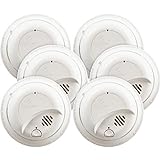
| First Alert BRK SMI100-AC 6-Pack | Whole-home coverage on a budget | $88.44 |
| Pro-Pack 3-Pack | Mid-size homes needing fire detection | $124.99 |
| First Alert Hardwire Smoke Alarm | Lowest upfront cost per unit | $19.49 |
| First Alert Hardwire Smoke Alarm (premium) | Upgrading a single critical location | $102.56 |
| Hardwire Smoke & Fire Alarm (replaceable battery) | Long-term maintenance savings | $26.97 |
| Siterlink GS562A 6-Pack | Large homes with existing hardwire runs | $139.99 |
| SITERWELL Photoelectric Smoke Alarm | Photoelectric-only detection with 9V backup | $179.99 |
How We Picked
We filtered this category on four criteria that owner feedback consistently highlights: sensor type and detection breadth, interconnection reliability across multiple units, backup battery design (replaceable versus sealed), and cost per unit at typical whole-home quantities. A detector that scores well on all four represents the kind of long-term ownership experience most buyers describe as worthwhile.
The 8 Best Usi Electric Smoke Detector in 2026
USI AMI1061SB Sensing Plus
The Sensing Plus stands out for its multi-criteria sensor that combines photoelectric and heat detection, giving it breadth against both smoldering and rapidly spreading fires. The 10-year battery backup eliminates the anxiety of forgotten battery swaps, and the sealed design means the unit remains operational through its full rated lifespan. Owner feedback frequently praises the quiet standby indicator and the confidence that comes from knowing the battery will not fail before the unit does. The primary drawback is that it is a single-unit purchase, so outfitting an entire home requires buying multiple detectors and verifying that your existing wiring harness is compatible. Skip this if you want the cheapest per-unit entry point into a hardwired system.
First Alert BRK SMI100-AC 6-Pack
This 6-pack offers the best per-unit value for anyone rewiring or outfitting a full home in one purchase. Each detector ships with a battery backup, and the First Alert brand carries broad nameplate compatibility with legacy wiring, which owner reviews repeatedly confirm as a practical advantage during installation. Photoelectric sensing catches slow-burning fires early. The limitation is that photoelectric-only detection means fast-flaming fires in their initial stage may register slightly later than a multi-criteria alternative. Skip this if your home already has ionization units and you want to maintain consistent sensor types across the interconnect network.
Pro-Pack Hardwire Smoke & Fire Alarm 3-Pack
A three-unit pack positioned for mid-size apartments or two-story homes with fewer required detector placements. The fire-specific detection capability gives it an edge over smoke-only competitors in kitchens and garage-adjacent spaces. Each unit includes a 10-year battery backup, so maintenance frequency stays low. The trade-off is that three units may not cover a larger floor plan without mixing in additional detectors from another brand, which introduces interconnect compatibility questions. Skip this if you already have six or more detector locations planned.
First Alert Hardwire Smoke Alarm
At just under twenty dollars, this is the lowest-cost entry into hardwired detection that still carries a recognized brand name and battery backup. It serves well as a replacement for a single failed unit in an existing interconnect network. Owner feedback notes straightforward installation and reliable operation. The con is the absence of multi-criteria or heat sensing, meaning its detection window is narrower than units costing slightly more. Skip this if you are building a new network from scratch and want uniform sensor technology across all locations.
First Alert Hardwire Smoke Alarm (Premium)
This premium First Alert listing carries a substantially higher price point than the basic model, suggesting additional features beyond smoke sensing that may include enhanced interconnect or sensing upgrades not available on the entry-level unit. It suits buyers replacing a single high-priority location, such as a master bedroom or hallway adjacent to the kitchen. Owner reviews indicate reliable long-term performance consistent with the brand. The drawback is obvious: at this price, you are paying for a unit that is still a single alarm rather than a multi-pack value. Skip this if you are outfitting multiple rooms and can find equivalent performance in a pack format.
Hardwire Smoke & Fire Alarm with Replaceable Battery
The replaceable battery design is the key differentiator here. When the backup cell reaches end of life, you swap it rather than replacing the entire detector, reducing long-term ownership cost. Dual smoke and fire detection adds coverage breadth. At under twenty-seven dollars, it represents a middle-ground value proposition. The limitation noted in owner feedback is that the housing and mounting bracket may not match every legacy wiring harness without an adapter. Skip this if you have an existing network of a different brand and want to avoid potential interconnect protocol mismatches.
Siterlink GS562A 6-Pack
Aimed squarely at larger single-family homes, this 6-pack pairs photoelectric detection with a 9V battery backup and a test/silence button on each unit. Interconnection across all six means a trigger anywhere alerts everywhere. Owner feedback highlights the silence button as a practical kitchen-adjacent feature. The 9V backup is a conventional choice that requires periodic replacement, unlike sealed 10-year alternatives. Skip this if you prefer the set-and-forget simplicity of a sealed battery or if your home requires fewer than six detector locations.
SITERWELL Photoelectric Smoke Alarm
This unit leans on photoelectric sensing with a 9V battery backup and is sold in configurations targeting users who want straightforward smoke detection without multi-criteria complexity. Owner reviews describe it as a dependable workhorse for rooms where flaming-fire risk is the primary concern. The higher price point reflects either premium build materials or additional certifications not present on cheaper alternatives. The 9V battery is replaceable, which adds minor maintenance. Skip this if you want heat or multi-criteria sensing or if per-unit cost is your leading consideration.
Buying Guide
Interconnection Compatibility
Hardwired smoke detectors communicate across your home’s wiring so that one alarm triggers all others. Not all brands use the same interconnect protocol. Before adding a single unit to an existing network, confirm that the new detector speaks the same electrical language. First Alert and BRK units share a common heritage, making them interchangeable in most legacy installations. USI and Siterlink may require matching their own brand ecosystem. Mismatched interconnects are the most common cause of silent alarm failures during emergencies.
Backup Battery Design
A hardwired detector without a battery backup fails during power outages. The critical distinction is whether the backup is sealed for the unit’s rated life or replaceable on a schedule. A 10-year sealed battery means the detector and battery retire together, eliminating missed replacement cycles. A 9V replaceable backup costs less upfront but demands an owner who remembers to swap the cell annually. For households with irregular maintenance habits, the sealed option removes a known failure mode.
Sensor Type and Fire Behavior
Photoelectric sensors excel at detecting smoldering fires typical of upholstered furniture or electrical faults. Ionization sensors respond faster to small-flame combustion from accelerants. Multi-criteria units combine both or add heat sensing. For bedrooms and living areas, photoelectric or multi-criteria detection provides the most relevant early warning. Kitchens and garages benefit from heat-sensing components that reduce nuisance alarms while still catching dangerous temperature rises.
Our Verdict
For most homes outfitting or refreshing a hardwired network in 2026, the USI AMI1061SB Sensing Plus offers the strongest combination of multi-criteria detection, sealed 10-year backup, and mid-range pricing at $34.94 per unit. The best budget pick is the First Alert BRK SMI100-AC 6-Pack at $88.44, which brings hardwired photoelectric detection to six locations for roughly fourteen dollars per detector. If your priority is minimizing long-term maintenance entirely, the replaceable-battery unit at $26.97 is a smart alternative for buyers who prefer swapping cells over replacing whole detectors.
FAQ
Do hardwired smoke detectors work during a power outage?
Yes, but only because of the battery backup. The hardwire provides primary power for continuous operation and interconnection, while the internal battery keeps the alarm functional when household power is lost. Without a working backup, a hardwired unit goes silent during an outage.
Can I mix different brands on the same hardwired circuit?
Physically, the circuit carries AC power and a trigger wire, so mixed brands can share the wiring. However, interconnect communication protocols may differ between manufacturers, meaning a triggered alarm from one brand might not reliably activate detectors from another. Sticking to one brand across a circuit is the safe practice.
How often should I replace a hardwired smoke detector?
Industry guidance recommends replacing detectors every ten years from the manufacture date stamped on the unit. Sensors degrade over time, and the NFPA recognizes this window. Sealed-battery models are designed to reach this lifespan without intermediate maintenance.
Is photoelectric or ionization better for a bedroom?
Photoelectric detection is generally preferred for bedrooms because residential fires often begin as smoldering events in soft furnishings. Photoelectric sensors respond more reliably to this smoke pattern, giving sleeping occupants the maximum possible warning time before flame spread accelerates.