Key takeaways
- Painting poly lumber. Even with adhesion promoter, paint on HDPE peels in one or two seasons and looks worse than the fade did.
- Using abrasive pads or sanding. Scratches in HDPE hold dirt and shine differently from the surrounding surface. Nothing fixes them afterward.
- Applying restorer in full sun. Streaks and lap marks set before you can wipe them out.
- Skipping the cleaning step. Restorer applied over oxidation wipes right off with the chalk a few weeks later.
- Using automotive tire shine or silicone sprays. They look good for a week, then attract dust and turn blotchy.
- Over-applying. A thick coat stays tacky, collects pollen, and transfers to clothing.
Poly lumber (recycled HDPE) is sold as the patio furniture you never have to refinish, and structurally that is true: it will not rot, splinter, or rust. But after 5 to 10 years of sun, most colors pick up a chalky, whitish haze, dark colors look dusty, and the surface feels rough where the top layer of plastic has oxidized. The classic mistakes make it worse. Pressure washing at close range gouges permanent stripes into the surface. Paint peels because nothing bonds well to HDPE. Abrasive pads leave swirl marks that show up the moment the sun hits them. The right approach is a deep clean to remove oxidation, then a plastic-specific restorer that puts color and sheen back without a film that can flake. Done correctly, a faded Adirondack chair looks new again in about an hour of hands-on work.
What You Need
| Item | Why | Optional? |
|---|---|---|
| Nitrile gloves and eye protection | Restorers contain solvents and oils that irritate skin | No |
| Garden hose with spray nozzle | Rinsing; safer than a pressure washer on oxidized plastic | No |
| Soft-bristle deck brush and a bucket | Lifts chalky oxidation without scratching | No |
| Dish soap or all-purpose cleaner | Removes pollen, sunscreen, bird droppings, and mildew film | No |
| Oxygen bleach (sodium percarbonate) | Kills mildew in textured surfaces and brightens light colors | Yes, for gray or green staining |
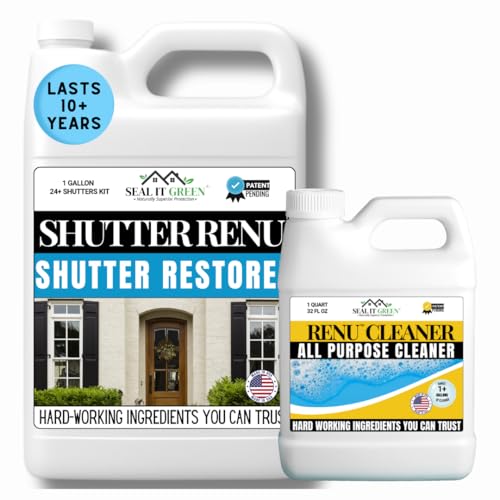
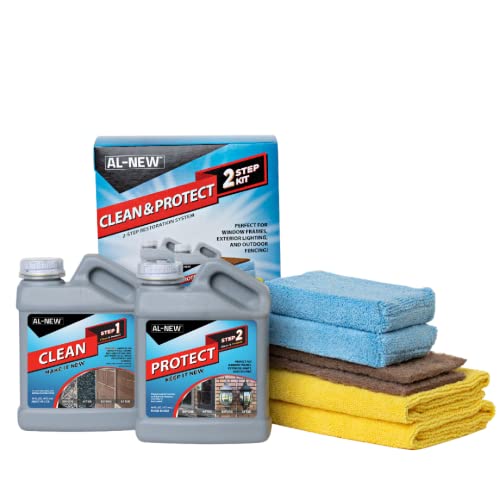
| Two-step clean-and-protect kit (16 oz) | Solvent cleaner strips oxidation, then a restorer re-wets the color; a 16 oz kit handles 2 to 4 chairs | No |
| Gallon plastic restorer kit | Better value for a full dining set or 6 or more pieces; claims of 10-plus-year durability apply to shutters, expect less on horizontal seats | Yes, choose one or the other |
| Lint-free microfiber cloths (6 to 10) | Application and buffing; terry towels leave lint in the finish | No |
| Painter’s tape | Masks stainless hardware and cushions | Yes |
| Small foam brush | Works restorer into slats, grooves, and around screw heads | Yes |
Expect to spend $55 to $70 for a 16 oz two-step kit, which is enough for a pair of Adirondack chairs and a side table, or $115 to $130 for a gallon kit that covers a six-seat dining set plus loungers with product left over. Compared with replacing a single poly Adirondack chair at $250 to $450, either option is cheap.
Our top picks
As an Amazon Associate we earn from qualifying purchases at no extra cost to you.
Step-by-Step
Step 1: Move furniture into shade and remove hardware (10 minutes)
Work in shade or on an overcast day. Restorers flash off too fast on a sun-hot surface and leave streaks. Take off cushions, and if the piece has stainless steel bolts that you want to stay bright, mask them with tape. Set chairs on a tarp; cleaner runoff can leave marks on pavers.
Step 2: Wash away surface dirt (15 minutes plus drying)
Mix a few squirts of dish soap into a gallon of warm water. Scrub every surface with the soft brush, following the grain of the slats. Rinse with the hose on a fan spray, holding the nozzle at least 12 inches away. If you must use a pressure washer, stay under 1,500 psi with a 40-degree tip and keep it 18 inches off the surface. Let the piece dry 30 to 60 minutes.
Step 3: Treat mildew and deep stains (20 minutes plus 15 minutes dwell)
Gray or green streaks in textured areas are usually mildew. Dissolve oxygen bleach per the package (typically 1 to 2 scoops per gallon of warm water), apply with the brush, let it work 10 to 15 minutes without drying out, then scrub and rinse. Avoid chlorine bleach; it can lighten some poly colors unevenly. Stubborn scuff marks often come off with a melamine eraser used gently.
Step 4: Strip the oxidized layer (20 to 30 minutes)
This is the step that makes the difference. Apply the kit’s cleaner or solvent step to one section at a time, about 2 square feet, with a microfiber cloth. You will see chalky residue lift onto the cloth, often the same color as the furniture. Keep switching to a clean cloth. Do not scrub with anything more aggressive than microfiber; abrasives create shiny swirl marks in HDPE that cannot be removed. Let the surface flash dry 5 to 10 minutes.
Step 5: Apply the restorer (20 to 40 minutes)
Pour a small amount of restorer onto a fresh cloth and wipe it on in long strokes along each slat. A foam brush helps in grooves and around fasteners. Aim for a thin, even film; the color should deepen immediately and the surface should look damp rather than wet. Wipe off any pooling within a few minutes. A two-seat bench takes about 15 minutes, a full Adirondack chair with its many slats about 20 minutes.
Step 6: Cure and buff (10 minutes plus 24 hours)
Let the restorer cure 2 to 4 hours before touching and 24 hours before cushions go back on or anyone sits down. If any spot looks glossy or streaky after an hour, buff lightly with a dry microfiber. Check for missed spots from a low angle in daylight; the restored areas will look richer and slightly satin next to anything you skipped.
Mistakes to Avoid
- Painting poly lumber. Even with adhesion promoter, paint on HDPE peels in one or two seasons and looks worse than the fade did.
- Using abrasive pads or sanding. Scratches in HDPE hold dirt and shine differently from the surrounding surface. Nothing fixes them afterward.
- Applying restorer in full sun. Streaks and lap marks set before you can wipe them out.
- Skipping the cleaning step. Restorer applied over oxidation wipes right off with the chalk a few weeks later.
- Using automotive tire shine or silicone sprays. They look good for a week, then attract dust and turn blotchy.
- Over-applying. A thick coat stays tacky, collects pollen, and transfers to clothing.
How Often
Wash poly furniture two or three times a season with soap and water, which alone prevents most of the chalky buildup. Plan on a restorer application every 2 to 3 years for horizontal surfaces that take full sun, such as seats, table tops, and lounger decks, and every 3 to 5 years for vertical surfaces like chair backs and legs. Dark colors (black, navy, forest green) fade faster and benefit from the shorter interval; white and light gray hide oxidation but still get rough to the touch. If you are buying new poly furniture in 2026, a first light coat of restorer at the end of its second summer will keep it from ever reaching the heavily chalked state.
When to Call a Pro or Replace
Poly lumber almost never needs a professional, but there are limits. Replace a piece if the plastic has become brittle enough to crack when you flex a slat, if slats have warped more than about half an inch out of line (usually from a hot grill or fire pit placed too close), or if the internal stainless hardware has corroded to the point that joints wobble and cannot be tightened. Deep gouges from a pressure washer or heavy scratches are permanent; if they bother you, replacement is the only fix. A replacement poly dining chair runs $200 to $350 and an Adirondack $250 to $450, so restoring a set that is structurally sound is nearly always the better value. Consider hiring a furniture refinishing service only for a large commercial or HOA installation of 20 or more pieces where the labor hours make sense to outsource.
FAQ
Can I use the same restorer on my vinyl fence or shutters?
Most plastic restorers are formulated for all types of faded vinyl and polyethylene, including shutters, fencing, and window frames. Test a small area first, since the color depth and sheen may differ between materials.
Will the restorer change the color of my furniture?
It brings the color back toward what it was when new, which can look noticeably darker than the faded version you are used to. It does not add pigment. If a piece is already the color you want, use only the cleaning step.
Is a heat gun a good way to bring back the shine?
Some people carefully pass a heat gun over faded HDPE to re-flow the oxidized surface. It works on small areas but is easy to overdo; too much heat warps slats and leaves glossy patches. A chemical restorer is safer and more even for a full set.
How long does a restored finish last before it fades again?
On seats and table tops in full sun, expect 2 to 3 years before the surface starts to look dull. Chair backs and shaded pieces can go 5 years or more. Regular washing extends both numbers.