Key takeaways
- Choose pressure-side if: you already have a booster pump, you want to keep debris out of your main pool filter, and you don’t mind replacing bags and tires periodically.
- Choose robotic if: you want the best Polaris robotic pool cleaner experience for wall climbing, fine dirt and algae pickup, and app scheduling, and you have a power outlet within 30-50 feet of the pool.
- Avoid pressure-side if: you have a small above-ground pool under 15,000 gallons with one weak return jet. A suction-side cleaner or cordless robotic is usually a better fit.
For most inground pools, polaris pool cleaner reviews point to the Polaris 280 for value on pressure-side systems, the Polaris 3900 Sport for large pools with heavy debris, and the Polaris Alpha iQ+ as the best Polaris robotic pool cleaner for hands-off filtration with no booster pump needed.
Choosing between them comes down to pool size, your existing pump setup, how much leaf load you get, and how much you want to spend on bags, tires, and hoses over 3-5 years. Below is how the top models compare for debris pickup, hose tangling, setup time, and long-term part costs.
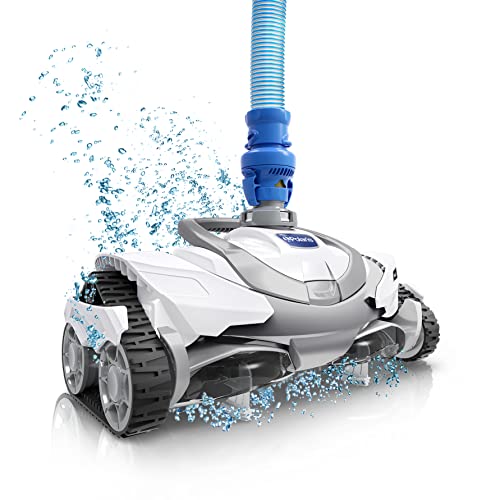
Polaris MAXX Premium Suction-Side Automatic Pool Cleaner
Included for 'Polaris Pool Cleaner Reviews Worth Buying' as a relevant option in this category; details come from the product listing.
View on Amazon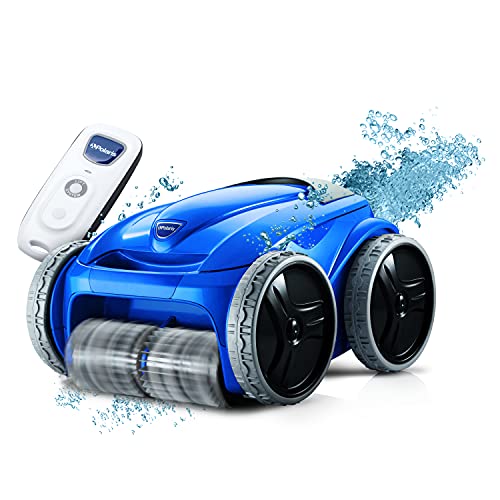
Polaris 9550 Sport Robotic Pool Cleaner, Automatic Vacuum
Included for 'Polaris Pool Cleaner Reviews Worth Buying' because the listing specifies Automatic Vacuum, details this guide uses to compare options.
View on Amazon
Polaris Quattro T2 Pressure Side Pool Cleaner for Inground Pools
Included for 'Polaris Pool Cleaner Reviews Worth Buying' as a relevant option in this category; details come from the product listing.
View on Amazon
Polaris VRXIQ+ Smart Robotic Pool Cleaner with iAquaLink Control
Included for 'Polaris Pool Cleaner Reviews Worth Buying' as a relevant option in this category; details come from the product listing.
View on AmazonPressure-Side vs. Robotic Polaris: Which System Fits You?
Polaris sells two very different types of cleaners, and mixing them up is the most common buying mistake. Pressure-side models like the 280, 360, and 3900 Sport connect to a return line and need water pressure to move. Most need a separate booster pump, except the 360 which runs off a standard return pump on many pools. Robotic models like the Alpha iQ+, VRX iQ+, and FREEDOM are low-voltage electric units with their own filter canister and drive motors. They plug into a power supply, not your pool plumbing.
- Choose pressure-side if: you already have a booster pump, you want to keep debris out of your main pool filter, and you don’t mind replacing bags and tires periodically.
- Choose robotic if: you want the best Polaris robotic pool cleaner experience for wall climbing, fine dirt and algae pickup, and app scheduling, and you have a power outlet within 30-50 feet of the pool.
- Avoid pressure-side if: you have a small above-ground pool under 15,000 gallons with one weak return jet. A suction-side cleaner or cordless robotic is usually a better fit.
Top Polaris Models Compared by Pool Size and Debris Type
| Model | Type / Pool Fit | Cable or Hose Reach | Typical Setup Time | Common Replacement Parts Cost Range |
|---|---|---|---|---|
| Polaris 280 | Pressure-side, inground pools up to 31 ft long, approx. 14,000-22,000 gallons | 31 ft feed hose, 9.5 ft sweep hose | 45-75 minutes first install, 10 minutes to connect after | Filter bags usually $25-$45, tires $18-$30 each, sweep hose $30-$55 |
| Polaris 360 | Pressure-side no booster needed, inground pools up to 35 ft | 31 ft feed hose, 9.5 ft sweep hose | 60-90 minutes, plus return fitting adjustment | Filter bags usually $25-$45, drive belts $20-$35, backup valve $70-$110 |
| Polaris 3900 Sport | Pressure-side for large pools 35-45 ft, 25,000-40,000 gallons | 31 ft feed hose with swivels, 10 ft sweep hose | 60-90 minutes, needs booster pump check | Large debris bag usually $40-$65, tires $20-$32 each, tail sweep $35-$60 |
| Polaris Alpha iQ+ / VRX iQ+ | Robotic, inground pools up to 60 ft, approx. 20,000-40,000 gallons | 60-70 ft swivel cable, 4L dual filter canister | 15-25 minutes, plug in power supply and set app | Filter canisters usually $90-$150 set, brushes $40-$70, tracks $60-$95 |
| Polaris FREEDOM Cordless | Cordless robotic, small to medium pools up to 35 ft | No hose, up to 2.5 hour runtime, 4L canister | 10 minutes, charge and drop in | Filters usually $70-$120, batteries not user-replaceable |
Prices for the cleaners themselves generally fall into two market ranges: pressure-side units are usually $500-$900 plus booster pump costs if you don’t have one, while smart robotics are usually $900-$1,600. Cordless robotics sit in the middle at usually $700-$1,100.
Debris Pickup: Leaves vs. Sand vs. Fine Silt
The Polaris 280 and 360 use a single-chamber filter bag that holds about 2.5 to 3 quarts of debris. That is enough for weekly leaves, grass clippings, and acorns, but in fall with heavy oak or maple drop you will empty the bag every 1-2 cycles. The 3900 Sport uses a 5-quart dual-chamber bag and a wider intake throat at 2.25 inches versus about 1.75 inches on the 280. In practice that means fewer clogs on seed pods, small twigs, and large beetles.
Robotic models flip the advantage. The Alpha iQ+ and VRX iQ+ use a 4-liter top-access canister with dual-stage filtration down to about 150 microns with the fine insert. They pick up sand, dead algae dust, and sunscreen film that blows straight through a pressure-side bag rated closer to 400-500 microns. If your main complaint is cloudy shallow-end corners and gritty steps rather than leaves, a robotic is the better pick.
Hose Tangling, Coverage, and Setup Realities
Hose tangling is the number one complaint in polaris pool cleaner reviews for pressure-side models, and it is almost always a hose-length and water-pressure issue, not a defect. A 31-foot hose on a 16 x 32 ft rectangular pool leaves about 8-10 feet of slack for turns, which is ideal. That same hose on a 14 x 28 ft small pool creates coils and figure-eights within 2 hours.
- Measure before you cut: pressure hoses come in sections. For a 30 ft pool, use 28-30 ft of hose from the wall fitting to the farthest corner plus 2 ft. Too long causes tangling, too short causes missed corners.
- Allow 24 hours for new hose memory to relax. Lay sections straight in the sun for 2-4 hours before connecting swivels.
- Check wheel RPM: Polaris specifies 28-32 RPM for the 280 and 3900 Sport. Below 26 RPM it stalls in deep ends, above 34 RPM it whips and tangles. Adjust with the restrictor disk or wall fitting.
- Robotics tangle far less. The Alpha iQ+ and VRX iQ+ have anti-tangle swivels rated for 360-degree rotation, and the 60-70 ft cable covers a 40 ft pool diagonally with 15-20 ft to the outlet. Cordless FREEDOM eliminates this entirely but needs 3-4 hours recharge between runs.
Setup time also differs sharply. A pressure-side install means threading the wall fitting, adding hose floats every 2-3 feet, attaching the backup valve 30 inches from the cleaner, tuning thrust jets, and timing the booster pump to run 2-3 hours per day. Plan for an hour and a PVC wrench. A robotic setup is placing the caddy 10-12 feet from the pool edge, keeping the power supply 12 inches above grade and 10 feet from water per code, and connecting to WiFi.
Decision Matrix: Pick by Your Situation
Use this to match pool reality to model rather than features:
- Small inground pool, 12,000-18,000 gallons, light leaves, already own booster pump: Polaris 280. Lowest bag and tire costs, 25 ft turning radius is plenty, stores in a 24 x 24 inch deck box.
- Medium inground, no booster pump and don’t want one: Polaris 360. Runs off pool pump at 25-40 GPM, saves $300-$500 on booster install and about 0.75 kW per hour in electricity.
- Large pool over 35 ft, heavy trees, 2 skimmers and attached spa: Polaris 3900 Sport. PosiDrive gears and 3 jets cover 45-50 ft per minute versus 35-40 ft for 280, and 50% larger bag means fewer empties.
- Dusty region, sand, fine pollen, want walls and tile line scrubbed: Alpha iQ+ or VRX iQ+. Four-wheel drive climbs to waterline, 70 sq ft per hour cleaning rate, app lets you spot-clean the shallow end in 30 minutes.
- Kids, pets, above-ground or small vinyl liner, no plumbing changes allowed: FREEDOM cordless or other compact cordless robotic. No hoses to trip on, weighs 9-11 lbs out of water versus 16-18 lbs for full-size robotics, fits through a 28-inch gate.
Assembly, Moving and What Wears Out First
Box weight matters if you carry gear to a shed. A 280 ships at about 18-22 lbs in a 26 x 20 x 20 inch box, 3900 Sport at 24-28 lbs, and Alpha iQ+ at 32-38 lbs with caddy. All fit through a standard 30-inch doorway, but robotics need dry indoor storage in winter because the power supply is not freeze-rated below 32F.
Durability patterns are consistent across owner reports. On pressure-side units, filter bags wear first and need replacement every 6-12 months with weekly use, tires every 12-24 months when tread smooths, and backup valves every 2-3 years when the cleaner stops backing out of corners. On robotics, fine filter panels clog first and need hose rinsing after each run, brushes wear in 18-24 months on plaster, and tracks last 3-4 years before slipping on walls.
To cut long-term cost, run pressure cleaners 2 hours per day instead of 4, empty bags before they pack tight, and store hoses straight, not coiled tight. For robotics, rinse filters, dry the canister out of sun to prevent warping, and keep cable loosely coiled in 24-inch loops.
Bottom Line for Small vs. Large Pools
For small pools under 20,000 gallons with basic leaf load, the 280 or 360 gives the lowest running cost and simplest repair path with widely available tires and bags. For large pools over 30,000 gallons or pools under trees, the 3900 Sport justifies its higher upfront range with faster coverage and fewer clogs. If you want wall scrubbing, fine-particle cleaning, and no booster pump noise, step up to the Alpha iQ+ class as the best Polaris robotic pool cleaner option, or go cordless for grab-and-go convenience in a compact yard.