Key takeaways
- Wear gloves and eye protection when dismantling pallets; old nails and dry splinters are the main injury risks.
- Leave drainage gaps between top planks so water never pools on the surface.
- Use exterior-rated screws and hardware to prevent rust streaks bleeding into the wood.
- Add furniture glides or a sealant to the feet to stop the legs wicking up moisture from a wet deck.
A pallet wood coffee table is the perfect entry-level woodworking project: cheap, forgiving, and genuinely useful on a patio or deck. Reclaimed shipping pallets are often free, the rustic look is on-trend, and you can finish the build in an afternoon with basic tools. The result is a sturdy outdoor table with a farmhouse character that store-bought pieces rarely match, and the satisfaction of having made it yourself.
This guide walks through how to build a DIY pallet wood outdoor coffee table step by step, from sourcing safe pallets to sealing the finished piece against weather. If woodworking is not your thing, we also point to ready-made outdoor coffee tables that deliver the same look with none of the sawdust.
Our top picks



As an Amazon Associate we earn from qualifying purchases at no extra cost to you.
⚡ Save on Your Next PC — Amazon Prime
Prime members get fast free shipping on the systems above, plus early access to Prime Day & Black Friday PC deals. New members get a 30-day free trial.
Watch: How to Build a DIY Pallet Wood Outdoor Coffee Table — Video Review
Source and Prep Safe Pallets
Start with the right pallets. Look for the “HT” (heat-treated) stamp and avoid any marked “MB,” which indicates chemical treatment with methyl bromide you do not want near a table. Choose pallets that are clean, dry, and free of oil stains or rot. Pry the boards apart carefully with a crowbar, remove every nail, and sand each plank thoroughly, from coarse grit to fine, to eliminate splinters. This prep is the least glamorous but most important stage; rushing it leaves you with a rough, hazardous surface.
Plan Your Design and Cut List
Sketch a simple design before cutting. A classic pallet coffee table is roughly 36 inches long, 20 inches wide, and 16 to 18 inches tall, a comfortable height beside outdoor seating. Decide whether you want a lower storage shelf, which adds function and uses more of your salvaged wood. A printed plan, like the WOODCRAFT project paper plan for a patio coffee table, takes the guesswork out of dimensions and joinery if you would rather follow a proven layout than improvise.
Assemble the Frame and Top
Build the frame first: cut four legs and connecting rails from the sturdiest planks, and screw them into a rectangular base using exterior-grade screws that resist rust. Then lay your top boards across the frame, leaving small, even gaps between planks so rain drains rather than pooling. Attach the top with screws driven up from underneath for a clean surface, or from above for a more rustic, visible-fastener look. If you planned a shelf, install it between the lower rails now.
Sand, Stain, and Seal for the Outdoors
Give the assembled table a final sanding, then apply an outdoor wood stain or oil to bring out the grain and add color. Because this table lives outside, sealing is non-negotiable: finish with an exterior-grade polyurethane or a penetrating oil like teak oil to guard against moisture, UV, and cracking. Two or three thin coats, sanded lightly between each, produce a durable finish that will survive seasons of rain and sun on a deck or patio.
Skip the Build: Ready-Made Options
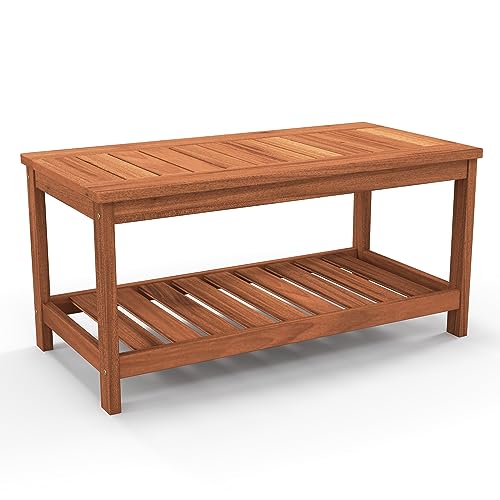
If you love the look but lack the time or tools, ready-made outdoor coffee tables deliver the same vibe. The Tangkula 2-tier wood coffee table offers a slatted hardwood top with a storage shelf, echoing the DIY design, while acacia-wood options like the Oana or Christopher Knight Catriona give you natural wood warmth. For zero maintenance, an HDPE table like the WO Home Furniture model mimics wood while resisting weather entirely.
Tips
- Wear gloves and eye protection when dismantling pallets; old nails and dry splinters are the main injury risks.
- Leave drainage gaps between top planks so water never pools on the surface.
- Use exterior-rated screws and hardware to prevent rust streaks bleeding into the wood.
- Add furniture glides or a sealant to the feet to stop the legs wicking up moisture from a wet deck.
Frequently Asked Questions
Are pallets safe to use for furniture?
Only heat-treated pallets stamped “HT” are safe. Avoid pallets marked “MB” (methyl bromide), which are chemically treated, and skip any that are oil-stained or rotted. Clean, dry, HT-stamped pallets sanded smooth make safe, sturdy furniture.
What tools do I need to build a pallet coffee table?
The basics: a crowbar or pry bar, a hammer or nail puller, a saw, a drill or driver, sandpaper, exterior screws, and outdoor stain and sealant. A power sander and circular saw speed things up but are not strictly required.
How do I protect a pallet table from the weather?
Seal it. After staining, apply two or three thin coats of exterior polyurethane or a penetrating oil like teak oil, sanding lightly between coats. This guards against moisture, UV fading, and cracking, letting the table live outdoors year-round.
How long does it take to build one?
An experienced DIYer can finish in an afternoon, but for a first project budget most of a weekend, especially since prepping and sanding the pallets and letting finish coats dry take time. The drying between sealant coats is often the longest wait.
Conclusion
Building a pallet wood outdoor coffee table is an accessible, rewarding project that yields a sturdy, on-trend piece for very little money. Source safe HT-stamped pallets, prep and sand them well, assemble a simple frame with drainage gaps, and seal the finished table thoroughly for outdoor life. And if you would rather skip the sawdust, a ready-made slatted or acacia coffee table gives you the same rustic look with none of the labor.