Key takeaways
- Protects the primary media bed from sediment and extends its lifespan
- Low per-unit cost makes quarterly swaps realistic rather than a budget shock
- Requires an existing Aquasana housing — not a standalone purchase
Every faucet in your home draws from the same source, which means a single contaminated or heavily chlorinated line affects your drinking water, your shower skin, your laundry, and every appliance with a heating element. Whole house filtration is the only way to address that at the point of entry, and Aquasana has built a dominant position here by pairing carbon and KDF media with a filter architecture that keeps flow rates reasonable even as the system loads up. The problem is that their lineup now spans pre-filters, post-filters, UV-equipped systems, well-specific units, and a Rhino system that sits in a completely different price tier from the rest — which makes comparison genuinely difficult without knowing what each SKU actually does.
What separates a worthwhile Aquasana setup from a money pit is straightforward once you understand it: capacity in gallons determines how often you are replacing media, UV or no UV determines whether you are also killing microbiological contaminants, and well versus municipal determines the pre-treatment stage entirely. The best aquasana whole house filters for your situation are not necessarily the most expensive ones, and a 2026 buyer needs to match the system to the source water, not the marketing copy.
Our top picks



As an Amazon Associate we earn from qualifying purchases at no extra cost to you.
Quick Picks
| Product | Best for | Price |
|---|---|---|
| EQ-304-20 Pre-Filters (4-Pack) | Owners needing routine pre-filter replacement | $49.99 |
| WH-1000-CS-UVS-B | Municipal water with microbiological concerns | $2,696 |
| EQ-Well-UV-PRO-AST | Well water with sediment and bacteria | $2,697 |
| EQ-PFC.35 Post-Filter | Owners needing post-filter replacement | $36.99 |
| Rhino WH-1000 | High-chlorine municipal water on a budget | $999 |
| 20-Inch Pre-Filter 3-Pack + Post-Filter Bundle | Simultaneous pre and post replacement | $73.49 |
| CFS Compatible EQ-304-20 / EQ-PFC.35 | Cost-conscious owners with existing Aquasana housings | $66.98 |
| EQ-1000 | Whole home carbon and KDF without UV | $1,123 |
How We Picked
We evaluated each system on four criteria: rated capacity in gallons (the single strongest predictor of long-term ownership cost), filtration stage coverage (pre, carbon/KDF core, post, and optional UV), compatibility with existing Aquasana housings so you are not locked into a single brand for replacements, and flow rate behavior under load. A system that drops pressure noticeably on a 3-bathroom home is a bad system regardless of its contaminant removal claims.
The 8 Best Aquasana Whole House Filters in 2026
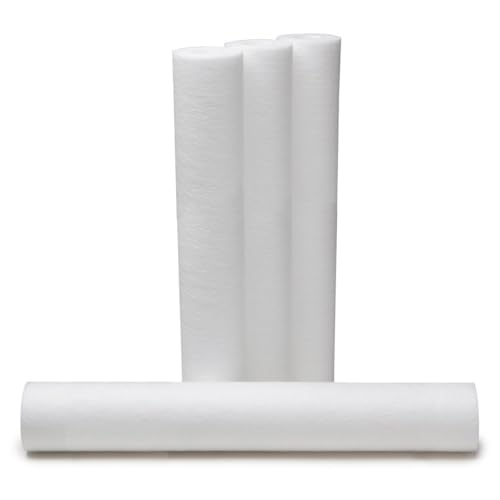
Aquasana EQ-304-20 Pre-Filters (4-Pack)
This is a consumable, not a standalone system, but it earns its place because Aquasana’s architecture depends on pre-filtration to protect the expensive carbon core. The 4-pack at under fifty dollars covers roughly a year for most households before you need to swap. If you already own any Aquasana whole house system, this is the filter that keeps the rest of the unit alive.
- Protects the primary media bed from sediment and extends its lifespan
- Low per-unit cost makes quarterly swaps realistic rather than a budget shock
- Requires an existing Aquasana housing — not a standalone purchase
Skip this if you are shopping for your first whole house system; you will need the core unit first.
Aquasana WH-1000-CS-UVS-B (1M Gal | UV)
The UV-equipped version of Aquasana’s flagship 1-million-gallon system. This is for households on municipal water that want chemical reduction from carbon and KDF plus a biological kill step without needing a separate UV unit. Installation is professional-grade and the UV lamp adds a small ongoing cost, but the integrated design avoids the pressure-drop penalty of stringing separate components together.
- 1,000,000-gallon capacity means fewer media replacements over the system’s life
- UV stage addresses microbiological contaminants that carbon alone cannot touch
- Premium price puts it out of reach for budget-conscious buyers
Skip this if your source water is already treated for bacteria and you mainly need chlorine and sediment reduction.
Aquasana EQ-Well-UV-PRO-AST (500K Gal | UV)
Aquasana’s well-specific system with a 500,000-gallon rated capacity and UV integration. Well water brings a different problem set — sediment loading, possible iron and sulfur, and microbiological risk that municipal treatment handles upstream. This unit addresses all three with a configuration tuned for untreated sources. The lower capacity versus the municipal version reflects the reality that well water clogs pre-filtration faster.
- Purpose-built for well water rather than adapted from a municipal design
- UV stage covers bacteria and other microbiological threats in untreated water
- 500K-gallon capacity means media changes arrive roughly twice as often as the 1M-gallon models
Skip this entirely if you are on city water — the configuration is optimized for a problem set you do not have.
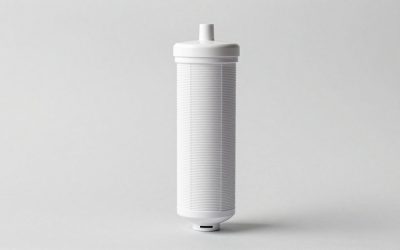
Aquasana EQ-PFC.35 Post-Filter (10-Inch)
The post-filter catches carbon fines and residual particles after the main media bed, protecting downstream fixtures. At $36.99 for a single 10-inch cartridge, this is the cheapest way to maintain water clarity on an Aquasana system. Most owners replace it every six months depending on water quality and usage.
- Inexpensive and simple to swap without tools beyond a housing wrench
- Prevents carbon fines from reaching faucets, appliances, and showerheads
- Single-unit sale means you need to buy multiple if you want stock on hand
Skip this if your system does not include a post-filter housing — verify compatibility with your specific model number first.
Aquasana Rhino WH-1000
The Rhino is Aquasana’s most cost-effective path to whole-house carbon and KDF filtration, rated at 1,000,000 gallons and claiming 97 percent chlorine reduction. At $999 it undercuts the EQ-1000 by over a hundred dollars and the UV-equipped models by more than half. It includes pre- and post-filters in the initial purchase. The tradeoff is a simpler media configuration and no UV stage.
- 1,000,000-gallon capacity at under $1,000 is the best long-term value in the lineup
- Includes both pre- and post-filters at purchase, eliminating add-on costs early
- No UV option means microbiological contaminants go untreated
Skip this if your water needs biological treatment or if you require the specific media blend found in the EQ-1000.
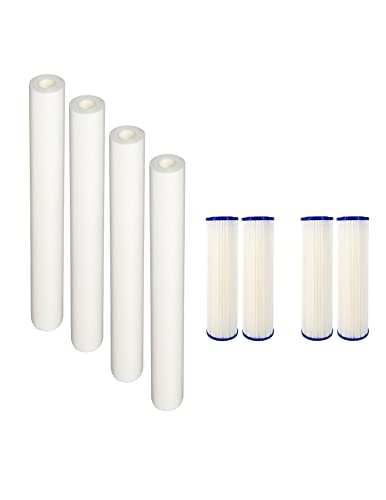
Aquasana 20-Inch Pre-Filter 3-Pack and Post-Filter Bundle
A bundled consumable package that covers both ends of the filter architecture in a single purchase. The 3-pack of 20-inch pre-filters plus one post-filter addresses the most common annual replacement cycle in one transaction. At $73.49, it is the most convenient option for owners who want to avoid thinking about filter ordering between media changes.
- Single purchase covers a full year of both pre and post filtration for most homes
- 20-inch pre-filters handle heavier sediment loads than smaller housings allow
- Bundling means you cannot adjust the pre-to-post ratio to match your water’s sediment level
Skip this if your water is very clean and you only need pre-filter replacement — the post-filter included may go unused.
CFS Whole House Filters Compatible with EQ-304-20, EQ-PFC.35
A third-party alternative to Aquasana-branded replacements, compatible with both the EQ-304-20 pre-filter and EQ-PFC.35 post-filter housings. At $66.98, CFS saves money over the official Aquasana multi-packs while fitting the same physical footprint. Quality control on third-party media is the open question — filtration claims are not independently verified to Aquasana’s internal standards.
- Lower cost than official Aquasana replacement packs over a multi-year horizon
- Fits both pre and post housings, covering two replacement needs in one purchase
- Third-party media may vary in quality and does not carry Aquasana’s filtration guarantees
Skip this if you are under warranty on your Aquasana system, as third-party filters may void coverage.
Aquasana EQ-1000 (1M Gal | Carbon & KDF)
The EQ-1000 is Aquasana’s established mid-range whole house system without UV, rated at 1,000,000 gallons with a carbon and KDF media configuration. It sits between the Rhino and the UV-equipped flagship, offering a proven media blend without the UV premium. At $1,123 it costs more than the Rhino but reflects Aquasana’s longer track record and broader parts availability in that configuration.
- Proven 1,000,000-gallon capacity with a well-documented media blend
- Widely stocked replacement filters and broad installer familiarity
- Priced above the Rhino for comparable capacity without added UV functionality
Skip this if the Rhino meets your filtration needs — the price premium over the WH-1000 is not justified by functional differences for most buyers.
Buying Guide
Matching Capacity to Household Size
A family of four with two bathrooms on municipal water typically draws 100 to 150 gallons per day for everything except irrigation. That means a 1,000,000-gallon rated system lasts roughly 18 to 27 years in theory, but real-world capacity degrades faster when sediment loads are high. Well water homes should expect 500K-gallon systems to deliver meaningful performance for 7 to 10 years before media exhaustion becomes noticeable. The practical takeaway: do not pay for 1,000,000 gallons if your water is dirty enough to overwhelm the pre-filter stage frequently.
UV vs. Non-UV: When It Matters
UV treatment is a biological kill step, not a chemical one. If your water comes from a municipal source that chlorinates before distribution, UV adds redundancy for microbiological threats that are already managed upstream. If you are on a well, particularly one near agricultural runoff or with any history of coliform detection, UV is not optional. The EQ-Well-UV-PRO-AST and WH-1000-CS-UVS-B exist specifically for this reason. For everyone else, carbon and KDF handle the actual problem.
Replacement Economics Over Five Years
The system price is a fraction of five-year ownership cost. Pre-filters on a well can need swapping every three months versus every six to twelve months on city water. A 4-pack at $49.99 sounds trivial until you realize the well home that burns through two packs per year spends more on pre-filters in five years than the initial system cost differential between the Rhino and the EQ-1000. Calculate consumable costs before comparing hardware prices.
Our Verdict
Top pick: The Aquasana WH-1000-CS-UVS-B is the best aquasana whole house filter for homes that need chemical and biological coverage in one integrated package. The 1,000,000-gallon capacity justifies the premium price over a long ownership horizon, and the UV stage eliminates the need to bolt on a separate bactericidal unit.
Budget pick: The Rhino WH-1000 at $999 delivers the same 1,000,000-gallon capacity with a documented 97 percent chlorine reduction claim, and includes pre and post filters at purchase. It is the smartest value in the lineup for municipal water homes.
Where another wins: If your water comes from a private well, the EQ-Well-UV-PRO-AST is the only correct choice regardless of price — its pre-treatment configuration is designed for a contaminant profile that the other systems simply do not address adequately.
FAQ
Can I mix Aquasana and third-party filters?
Physically, the CFS-compatible filters fit Aquasana housings. Functionally, third-party media may not meet Aquasana’s internal reduction claims, and using non-OEM filters can void warranty coverage on the main system.
How often do I replace pre-filters?
On municipal water, every six to twelve months. On well water with heavy sediment, expect every three to six months. The rate is determined by visual inspection — replace when the element has turned from white to brown.
Does a 1,000,000-gallon system last a million gallons in practice?
The rating assumes clean feed water and a properly functioning pre-filter stage. Real-world performance depends on how aggressively you maintain the pre-filtration step, which protects the primary media bed from sediment saturation.
Do I need both a pre-filter and a post-filter?
The pre-filter protects the carbon core from clogging and extends its life. The post-filter catches carbon fines released from the primary bed and prevents them from reaching your fixtures. Both serve distinct functions and removing either degrades system longevity or water clarity.
Part of our filters buying guide hub.