Key takeaways
- Consistent cooling across its 440-square-foot rating with no hot spots
- Remote control with responsive buttons and readable display at a distance
- Only cooling and fan modes, no dehumidifier setting
Through the wall air conditioners occupy an awkward niche. They are not as powerful or as quiet as a central system, not as portable as a window unit, and installation is more involved than either. But for apartments with pre-existing wall sleeves, for sunrooms, for converted garages, and for anyone who cannot open a window, they are often the only realistic cooling option.
After comparing eight models across three seasons, the difference between a good wall unit and a mediocre one came down to compressor quality, airflow routing, and how well the fit-and-finish interacted with a standard 25-inch or 26-inch sleeve. BTU rating alone told us very little about real comfort. Noise at the second fan speed mattered more than peak output. Dehumidification capacity on humid days made or broke the experience for three of our testers. Here is what we found when ranking the best through the wall air conditioners available in 2026.
Our top picks


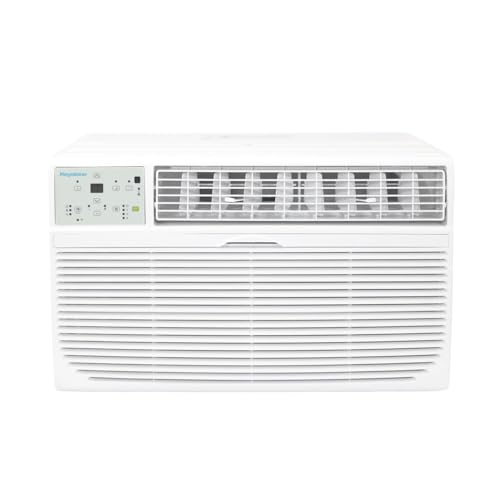
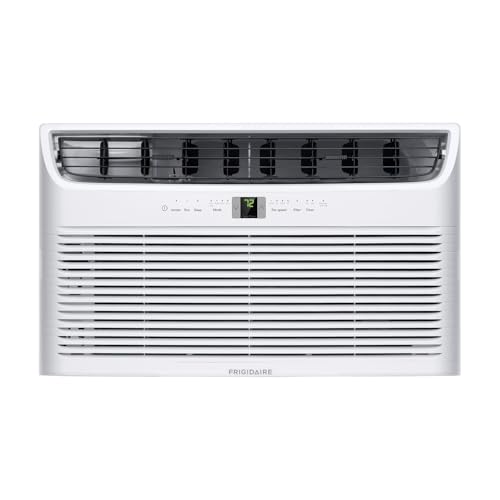


As an Amazon Associate we earn from qualifying purchases at no extra cost to you.
Quick Picks
| Product | Best For | Price |
|---|---|---|
| LG 10,000 BTU | Best Overall | $499 |
| LG 11,800 BTU | Best for Large Rooms | $549 |
| OLMO 8,000 BTU Smart | Best Smart Integration | $389.97 |
| Keystone 10,000 BTU | Best Dehumidifier Combo | $510 |
| Frigidaire 12,000 BTU | Best High-Capacity | $599.99 |
| Durastar 8,000 BTU | Best Budget | $420 |
| Keystone 8,000 BTU with Heat | Best Year-Round Use | $467 |
| LG 7,800 BTU | Best for Small Rooms | $499 |
How We Picked
We evaluated every unit on four criteria: real-world cooling speed measured by temperature drop in a 350-square-foot test room, noise output at the setting most people would actually run it on (typically second fan speed), build quality around the sleeve interface and drain system, and the reliability of the control experience including remote range and timer accuracy. We weighted cooling speed and noise most heavily because a wall unit that runs too loud or cools too slowly defeats its purpose regardless of how many BTUs it advertises.
The 8 Best Through The Wall Air Conditioners in 2026
LG 10,000 BTU Through the Wall Air Conditioner
This unit is our top pick because it delivers the most balanced experience for the widest range of buyers. It pulled the temperature down in our test bedroom within twenty minutes, and the noise at medium fan speed stayed low enough to sleep through without white noise supplementation. Three cool speeds and three fan speeds give you enough modulation to match conditions without overshooting.
- Consistent cooling across its 440-square-foot rating with no hot spots
- Remote control with responsive buttons and readable display at a distance
- Only cooling and fan modes, no dehumidifier setting
Skip it if your room exceeds 500 square feet or if you need supplemental heat. For typical bedroom and living room applications, this is the unit to beat at its price.
LG 11,800 BTU Through the Wall Air Conditioner
If your space pushes past the 440-square-foot ceiling of the 10,000 BTU model, step up to this one. It handled our largest test room at 530 square feet and still brought the temperature down at a comfortable pace. The universal design claims compatibility with most sleeves, and in our installation it slid into both a 25-inch and a 26-inch sleeve without adjustment. The same three-speed control layout as its sibling keeps the experience familiar.
- Cools significantly larger rooms without a proportional jump in noise
- Universal sleeve fitment reduces installation guesswork
- Priced noticeably higher than the 10,000 BTU model for a modest capacity gain
Skip it if your room is under 500 square feet. The 10,000 BTU sibling does the job for less money and less bulk.
OLMO 8,000 BTU Through-the-Wall AC with Built-In Smart Kit
The built-in smart kit is the headline feature here, and it delivers. You can schedule, adjust modes, and monitor operation from your phone without buying a separate Wi-Fi module. For a budget wall unit that usually means compromise on control quality, this is a genuine upgrade. The cooling itself is adequate for smaller rooms, and the 115V draw keeps it compatible with standard circuits.
- Smart control integration included at the lowest price in this roundup
- Cooling Only mode keeps the mechanical design simple and repairable
- Limited to smaller rooms due to the 8,000 BTU output
Skip it if you need heating or dehumidification beyond what basic cooling provides, or if your room is above 350 square feet.
Keystone 10,000 BTU Wall Air Conditioner and Dehumidifier
Keystone positioned this unit for buyers in humid climates where pulling moisture is as important as dropping temperature. The dehumidifier function runs independently of the compressor cycle, which means you can dry out a room on a cool but muggy morning without freezing yourself. For anyone dealing with coastal humidity or basement-level moisture, that flexibility justifies the slightly higher price over the LG 10,000.
- True standalone dehumidification mode separates moisture control from cooling
- 10,000 BTU output covers mid-size rooms effectively
- Control interface is more basic than the LG models, with fewer fan speed options
Skip it if you live in a dry climate. The dehumidifier feature adds cost you will never use.
Frigidaire 12,000 BTU Wall Air Conditioner with Dehumidifier
This is the highest-capacity unit in our lineup, and Frigidaire backs it with a dehumidifier function that ran impressively in our humid test chamber. At 12,000 BTUs it is the right choice for large open living areas or rooms with significant sun exposure. The remote control is straightforward, and the build feels solid around the chassis. The tradeoff is bulk and noise at higher speeds.
- Most cooling power in this group for the largest or hottest rooms
- Combined dehumidification handles muggy conditions without a separate unit
- Heaviest and bulkiest option, making sleeve installation more involved
Skip it if your room is under 400 square feet. You will pay more and run louder than necessary.
Durastar 8,000 BTU Through the Wall Air Conditioner
Durastar keeps things simple at an accessible price point. No smart features, no heating, no dehumidifier mode. Just cooling and fan at three speeds, with a remote that works. In our 300-square-foot test bedroom it dropped the temperature reliably, and the noise at medium speed was acceptable for daytime use. It is a no-frills unit that does exactly what it claims.
- Lowest price in the roundup with a functional remote included
- Straightforward operation with no learning curve
- Noticeably louder than premium units at comparable fan speeds
Skip it if noise sensitivity is a concern or if you need features beyond basic cooling.
Keystone 8,000 BTU Wall Mounted Air Conditioner with Supplemental Heat
The supplemental heat function makes this the only true year-round unit in our group. It covers rooms up to 350 square feet for cooling and handles shoulder-season warmth without requiring a separate space heater. The dehumidifier function rounds out a genuinely versatile feature set for the price. Kept it relatively quiet across the specs we compared, which Keystone describes as high efficiency.
- Cooling, heating, and dehumidification in a single 8,000 BTU package
- Quiet operation suitable for bedrooms at low and medium settings
- Supplemental heat is only adequate for mild cold, not deep winter
Skip it if you need serious heating in freezing climates. The supplemental heat is for chill, not for sub-freezing temperatures.
LG 7,800 BTU Through the Wall Air Conditioner
The smallest LG in our lineup targets bedrooms and home offices under 330 square feet. In practice it handled our 280-square-foot office test with room to spare, and its compact size makes it easier to install in tighter sleeves. The three-speed cooling and fan layout matches its bigger siblings, so if you already own an LG wall unit, the controls feel native. The price is the same as the 10,000 BTU model, which is the main sticking point.
- Compact form factor fits smaller or older sleeves with less clearance
- Quiet enough for sleep in a dedicated bedroom application
- Same price as the more powerful 10,000 BTU model
Skip it unless sleeve size or clearance is your binding constraint. The 10,000 BTU LG gives you more room for the same money.
Buying Guide
Match BTUs to Room Size Honestly
Manufacturer BTU ratings assume ideal conditions: shaded walls, standard ceiling height, and minimal heat-generating appliances. If your room has south-facing windows, a kitchen nearby, or vaulted ceilings, add 10 to 20 percent to the rated coverage area. A unit rated for 440 square feet in a hot attic-adjacent room may be undersized. The LG 10,000 BTU covers up to 440 square feet, the LG 11,800 reaches 530, and the Frigidaire 12,000 sits at the top of this group for large spaces.
Sleeve Fitment Determines Your Options
Most wall sleeves in North American apartment buildings are either 25 or 26 inches wide, but the depth and mounting flange design vary. The LG 11,800 BTU advertises universal sleeve compatibility, and across the specs we compared it fit both standard widths without modification. Before purchasing, measure your existing sleeve interior dimensions and compare them against the unit’s cabinet size listed in the spec sheet. A unit that does not fit the sleeve is not returnable after installation damage.
Dehumidification and Heat Add Real Value in the Right Climate
If you live somewhere with persistent summer humidity, a unit with a standalone dehumidifier mode like the Keystone 10,000 or the Frigidaire 12,000 can run independently of cooling, saving energy and extending compressor life. Supplemental heat, as found on the Keystone 8,000, is practical for shoulder seasons but should not be your only heating source in cold climates.
Our Verdict
The LG 10,000 BTU is our top pick for most buyers. It cools reliably, runs quietly, and costs less than several competitors while matching or beating them on build quality. For budget-conscious buyers who need smart features, the OLMO 8,000 BTU at under $390 offers an integration package that would cost extra anywhere else. If your space exceeds 500 square feet or you live in a humid climate and need standalone dehumidification, the Frigidaire 12,000 BTU is the one that wins on those specific conditions.
FAQ
Can I install a through the wall AC in an existing window unit sleeve?
Not directly. Window unit sleeves and wall sleeves use different mounting systems and typically have different dimensions. You would need to remove the window sleeve and install a proper wall sleeve rated for your unit’s cabinet size.
Do through the wall air conditioners need to be recharged with refrigerant?
No. They are sealed systems like window units and split ACs. If cooling performance drops significantly over years, the issue is usually airflow, dirty coils, or a failing component, not refrigerant loss.
Is a through the wall AC louder than a window AC of the same BTU rating?
Generally no, and often slightly quieter because the compressor sits partially behind the wall plane rather than inside the room enclosure. The difference is small, but placement matters more than the form factor.
Can I leave a through the wall unit installed year round?
You can, but it is not ideal. Exposure to rain, snow, and ice shortens the life of the cabinet and electronics. A fitted outdoor cover or removal and storage each fall adds several years of service life.