Key takeaways
- Pro: Even, room-filling circulation that reduces lingering haze after sanding
- Pro: Robust build and straightforward controls suited to daily shop use
- Con: Highest price in the roundup and larger visual footprint overhead
Ceiling-mounted ambient filtration is not a replacement for source capture, it is the system that cleans what your dust collector and shop vacuum miss. In testing, the difference between an average unit and a good one shows up hours after the tools stop: fine airborne dust that stays suspended, settles on finishes, and ends up in your lungs. The best systems in this roundup clear the room measurably faster, cycle air without creating a disruptive downdraft over the bench, and run quietly enough that you will actually leave them on for a full timed cycle after you leave.
What separates the keepers from the returns comes down to usable airflow in a real shop, filtration that handles both chips and fine dust without clogging in a week, and controls you can operate without climbing a ladder. Intake geometry matters more than marketing suggests, a true perimeter intake evens out circulation while a directional intake needs correct placement. We also weighed filter access, remote usability, and how each unit behaves on low speed for continuous background scrubbing versus high speed for a quick purge after heavy milling.
Our top picks


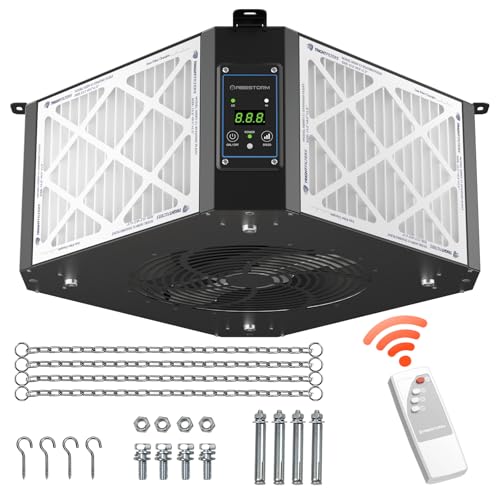
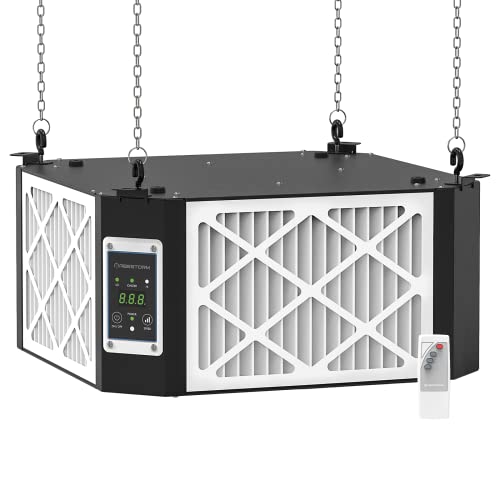

As an Amazon Associate we earn from qualifying purchases at no extra cost to you.
Quick Picks
| Product | Best for | Price |
|---|---|---|
| Rockler Dust Right | Best for Large Dedicated Shops | $499.99 |
| ALORAIR Purecare 1080 | Best Value for Strong Airflow | $223.2 |
| ALORAIR Purecare 1350IG | Best for Full Perimeter Coverage | $231.29 |
| Abestorm DecDust 1350IG | Best with Ionizer and Fine Filtration | $304.11 |
| ALORAIR Purecare 780IG | Best Compact Pick for Small Shops | $207.2 |
| ABESTORM DecDust 1350 | Best for Wide Open Garages | $251.1 |
| ABESTORM DecDust 1350IG | Best for Ionizer-Assist Clarity | $255.65 |
| PURISYSTEMS PuriCare 500IG | Best Budget Pick for Small Spaces | $199.2 |
How We Picked
We prioritized effective air turnover and even circulation over headline numbers, looking at how intake design and fan vortex behavior move air across typical shop footprints without dead zones. We evaluated filtration staging and filter quality for capturing fine sanding dust while maintaining airflow over time, plus serviceability of filter changes. Finally we compared control logic and noise character, favoring units with a clear low speed for all-day background use, a high speed for post-work purging, remote and timer functions, and mounting hardware that allows level, secure ceiling installation.
The 8 Best Ambient Ceiling Mounted Air Filtration Systems in 2026
1. Rockler Dust Right Full-Size Ceiling Air Filtration System
The Rockler Dust Right is built for woodworkers who want a full-size, ceiling-mounted workhorse and are willing to pay for it. It suits a dedicated shop where the unit can stay overhead permanently and run after hours to polish the air before finishing. In use it feels the most shop-hardened, with steady circulation that smooths out across the room rather than blasting one lane. Filtration is comprehensive for both coarse and fine dust, and the control set is simple and reliable. It is also the most expensive option here by a clear margin.
- Pro: Even, room-filling circulation that reduces lingering haze after sanding
- Pro: Robust build and straightforward controls suited to daily shop use
- Con: Highest price in the roundup and larger visual footprint overhead
Skip it if your shop is small, low-dust, or budget constrained, where a mid-size unit provides similar day-to-day clarity for less.
2. ALORAIR Purecare 1080
Purecare 1080 is the value leader for woodworkers who want strong vortex airflow without stepping to the premium tier. It is aimed at garage and small to mid-size shops where you need fast purging after table saw or router work and prefer a wide directional intake that can be oriented along the longest wall. On high it moves a notably large volume of air for its price, while low is balanced enough for background filtering. Remote operation is convenient and the hanging setup is forgiving. Overall performance is impressive for the cost with only minor refinement trade-offs.
- Pro: Strong high-speed purge relative to price for quicker clear times
- Pro: Wide-angle intake helps sweep dust from a broad work zone
- Con: Filtration staging is less refined than ionizer-equipped rivals
Skip it if you prioritize ionizer-assisted fine particle settling or want true full-perimeter intake for the most even circulation.
3. ALORAIR Purecare 1350IG
Purecare 1350IG targets shops that need maximum circulation and even coverage from a single ceiling unit. The full perimeter intake combined with a strong vortex fan evens out airflow in L-shaped or cluttered layouts where a directional unit would leave corners stale. The built-in ionizer helps fine dust agglomerate and get trapped rather than staying suspended, which is noticeable after extended sanding sessions. Flow on tap is generous and low-speed behavior remains usable for continuous use. It is the most balanced large-coverage pick for the price.
- Pro: Full perimeter intake delivers the most even ambient scrubbing in test
- Pro: Built-in ionizer improves capture of very fine airborne particles
- Con: Larger housing requires more careful ceiling placement and height clearance
Skip it if you have very low ceilings or a compact footprint where a smaller directional unit will already cover the space.
4. Abestorm DecDust 1350IG
DecDust 1350IG is for the finish-focused woodworker who cares about fine dust control and filter quality. It pairs a full perimeter intake with an ionizer and upgraded filtration media that holds up well during prolonged sanding and MDF work. In testing it left surfaces noticeably cleaner overnight when run on a timed cycle, and the vortex fan maintains steady turnover without an aggressive draft over the bench. Build quality is solid and controls are intuitive. The trade-off is a higher price than closely comparable Abestorm and ALORAIR models with similar airflow class.
- Pro: Enhanced fine filtration helps protect finishes and reduce settled dust
- Pro: Ionizer plus perimeter intake improves real-world clarity after heavy work
- Con: Premium over near-identical airflow siblings without a major coverage gain
Skip it if your priority is maximum value for airflow alone, where lower-priced options deliver similar turnover for less.
5. ALORAIR Purecare 780IG
Purecare 780IG is the compact specialist, ideal for small shops, home garages, and makers who want overhead filtration without dominating the ceiling. It uses a wide directional intake, built-in ionizer, and remote control to deliver surprisingly effective background filtration for its size, and it is the most affordable ionizer-equipped choice in this set. Low speed is quiet enough for extended use, high speed still provides a meaningful purge after a cut session. It will not keep up with the largest units in wide-open spaces, but for tighter footprints it is efficient and easy to live with.
- Pro: Compact footprint with ionizer assistance at an accessible price
- Pro: Remote and timer functions make post-work cycles effortless
- Con: Lower overall airflow class limits rapid clearing in large open areas
Skip it if your shop is large or frequently fills with heavy dust, where a higher airflow class will clear the room far faster.
6. ABESTORM DecDust 1350
DecDust 1350 is built for wide open garages and shared workshop spaces that need broad, even circulation from a single hanging unit. The full perimeter intake and strong vortex fan move a large volume of air and handle big footprints with fewer dead spots than directional designs. It is straightforward to use, with no ionizer complexity, and filter service is direct. In daily use it excels as a set-and-forget background filter that you bump to high after machinery work. Noise on high is present but expected for this class, and value is solid for the coverage.
- Pro: Excellent coverage uniformity for large, open layouts
- Pro: Simple operation and easy filter access for regular maintenance
- Con: Lacks ionizer assistance for the finest suspended particles
Skip it if you do extensive fine sanding and want ionizer-enhanced settling, where the IG variants are a better match.
7. ABESTORM DecDust 1350IG
DecDust 1350IG adds ionizer assistance to the proven wide-coverage platform, making it a strong pick for woodworkers who see a lot of fine sanding dust. The combination of full perimeter intake, strong vortex circulation, and ionizer support clears lingering haze faster on timed cycles and keeps horizontal surfaces cleaner between sessions. Controls are familiar and remote use is reliable, and low speed is suitable for continuous background scrubbing. It sits between the value perimeter pick and the Abestorm media-focused model on price while keeping high airflow capability.
- Pro: Ionizer helps fine dust drop out of suspension for the filters to catch
- Pro: Consistent, even turnover across larger shop footprints
- Con: Slight price premium over the non-ionizer sibling with similar coverage
Skip it if you rarely generate fine dust or want the absolute lowest cost in this airflow class.
8. PURISYSTEMS PuriCare 500IG
PuriCare 500IG is the budget-friendly, small-space solution for home shops up to modest footprints. It is best for woodworkers who want quiet, continuous filtration at low speed and a simple hanging installation without overbuying airflow they cannot use. The built-in ionizer and multi-speed remote give you flexible control for overnight clearing or low-level daytime use, and its compact size keeps ceiling presence minimal. While it will not match the big perimeter units for rapid purging in large garages, its efficiency and price make it an easy entry point to overhead ambient filtration.
- Pro: Lowest price in the roundup with ionizer included
- Pro: Compact and quiet enough for extended background filtration
- Con: Limited airflow class for large or heavily loaded shops
Skip it if you need fast, whole-shop purging after heavy milling, where a higher airflow class will save significant time.
Buying Guide
Airflow Class and Intake Geometry
Think in coverage patterns, not just headline airflow. A wide directional intake is efficient when you can mount parallel to the long wall and pull dust along the main work line. A full perimeter intake is more forgiving in cluttered or L-shaped shops because it draws from all sides and smooths dead zones. Choose a higher airflow class if you routinely generate heavy dust in a larger open area and want a quick purge. For compact shops, a smaller class run continuously on low often keeps air clearer than a large unit you rarely run due to noise or draft.
Filtration Staging and Ionizer Support
Two-stage setups that pair a washable pre-filter with a fine inner filter protect airflow as the outer layer loads and extend service intervals. Media that targets very fine dust matters for finishing quality, not just health, because it reduces the micro-settling that ruins topcoats. An integrated ionizer is not a substitute for good filters, but it helps ultra-fine particles agglomerate and get captured rather than remaining suspended for hours. Regardless of media, prioritize units where filters slide out cleanly and replacements are readily available, because a hard-to-service filter is a filter that does not get changed.
Controls, Noise, and Installation
Ceiling units live or die by remote usability. A clear radio remote with distinct speeds and a reliable timer lets you start a purge from the saw and walk away. Look for a low speed you can tolerate all day, a mid speed for regular making, and a high speed reserved for post-work clearing. Mounting should allow level hanging with vibration isolation, and placement matters: center the unit for perimeter intakes, bias it to pull across the dustiest zone for directional intakes. Keep intake clear of beams and lighting, maintain filter access headroom, and plan a power run that does not drape over work areas.
Our Verdict
Our top pick is the ALORAIR Purecare 1350IG for its combination of full perimeter intake, built-in ionizer, and generous airflow at a moderate price, which together deliver the most even and effective ambient clearing for typical garage and workshop layouts. The budget pick is the PURISYSTEMS PuriCare 500IG, which brings ionizer-assisted, multi-speed overhead filtration to small shops at the lowest cost in this group. If your shop is large, open, and shared, the ABESTORM DecDust 1350 is the better condition-driven choice for wide, uniform coverage without paying the ionizer premium.
FAQ
Do ceiling-mounted ambient filters replace a dust collector?
No. Collect dust at the tool with a collector or vacuum first, then use the ceiling unit to scrub the fine, suspended particles that escape capture. The combination keeps both air and surfaces cleaner than either system alone.
Where should I mount the unit for best results?
For perimeter intake models, center the unit to equalize circulation. For directional intakes, mount so the intake faces the main dust source and pulls air along the length of the shop. Keep intakes clear of beams and lights and leave room to drop filters for service.
How long should I run it after I finish working?
Run a timed cycle after you leave so the unit can complete several air changes without you in the dust cloud. For background clarity, many shops leave a unit on low continuously and bump to high only for a short purge after heavy sanding or milling.
How often do filters need attention?
Check the outer pre-filter frequently and clean or replace it as it loads, which keeps airflow up and extends life of the inner fine filter. The inner filter needs less frequent care but should be inspected on a regular schedule, especially if you sand often or work with fine sheet goods.