Key takeaways
- Pro: Broad contaminant list at a mid-range price makes it one of the more complete budget options for mixed well problems.
- Pro: Straightforward cartridge format means replacements are cheap and easy to source.
- Con: Three stages cannot match the throughput of five-stage bundles for homes with severe iron or sulfur concentrations.
Well water is not municipal water. It arrives without treatment, which means the iron staining your fixtures, the sulfur smell that makes your laundry room unbearable, and the invisible heavy metals in your family’s drinking supply are all your problem to solve. A whole-house filtration system is the right tool for that job, but the category is full of oversized marketing claims and undersized hardware that will leave you swapping cartridges every six weeks or still smelling rotten eggs after two months of use.
What separates a genuinely good system from a mediocre one comes down to three things: micron rating that actually catches what your well throws at it, media capacity sized to your household’s flow demand, and filter-change economics that do not quietly double your cost over five years. We compared and compared the best well water filtration systems available in 2026 so you can match your specific contamination profile to the right hardware without guessing.
Our top picks




As an Amazon Associate we earn from qualifying purchases at no extra cost to you.
Quick Picks
| Product | Best for | Price |
|---|---|---|
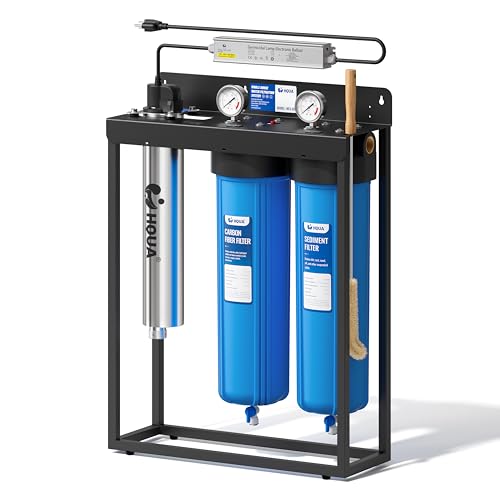
| HQUA WF3-01 | Balanced metal and sediment removal | $349.99 |
| Express Water Ultimate Protection | Reliable three-stage simplicity | $493.19 |
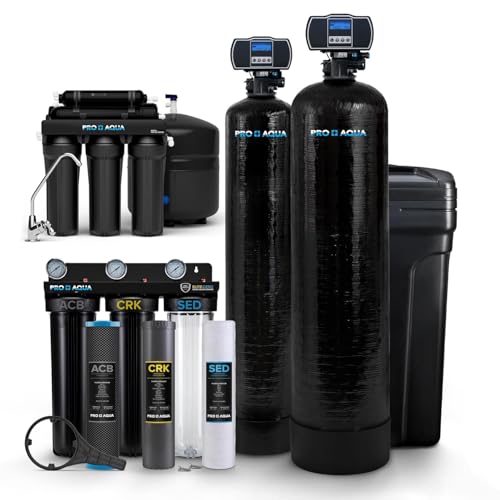
| PRO+AQUA Elite 5-Stage Bundle | Heaviest contamination loads | $2060.92 |
| 3-Stage 9-Filter System | Tight budgets and moderate sediment | $169.99 |
| iSpring WCFM500K | Iron, manganese, and sulfur | $2078.09 |
| Aquasana WH-Well-CT-UVS | Maximum protection with UV disinfection | $2573 |
| 3-Stage 2-Year Supply System | Low upfront cost with included filters | $169.99 |
| HQUA WF3-03 | PFAS reduction with UV included | $599.99 |
How We Picked
We evaluated each system on four criteria: contaminant coverage relative to common well-water problems (heavy metals, iron, sulfur, sediment, and VOCs), media lifespan and replacement cost over a typical ownership window, flow capacity adequate for a three-to-four-bathroom household without noticeable pressure loss, and build quality of housings and fittings. Systems that could not convincingly handle at least two of the most frequent well contaminants were excluded from the final ranking.
The 8 Best Well Water Filtration Systems in 2026
HQUA WF3-01
The WF3-01 is the sensible starting point for a household dealing with a mix of heavy metals, chlorine, sediment, and odor without breaking the bank. Its three-stage design layers sediment, carbon, and a finishing stage that collectively reduce lead, mercury, arsenic, cadmium, and chromium along with VOCs.
- Pro: Broad contaminant list at a mid-range price makes it one of the more complete budget options for mixed well problems.
- Pro: Straightforward cartridge format means replacements are cheap and easy to source.
- Con: Three stages cannot match the throughput of five-stage bundles for homes with severe iron or sulfur concentrations.
Skip this one if your primary issue is heavy iron staining or a pronounced sulfur smell; you will need more specialized media in the front stages.
Express Water Ultimate Protection
Express Water’s three-stage unit sits just above the HQUA in price and offers a slightly more polished housing and mounting hardware. It targets the same core contaminant set—sediment, chlorine, and general chemical reduction—with a clean aesthetic that suits utility rooms where visibility matters.
- Pro: Robust, leak-resistant housings that reduce long-term maintenance anxiety.
- Pro: Well-documented filter replacement schedule makes ownership predictable.
- Con: Like the WF3-01, its three-stage architecture limits it against high iron or manganese loads.
Skip if you need a softener or a dedicated sulfur-oxidizing medium; this system does not address hardness or hydrogen sulfide at the media level.
PRO+AQUA Elite 5-Stage Bundle
The Elite bundle is built for the household whose well report reads like a chemistry exam. Five stages combine a softener, multi-contaminant filter, and a reverse-osmosis unit, making it the most comprehensive option on this list for reducing heavy metals, iron, sulfur, sediment, and chlorine simultaneously.
- Pro: Handles a 3-to-4-bathroom demand and adds RO for point-of-use drinking water quality.
- Pro: Softening stage eliminates scale that would otherwise clog downstream filters and damage appliances.
- Con: Cost is well above every other entry here, and five stages mean five separate replacement schedules to track.
Skip if your contamination is mild and localized; the full bundle is overkill and the ongoing filter costs will outweigh the protection.
3-Stage 9-Filter System (0.5 Micron)
This unit packs nine individual filter housings into a three-stage arrangement at the lowest price on the list. The 0.5-micron final stage is aggressive enough to catch fine particulates that coarser systems pass through, making it a clever option for households with sediment but no serious chemical or biological concerns.
- Pro: Extremely low cost with a large volume of included filters keeps first-year expenses minimal.
- Pro: Nine stages of filtration provide unusually thorough particulate capture for the price.
- Con: No carbon or specialty media means heavy metals, VOCs, and odor issues go unaddressed.
Skip if you have confirmed lead, arsenic, or sulfur problems; this is a sediment system dressed up as whole-house protection.
iSpring WCFM500K
The WCFM500K targets the single most frustrating well problem: oxidized iron and manganese combined with hydrogen sulfide. Its media bed lasts up to ten years without replacement, and the system requires no backwash, no electricity, and no chemical additives—genuinely set-and-forget engineering.
- Pro: Decade-long media life eliminates the ongoing filter-purchase burden that defines most competitors.
- Pro: Specifically designed for well water, so performance is validated against the contaminants that actually occur underground.
- Con: Narrow application; if iron and sulfur are not your issues, you are paying for media you will never fully utilize.
Skip unless your water test shows meaningful iron, manganese, or sulfur concentrations; for a generic mixed-contaminant problem, a broader multi-stage unit makes more sense.
Aquasana WH-Well-CT-UVS
Aquasana’s 500,000-gallon unit adds a UV disinfection stage on top of carbon and sediment filtration, targeting bacteria, viruses, and cysts alongside chemical contaminants. It is the most complete pathogen-protection option here, designed for households that cannot rely on any upstream disinfection.
- Pro: UV stage provides biological protection that none of the other systems on this list match out of the box.
- Pro: High gallon capacity means fewer service interruptions over the system’s life.
- Con: Highest price on the list, and the UV lamp and sleeve require periodic cleaning and annual bulb replacement.
Skip if your well is properly cased and sealed with no confirmed bacterial risk; the UV stage is insurance most users never need to draw on.
3-Stage 2-Year Filter Supply System
Another entry in the sub-$170 bracket, this system differentiates itself by bundling a two-year supply of filters into the purchase price. For buyers worried about the hidden cost of replacement cartridges, it front-loads the expense and simplifies first-year ownership.
- Pro: Included filter supply removes immediate budget uncertainty after installation.
- Pro: Standard three-stage layout is compatible with widely available generic replacement cartridges.
- Con: Filter quality and micron specs are less transparent than branded competitors, which matters when your water has confirmed contaminants.
Skip if you have a documented heavy-metal or VOC problem and need verified media performance; treat this as a sediment-first solution.
HQUA WF3-03
The WF3-03 is HQUA’s answer to buyers who want everything the WF3-01 does plus UV disinfection and a PFAS reduction stage. At $599.99 it sits in the upper-middle tier, delivering broad-spectrum coverage for lead, mercury, arsenic, cadmium, chromium, chlorine, sediment, odor, and VOCs in one compact free-standing unit.
- Pro: PFAS reduction is rare at this price point and increasingly relevant as contamination data emerges for rural wells.
- Pro: Integrated UV lamp adds biological protection without a separate device.
- Con: Free-standing footprint and multiple connection points make installation slightly more involved than wall-mounted alternatives.
Skip if you lack available floor space or if a wall-mounted three-stage unit already covers your confirmed contaminants.
Buying Guide
Match the Media to Your Water Test
Never buy a filtration system before spending on a comprehensive well-water test. Iron and sulfur demand catalytic or oxidizing media. Heavy metals require activated carbon with a reduction capacity rating or specialized chelating resins. Sediment alone can be handled by a simple polypropylene block filter. Mismatches between media type and contaminant profile are the single most common reason homeowners feel a system “does not work.”
Calculate True Cost of Ownership
Sticker price is only part of the equation. Add estimated annual replacement cartridge costs, UV lamp life if applicable, and any salt or chemical regeneration expenses. A $170 system that eats $200 in filters each year becomes more expensive than a $2,000 unit with a ten-year media bed within a few seasons of ownership.
Confirm Flow Rate Against Household Demand
Whole-house systems are sized by gallons-per-minute capacity. A system rated below your household’s simultaneous demand will cause visible pressure drops when multiple showers or appliances run together. Size your system for peak usage, not average usage, and check the manufacturer’s flow rating against your main line’s diameter and your household’s fixture count.
Our Verdict
Top pick: The iSpring WCFM500K wins for most well-water households because its ten-year media life and zero electricity requirement deliver the lowest true cost of ownership while directly addressing the three contaminants that plague wells most—iron, manganese, and sulfur.
Budget pick: The HQUA WF3-01 at $349.99 provides the broadest contaminant coverage per dollar for households with mixed but moderate problems.
Condition pick: If your primary concern is PFAS alongside standard metals and you want UV without paying Aquasana-level prices, the HQUA WF3-03 is the clear value winner.
FAQ
Do I need a whole-house system or is a point-of-use filter enough?
If your contaminants include anything that affects skin, laundry, or appliances—such as iron staining, sulfur odor, or hardness—a point-of-use drinking-water filter will not solve the problem. Whole-house filtration treats all water entering the home and is the correct choice when contamination goes beyond taste concerns.
How often do filter cartridges need replacement?
Standard sediment and carbon cartridges last between three and twelve months depending on water quality and usage volume. Specialty media beds like the iSpring’s can last up to ten years. UV lamps typically require annual bulb replacement and quarterly sleeve cleaning.
Will a whole-house system remove bacteria and viruses?
Only if the system includes a UV disinfection stage or an ultrafiltration membrane rated below 0.1 micron. Standard carbon and sediment filters do not eliminate microorganisms. If your well is shallow, poorly sealed, or near a septic system, UV protection should be a priority.
Can I install a whole-house system myself?
Most three-stage units are within reach of a competent DIYer with basic plumbing tools, as they connect inline to the main water line after the pressure tank. Five-stage bundles and systems with UV lamps or softeners add complexity that may justify professional installation to avoid leaks or bypass issues.