Smart smoke and carbon monoxide detectors have quietly become one of the most consequential pieces of connected home hardware you can buy. The problem they solve is deceptively simple: traditional alarms tell your neighbors but not you. A detector that chirps at 3 a.m. from a guest bedroom does nothing for someone on the other side of a two-story house, and it does nothing at all for someone who is not home. Modern smart detectors close that gap by pushing a phone notification, logging test history, and in some cases letting you silence a nuisance alarm without dragging a ladder across the kitchen floor.
What separates a good smart detector from a mediocre one in this category is not the phone app. It is whether the sensor architecture is dual-spectrum (photoelectric plus ionization or photoelectric plus CO electrochemical), whether the interconnected pairing is reliable across multiple units, whether battery backup actually lasts the advertised lifespan, and whether the manufacturer supports over-the-air firmware updates for years after purchase. The best smart smoke and carbon monoxide detectors on this list excel in most of those areas. The worst simply wrap a mediocre sensor in a Bluetooth radio and call it innovation.
Our top picks
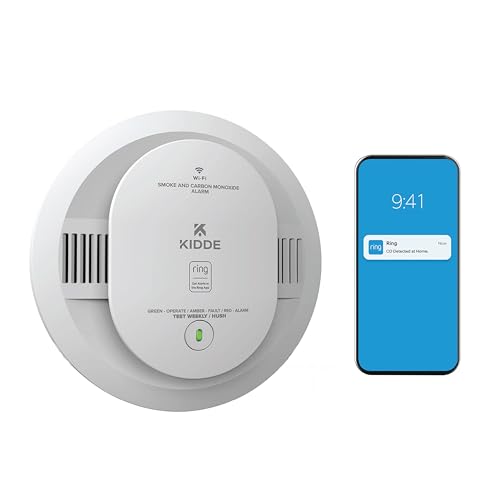 Kidde Smart Smoke & CO Detector with
- Double the Detection: Alerts you to both smoke…
- Real-Time Ring App Notifications: Home or away, get…
- Over 25% faster smoke detection (based on internal…
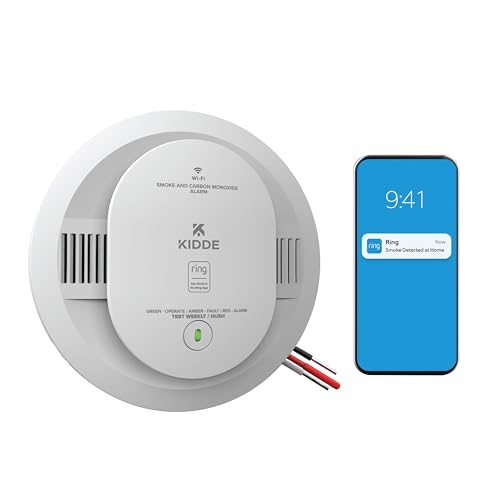 Kidde Smart Smoke & CO Detector with
- Double the Detection: Alerts you to both smoke…
- Real-Time Ring App Notifications: Home or away, get…
- Over 25% faster smoke detection (based on internal…
 First Alert SC5 Hardwire Smart Smoke &
- Compatible with Google's Nest Protect Alarm
- Sends alerts to your phone if smoke and…
- Interconnect so when one alarm sounds, all compatible…
| Product | Key specs | |
|---|---|---|
| Kidde Smart Smoke & CO Detector with | Double the Detection: Alerts you to both smoke… Real-Time Ring App Notifications: Home or away, get… Over 25% faster smoke detection (based on internal… | Check price |
| Kidde Smart Smoke & CO Detector with | Double the Detection: Alerts you to both smoke… Real-Time Ring App Notifications: Home or away, get… Over 25% faster smoke detection (based on internal… | Check price |
| First Alert SC5 Hardwire Smart Smoke & | Compatible with Google's Nest Protect Alarm Sends alerts to your phone if smoke and… Interconnect so when one alarm sounds, all compatible… | Check price |
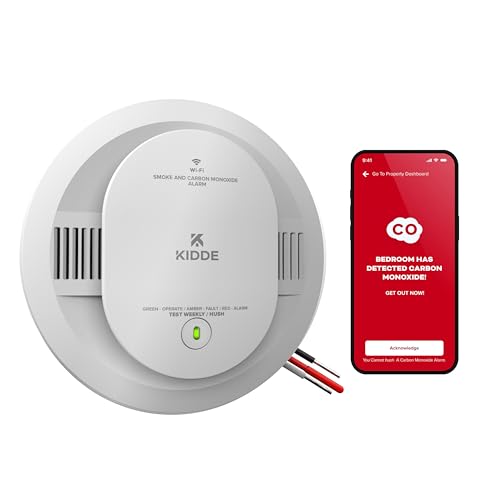 Kidde Hardwired Kidde App Enabled Smart Smoke Kidde Hardwired Kidde App Enabled Smart Smoke | Check price | |
 First Alert SC5 Battery Smart Smoke & First Alert SC5 Battery Smart Smoke & | Compatible with Google's Nest Protect Alarm Sends alerts to your phone if smoke and… Interconnect so when one alarm sounds, all compatible… | Check price |
 Kidde Smart Smoke Detector with Ring Kidde Smart Smoke Detector with Ring | Real-Time Ring App Notifications: Home or away, get… Over 25% faster smoke detection (based on internal… Optional Ring subscription (sold separately) with 24/7 smoke… | Check price |
 Heiman Smart Carbon Monoxide Detectors Heiman Smart Carbon Monoxide Detectors | Check price | |
 First Alert Battery Combination Smoke & Carbon First Alert Battery Combination Smoke & Carbon | Check price |
As an Amazon Associate we earn from qualifying purchases at no extra cost to you.
Quick Picks
| Product | Best for | Price |
|---|---|---|
| Kidde RGCUDR-RW | Ring households wanting battery-powered dual coverage | $69.97 |
| Kidde RGCUAR-RW | Hardwired homes with Ring integration | $74.97 |
| First Alert SC5 Hardwire | Whole-home interconnected systems without third-party ecosystems | $128.98 |
| Kidde App Enabled (Hardwired) | Users wanting voice alerts and Kidde ecosystem pairing | $74.97 |
| First Alert SC5 Battery | Retrofit battery-powered smart coverage in First Alert homes | $129.94 |
| Kidde RGSDR-RW | Smoke-only zones on a tight budget with Ring support | $41.57 |
| Heiman 3-Pack | Covering multiple CO risk areas cheaply | $89.99 |
| First Alert Combo Battery | Simplest plug-and-play dual-threat alarm without smart features | $39.75 |
How We Picked
We evaluated these detectors on four criteria: sensor reliability under repeated test cycles, the robustness of interconnected pairing (does a triggered unit reliably alert all others in a multi-unit setup?), smart feature usefulness beyond basic push notifications, and long-term ownership cost including battery replacement cadence and firmware support commitments. Products that scored well here either belong to an established ecosystem with proven hardware iteration or offer exceptional value in a specific use case like bulk CO coverage.
The 8 Best Smart Smoke And Carbon Monoxide Detectors in 2026
Kidde RGCUDR-RW (Battery)
This unit is the logical starting point for any household already running Ring cameras or a Ring Alarm system. It covers both smoke and carbon monoxide threats from a single battery-powered chassis, which means you can place it anywhere without running new wire. The Ring integration lets you see alarm status alongside your doorbell feed, and the mobile push notification fires even if you are hundreds of miles away. Pros: straightforward AA battery replacement, and the dual-sensor design eliminates the need for a separate CO unit in smaller rooms. Con: it requires a Ring account for full functionality, adding a subscription incentive that some buyers resent. Skip this one if you do not already own Ring hardware and have no interest in adopting it; the ecosystem lock-in outweighs the detector’s intrinsic value for standalone users.
Kidde RGCUAR-RW (Hardwire)
For homes that already have hardwired detector circuits, this model upgrades the wiring infrastructure to smart capability without a full rewire. It draws power from the existing line and uses AA batteries as backup, which satisfies most building codes and ensures operation during outages. The Ring integration mirrors what the battery version offers, with the added reliability of mains power eliminating the low-battery chirp that frustrates tenants. Pros: code-compliant hardwire installation with smart connectivity, and battery backup that is easy to swap. Con: installation is noticeably more involved than the battery variant and may require an electrician if your junction box wiring is outdated. Skip this if your home lacks existing hardwired detector circuits and you are not prepared for the installation overhead.
First Alert SC5 Hardwire
The SC5 is a serious piece of hardware for people who want First Alert’s dedicated app and interconnected system without third-party ecosystem baggage. It supports hardwired interconnection so that when one SC5 detects a threat, every linked unit sounds. The First Alert app provides location mapping, test history, and a clear visual indicator of which room triggered the alarm. Pros: excellent app polish and multi-unit interconnection that works reliably even during Wi-Fi outages. Con: the price sits well above most competitors, and the hardwired requirement limits placement flexibility. Skip this if you are outfitting a single room or a rental property where you cannot modify wiring.
Kidde App Enabled Hardwired with Voice Alerts
This detector earns its spot for anyone who wants spoken location cues rather than a generic siren. Voice alerts announce which room or floor detected the hazard, a genuinely useful feature for multi-story households or anyone waking confused at night. It connects through the Kidde app for status monitoring and interconnects with other Kidde units for whole-home coverage. Pros: voice identification of the alarm source reduces evacuation hesitation, and the app integration is free with no subscription required. Con: the app experience is less polished than First Alert’s, and firmware update cadence has been inconsistent in community reports. Skip this one if voice alerts feel gimmicky to you or if you already operate a Ring household and prefer consolidated notifications.
First Alert SC5 Battery
The battery-powered sibling of the SC5 Hardwire brings the same smart interconnection and app experience to homes without existing detector wiring. Placement is limited only by where you can mount a bracket and reach a ceiling or high wall. The sealed battery option eliminates the annual replacement chore that plagues cheaper units. Pros: no wiring required, and the sealed battery design means effectively zero maintenance for the rated lifespan. Con: at $129.94 it is the most expensive unit on this list, and you are paying a premium for the convenience of battery placement over the hardwired version’s power reliability. Skip this if your home already has hardwired circuits and you can install the wired SC5 for slightly less.
Kidde RGSDR-RW (Smoke Only)
Not every location needs a CO sensor. Hallways, stairwells, and rooms without combustion appliances are legitimate smoke-only zones, and paying for a dual-threat detector there is wasteful. This unit delivers Ring-compatible smart smoke detection at a fraction of the dual-alarm price. Pros: significantly cheaper than full CO-plus-smoke models, and it interconnects with the other Ring Kidde units on this list for unified app management. Con: obviously, it cannot detect carbon monoxide, so pairing it with a dedicated CO unit in your furnace room or garage is necessary. Skip this entirely if you are outfitting a small apartment where a single dual-sensor detector would cover everything more simply.
Heiman Smart CO Detectors 3-Pack
This three-pack solves a specific problem: covering multiple carbon monoxide risk zones without buying three separate smart alarms. The included gateway enables interconnection between the three units, so a CO spike near your attached garage triggers all of them. For the price, the value per unit is hard to beat. Pros: genuinely low per-unit cost and meaningful interconnection without a subscription, and the gateway supports Z-Wave protocols common in many home automation hubs. Con: no smoke detection in this pack, and Heiman’s firmware support track record is less proven than Kidde or First Alert over long ownership periods. Skip this if you need combined smoke and CO coverage or if you are unwilling to maintain a separate gateway alongside your existing smart home hub.
First Alert Combo Battery
This is the detector for people who want reliable dual-threat protection and no app, no Wi-Fi, no subscription, no firmware updates, and no phone notifications. It is a straightforward combination smoke and CO alarm powered by replaceable batteries. Pros: the lowest price on this list for dual-threat coverage, and the simplicity means there is nothing to break, hack, or abandon. Con: it is not a smart detector by any definition. If that is a dealbreaker, nothing here will fix it. Skip this if your primary reason for shopping this category is remote alerts or connected-home integration.
Buying Guide
Hardwired versus Battery: What Actually Matters
Hardwired units draw from your home’s electrical circuit and typically use battery backup for power outages, which is what most building codes require for new construction. Battery-powered units offer placement freedom and DIY installation but demand you remember to replace or recharge cells. The practical decision is simpler than it appears: if your home has existing hardwired detector circuits, use them. If it does not, a battery unit is the path of least resistance. Do not rewire a house specifically to gain smart detector features unless you are already renovating.
Interconnection Is the Real Smart Feature
A single smart detector sending you a push notification is useful, but the genuine safety gain comes when multiple units talk to each other. If a kitchen fire triggers one alarm, every connected unit in the house should sound simultaneously, giving sleeping occupants on another floor a head start. Check whether interconnection works over your existing hardwire circuit, a proprietary wireless protocol, or your home Wi-Fi network. Wi-Fi-based interconnection is the least reliable because a router reboot or internet outage can silently sever the link between units.
Ecosystem Commitment and Firmware Longevity
A smart detector is only as good as the company maintaining its app and pushing security patches. Kidde and First Alert are legacy alarm manufacturers with established support infrastructure. Heiman is a smaller player whose gateway and firmware roadmap may not receive updates for a decade. Before buying, consider whether you will still have this device installed in five years and whether the manufacturer has a track record of maintaining older models. A detector that becomes a dumb brick because its companion app goes dark is worse than one that never claimed to be smart.
Our Verdict
The top pick is the Kidde RGCUDR-RW for the majority of buyers already in the Ring ecosystem. It balances dual-threat coverage, easy installation, and connected notifications at a fair price. The budget pick is the Kidde RGSDR-RW at $41.57 for smoke-only zones where a full CO detector is unnecessary. If you are outfitting a multi-story home with existing wiring and want the most polished app experience, the First Alert SC5 Hardwire at $128.98 is the right call despite its premium.
FAQ
Do I need both a smart smoke detector and a separate CO alarm?
Not necessarily. Combined units like the Kidde RGCUDR-RW and First Alert SC5 cover both threats in one device. You might still want dedicated CO alarms near attached garages or furnace rooms where smoke detection is irrelevant, which is where a multi-pack like the Heiman makes sense.
Are smart detectors required by law?
No. Most jurisdictions require smoke and CO alarms in specified locations but do not mandate smart connectivity. A smart detector satisfies code as long as it meets the underlying UL listing standards for the sensors it contains. Verify local requirements before assuming the app features are legally sufficient.
Can a smart detector still work if my Wi-Fi goes down?
The local alarm will sound regardless of internet status because detection is handled on-device. However, push notifications to your phone depend on your home network being operational. Hardwired units with battery backup will continue to function as traditional alarms through any outage.
How often do I need to replace a smart smoke and CO detector?
Sensor technology degrades over time. Most manufacturers rate CO sensors for seven to ten years and recommend full replacement at the end of that window regardless of whether the unit still appears functional. Check the manufacture date printed on the back of the device and set a calendar reminder to replace it before the rated lifespan expires.