Few things transform a backyard, patio, or camping trip like the warm glow of an open flame. It is the ultimate social anchor, drawing friends and family together for hours of conversation. However, the days of settling for a rusty, smoke-belching metal bowl that leaves your clothes smelling like ash for days are officially over. Today, homeowners face a modern outdoor design dilemma: the smokeless wood fire pit vs propane fire bowl.
At first glance, both options promise a cleaner, more enjoyable fire experience than traditional wood-burning setups. But the actual user experience of owning, fueling, and maintaining these two appliances could not be more different. One relies on advanced thermodynamics to burn real firewood with minimal smoke, while the other offers instant, push-button ambiance powered by liquid propane. As we head into 2026, outdoor living spaces are prioritizing convenience, safety compliance, and aesthetic integration more than ever. To help you choose the perfect centerpiece for your outdoor space, let us break down the physics, costs, and practical realities of both options.
Our top picks



As an Amazon Associate we earn from qualifying purchases at no extra cost to you.
Quick Verdict
If you prioritize the authentic, high-heat sensory experience of a real wood fire—complete with a gentle crackle, high heat output, and natural wood aroma—but want to avoid stinging eyes and coughing fits, choose a smokeless wood fire pit. It is ideal for open backyards, larger patios, and those who do not mind the ritual of sourcing firewood and clearing out cold ash.
If you prioritize instant gratification, precise flame control, strict safety compliance (especially on wooden decks or during municipal burn bans), and zero cleanup, choose a propane fire bowl. It is the ultimate choice for urban balconies, rental properties, and spontaneous weeknight fires that you want to turn on and off with the twist of a dial.
Side by Side
To help you understand the core differences at a glance, here is how the smokeless wood fire pit vs propane fire bowl stack up across eight essential categories:
| Feature | Smokeless Wood Fire Pit | Propane Fire Bowl |
|---|---|---|
| Comfort & Smoke | 90-95% smoke reduction once hot; minor smoke during startup. | 100% smoke-free instantly; zero soot or eye irritation. |
| Durability | Highly durable; typically constructed from thick, rust-resistant 304 stainless steel. | Good durability, but contains internal gas valves, igniters, and hoses that can wear out. |
| Price Range | $150 to $450+ depending on size and accessories. | $80 to $300+ for portable units; $500+ for built-in stone tables. |
| Maintenance | Requires regular ash disposal, soot wiping, and dry wood storage. | Very low maintenance; occasional burner cleaning and tank refills. |
| Space & Clearance | Requires open overhead clearance and safe distance from combustible structures. | Lower clearance requirements; many models are safe for covered patios and wooden decks. |
| Aesthetic & Flame | Tall, dynamic, natural golden flames with a classic crackle. | Consistent, adjustable blue-and-yellow flames over lava rocks or glass beads. |
| Resale Value | High; premium brands retain value well due to heavy-duty metal construction. | Moderate; value is tied to the condition of the ignition system and burner. |
| Best For | Traditionalists who want maximum heat and the ritual of a real wood fire. | Urban dwellers, renters, campers, and those seeking quick, fuss-free ambiance. |
Where Smokeless Wood Fire Pit Wins
The magic of a smokeless wood fire pit lies in its internal engineering. These units utilize double-walled construction to facilitate “secondary combustion.” Cool air is drawn in through bottom vents, travels upward through the hollow walls where it is superheated, and exits through a ring of inner holes at the top of the pit. This superheated air mixes with the escaping smoke and ignites it before it can reach your face.
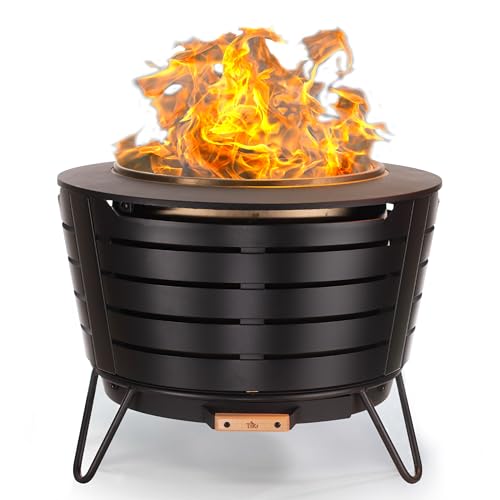
Because of this high-efficiency burn, smokeless wood fire pits win decisively in the heat department. A well-fueled wood pit can easily reach internal temperatures exceeding 1,000°F, radiating massive amounts of warmth outward. For those looking for a larger footprint, options like the heavy-duty Grovellis 27 inch Smokeless Fire Pit with Waterproof Cover & Fire Poker ($179.99) offer massive capacity for larger logs, while premium options like the TIKI Patio Smokeless Fire Pit, 25 in Wood Burning Fire Pit with Cover ($295) bring sleek aesthetics and highly efficient airflow systems to the backyard.
Furthermore, wood fire pits offer the unmistakable sensory elements of a traditional campfire: the natural aroma of birch, oak, or cherry wood, and the satisfying crackle of burning logs. You can also cook directly over them using real wood coals, which imparts an authentic smoky flavor to meats and vegetables that propane simply cannot replicate.
Where Propane Fire Bowl Wins
The defining advantage of a propane fire bowl is total control. There is no wood to split, no kindling to stack, and no waiting 20 minutes for the fire to catch. With a simple turn of a valve and a click of an igniter, you have a fully realized flame. When you are ready to go bed, you turn the dial off; there is no need to wait around for glowing embers to die down or worry about stray sparks igniting dry leaves overnight.
Propane fire bowls are also unmatched in terms of versatility and portability. Compact units, such as the Ciays Large Propane Fire Pit 19 Inch ($107.97), which includes a grill grate, folding legs, and a propane tank holder, or the highly rated Outland Living Portable Propane Fire Pit, 19-inch ($159.99) with its impressive 58,000 BTU output and Deluxe carry kit, are incredibly popular because they can transition from a backyard patio to a campsite or tailgate in minutes.
Because they do not produce flying embers or hot ash, propane bowls are widely permitted during municipal burn bans and are generally safe to operate on wooden decks, composite decking, and under open-sided pergolas. They also eliminate the chore of ash disposal, making them incredibly clean to operate.
Cost Over 5 Years
When choosing between these two systems, it is important to look beyond the initial purchase price and calculate the total cost of ownership over five years of regular use (assuming roughly 15 burns per year).
Smokeless Wood Fire Pit: The initial investment for a high-quality stainless steel unit ranges from $150 to $300. The primary ongoing cost is firewood. A face cord of seasoned hardwood costs roughly $150 to $250. If you burn through one-quarter of a cord per year, your annual fuel cost is around $50 to $60. Over five years, factoring in the initial purchase, a protective cover, and fuel, you can expect to spend approximately $450 to $650.
Propane Fire Bowl: A portable propane fire bowl costs between $100 and $200 upfront. However, propane is a more expensive fuel source per hour of burn time. A standard 20-pound propane tank costs about $20 to $30 to refill and will last approximately 3 to 4 hours on a high setting (around 58,000 BTUs). If you run your fire bowl for 3 hours per session, 15 times a year, you will use 15 full tanks of propane annually, costing $300 to $450 per year. Over five years, the total cost of the unit, propane refills, and occasional hose or igniter replacements will range from $1,600 to $2,400.
While propane fire bowls are often cheaper to buy initially, the long-term fuel costs make the smokeless wood fire pit the more economical choice for frequent users.
Which One for Your Home
To determine which option fits your daily life, consider how your specific housing situation and household dynamic align with each technology.
Small Apartment or Balcony
If you live in an apartment, condo, or home with only a small balcony or tight courtyard, a propane fire bowl is your only realistic choice. Most municipal fire codes and homeowner associations strictly prohibit wood-burning appliances on balconies or within 15 to 21 feet of residential structures. A compact propane unit has no sparks, minimal clearance requirements, and can be easily stored in a closet when not in use.
Family with Kids and Pets
For households with young children and pets, safety is the primary concern. Propane fire bowls offer a significant advantage because they can be shut off instantly in an emergency, and they do not emit unpredictable sparks or embers. However, they do require managing a gas hose that can be a tripping hazard. Smokeless wood pits get incredibly hot on the exterior metal walls and take hours to cool down after the fire is out, requiring active, continuous supervision to prevent accidental burns.
Rental Property
If you rent your home, portability and non-permanent fixtures are key. A portable propane fire bowl is highly recommended because it leaves zero residue on the patio, requires no permanent installation, and packs away neatly into a carrying bag when it is time to move. It also minimizes landlord liability concerns regarding smoke damage or stray sparks.
Long-Term Home
For homeowners looking to invest in a permanent outdoor living area, a smokeless wood fire pit offers unmatched warmth, crowd-pleasing presence, and long-term durability. It serves as a beautiful architectural focal point on a stone patio and provides the high heat output necessary to keep large groups warm during chilly autumn and winter evenings.
FAQ
Do smokeless wood fire pits actually produce zero smoke?
No fire pit is 100% smokeless. During the first 10 to 15 minutes of lighting a wood fire, the pit will produce smoke as the wood catches and the inner walls heat up. Once the internal temperature reaches the threshold required for secondary combustion, the smoke is dramatically reduced by up to 90-95%, leaving only heat waves and minimal, nearly invisible exhaust.
Can you use a propane fire bowl on a wooden deck?
Yes. Because propane fire bowls are elevated on metal legs and feature heat shields on the bottom, they do not transfer intense radiant heat downward. This makes them safe to use on wooden or composite decks, though it is always recommended to place a protective, heat-resistant fire mat underneath for absolute safety.
Which option produces more heat?
A smokeless wood fire pit produces significantly more heat than a standard propane fire bowl. While a high-quality propane bowl maxes out around 58,000 BTUs, a fully loaded wood fire pit can generate heat equivalent to 100,000 BTUs or more, warming a much larger physical radius on cold nights.
Can you cook food over both types of fire pits?
Yes, but the experience differs. Wood fire pits are excellent for traditional open-flame cooking, allowing you to roast marshmallows, hot dogs, or grill steaks over real wood embers for a distinct smoky flavor. Propane fire bowls are cleaner and great for roasting marshmallows, and some portable models even come with specialized grill grates, but they will not impart that classic wood-fired taste to your food.