Homeowners who already run a Ring security system face a practical question: should they buy a dedicated smoke alarm that integrates natively with that system, or can a standard detector paired with a listener device deliver equivalent peace of mind? The answer depends on whether you want unified alerts in a single app, whether your home is wired for hardwired alarms, and whether you value carbon monoxide detection alongside smoke sensing in one unit. Cheap solutions that bolt onto existing alarms introduce another point of failure and a separate charging cycle; integrated units from Kidde eliminate the adapter layer entirely.
What separates a good Ring-compatible smoke detector from a mediocre one comes down to three things: reliable alert routing (does the notification actually reach your phone when the alarm sounds?), power flexibility (battery-only versus hardwired with backup), and whether the unit detects both smoke and CO or forces you to buy two devices. Owner feedback consistently shows that battery-only units create a small but real risk of silent failure if you forget to replace cells, while hardwired models with backup solve that problem at the cost of installation complexity. The Ring Smoke & CO Listener sidesteps hardware questions by reading existing alarms acoustically, but it cannot replace a dead or expired detector.
Our top picks
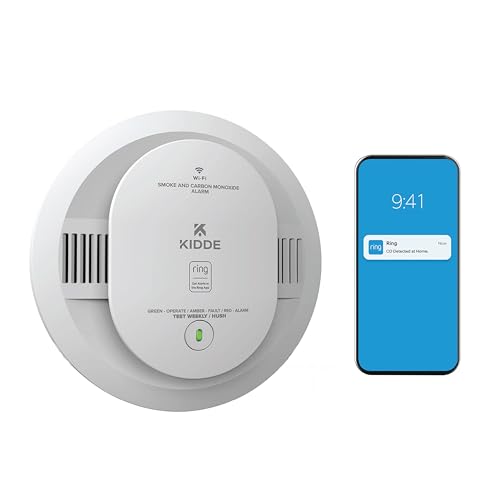 Kidde Smart Smoke & CO Detector with
- Double the Detection: Alerts you to both smoke…
- Real-Time Ring App Notifications: Home or away, get…
- Over 25% faster smoke detection (based on internal…
 Kidde Smart Smoke Detector with Ring
- Real-Time Ring App Notifications: Home or away, get…
- Over 25% faster smoke detection (based on internal…
- Optional Ring subscription (sold separately) with 24/7 smoke…
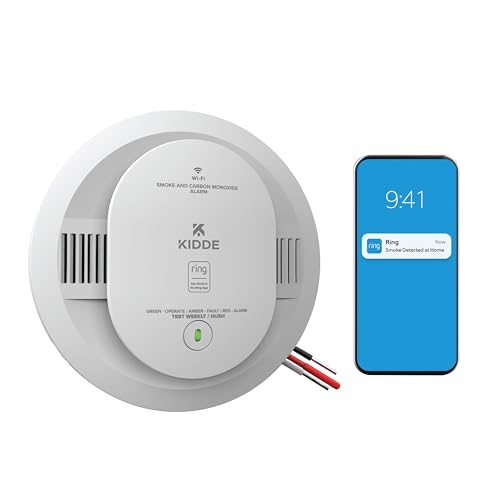 Kidde Smart Smoke & CO Detector with
- Double the Detection: Alerts you to both smoke…
- Real-Time Ring App Notifications: Home or away, get…
- Over 25% faster smoke detection (based on internal…
| Product | Key specs | |
|---|---|---|
| Kidde Smart Smoke & CO Detector with | Double the Detection: Alerts you to both smoke… Real-Time Ring App Notifications: Home or away, get… Over 25% faster smoke detection (based on internal… | Check price |
| Kidde Smart Smoke Detector with Ring | Real-Time Ring App Notifications: Home or away, get… Over 25% faster smoke detection (based on internal… Optional Ring subscription (sold separately) with 24/7 smoke… | Check price |
| Kidde Smart Smoke & CO Detector with | Double the Detection: Alerts you to both smoke… Real-Time Ring App Notifications: Home or away, get… Over 25% faster smoke detection (based on internal… | Check price |
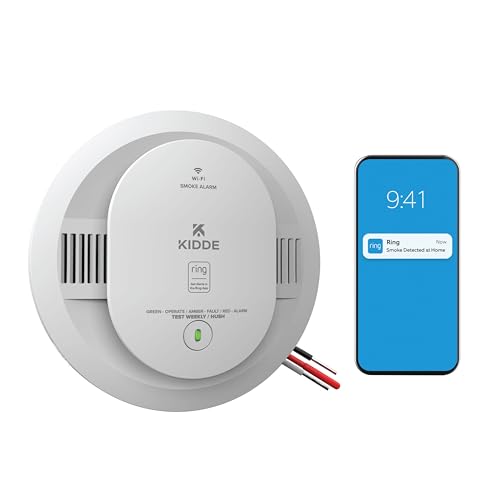 Kidde Smart Smoke Detector with Ring Kidde Smart Smoke Detector with Ring | Real-Time Ring App Notifications: Home or away, get… Over 25% faster smoke detection (based on internal… Optional Ring subscription (sold separately) with 24/7 smoke… | Check price |
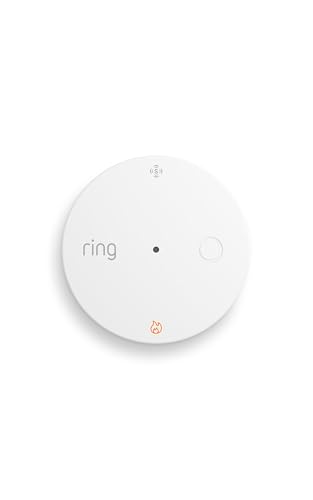 Ring Sensors: Smoke & CO Listener Ring Sensors: Smoke & CO Listener | Instant notifications Mounts in minutes near existing alarms, no tools… Add 24/7 Pro Monitoring with a compatible Ring… | Check price |
 First Alert 10-Year Battery Combination Smoke & First Alert 10-Year Battery Combination Smoke & | First Alert's Precision Detection advanced sensing technology complies… Z-Wave Plus Certified Works with Ring Base Station to provide notifications… | Check price |
 Kidde Smoke Detector Kidde Smoke Detector | Model 20SA10 features advanced sensing technology that detects… Operates on 120V AC with a built-in 10-year… Uses enhanced sensing technology that helps distinguish between… | Check price |
 Kidde Hardwired Smoke & Carbon Monoxide Detector Kidde Hardwired Smoke & Carbon Monoxide Detector | 2-in-1 Detection - Smoke & carbon monoxide detector… Voice Alarm announces the hazard type when detected:… 85-decibel alarm alerts to smoke, fire, or carbon… | Check price |
As an Amazon Associate we earn from qualifying purchases at no extra cost to you.
Quick Picks
| Product | Best for | Price |
|---|---|---|
| RGCUDR-RW | Battery-only smoke + CO with Ring | $69.97 |
| RGSDR-RW | Budget Ring-compatible smoke-only | $41.54 |
| RGCUAR-RW | Hardwired smoke + CO with Ring | $74.97 |
| RGSAR-RW | Hardwired smoke-only with backup | $54.98 |
| Ring Smoke & CO Listener | Upgrading existing alarms cheaply | $24.99 |
| First Alert 10-Year Combo | Long-life battery, no smart features | $64.98 |
| Kidde 20SA10 3-Pack | Multi-room hardwired on a budget | $112.97 |
| Kidde Hardwired Combo 2-Pack | Voice alerts and interconnection | $94.99 |
How We Picked
We evaluated every option on published specifications, current retail pricing, and recurring themes in owner reviews. The four criteria that mattered most: whether the device integrates natively with the Ring app or requires a workarround, the power source configuration and its practical implications for maintenance, whether smoke and CO detection are combined in a single unit, and the per-location cost when you need coverage across three or more rooms.
The 8 Best Ring Smoke Detector in 2026: Compared and Ranked
Kidde RGCUDR-RW — Battery Smoke + CO with Ring
This is the straightforward choice for renters or homeowners without existing hardwired circuits who want one device handling both threats. It pairs directly with the Ring app, so smoke and CO alerts arrive alongside your doorbell notifications without a separate listener. Two AA batteries power it, and owner feedback notes the pairing process takes under two minutes on the first attempt.
- Pro: Detects both smoke and carbon monoxide in a single compact unit.
- Pro: Native Ring integration means alerts appear in one unified feed.
- Con: Requires battery replacement roughly every year, and a missed swap renders it silent.
Skip it if your home already has hardwired alarm circuits or if you want a ten-year no-replacement battery.
Kidde RGSDR-RW — Battery Smoke-Only with Ring
The least expensive path to putting a Ring-compatible smoke alarm on a ceiling. It detects smoke only, which makes it appropriate for hallways and bedrooms where CO sources are distant. Owner reports confirm reliable phone notifications and a slim profile that does not protrude noticeably from the ceiling.
- Pro: Lowest entry price among native Ring-compatible detectors.
- Pro: Simple installation with no wiring knowledge required.
- Con: No carbon monoxide sensing, so you need a separate CO alarm nearby.
Skip it if you have gas appliances in the same room or want to minimize total device count.
Kidde RGCUAR-RW — Hardwired Smoke + CO with Ring
For homes with existing hardwired alarm wiring, this unit taps into the building circuit and keeps a set of AA batteries as backup. It combines smoke and CO detection and feeds both alert types into Ring. Owner feedback highlights that the hardwired connection eliminates the “did I check the battery this month?” anxiety.
- Pro: Hardwired power with battery backup provides the highest reliability profile.
- Pro: Handles both smoke and CO in one device.
- Con: Highest price in the Ring-compatible lineup and requires a qualified installer for safe wiring.
Skip it if your home lacks hardwired alarm circuits or if you are uncomfortable with electrical work.
Kidde RGSAR-RW — Hardwired Smoke-Only with Ring
A mid-priced option that brings hardwired reliability to the smoke-only category. The AA battery backup covers power outages, and Ring integration delivers alerts to your phone. It suits homeowners who have separate CO detectors elsewhere and need a dependable smoke unit on the existing circuit.
- Pro: Hardwired with backup means no single point of power failure.
- Pro: $20 cheaper than the combo CO-plus-smoke equivalent.
- Con: Smoke only — you must rely on other devices for CO coverage.
Skip it if you want to consolidate detection into fewer physical units.
Ring Smoke & CO Listener
The newest Ring sensor uses a microphone to detect the audible chirp of any existing smoke or CO alarm and forwards the notification to your Ring app, including on Amazon Sidewalk with no base station required. It does not replace your detectors; it makes dumb alarms smart. Pro Monitoring is sold separately.
- Pro: Works with any audible alarm, so you never replace an existing detector just for connectivity.
- Pro: No base station needed and operates over Amazon Sidewalk.
- Con: Cannot function if your underlying alarm is dead, expired, or has a low battery chirp that does not reach it.
Skip it if you are starting from zero and need the actual sensing hardware anyway.
First Alert 10-Year Battery Combination Alarm
A sealed lithium-battery unit that lasts ten years without replacement, detecting both smoke and CO. It does not integrate with Ring or any app, so alerts remain purely local. Owner feedback praises the set-and-forget convenience, but it is not a smart device.
- Pro: Ten-year sealed battery eliminates the annual replacement chore.
- Pro: Detects both smoke and CO in one housing.
- Con: No Ring integration, no phone notification, no remote monitoring.
Skip it if the primary reason you searched for “ring smoke detector” is phone alerts; this unit cannot deliver them without an add-on listener.
Kidde 20SA10 3-Pack — Hardwired with 10-Year Backup
Three hardwired smoke detectors sharing a single purchase, each with a sealed ten-year battery backup. They do not connect to Ring. The pack breaks down to roughly $38 per unit, undercutting most single smart detectors on per-location cost.
- Pro: Lowest per-unit price for hardwired coverage across multiple rooms.
- Pro: Decade-long backup battery means no maintenance after install.
- Con: No Ring integration or smartphone notification without a listener accessory.
Skip it if unified Ring alerts are non-negotiable; pair it with the Listener if you want the best of both.
Kidde Hardwired Smoke + CO 2-Pack with Voice Alerts
Two hardwired combo units featuring voice prompts (“Fire, bedroom”) and LED indicators that identify which alarm triggered. They interconnect so one event sounds all units. No Ring or app integration is present.
- Pro: Voice and LED cues help occupants locate the danger without guessing.
- Pro: Interconnection ensures the whole household is warned regardless of which unit fires.
- Con: No smart connectivity; you cannot monitor status or receive alerts remotely.
Skip it if you travel frequently and need phone notifications; Ring integration is absent.
Buying Guide
Hardwired vs. Battery-Only: The Reliability Tradeoff
Battery-only units install in minutes and cost less upfront, but they create an ongoing maintenance obligation. A dead battery turns your smoke detector into a plastic disc on the ceiling. Hardwired models draw from the home circuit and keep a backup for outages, removing the most common failure mode. The cost difference narrows when you factor the price of replacement cells over a decade. If your home already has alarm wiring, the hardwired Kidde Ring models (RGCUAR-RW and RGSAR-RW) are almost always the better long-term choice.
Native Integration vs. Listener-Based Smart Alerts
A Ring Smoke & CO Listener converts any existing audible alarm into a smart device for under $25. Native Ring-compatible Kidde detectors eliminate the extra component, the separate charging consideration, and the risk that the microphone cannot hear a faint or distant alarm. The tradeoff is price: a native unit costs roughly twice as much as a Listener but bundles the sensor and the communication into one product. Choose the Listener only when your current detectors are new enough to justify keeping them.
Single-Device vs. Dedicated CO Coverage
Combo smoke-plus-CO units save ceiling space and simplify maintenance, but they place the CO sensor in the same housing as the photoelectric smoke chamber, which some technicians argue can lead to premature CO false alarms in kitchens. For a two- or three-bedroom home with no garage-adjacent bedrooms, a combo unit per room is convenient. In larger layouts, dedicated CO detectors near sleeping areas paired with Ring-compatible smoke units offer more targeted placement at similar total cost.
Our Verdict
The top pick for most Ring households is the Kidde RGCUDR-RW. It handles both smoke and CO, pairs natively with the Ring app, and avoids the extra layer a Listener introduces. Budget-conscious buyers who need smoke-only coverage should grab the RGSDR-RW at $41.54, which is less than the cost of a standard non-smart detector plus a Listener combined. If your home already has functioning hardwired alarms and you want notifications without rewiring anything, the Ring Smoke & CO Listener at $24.99 wins on speed and simplicity.
FAQ
Do Ring-compatible Kidde detectors need a Ring base station?
No. They connect over Wi-Fi through the Ring app on your phone or a Ring hub already present in your home. They do not require a dedicated Ring base station beyond what the security system itself needs.
Can the Ring Smoke & CO Listener work with a dead alarm?
No. It reads audible sound from an existing alarm. If that alarm has a dead battery or has reached its end-of-life date and stopped chirping, the Listener has nothing to pick up.
Are hardwired detectors required by code in new construction?
In most jurisdictions, new residential construction requires hardwired smoke alarms with battery backup and interconnection. Existing homes with battery-only units are generally not retroactively subject to that rule, but local codes vary, so check before choosing.
Does Pro Monitoring for the Listener cost extra?
Yes. The Ring Smoke & CO Listener provides free app notifications out of the box. Professional monitoring that dispatches emergency services on your behalf requires a Ring Protect Pro subscription, sold separately.