Key takeaways
- Unbox and lay out parts (2-3 min): pole sections (usually 2-piece), canopy with ribs pre-attached, crank handle, tilt knob, and hardware bag.
- Join pole sections (3-5 min): the lower pole slides into the upper pole and locks with a push-button or screw collar; this is the step most likely to feel stiff out of the box.
- Attach canopy to pole (5-8 min): feed the pole through the canopy’s center hub, align the runner with the ribs, and seat it against the crank mechanism.
- Insert crank and tilt hardware (3-5 min): secure the crank handle and tilt knob with the included screws; hand-tighten only, over-torquing can strip the plastic housing on the tilt knob.
- Open and test tilt (2-3 min): crank slowly and check that all 8 ribs pop out fully before testing the tilt function.
What's inside
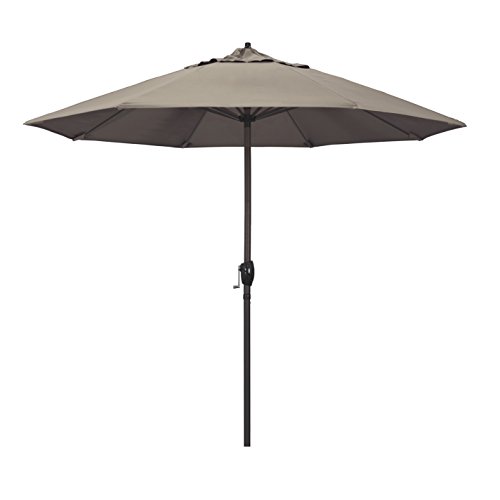
The Abba Patio 9 ft market umbrella uses an 8-rib fiberglass frame on a 1.5-inch aluminum pole, with a crank-and-tilt mechanism and a mesh vent panel at the canopy peak that lets wind pass through instead of catching under the fabric. Assembly from box to standing umbrella typically takes 15 to 25 minutes with a socket base already in place, longer if you’re also filling or leveling the base itself.
Frame and pole: what the specs actually mean
The 9 ft size refers to canopy diameter, measured across the open umbrella, not the pole height. Pole height on this model usually runs around 8 feet, with the canopy sitting a bit above that once tilted. That matters for clearance: if you’re placing it through a table with an umbrella hole, you want at least 2 to 3 inches of play around the pole so it doesn’t bind when you crank it open.

Abba Patio 9FT Lyon Outdoor Patio Umbrella Outdoor Table Umbrella with Push Button Tilt and Crank Market Umbrella 8 Sturdy Ribs UV Protection Waterproof for Garden Deck Backyard Pool, Navy Blue
Included for 'Abba Patio 9 Ft Market Umbrella: Frame, Fabric and Setup Breakdown' because the listing specifies Navy Blue, details this guide uses to compare options.
View on Amazon
Abba Patio 9FT Lyon Outdoor Patio Umbrella Outdoor Table Umbrella with Crank Market Umbrella 8 Sturdy Ribs UV Protection Waterproof and Push Button Tilt for Garden Deck Backyard Pool,Orange
Included for 'Abba Patio 9 Ft Market Umbrella: Frame, Fabric and Setup Breakdown' because the listing specifies Orange, details this guide uses to compare options.
View on Amazon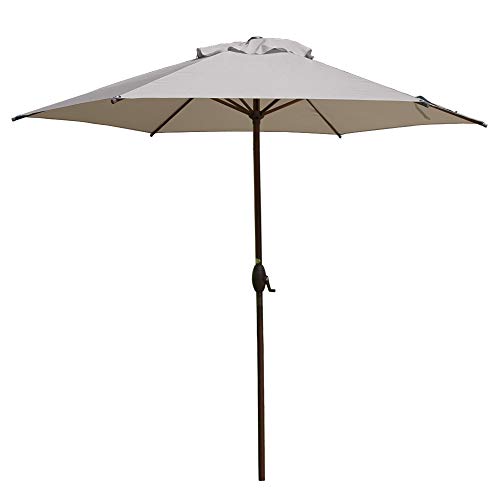
Abba Patio 9ft Patio Umbrella Outdoor Umbrella Patio Market Table Umbrella with Push Button Tilt and Crank for Garden, Lawn, Deck, Backyard & Pool, Beige
Included for 'Abba Patio 9 Ft Market Umbrella: Frame, Fabric and Setup Breakdown' because the listing specifies Lawn and Deck, details this guide uses to compare options.
View on Amazon
Abba Patio 9ft Patio Umbrella Outdoor Umbrella Patio Market Table Umbrella with Push Button Tilt and Crank for Garden, Lawn, Deck, Backyard & Pool, Turquoise
Included for 'Abba Patio 9 Ft Market Umbrella: Frame, Fabric and Setup Breakdown' because the listing specifies Lawn and Deck, details this guide uses to compare options.
View on AmazonThe 1.5-inch aluminum pole is on the lighter end for market umbrellas. Heavier-duty market and cantilever umbrellas often use 1.8 to 2-inch poles or steel cores, which resist bowing better in sustained wind above 15-20 mph. The 8-rib fiberglass frame is a middle-ground choice: fiberglass ribs flex under gusts and snap back rather than cracking, which is an upgrade over the 6-rib steel frames found on budget umbrellas, but it’s still a residential-grade frame, not a commercial one rated for open-air restaurant patios.
Vent design and wind handling
The vent is a mesh panel built into the canopy crown. In practice, it reduces the “parachute” effect that pulls a closed-top umbrella out of its base during gusts, but it doesn’t eliminate the need for adequate base weight. For a 9 ft umbrella on a 1.5-inch pole, a base weighing at least 50 lbs is the realistic minimum for calm-to-breezy conditions; if your patio regularly sees wind above 20 mph, plan to tilt and lower the umbrella rather than trust the vent alone.
Assembly: step by step and realistic timing
- Unbox and lay out parts (2-3 min): pole sections (usually 2-piece), canopy with ribs pre-attached, crank handle, tilt knob, and hardware bag.
- Join pole sections (3-5 min): the lower pole slides into the upper pole and locks with a push-button or screw collar; this is the step most likely to feel stiff out of the box.
- Attach canopy to pole (5-8 min): feed the pole through the canopy’s center hub, align the runner with the ribs, and seat it against the crank mechanism.
- Insert crank and tilt hardware (3-5 min): secure the crank handle and tilt knob with the included screws; hand-tighten only, over-torquing can strip the plastic housing on the tilt knob.
- Open and test tilt (2-3 min): crank slowly and check that all 8 ribs pop out fully before testing the tilt function.
Total: roughly 15-25 minutes for one person with a Phillips screwdriver, or under 15 minutes with two people. The base (if purchased separately) adds filling time: 15-20 minutes for a fillable resin base with sand or water, or none if you’re using a solid cast-iron or concrete base.
Fabric grade vs. solution-dyed: what you’re actually trading off
Abba Patio’s standard canopy fabric is typically a polyester blend, printed or piece-dyed, in the 180-250 GSM range depending on the color and pattern. This is the same general category used across most mid-range market umbrellas. Solution-dyed acrylic, the fabric grade used on premium umbrellas, is a different manufacturing process: color is added to the liquid fiber before it’s spun into thread, rather than applied to finished fabric.
| Attribute | Standard polyester (Abba Patio grade) | Solution-dyed acrylic |
|---|---|---|
| Typical fade resistance | 1-2 seasons of full color before noticeable fading | 3-5+ seasons, UV-stable pigment |
| Water resistance | Water-repellent coating, wears off over time | Naturally water-resistant fiber, coating not load-bearing |
| Weight (approx.) | 180-250 GSM | 230-300 GSM |
| Typical price premium | Baseline | Usually 2-3x the umbrella’s base cost if replacing canopy only |
| Best for | Seasonal use, storage in off-months, budget-conscious buyers | Left outdoors year-round, coastal or high-UV climates |
If you store the umbrella indoors or in a shed during winter and heavy rain, the standard fabric is a reasonable match for this price tier and you won’t get much practical benefit from paying for solution-dyed. If the umbrella stays up outdoors through winter, or you’re in a region with intense summer UV (southern states, high altitude, near water), fading will show up faster on the standard fabric, sometimes within a single season of full sun exposure.
Who this umbrella fits, and who should look elsewhere
| Your situation | Fit |
|---|---|
| Standard backyard patio table, seasonal use, moderate wind | Good fit — rib count, pole thickness, and vent are adequate for typical residential conditions |
| Coastal property or consistently windy site | Marginal — consider a thicker pole (1.8″+) and heavier base, or plan to lower the umbrella in high wind |
| Commercial patio (restaurant, café) | Not a fit — look for commercial-rated aluminum or steel frames with reinforced ribs |
| Year-round outdoor placement in strong sun | Marginal — the standard fabric will fade faster than a solution-dyed canopy |
| Renters or anyone moving the umbrella seasonally | Good fit — 2-piece pole and moderate weight make it manageable to store and reassemble |
What wears out first
On umbrellas in this construction class, the most common failure points are the tilt knob’s plastic threading (from over-tightening), the canopy fabric’s color and water repellency (from UV and rain cycles), and the rib finials at the tips (from repeated open/close cycles catching on the fabric). The aluminum pole and crank mechanism itself tend to outlast the fabric and plastic hardware by several seasons if not exposed to standing water or left cranked open in storms.