Our Top Picks
 Amazon Basics 28" 60-Degree Oscillating Tower Fan with28 Inches (Height)9.4 x 9.4 x 27.8 Inches5.4 poundsCheck on Amazon
The best tower fans for a typical bedroom are the remote-controlled 36 to 42 inch models with a timer and a quiet claim around 28dB, while a basic mechanical-control tower works for a small room on a tight budget. Ten listings are sorted below by what each title says, with two of them flagged as a different type of fan.
Top picks at a glance

DREO Tower Fan for Bedroom, 28ft/s Velocity, Ultra Quiet Fan, 8 Speeds | 2026 Upgraded DC Motor, 90° Oscillating, 4 Modes Standing Fan, Bladeless Fan for Indoors, Floor Fans with Remote, Black
One of the home product options compared in this guide.
View on Amazon
Levoit Tower Fan for Bedroom, 28ft/s Fans that Blow Cold Air, 28dB Quiet | Standing Floor Fan for Room, 90° Oscillating, 5 Speeds 4 Modes & Temp Sensor, Bladeless, 12H Timer, Remote, 36 inch, White
One of the home product options compared in this guide.
View on AmazonAmazon Basics 28" 60-Degree Oscillating Tower Fan with Powerful Airflow for Bedroom, Living Room, Office, 3 Speeds, Mechanical Control, Air Circulator, 35W, 27.8"H x 9.4"D x 9.4"W, Black
One of the home product options compared in this guide.
View on Amazon
DREO Tower Fan for Bedroom, 26ft/s Velocity, 90° Oscillating, 8H Timer | 4 Speeds, 3 Modes, 28dB Quiet Standing Fan, Floor Fan for Room, Living Room, Office, Home, Cooling Fan with Remote, Black
One of the home product options compared in this guide.
View on Amazon
DREO Tower Fan for Bedroom, 28ft/s High Velocity, 9 Speeds, DC Motor | 2026 Upgraded Ultra-Quiet Fan,4 Modes, 12H Timer, 90° Oscillating Cooling Standing Fan for Indoor Home Office Room, 42 inch
One of the home product options compared in this guide.
View on Amazon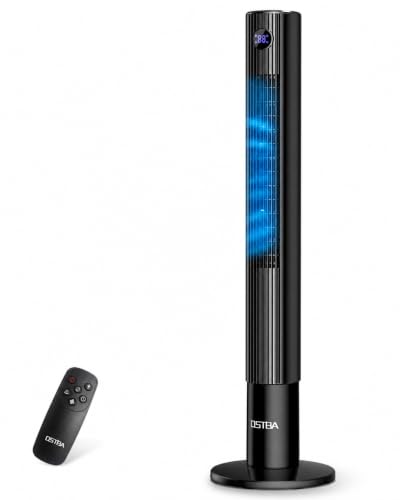
OSTBA 43'' Tower Fan for Bedroom, 85° Oscillating, 12H Timer, with Remote | 28dB Cooling with LED Display, 3 Speeds, 2 Modes, Sleep Mode and Floor Standing Design, Quiet Standing Fan
One of the home product options compared in this guide.
View on Amazon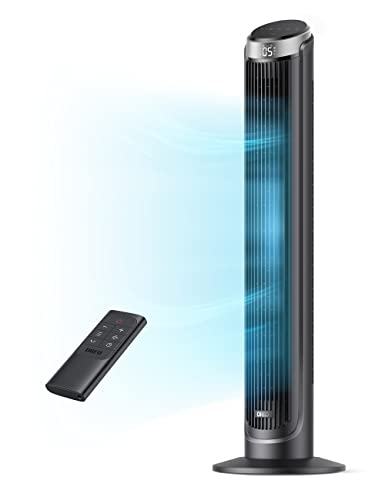
DREO Tower Fan for Bedroom, 90° Oscillating Fans that Blow Cold Air | 26 ft/s Powerful Airflow, 28dB Quiet Fan, 5 Speeds, 4 Cooling Modes, 12H Timer, 40" Standing Floor Fan for Home Office
One of the home product options compared in this guide.
View on Amazon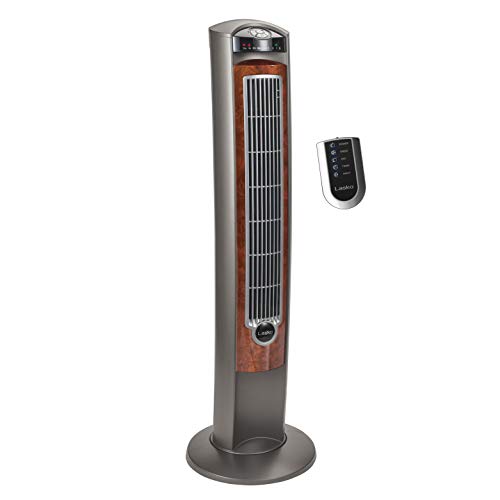
Lasko Oscillating Tower Fan with Remote - 42" Tall – Gray/Woodgrain | Quiet Standing Fan for Bedroom, Office, and Home, 3 Speeds, Timer, Powerful Cooling Air, Nighttime setting, Space-Saving
One of the home product options compared in this guide.
View on Amazon
DR.PREPARE Tower Fan for Bedroom, 25 dB Quiet DC Bladeless Fan with Remote, 8 Speeds, 1-8H Timer, 80° Oscillating Fans for Indoors, 16 Inch Portable Desk Table Fans for Room, Home, Office
One of the home product options compared in this guide.
View on Amazon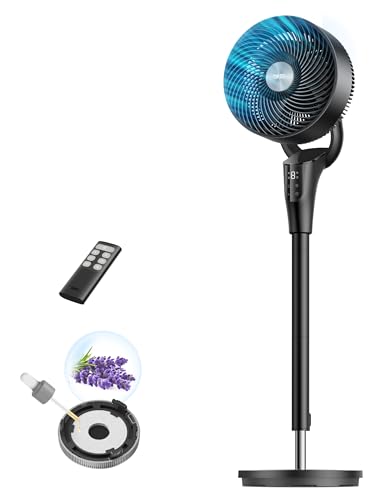
DREO Fan for Bedroom, Standing Oscillating Fan for Whole Room, Quiet Fan | 90ft Airflow, 90° Oscillating, 8+H Speeds, 3 Modes, 38-42'' Adjustable Height, 8H Timer, 105° Manual Vertical, DC Motor
One of the home product options compared in this guide.
View on Amazon| Model | Key point from title | Price tier | Best for |
|---|---|---|---|
| DREO 8-speed DC tower (28ft/s) | 8 speeds, DC motor, remote | Mid-range | Light sleepers |
| Levoit 36-inch | Temperature sensor, 12H timer | Mid-range | Bedrooms with limited height |
| Amazon Basics 28-inch | 3 speeds, mechanical control, 35W | Budget | Simple small-room use |
| DREO 26ft/s, 8H timer | 4 speeds, 3 modes, remote | Mid-range | Basic remote tower |
| DREO 42-inch, 9 speeds | 9 speeds, DC motor, 12H timer | Premium | Large rooms |
| OSTBA 43-inch | LED display, sleep mode, 3 speeds | Budget | Budget bedroom use |
| DREO 40-inch, 5 speeds | 4 cooling modes, 12H timer | Mid-range | Home office or bedroom |
| Lasko 42-inch | Woodgrain finish, nighttime setting | Mid-range | Visible living spaces |
| DR.PREPARE 16-inch | Desk-size, 8 speeds, 25 dB claim | Budget | Desk or nightstand (off-type) |
| DREO adjustable standing fan | 38-42 inch height, 105-degree tilt | Mid-range | Aimable airflow (not a tower) |
What is changing in tower fans
Tower fans have moved from basic knob-controlled columns to appliances with remotes, timers and sensors. A large share of listings now advertise DC motors, which are generally described as quieter and more efficient than traditional AC motors, with finer speed steps as a side effect. Eight or nine speeds are no longer unusual.
Marketing has also drifted. Phrases such as fans that blow cold air, bladeless and 28ft/s velocity are common, but they do not all mean what they sound like. A fan does not cool air; it moves air, which can make skin feel cooler. Bladeless in this category usually refers to a design where the moving parts are hidden inside the column, not to an absence of an impeller, and our guide to bladeless tower fans goes deeper on that. Velocity figures are measured under conditions the title rarely states.
Noise claims have also become standard, with many listings quoting figures near 25 to 28 dB. These are generally lab figures at close range at low speed, and real room noise will be higher at top speed and depends on the room. Treat them as a ranking hint, not a promise.
Tower fans also differ from other fan types in a practical way. A pedestal fan aims one beam of air, a box fan pushes a wide flat stream, and a tower spreads a vertical curtain of air as it oscillates. That shape is why towers are popular beside beds and sofas, where a person sits within a few feet. It is also why placement matters more than raw velocity numbers.
How we picked these
We worked from the titles, seller descriptions, published specifications, manufacturer documentation and buyer reviews. Nobody on the team used or measured these units. Where a title is silent, we say check the listing. Two listings in this set are not floor-standing towers, and we say so in their sections. Price tiers are relative to the ten, with no prices quoted.
The ten fans in detail
DREO Tower Fan with 8 Speeds and DC Motor (28ft/s)
The title lists a bladeless-style tower fan with a stated 28ft/s velocity, eight speeds, a DC motor, 90-degree oscillation, four modes and a remote, in black. It is pitched at bedrooms and indoor use. The velocity is a seller claim and the title does not say at what distance it was recorded.
Eight speeds mean finer steps between a barely-there breeze and full output, which is handy for sleepers who find three speeds too coarse. DC motors are generally marketed as quieter and more efficient than AC ones, though the title gives no wattage or decibel figure for this model.
Who it suits: Light sleepers and home-office workers who want a stepped speed range and remote control from the bed or desk.
Pros
- Eight speeds named
- DC motor stated
- Remote and 90-degree oscillation
Cons
- No decibel figure in the title
- Height is not given
Check the listing: height, noise rating, timer options and whether the remote needs a battery. Ask before buying: how tall is it, and will it reach my bed from where I plan to put it?
Levoit Tower Fan with Temperature Sensor (36 Inch)
This listing names a 36-inch white tower fan with a 28dB quiet claim, five speeds, four modes, a temperature sensor, 90-degree oscillation, a 12-hour timer, a remote and bladeless design. The phrase fans that blow cold air is marketing wording: a fan moves air and does not lower air temperature, though moving air can feel cooler on skin.
The temperature sensor is the standout detail, since it hints at an automatic mode where the fan reacts to room conditions. How that mode behaves is something to confirm in the manual. At 36 inches it is shorter than the 40-plus inch units here, which can suit a bedside or desk setup.
Who it suits: Bedroom users who want a timer and an auto-style mode and have limited floor height or space.
Pros
- Temperature sensor mentioned
- 12-hour timer
- Shorter 36-inch height
Cons
- Cold air wording overstates what a fan does
- Five speeds is fewer steps than the eight-speed DREOs
Check the listing: what the temperature-sensing mode actually controls and the dB measurement conditions. Ask before buying: does the sensor change speed automatically, or just display the temperature?
Amazon Basics 28-Inch Oscillating Tower Fan
The title is a complete spec line: 28 inches, 60-degree oscillation, three speeds, mechanical control, 35W, and dimensions of 27.8 by 9.4 by 9.4 inches, in black. There is no remote and no timer mentioned, and the oscillation arc is narrower than most rivals here.
Mechanical controls are simple and tend to be easy to use, with fewer electronics to worry about. The 35W figure and compact footprint make it a basic option for a small room or a spot where you do not need a remote. Dimension claims in titles should be checked against the product page.
Who it suits: Budget-minded buyers who want a simple fan with physical controls and no extra features.
Pros
- Lowest price tier among the towers
- Compact footprint stated
- Simple mechanical controls
Cons
- No remote or timer in the title
- Only 60-degree oscillation
Check the listing: noise rating, whether any timer exists, and the cord length. Ask before buying: do I need a remote and timer, or will knobs be enough?
DREO Tower Fan with 8H Timer (26ft/s, 4 Speeds)
A DREO tower with a 26ft/s velocity claim, 90-degree oscillation, an 8-hour timer, four speeds, three modes, a 28dB quiet claim and a remote, for bedroom, living room or office. The title does not give its height.
It sits in the middle of the DREO range in this set. Four speeds and three modes are plain, while the 8H timer is shorter than the 12H options elsewhere. The 28dB figure is a seller claim whose measurement distance is unknown, so treat it as a rough indicator.
Who it suits: Buyers who want a mid-range remote-controlled tower for a bedroom or small living room without extra modes.
Pros
- Timer, remote and oscillation included
- Quiet claim stated
- Mid-range price tier
Cons
- Only four speeds
- Shorter timer than rivals
Check the listing: height, power consumption and the exact modes available. Ask before buying: which three modes does it have, and are they useful to me?
DREO 42-Inch Tower Fan with 9 Speeds
The title names a 42-inch tower with 28ft/s velocity, nine speeds, a DC motor, four modes, a 12H timer and 90-degree oscillation, described as ultra-quiet. Nine speeds is the widest speed range among the towers in this set.
The taller body helps move air at higher levels in a living room or open office, and the DC motor claim suggests low-speed quietness. As with all quiet claims here, check the decibel rating in the manual. At 42 inches, make sure it fits under shelves and window sills.
Who it suits: Shoppers with a larger bedroom or open-plan living space who want a taller fan with many speed steps.
Pros
- Nine speeds named
- Tall 42-inch body
- DC motor and 12H timer
Cons
- Highest price tier among the DREO towers
- Taller footprint needs clearance
Check the listing: base size, weight, and how loud it runs at top speed. Ask before buying: will 42 inches look and fit right in my room?
OSTBA 43-Inch Tower Fan with LED Display
This listing describes a 43-inch tower with 85-degree oscillation, a 12H timer, remote, 28dB cooling claim, LED display, three speeds, two modes and a sleep mode. The wording 28dB Cooling mixes noise and cooling in a confusing way, and fans do not cool air, so read that as a noise claim.
The LED display and sleep mode appeal to bedroom users who want a dimmable or simple interface. With only three speeds and two modes, the control range is narrower than the DREO units. It is also among the taller options here, so confirm clearance and weight.
Who it suits: Budget-conscious bedroom shoppers who value a display, timer and sleep mode over many speed steps.
Pros
- Low price tier with remote and timer
- Sleep mode and LED display
- Tall 43-inch body
Cons
- Three speeds and two modes
- Ambiguous cooling wording
Check the listing: whether the display can be turned off, noise ratings and warranty terms. Ask before buying: can I dim or turn off the LED display at night?
DREO 40-Inch Tower Fan with 5 Speeds
The title lists a 40-inch tower with 26 ft/s airflow, 90-degree oscillation, 28dB quiet claim, five speeds, four cooling modes and a 12H timer. Again fans that blow cold air is promotional language, not a temperature claim.
It lands between the eight-speed DREO and the four-speed one in features, with a taller body than the 36-inch Levoit. The 12H timer matches the longer overnight option. If you are choosing between DREO models, compare speeds, height and timer first because the airflow claims are close.
Who it suits: Home-office or bedroom users who want a taller body and a 12-hour timer without paying for the widest speed range.
Pros
- 12H timer named
- Taller 40-inch body
- Mid-range price tier
Cons
- Airflow claim is lower than the 28ft/s models
- Cooling wording is marketing
Check the listing: what the four modes are called and whether the remote is included in the box. Ask before buying: is the extra height worth it over the 36-inch alternative?
Lasko 42-Inch Oscillating Tower Fan with Remote
The title describes a 42-inch gray and woodgrain oscillating tower with remote, three speeds, a timer, a nighttime setting and a space-saving design. No noise figure, motor type or oscillation angle is given.
The finish stands out among black and white rivals, which matters if the fan will sit in a visible living area. With only three speeds, the range is simpler than the DREO models. The title is vague about the timer length and the nighttime setting, so check what those do before relying on them.
Who it suits: Buyers who care about appearance and want a basic tower with a remote and night mode.
Pros
- Woodgrain finish for living spaces
- Remote and timer included
- Nighttime setting
Cons
- Three speeds only
- No dB or oscillation angle in the title
Check the listing: timer options, nighttime setting behavior and the warranty. Ask before buying: what does the nighttime setting change, the light or the speed?
DR.PREPARE 16-Inch Portable Desk Tower Fan
This is clearly off-type for a floor-standing tower roundup: the title says 16 inch portable desk table fan, with a 25 dB DC bladeless design, remote, eight speeds, a 1 to 8 hour timer and 80-degree oscillation. It is a desktop-class unit, not a floor tower.
A 16-inch body sits on a desk or nightstand, so airflow reaches a person at close range and not across a room. It can complement a taller fan, but it does not replace one. The 25 dB claim is a seller figure.
Who it suits: People who want a small fan for a desk or nightstand and not a floor-standing tower.
Pros
- Small and portable
- Eight speeds, remote and timer
- Lowest price tier
Cons
- Not a floor tower
- Short reach compared with taller fans
Check the listing: stand height, weight, cord length and whether it tips easily. Ask before buying: do I want a desk fan, or a floor tower that fills a room?
DREO Standing Oscillating Fan with Adjustable Height
The title does not call this a tower: it is a standing oscillating fan with a DC motor, an 8H timer, three modes, 90-degree oscillation, a 38 to 42 inch adjustable height and a 105-degree manual vertical tilt. The phrases 90ft Airflow and 8+H Speeds are ambiguous or typo’d, so verify them on the page.
Because it is a pedestal-style unit, it moves air differently from a tower and can aim up or down. That makes it more flexible for directing air at a seating area, but it stands wider and less tidily than a tower. It is the least tower-like listing here after the desk model.
Who it suits: Shoppers who want an adjustable, aimable standing fan and are not set on the tower shape.
Pros
- Adjustable height and tilt
- DC motor and 8H timer
- Mid-range price tier
Cons
- Not a true tower
- Ambiguous speed and airflow wording
Check the listing: number of speeds, base footprint and noise rating. Ask before buying: do I want a slim tower, or an aimable pedestal fan?
Buying guide for tower fans
Height and placement
Height determines where the air lands. A 36 to 43 inch tower aimed at a bed or couch reaches a seated or lying person. Taller models give more reach but need clearance. Measure where it will stand and how far it is from the person using it.
Speeds, modes and timers
More speeds help fine control, especially at night. Modes such as sleep or natural wind vary the speed. A timer of 8 to 12 hours covers a night; check how it counts. Remote controls add convenience, and mechanical knobs add simplicity.
Noise claims
A 28dB claim is typically for the lowest speed. Higher speeds are louder. Fan noise includes motor hum and air rush, and a DC motor can lower the hum. If you are a light sleeper, look for buyer reviews about low-speed noise.
Remote controls and displays
A remote saves a trip across the room at night, but check whether the fan has a place to store it and whether the display can be dimmed or switched off. A bright LED display can be annoying in a dark bedroom. Mechanical knobs avoid batteries and menus, but you must reach the fan to change settings.
Footprint and stability
Tall, narrow bodies tip more easily than wide ones. Check the base dimensions and weight, and consider kids and pets. A stable base matters on carpet and for rooms with high traffic. Keep the cord routed so nobody trips on it.
Care and maintenance
Tower fans collect dust on the grille and inside the column over time, which can raise noise and cut airflow. Unplug the unit and wipe the exterior with a dry or slightly damp cloth, then use a soft brush or a vacuum attachment on vents. Check whether the manual allows opening the housing, and do not use harsh chemicals on plastic. A quick monthly wipe during heavy use is a sensible habit, according to general appliance care guidance.
Oscillation
Arcs range from 60 to 90 degrees in this set. Wider arcs sweep more of the room, narrower ones focus the air. Oscillation is not a cooling feature; it just spreads airflow.
Safety and care
Place the fan on a level, stable floor, keep cords away from walkways, keep fingers and objects out of the grille, and never use a fan with a damaged cord or plug. Unplug before cleaning, and dust the grille and vents regularly. Keep away from water, and follow the manufacturer’s instructions and local codes. Supervise children and pets near any fan. For whole-house air movement, see our whole house fans for attics, and for gym-scale airflow, our high velocity industrial floor fans.
Worked example
Assume a bedroom fan used 8 hours a night for 30 nights, and an assumed draw of 35W (the Amazon Basics title states 35W; other titles give no wattage). That is 35W times 8 hours times 30 nights, or 8.4 kWh. At an assumed 15 cents per kWh, that is roughly 1.3 US dollars a month (estimate). If a lower-power DC unit drew a hypothetical 15W at low speed, usage would be about 3.6 kWh, around half a dollar (estimate). A velocity of 28 ft/s converts to roughly 19 mph at the outlet (estimate), which falls off with distance. These are illustrative numbers, not product results.
| Spec concept | What to look for | Why |
|---|---|---|
| Height | 36 to 43 inches for bedrooms | Aims air at people, not the floor |
| Speeds | 5 to 9 speeds | Finer control at night |
| Timer | 8 to 12 hours | Covers a full night |
| Oscillation | 60 to 90 degrees | Spreads air across the room |
| Motor | DC or AC | Affects noise and energy use |
| Controls | Remote or mechanical | Convenience or simplicity |
Mistakes buyers make
Buying on velocity numbers is a common mistake, since titles rarely say how they were recorded. Another is taking cold air wording literally; no fan lowers room temperature. Shoppers also overlook height and end up with a tower that blows over the bed or under the couch. Ignoring the timer and sleep mode can lead to waking up cold or needing to get up to switch it off. Some buyers mistake a desk fan or a pedestal fan for a tower, which is why two listings here are flagged. Finally, skipping dust cleaning shortens quiet performance and can lower airflow over time. Another slip is buying for the largest room in the house and using the fan in the smallest; a tall, high-velocity fan in a tiny bedroom can feel like a wind tunnel at the lowest speed. Check how low the lowest setting really is, using buyer reviews as a guide, and think about whether a fan with a sleep mode or a wide speed range would suit light sleepers better.
Verdict by use case
For a light sleeper, choose a many-speed DC unit such as the eight- or nine-speed DREO. For a small bedroom with limited height, the 36-inch Levoit with a timer fits. For a tight budget, the Amazon Basics is the simple choice, and the OSTBA adds a remote and sleep mode. For a visible living area, the Lasko finish is distinctive. For a desk, look at the 16-inch DR.PREPARE, and for aimable airflow, the DREO standing fan, remembering that neither is a true tower. If two listings look alike, compare height, timer length and speed count first, then warranty terms, because the airflow and noise claims are close and are the seller’s own. And if a title leaves out the dB rating or the height, that is a reason to read the product page and buyer reviews before you decide.
Frequently asked questions
Do tower fans actually cool a room?
No. A fan moves air and does not lower the temperature of the room, although moving air across skin can feel cooler through evaporation. Titles that say blow cold air are marketing language. A tower fan works best when it is aimed at people, and it does little in an empty room. Pair it with closed blinds or an open window at night if your space allows.
Are bladeless tower fans really bladeless?
Usually the moving parts are hidden inside the column, so you see a slim body with no exposed spinning blades. The term describes the design, not the absence of an impeller or fan wheel. Check the manual for how the fan is built, what the grille protects and how to clean it, since the details differ by model and the titles rarely explain them.
What does the 28dB claim mean?
It is a noise figure from the seller, usually quoted at low speed and close range under conditions the title does not state. Real-world noise is higher at top speed and depends on room acoustics and how close the fan sits. Treat it as a hint that the fan is quiet at its lowest setting, then look at buyer reviews for comments on low-speed noise.
How tall should a tower fan be?
For bedrooms, 36 to 43 inches usually reaches a person lying in bed or sitting on a couch from a few feet away. Shorter units suit desks and nightstands, and taller ones cover larger spaces. Measure your space, including clearance under windowsills and shelves, and think about where the airflow will land before you choose a height. A tower that is too tall for the room can send air over your head and miss you entirely.
Is a DC motor worth it?
DC motors are generally marketed as quieter, more efficient and capable of finer speed steps than AC motors. The titles here do not state wattage, so any energy saving is not proven by them. If you sleep with the fan on, the finer steps and low-speed quietness are the practical benefits, so look for DC with at least five speeds.
How do I clean a tower fan?
Unplug it first, then wipe the exterior and use a soft brush or vacuum attachment on the grille and vents. Follow the manufacturer’s instructions, since some models have removable parts and others do not. Do not use water inside the column or submerge the unit. Dust buildup can lower airflow and add noise, so clean it a few times each season.