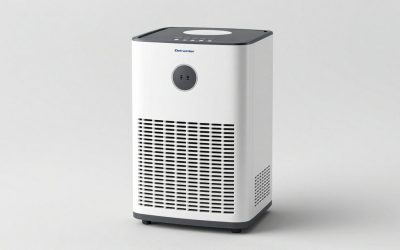
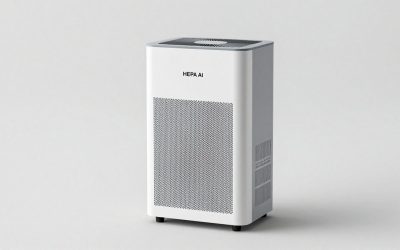
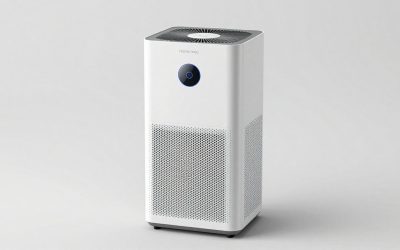
Our Top Picks
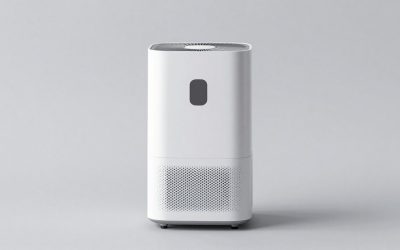
 VEVOR Electric Space Heater with Thermostat Remote ControlM8.35 x 8.35 x 19.88 inches4.87 poundsCheck on Amazon
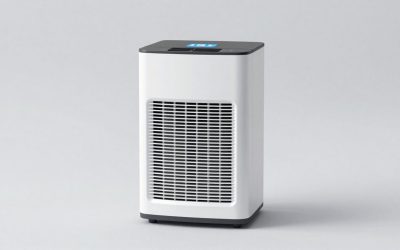
 Smart EnviMAX 1000W Wi-fi Plug-in Electric Wall HeaterSmart EnviMAX3.1 x 19.3 x 22.2 inches12.3 PoundsCheck on Amazon
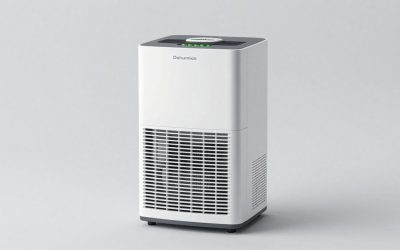
 Heat Storm HS-1000-WX-WIFI Infrared Wi-Fi Heater1000 Watt4 x 13 x 17 inches6.1 poundsCheck on Amazon
For a true 1,000 square feet, no plug-in unit on this list heats the whole space alone, but the Comfort Glow QEH1425 is the best electric heater for 1000 square feet among these five because it is the only listing whose title claims that coverage and also pairs 1500W with a remote and a washable air filter. Treat the coverage number as a seller claim, since heating output is set by watts, not by marketing area. The other four are smaller-wattage units that suit one zone: a wall, a desk, a nook or a large room you actually sit in.
Read this as a zone-heating guide with an honest ceiling. If your goal is warming an entire 1,000 square foot floor plan through winter, keep reading, because the buying guide below explains why a stack of plug-in heaters is rarely the right tool and when a professional heating assessment makes more sense.
Top picks at a glance
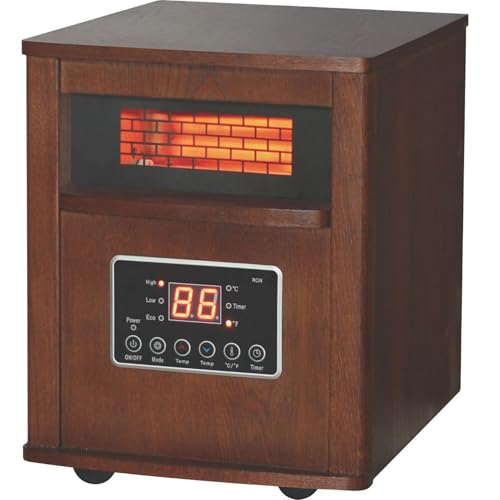
Comfort Glow Indoor Portable Space Heater with Remote, Infrared- QEH1425 | Cabinet Infrared Quartz Element Heater, 6 Quartz Bulb, Heat Up To 1000 sq ft Area, Washable Air Filter, 3 Heat Settings 1500W
One of the home product options compared in this guide.
View on Amazon
Heat Storm Wave Floor to Wall Infrared Space Heater with Attachable Feet, Remote Control, Built in Thermostat, 500-1000 Watts, 13x4x17 in, With Feet
One of the home product options compared in this guide.
View on AmazonVEVOR Electric Space Heater with Thermostat Remote Control, 1000W/1500W 2-Level Adjustable Quiet Ceramic Heater Fan, 20 in Tip-Over Shutdown Overheat Protection Small Heaters for Office Room Desk
One of the home product options compared in this guide.
View on AmazonSmart EnviMAX 1000W Wi-fi Plug-in Electric Wall Heater - Energy Efficient Smart Heaters for Large Rooms - App Controlled Electric Heater with Thermal Shut Off Switch - Works with Alexa & Google Home
One of the home product options compared in this guide.
View on AmazonHeat Storm HS-1000-WX-WIFI Infrared Wi-Fi Heater, 1000 Watt
One of the home product options compared in this guide.
View on Amazon| Model | Key point from title | Price tier | Best for |
|---|---|---|---|
| Comfort Glow QEH1425 | Infrared quartz cabinet, 6 bulbs, 1500W, remote, 3 heat settings, “up to 1000 sq ft” claim | Premium | Main living area with a remote |
| Heat Storm Wave Floor to Wall | Infrared, 500-1000W, built-in thermostat, remote, feet or wall mount | Mid-range | Bedroom or den with flexible placement |
| VEVOR Ceramic Heater Fan | 1000W/1500W, thermostat, remote, 20 in tower, tip-over and overheat protection | Budget | Desk or small office |
| Smart EnviMAX 1000W Wall Heater | Wi-Fi plug-in wall unit, app control, thermal shut-off, Alexa and Google Home | Premium | Smart-home users heating one room |
| Heat Storm HS-1000-WX-WIFI | Infrared, Wi-Fi, 1000W | Mid-range | Scheduled spot warmth by app |
The ceiling every heater on this list shares
Electric resistance and infrared heaters turn nearly every watt they draw into heat, so output is essentially fixed by the wattage on the label. A 1500W unit produces about 5,100 BTU per hour, give or take rounding, and a 1000W unit about 3,400. Those are arithmetic conversions, not measurements of any listed product.
That matters for the keyword because 1,000 square feet is a large area. Rule-of-thumb sizing for primary heat in a cold climate lands near 10 watts per square foot, which would be an order of magnitude beyond what one plug-in heater delivers. In a mild climate, a well-insulated home, or a space where you only want to take the chill off a seating area, far less is needed.
So the useful question is rarely “which heater covers 1,000 square feet” and more often “which heater warms the part of 1,000 square feet where I spend my time.” The five listings below are judged against that second question.
How the market for these heaters is shifting
Several broad trends appear across current electric heater listings, and they are visible in this set. None of the following is a claim about a specific release date or sales figure.
First, remote controls and built-in thermostats have moved from premium extras to common features, even on budget fan heaters. Second, Wi-Fi models are now sold next to basic ones, aimed at people who want schedules or voice control through Alexa or Google Home. Third, listings increasingly state a coverage area in square feet, which can be misleading because area ratings depend on assumptions such as insulation and ceiling height that the listing rarely spells out.
Fourth, safety features such as tip-over shutdown and overheat protection are now standard talking points, and shoppers are right to treat them as a baseline rather than a bonus. Fifth, infrared, quartz and ceramic labels are used loosely, so the heating element name tells you less than the wattage and the controls do. Finally, plug-in wall-style units are being marketed as a tidier alternative to floor heaters, though they still draw from a standard outlet and obey the same wattage ceiling.
How we picked these
This is a desk-research roundup built from published titles, specifications and manufacturer documentation, plus general buyer-review patterns. We kept only listings that are electric room heaters, then sorted them by what the title says about wattage, controls and safety. Nobody on the team used or measured these units. Where a title is silent, we say “check the listing” rather than guess. Price tiers are relative inside this set only.
The five heaters, one by one
Comfort Glow Indoor Portable Space Heater with Remote, Infrared QEH1425
The title describes a cabinet-style infrared quartz heater with six quartz bulbs, three heat settings, 1500W, a remote and a washable air filter, and it claims heat for up to 1000 sq ft. That claim is the only reason this listing leads a keyword about 1,000 square feet, and it deserves the most skepticism on the page: at 1500W, the output equals other 1500W heaters, so “up to” is best read as a ceiling under ideal conditions.
Where it makes sense is the main room you use most, such as a living room or open den, where you sit within a few feet of the cabinet and want quiet, steady warmth. A scenario: you work from a sofa corner in a large open room, so a single heater beside you covers your zone while the rest of the floor stays cooler.
- Pro: remote and three settings make adjustment easy from a chair.
- Pro: washable air filter is stated in the title, which cuts consumable costs.
- Pro: highest wattage in this set, so the strongest per-unit output.
- Con: the coverage claim is a seller claim and unlikely to apply to a drafty or high-ceilinged space.
- Con: sits at the premium end of this set on price.
Who should skip it: anyone with a drafty, high-ceilinged or sprawling open plan expecting one unit to hold a comfortable temperature everywhere, and anyone who wants a very small footprint, since a cabinet body takes more floor space than a wall-mounted slab. It also makes less sense if the only space you heat is a small desk area, where a cheaper 1000W unit would cover the same zone.
Check the listing for thermostat and timer presence, tip-over protection, cord length and dimensions, since the title mentions none of those. Question to ask before buying: does the room you want to heat have a dedicated outlet that can carry a 1500W load comfortably alongside anything else on that circuit?
Heat Storm Wave Floor to Wall Infrared Space Heater
This listing names an infrared heater that can sit on attachable feet or mount to a wall, with a remote, built-in thermostat, a 500-1000 watt range and listed dimensions of 13 by 4 by 17 inches. The wattage range tells you the maximum is 1000W, so it is a smaller-output unit than the Comfort Glow and should be matched to a bedroom, den or home office rather than an open floor plan.
A realistic use: a spare room that stays cooler than the rest of the house. The slim profile suits tight spaces, and the wall-mount option keeps floor space clear, which helps if you have pets or children moving around. Safety guidance from most manufacturers calls for clearance from furniture and curtains, so choose a position accordingly.
- Pro: built-in thermostat and remote are both in the title.
- Pro: compact size and flexible placement.
- Con: 1000W maximum means limited reach in a large room.
- Con: title does not list tip-over or overheat protection, so confirm in the listing.
Who should skip it: people who need strong output for a big room, or who want app scheduling, since the title mentions a remote but no Wi-Fi. Because the wattage is adjustable within the stated range, it is also worth confirming whether the lower setting is enough for overnight background warmth or whether it simply cycles on and off.
Check the listing for wall-mount hardware, cord length, noise and how the thermostat is calibrated. Question to ask: if I mount it on a wall, where is the nearest outlet and does the cord path stay clear of heat?
VEVOR Electric Space Heater with Thermostat Remote Control
This is a ceramic fan heater with a 1000W/1500W two-level selector, thermostat, remote, a 20 inch height, and tip-over shutdown and overheat protection named in the title. The title also says “Small Heaters for Office Room Desk,” which tells you the maker’s own intended use: a small room or desk, not a big open space. That puts it in a weaker class for this keyword, and we say so plainly.
Its appeal is cost and quick air heating in a compact room. Picture a closed home office: the fan pushes warm air around a small volume quickly, and the thermostat cycles the heater instead of running flat out. The trade-off with fan heaters is noise and the way they dry out and stir the air.
- Pro: lowest price tier here, with the safety features spelled out in the title.
- Pro: two power levels let you step down to 1000W for lighter use.
- Con: described by its own title as a small-room heater.
- Con: fan operation adds noise, level not stated in the title.
Who should skip it: anyone sensitive to fan noise while working or sleeping, and anyone who wants a heater to cover a living room. Ceramic fan heaters are also a poor match for people who dislike dry, moving air. Treat it as a small-space tool and compare it with the infrared units above only if your room is genuinely compact.
Check the listing for decibel claims, oscillation, auto-off timers and cord length. Question to ask: is fan noise acceptable in the space where I will actually be sitting?
Smart EnviMAX 1000W Wi-Fi Plug-in Electric Wall Heater
The title calls this a 1000W Wi-Fi plug-in wall heater with app control, a thermal shut-off switch and Alexa and Google Home compatibility, pitched for “large rooms.” The word “large” is the seller’s, and 1000W does not stretch as far as that suggests. It is a premium-tier listing in this set, so what you are paying for is smart control and a wall-style form factor, not extra heat.
It suits a person who wants scheduled warmth in one room, such as a bedroom or a home study, and values voice control and tidy placement. A scenario: you schedule the unit to warm the study at 7 a.m. and shut off at noon, avoiding heat in an empty room.
- Pro: app and voice assistant control are named in the title.
- Pro: thermal shut-off switch is stated.
- Con: highest price tier with only 1000W of output.
- Con: Wi-Fi features may depend on an app and account, details not in the title.
Who should skip it: shoppers who mainly want heat per dollar, because the premium tier here reflects the smart features and plug-in wall styling, not additional output. If you will never use schedules or voice control, a cheaper 1000W unit gives the same heat. It is also a poor fit for anyone who needs to warm a room beyond what 1000W can handle.
Check the listing for installation instructions, since a heater described as a wall unit may involve mounting or a specific outlet position; follow the manufacturer’s instructions and local codes, and ask a qualified electrician if wiring is involved. Question to ask: does the app work without a subscription or cloud account for basic functions?
Heat Storm HS-1000-WX-WIFI Infrared Wi-Fi Heater
The shortest title in the set gives only the model number, infrared, Wi-Fi and 1000 watts. Everything else, from thermostat to dimensions to safety shut-off, is a “check the listing” item. That makes it the hardest to judge from the page, though the same maker’s Wave model above shows a similar infrared approach.
It fits someone who wants app-based scheduling for a single room without paying the premium tier price of the EnviMAX, and who is comfortable verifying details before buying. A scenario: a small apartment living room where you want the heater to warm up before you get home.
- Pro: Wi-Fi control at a mid-range tier in this set.
- Pro: 1000W infrared output suits spot or small-room use.
- Con: the title says little, so key details need confirming.
- Con: 1000W caps the heating reach.
Who should skip it: buyers who want to know exactly what they are getting before clicking, since the title leaves out thermostat, remote and safety details. If those matter, compare it line by line with the Wave model, whose title lists more, and only choose this one if the full listing confirms them.
Check the listing for mounting style, safety cut-offs, remote or manual control and app requirements. Question to ask: what happens to the heater’s schedule if the Wi-Fi drops?
Buying guide: sizing, safety and real running costs
Start with watts, not the square-foot sticker
The wattage on the label is the single most reliable number. Plug-in heaters in North America are generally limited to about 1500W so they stay within a standard 15 amp household circuit, which is why you rarely see a portable unit above that. If the listing leads with a coverage area and buries the wattage, treat the area as a marketing figure.
Match the heater to a zone
For a 1,000 square foot home, most people heat the room they are in. A closed 150 square foot room is plausible for 1500W in mild conditions; an open 1,000 square foot floor is not. If you need whole-space warmth, ask a heating professional about central, ductless or hard-wired options.
Infrared, ceramic and wall-style differences
Infrared and quartz heaters warm surfaces and people in line of sight, so they feel best when you sit in front of them. Ceramic fan heaters warm air and spread it, which helps in a small closed room. Wall-style plug-in units trade floor space for a fixed location; our guide on how to choose electric wall heaters goes deeper on that format. Check which approach suits where you will be sitting.
Controls worth having
A thermostat stops the heater from running flat out, a timer avoids heating an empty room, and a remote saves getting up. Wi-Fi adds scheduling but not power. Check whether basic operation works without the app.
Safety checklist
Look for tip-over shutdown, overheat protection, a cord that does not run hot, and clear clearance guidance. Keep the heater away from bedding, curtains and anything flammable, avoid extension cords and power strips unless the manual allows them, and never leave a portable heater running unattended if the manufacturer advises against it. Follow the manufacturer’s instructions and local codes, and have an electrician check the circuit if a plug or outlet warms noticeably.
Worked example: what one heater can plausibly do
Assume a 1,000 square foot home in a cold climate with average insulation and 8 foot ceilings. Using the 10 watts per square foot rule of thumb, the whole space would call for roughly 10,000 watts of primary heat. A 1500W heater therefore supplies about 15 percent of that, which is why it works as zone heating. Now assume you instead heat only a 200 square foot living area at 10 watts per square foot: that is 2,000 watts, so 1500W covers most of the need in mild weather and falls short on the coldest days.
Running cost, with an assumed electricity price of $0.16 per kWh (an estimate; use your own rate): 1500W for 8 hours is 12 kWh, about $1.92. A 1000W unit for the same period is 8 kWh, about $1.28. These are estimates that assume continuous full output; a thermostat cycles the heater and usually lowers the total.
| Spec concept | What to look for | Why it matters |
|---|---|---|
| Wattage | 1500W for the largest portable output; 1000W for smaller zones | Output is set by watts, not the coverage sticker |
| Thermostat | Built-in, adjustable, with a clear temperature display | Cycles the heater to reduce wasted energy |
| Safety shut-offs | Tip-over and overheat protection named in the listing | Reduces fire risk if the unit is knocked or blocked |
| Heat type | Infrared for people, ceramic fan for air | Changes how quickly and where you feel warmth |
| Smart control | App, schedule, Alexa or Google Home support | Convenience only, adds no heating power |
| Cord and plug | Cord length, grounded plug, direct wall outlet use | Avoids extension-cord overheating |
Which wattage fits which room
The table below is a rough, rule-of-thumb guide built on the same 10 watts per square foot figure. It is an estimate for cold weather with average insulation, not a promise about any listing.
| Room size (estimate) | Rule-of-thumb watts | Fits which listing class |
|---|---|---|
| Desk or nook, about 60 sq ft | About 600W | Any 1000W unit, with room to spare |
| Bedroom, about 120 sq ft | About 1,200W | 1000W covers mild weather; 1500W for cold nights |
| Living area, about 200 sq ft | About 2,000W | 1500W unit covers most, not all, of the need |
| Open floor, 1,000 sq ft | About 10,000W | Beyond any plug-in unit; ask a professional |
Mistakes buyers make with large-room heaters
The most common mistake is trusting the area figure in the title. A “1000 sq ft” claim on a 1500W unit describes ideal conditions, and most homes do not match them. Check wattage first, then decide how much space you really need to warm.
A second mistake is buying several small heaters and plugging them into one circuit. Two 1500W units on the same 15 amp circuit can exceed what it should carry; ask an electrician before running multiple heaters at once. A third is paying a premium for Wi-Fi when the real constraint is wattage. A fourth is ignoring clearance: heaters need space around them, and a heater tucked behind a sofa is a hazard, not a solution.
Another slip is placing a heater where airflow or radiant heat is blocked, such as under a desk with the front against a wall. Output then goes into furniture instead of the room, and the unit may trip its overheat protection. Give every heater the clearance the manual states.
The last common error is forgetting running cost. Electric resistance heating is simple but can be expensive at full output for many hours, so a thermostat, a timer and good insulation matter more than a fancier remote.
Verdict by use case
For the main sitting area of a large home, the Comfort Glow QEH1425 is the strongest pick on output and controls, with the coverage claim taken lightly. For a bedroom or den that wants flexible placement and a thermostat, the Heat Storm Wave is a reasonable mid-range choice, and a remote-first shortlist lives in best space heaters with remote. For a desk or small office on a budget, the VEVOR fan heater fits, though its own title calls it a small-room unit.
For smart-home users who want voice control in one room, the Smart EnviMAX is the full-featured option at a premium (see also the broader best electric wall heaters comparison), and the Heat Storm Wi-Fi model is the lighter-spending alternative if you confirm its details. If you truly need to heat all 1,000 square feet, none of these is enough alone; plan around a heating professional’s assessment.
Frequently asked questions
Can one electric heater warm 1,000 square feet?
Usually not on its own. A common rule of thumb is roughly 10 watts per square foot for primary heating in a cold climate, which would be around 10,000 watts for 1,000 square feet, while a typical plug-in heater tops out at 1,500 watts. A single unit is better treated as zone heating for the room you occupy. Insulation, ceiling height and climate change the math, so treat these figures as rough estimates, not guarantees.
How many watts do I need to heat 1,000 square feet?
A widely quoted rule of thumb for primary heat is about 10 watts per square foot, so roughly 10,000 watts for an open 1,000 square foot space in a cold climate. Well-insulated homes in mild weather may need much less, and drafty ones more. Because a standard plug-in heater is capped near 1,500 watts, hard-wired heating or central systems usually carry whole-space loads. Ask a qualified professional for a proper load estimate.
Are infrared heaters better than ceramic fan heaters?
Neither is better in every case. Infrared and quartz units tend to warm people and objects in front of them and are usually quiet, while ceramic fan heaters move air and warm a small room quickly but add fan noise. The right choice depends on whether you want spot warmth at a desk or sofa, or faster air heating in a small enclosed room. Check each listing for noise, thermostat and safety details.
Is it safe to leave an electric space heater running overnight?
Manufacturers generally advise against leaving portable heaters unattended and recommend keeping them well clear of bedding, curtains and furniture. Look for tip-over shutdown and overheat protection, plug directly into a wall outlet instead of an extension cord unless the manual says otherwise, and follow the manufacturer’s instructions and local codes. If a heater feels hot at the plug or cord, stop using it and have the circuit checked.
What does a Wi-Fi or app-controlled heater add?
Wi-Fi control lets you set schedules, change the temperature from your phone and sometimes tie into Alexa or Google Home voice commands. It does not add heating power, so a 1,000 watt smart heater warms exactly as much as a 1,000 watt basic one. The value is convenience and avoiding heat in empty rooms. Check whether the app, hub or account is required for basic operation before buying.
Should I use a wall-style plug-in heater or a floor model?
It depends on the room. Floor models can be moved to wherever you sit, while wall-style units free floor space but fix the location. Either way, the wattage on the label sets the heat, and both need a safe outlet. If a wall unit involves hard wiring, hire a qualified electrician and follow the manufacturer’s instructions and local codes.