
Key takeaways
- Buy angles before you buy weight. A bench that locks at 15°, 30°, and 45° will change your chest development more than an extra 20 pounds on a flat press. If your budget forces a choice, take the adjustable bench.
- Check the load ceiling against your two-year self. Dumbbells that stop at 50 pounds each are plenty for flyes forever, but you’ll outgrow them on presses faster than you expect. Look for expandable sets or a pair with a 70–90 pound top end.
- Measure the pad, not just the frame. A backrest around 10 inches wide lets your shoulder blades retract and settle; a 14-inch pad props them up and quietly steals range of motion from every press you do.
- Match the anchor to your building. Wall-mounted pulleys need studs or masonry, doorway pull-up bars need proper trim, and freestanding towers need a level floor. Verify this before ordering, not after.
- Prioritize fast weight changes. Drop sets and mechanical-dropset sequences are where home chest training gets efficient, and a dial you can turn in four seconds is worth more than a spin-collar set you’ll never bother adjusting mid-workout.
What's inside
The chest is one of the few muscle groups that genuinely rewards variety of angle over sheer load. The pectoralis major has two functional halves — the clavicular head that pulls the arm up and across, and the larger sternal head that drives it down and in — and neither one gets fully covered by hammering flat presses three days a week. That’s the practical problem with most home setups: a single pair of dumbbells and a flat bench gives you maybe 60% of what your chest can do. Add an adjustable incline, a low cable line, and something to dip from, and suddenly you can train the same muscle from six directions in a room the size of a parking space.
What follows is a working shortlist built around that idea. Rather than ranking eight nearly identical benches, I’ve picked the pieces that each unlock movement patterns the others can’t: pressing with heavy free weight, pressing at a steep incline, resisted adduction under constant tension, bodyweight loading at a forward lean, and the deep-stretch flye position that no barbell will ever give you. Prices below are typical street ranges, and every pick here has been chosen with the assumption that you have limited floor space, a normal ceiling height, and no interest in bolting a rack into a rented wall.
As an Amazon Associate we earn from qualifying purchases at no extra cost to you. Product prices and availability are accurate as of the date shown and are subject to change.


Quick Comparison
| Equipment | Best For | Footprint | Typical Price | Signature Chest Movement |
|---|---|---|---|---|
| Adjustable Dumbbell Pair (dial or selector) | Progressive overload in the smallest space | 2 sq ft | $300–$700 | Flat and incline dumbbell press |
| FID Adjustable Bench | Unlocking incline and decline angles | 6 sq ft (folds) | $150–$400 | 30° incline press, decline press |
| Wall-Mounted Cable Pulley / Functional Trainer | Constant-tension flyes and crossovers | Wall bay, 3 sq ft | $250–$1,500 | High-to-low and low-to-high crossover |
| Power Tower with Dip Station | Heavy bodyweight pressing | 10 sq ft | $150–$350 | Forward-lean chest dip |
| Layered Resistance Band Set + Door Anchor | Travel, warm-ups, high-rep finishers | Drawer | $30–$80 | Standing banded press and flye |
| Suspension Trainer | Deep-range bodyweight flyes | Door or beam mount | $60–$180 | Atomic push-up, suspended flye |
| Weighted Vest | Loading push-ups and dips | Hook on a wall | $60–$200 | Weighted push-up, weighted dip |
How to Choose
- Buy angles before you buy weight. A bench that locks at 15°, 30°, and 45° will change your chest development more than an extra 20 pounds on a flat press. If your budget forces a choice, take the adjustable bench.
- Check the load ceiling against your two-year self. Dumbbells that stop at 50 pounds each are plenty for flyes forever, but you’ll outgrow them on presses faster than you expect. Look for expandable sets or a pair with a 70–90 pound top end.
- Measure the pad, not just the frame. A backrest around 10 inches wide lets your shoulder blades retract and settle; a 14-inch pad props them up and quietly steals range of motion from every press you do.
- Match the anchor to your building. Wall-mounted pulleys need studs or masonry, doorway pull-up bars need proper trim, and freestanding towers need a level floor. Verify this before ordering, not after.
- Prioritize fast weight changes. Drop sets and mechanical-dropset sequences are where home chest training gets efficient, and a dial you can turn in four seconds is worth more than a spin-collar set you’ll never bother adjusting mid-workout.
Top Picks Reviewed
Adjustable Dumbbell Pair — the foundation
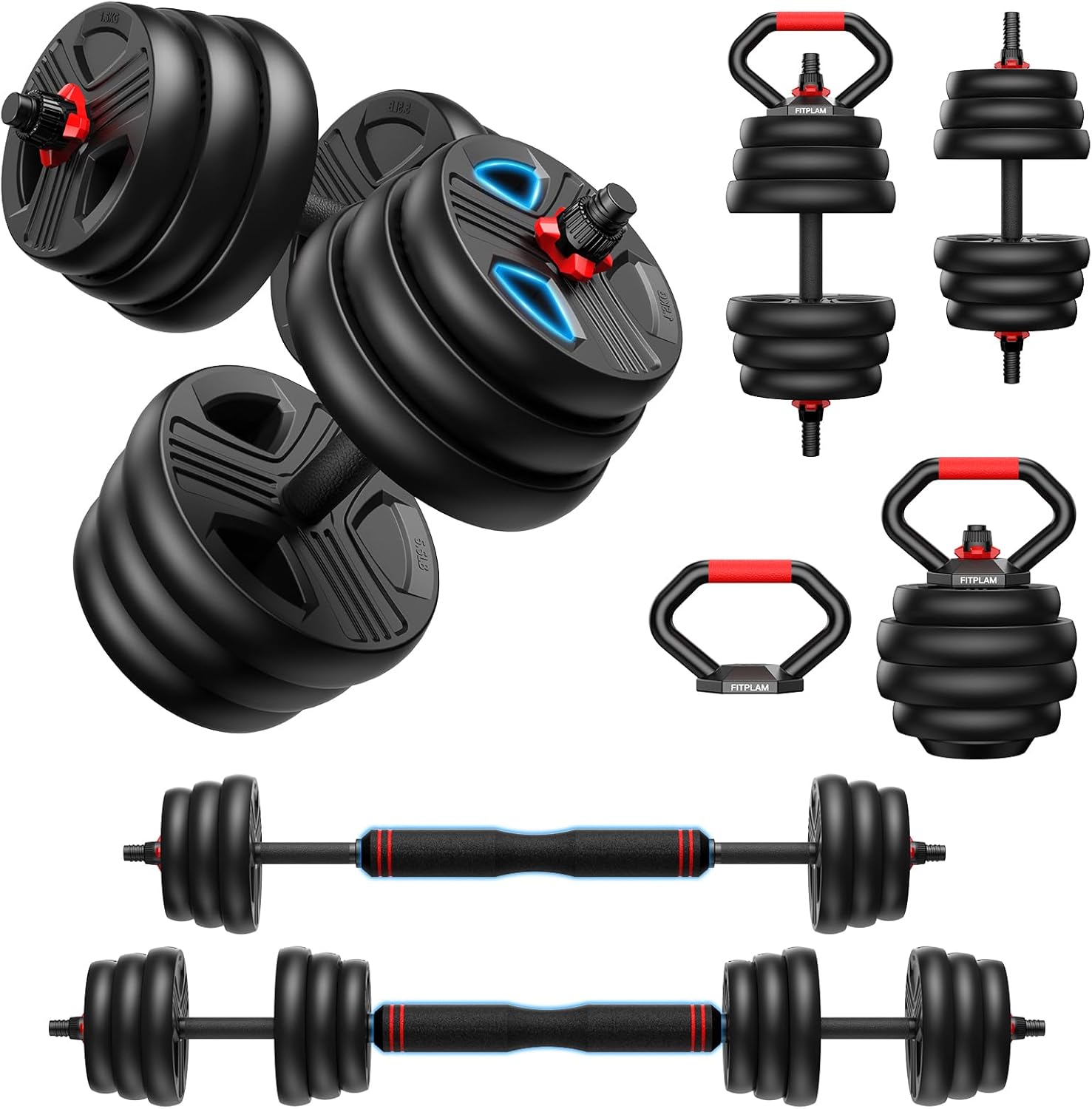
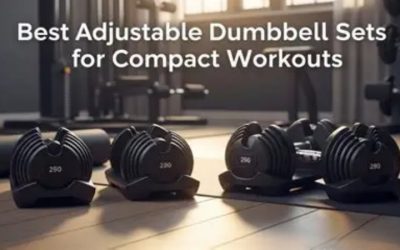
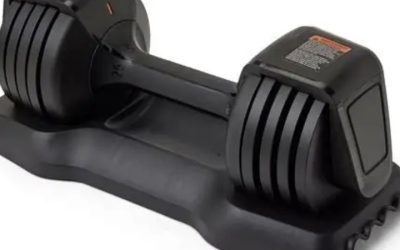
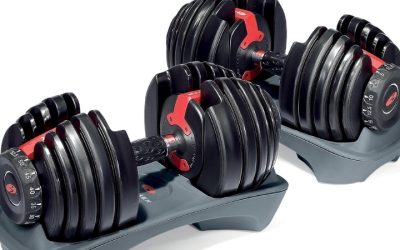
If you buy one thing, buy this. A dial-style or selector pair replaces roughly fifteen fixed dumbbells and gives you 2.5 to 5 pound increments, which matters enormously for pressing: the jump from 45 to 50 pounds per hand is a 10% increase, and smaller steps keep you adding reps instead of stalling. Dumbbells also let each arm travel its own path, so you can bring the handles slightly together at the top for extra adduction. Look for a mechanism that seats firmly with an audible stop, and expect a slightly longer handle-to-handle length than a fixed dumbbell — worth a rehearsal on light weight before your first heavy set.
FID Adjustable Bench — the angle machine
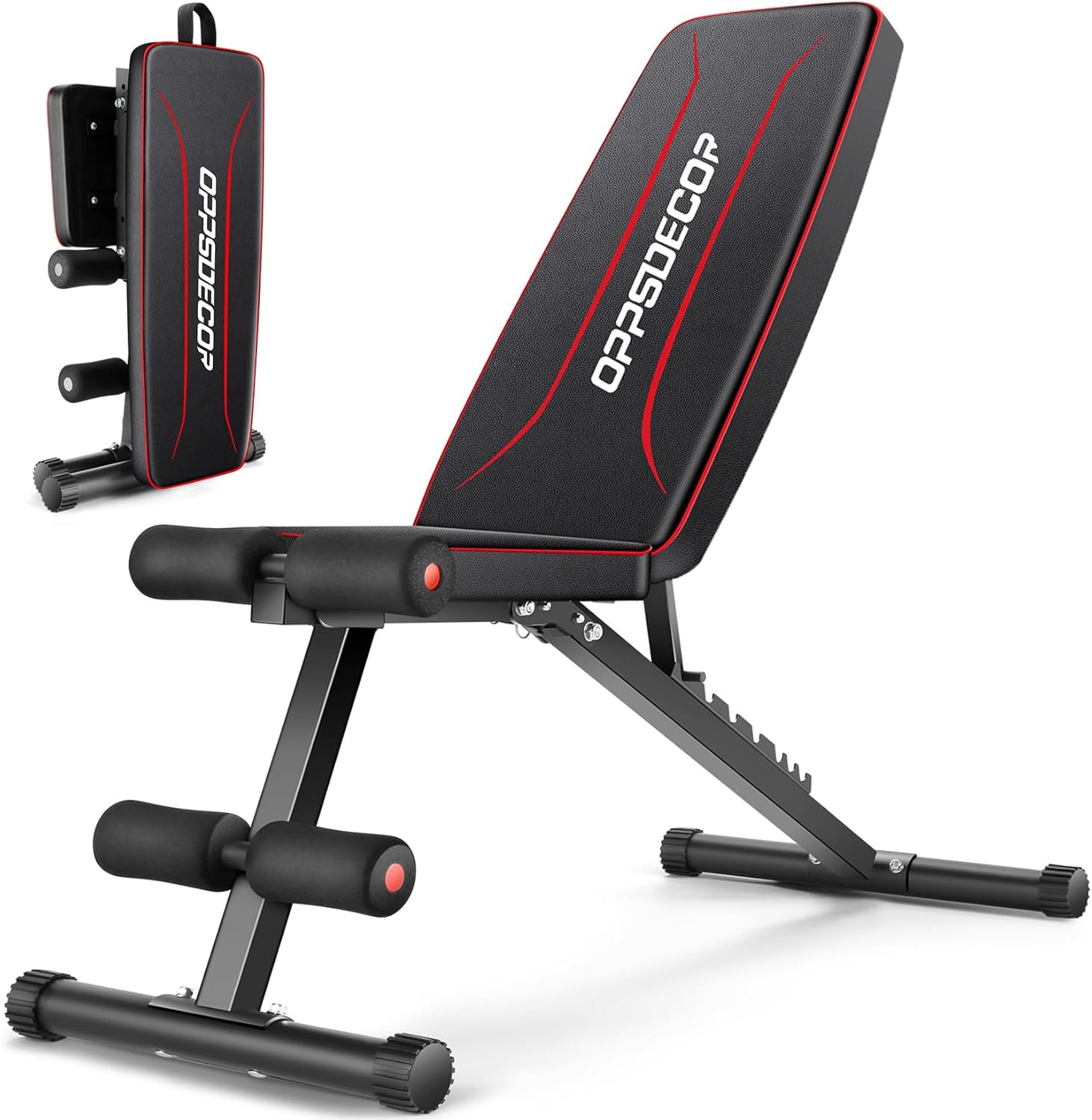
Flat, incline, and decline in one frame. Practically speaking, the incline positions do the heavy lifting here: pressing at 30° biases the clavicular fibers that most home lifters underdevelop, and a 45° setting shifts more work to the front delts if you want that. Look for a ladder-style or pop-pin adjustment rather than a single tension knob, a leg-hold attachment for decline work, and a rated capacity that includes your bodyweight plus the dumbbells. Folding models stand vertically in a closet, which is often the difference between using a bench and resenting it.
Wall-Mounted Cable Pulley System — the tension specialist
Free weights lose tension at the top of a flye; cables don’t. A single-stack wall pulley or compact functional trainer lets you run high-to-low crossovers for the sternal head, low-to-high raises for the upper chest, and single-arm presses that force your core to resist rotation. Dual-stack trainers are excellent but cost several times as much; a single stack with a swivel and a long cable run covers most needs. Confirm the pulley ratio before you judge the weight numbers — a 2:1 stack means the plate weight is roughly halved at the handle.
Power Tower with Dip Station — heavy bodyweight loading
Dips are the closest thing to a decline press you can do without lying down, and leaning your torso forward 20 to 30 degrees while flaring the elbows slightly shifts the emphasis squarely onto the lower chest. A power tower bundles dip handles with a pull-up bar and usually a knee-raise station, which makes it the best value per square foot in home training. Prioritize a wide, stable base, non-slip feet, and handles set roughly shoulder-width; narrow handles push work back toward the triceps.
Layered Resistance Band Set with Door Anchor — the utility player
Bands earn their place for two reasons: they warm the shoulders up properly before pressing, and their ascending resistance curve peaks exactly where your chest is strongest, near full adduction. Anchor a band at chest height and you have a press; anchor two high and you have a crossover; loop one across your back and you have a banded push-up that keeps tension at the top. Buy tube bands with layered latex and metal-free clips, plus a genuine door anchor with a thick foam block rather than a knotted strap.
Suspension Trainer — range of motion on demand
Hanging straps let your hands travel below your torso in a flye or push-up, producing a loaded stretch that a floor push-up physically can’t. Adjust difficulty by walking your feet, and use the same straps for rows to keep your shoulders balanced. A door-mount anchor works for most apartments; a beam or ceiling anchor is better if you have one.
Weighted Vest — progression for bodyweight work
Once you can dip fifteen clean reps or do thirty push-ups, adding reps stops building much. A vest with distributed steel plates in 2.5 or 5 pound increments turns push-ups and dips back into strength work. Choose a snug, high-cut vest that doesn’t sag onto your ribs when you’re horizontal.
Frequently Asked Questions
Can I build a real chest without a bench press?
Yes. Research comparing free-weight and machine or dumbbell pressing consistently shows similar hypertrophy when effort and volume match. What matters is loading the pecs through a full range, close to failure, across multiple angles — dumbbells, dips, and cables cover that comfortably.
How much space do I actually need?
A usable chest setup fits in about 40 square feet: roughly 7 by 6 feet gives you room for a bench with dumbbells beside it, or a power tower with clearance to swing your legs. Ceiling height of 7.5 feet or more is the real constraint for overhead pull-up bars and standing cable work.
Should I start with dumbbells or a cable system?
Dumbbells, almost always. They handle pressing, flyes, pullovers, and every other muscle group you own, while a cable stack is a specialist that shines mainly for isolation and constant-tension work. Add the pulley once your presses are established.
How often should I train chest at home?
Two sessions a week, with roughly 10 to 20 hard sets total, suits most people. Splitting that volume across two days rather than cramming it into one keeps set quality high and gives connective tissue time to recover between heavy pressing days.
Final Thoughts
The best home chest setup isn’t the most expensive one — it’s the one that covers pressing, adduction, and a stretched position without asking you to move furniture first. Start with an adjustable dumbbell pair and an FID bench, which together handle the overwhelming majority of productive chest work. Add a dip station when your presses feel stale, a cable pulley when you want tension that doesn’t fade at lockout, and a weighted vest once bodyweight reps stop being challenging. Build it in that order and you’ll spend less, use everything you own, and still have a room you can walk through.
Write Your Review
No reviews yet. Be the first to share your experience!