Key takeaways
- Clean in small sections so detergent does not dry before you can rinse it.
- Use white cloths for spot testing; colored towels can transfer dye.
- Keep furniture feet off a wet rug and use felt or protective pads once it is dry.
- Store the rug rolled, not sharply folded, in a dry, ventilated place during long periods of bad weather.
What's inside
Outdoor rugs make patios, porches, and decks feel finished, but they also collect the things an indoor vacuum never sees: pollen, grit, food spills, sunscreen, leaf tannins, and moisture-loving mildew. Cleaning one properly is less about aggressive scrubbing and more about matching the method to the rug’s fiber, backing, and stain.
This guide explains the safest way to clean an outdoor rug in 2026, from routine maintenance to stubborn organic stains. You’ll learn which tools and cleaners are worth considering, when a hose is enough, how to dry the rug thoroughly, and which common shortcuts can cause fading, odor, or backing damage.
As an Amazon Associate we earn from qualifying purchases at no extra cost to you. Product prices and availability are accurate as of the date shown and are subject to change.



🛒 Best Price Today on Amazon
Prime members get fast, free shipping on everything above, plus member-only deals. New members get a 30-day free trial — cancel anytime.
1. Check the Rug Before You Clean It
Start by reading the care label and identifying the material. Most outdoor rugs are made from polypropylene or another synthetic fiber, which generally tolerates water well. Natural-fiber rugs, including jute, sisal, cotton, and wool, need a gentler approach and may not be suitable for soaking. Also inspect the underside: latex, rubber, or woven backings can crack, curl, or separate when exposed to harsh chemicals or prolonged moisture.
Test any cleaner on a hidden corner first. Look for color transfer, lightening, stickiness, or changes in texture after the area dries. If the rug is valuable, handmade, badly mildewed, or showing a deteriorating backing, professional cleaning is safer than experimenting.
2. Remove Dry Dirt First
Choose a dry, calm day and move the rug to a washable surface such as a driveway, concrete patio, or clean deck. Avoid placing it directly on soil, where more dirt can work into the fibers. Shake or gently beat the rug outdoors, then vacuum both sides using a standard floor-head setting. A soft-bristle broom can help lift sand from a flat weave.
Do not begin with water. Wet grit turns into mud and can drive particles deeper into the rug. Remove furniture, planters, and decorative objects, and check for trapped twigs or sharp debris that could scratch the surface during washing.
3. Use a Mild, Controlled Cleaning Method
For general grime, rinse the rug with a garden hose from the cleaner side toward the edge, allowing loosened dirt to flow away. Mix a small amount of mild dish soap with water, or use a cleaner specifically labeled for outdoor textiles. Apply it with a soft brush or sponge, working in manageable sections. Use light, overlapping strokes rather than grinding the bristles into the pile.
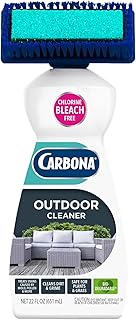
For isolated spills, blot first with a clean cloth. Carbona Oxy Powered Outdoor Cleaner with Built-In Brush can be useful for small, localized marks on outdoor furniture and rugs, but still test it before broad application. Oxygen-based products may brighten some stains while affecting unstable dyes.
Rinse far more thoroughly than you think necessary. Soap left in the fibers attracts dust and can leave a stiff, dull feel. A pressure washer is usually unnecessary and can fray edges or force water through the backing. If you use one, select the lowest practical pressure, keep the nozzle well away from the rug, and test an inconspicuous area.
4. Treat Mold, Mildew, and Algae Carefully
Green or black marks often indicate organic growth rather than ordinary dirt. First remove loose growth outdoors and wear gloves; avoid brushing vigorously in enclosed areas. Select a product whose label specifically permits use on the rug’s material, and protect nearby plants, painted surfaces, and metal hardware.
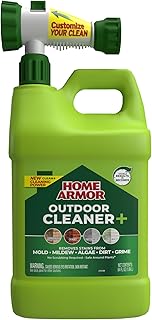
For hose-based treatment on suitable synthetic rugs, the 30 SECONDS Outdoor Cleaner Hose End Sprayer may be convenient for broad coverage. The ready-to-use 30 SECONDS Outdoor Mold & Mildew Stain Remover Spray is better suited to spot treatment. Wet & Forget Outdoor Cleaner & Stain Remover is a bleach-free option designed to work gradually with weather, while Home Armor Outdoor Cleaner+ is another product marketed for outdoor mold, mildew, algae, dirt, and grime. Follow the current label exactly: dwell time, dilution, rinsing instructions, and plant-safety directions matter more than brand familiarity.
Simple Green Oxy Solve Total Outdoor Cleaner Concentrate is a peroxide-based choice for some outdoor surfaces and can be used manually when the label allows, but do not assume a deck or concrete instruction automatically applies to a textile rug. Never combine cleaners, especially products containing bleach with acids, ammonia, or other chemicals.
5. Rinse, Dry, and Prevent a Repeat
After cleaning, rinse until the runoff is clear and the rug no longer feels slippery. Hang it over a sturdy railing only if the construction will not stretch; otherwise lay it flat on a clean, elevated surface. Turn it periodically so air reaches both sides. A box fan can speed drying in a sheltered area, but avoid high heat from a dryer or direct, intense sun if the colors are prone to fading.
Do not return the rug to the patio while the backing is damp. Trapped moisture encourages mildew and can discolor the surface beneath it. Once dry, inspect the edges, corners, and underside. Regularly sweeping, promptly blotting spills, and lifting the rug occasionally for ventilation will reduce the need for deep cleaning.
Tips
- Clean in small sections so detergent does not dry before you can rinse it.
- Use white cloths for spot testing; colored towels can transfer dye.
- Keep furniture feet off a wet rug and use felt or protective pads once it is dry.
- Store the rug rolled, not sharply folded, in a dry, ventilated place during long periods of bad weather.
Frequently Asked Questions
Can I clean an outdoor rug with a pressure washer?
Usually, a hose and soft brush are safer. High pressure can roughen synthetic fibers, loosen binding, and damage the backing. If the care label permits pressure washing, use the lowest setting, a wide spray pattern, and generous distance while testing first.
How often should an outdoor rug be washed?
Vacuum or sweep every one to two weeks during heavy use, and wash when dirt remains after dry cleaning or when odors develop. Rugs under dining furniture, near trees, or in damp shade may need more frequent attention than rugs in a sunny, covered area.
What is the best way to remove mildew odor?
Clean the source rather than masking it with fragrance. Rinse thoroughly, use a compatible labeled mildew treatment if needed, and dry both sides completely. Persistent odor often means moisture is trapped in the backing, in which case replacement may be more practical.
Can outdoor rugs go in a washing machine?
Only if the manufacturer expressly says so and the rug fits without overloading the machine. Large rugs can damage household washers, while rubber-backed designs may shed or deteriorate. For most patio rugs, controlled hand washing outdoors is the safer choice.
Conclusion
The best way to clean an outdoor rug is a measured sequence: remove dry grit, test the cleaner, wash gently, rinse completely, and dry every layer. Mild routine care protects the fibers, while a properly labeled outdoor treatment can address mildew and algae without unnecessary scrubbing. Choose products for the rug’s actual material, not simply for the toughest-looking stain, and your rug will stay cleaner, safer, and more comfortable through the season.