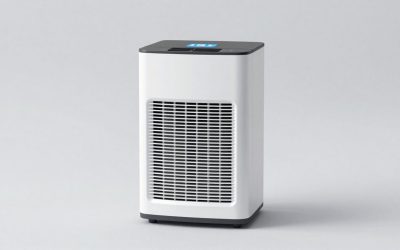
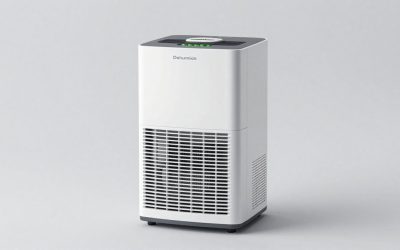
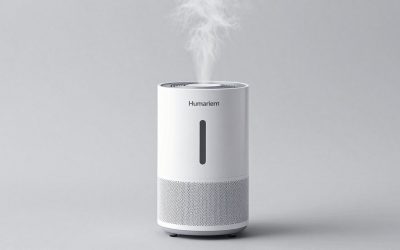
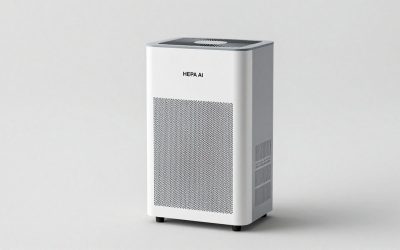
The best overall budget pick is the 20dB Ultra-Quiet Bedroom Air Purifier, with the COWAY Airmega 100 as the runner-up for anyone covering a larger, smokier space. Both pull PM2.5 out of the air fast enough to matter, and both sit under the $100 line where most honest filtration stops.
Here’s the problem I run into constantly with clients who live outdoors as much as indoors: the air you love on the patio is the air that follows you inside. Pollen off the flowering hedge, ash drift from a fire pit or a wildfire two counties over, road dust from a gravel drive, grill smoke that rides the screen door every time it swings. Sub-$100 purifiers are where the marketing gets loudest and the engineering gets thinnest — plenty of them move air without capturing fine particles at all. This guide separates the units with genuine mechanical HEPA-grade media and real airflow from the ionizers and mood-lighting boxes, and tells you which one fits your room, your sleep, and your season.
Our top picks


As an Amazon Associate we earn from qualifying purchases at no extra cost to you.
Quick Comparison
| Product | Best For | Standout Feature | Rating |
|---|---|---|---|
| 20dB Ultra-Quiet Bedroom Air Purifier | Bedrooms and light sleepers | 20dB sleep mode | Top-rated overall |
| COWAY Airmega 100 | Smoke, pet dander and odor | AQI monitor with auto mode | Highly rated |
| Upgraded Negative Ion Generator (4 Pack) | Bathrooms, kitchens, pet corners | Filterless, four-room coverage | Well rated |
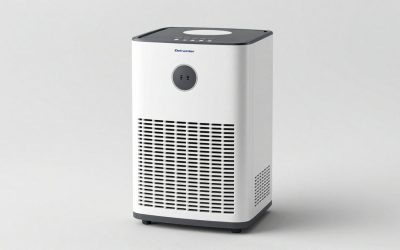
| Large Room Purifier with Washable Pre-Filters, 1015 ft² | Pet hair and heavy lint | Washable pre-filter saves money | Highly rated |
| True HEPA Purifier, 1,190 ft² | Open-plan and great rooms | Largest rated coverage here | Highly rated |
How to Choose a Budget Air Purifier Under $100 That Actually Filters Fine Dust
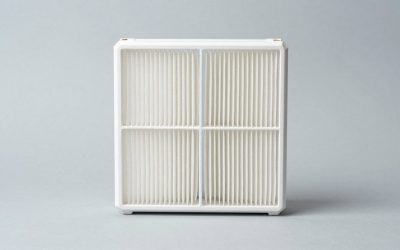
- Demand true mechanical HEPA: Fine dust is 2.5 microns and smaller. Only a pleated HEPA-grade medium physically traps it — “HEPA-type,” “ionic,” or “plasma” language usually means it does not.
- Match coverage to air changes, not square feet: A unit rated for 1,000 ft² in one air change per hour is weak in a 300 ft² bedroom. For allergies or smoke, aim for a rating roughly double your room size.
- Check the noise floor at usable speed: Manufacturers quote decibels on the lowest setting. If the quiet mode barely moves air, you’ll run it loud — or not at all.
- Price the filters, not the machine: A $70 purifier with $45 annual filters costs more over three years than a $95 one with a washable pre-filter. Budget for the consumable.
- Add carbon if outdoor air reaches you: Smoke, grill fumes, and mulch or compost odor are gases. HEPA alone won’t touch them; an activated carbon layer will.
The Best Budget Air Purifiers Under $100 That Actually Filter Fine Dust, Reviewed
Best Overall: 20dB Ultra-Quiet Bedroom Air Purifier
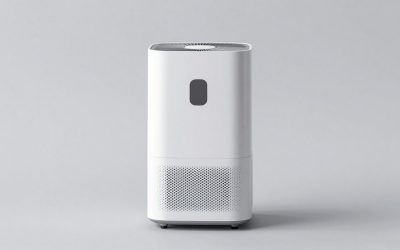
This is the pick for anyone who wants filtration running all night without a fan drone competing with crickets and traffic. It’s best for bedrooms and nurseries where pollen and settled dust are the main complaints and silence is non-negotiable.
Best Budget: COWAY Airmega 100
A HEPA-and-carbon combination with a real AQI sensor and auto mode at this price is unusual, and the two-year warranty signals confidence. Choose it if you deal with smoke, pet dander, or cooking odor and want the machine to speed up on its own when the patio door opens.
Best Premium: Upgraded Negative Ion Generator, 4 Pack
Treat these as odor-and-freshness helpers rather than dust filters — four plug-in ionizers cover the small, damp, smelly spaces a single purifier never reaches. Best for mudrooms, bathrooms, litter corners, and basement stairwells alongside a HEPA unit, not instead of one.
Best for Pet Hair: Large Room Purifier with Washable Pre-Filters, 1015 ft²
The washable pre-filter catches fur and lint before it blinds the HEPA media, which is exactly what kills purifiers in homes with shedding dogs. Ideal for family rooms with heavy foot traffic between yard and couch.
Best for Large Open Rooms: True HEPA Purifier, 1,190 ft²
The widest coverage rating in this group, which makes it the practical choice for great rooms, finished basements, and open kitchen-living spaces. Best for households where one machine has to handle several connected zones.
Frequently Asked Questions
Can a purifier under $100 really remove wildfire smoke?
It can remove the particulate portion, which is what irritates lungs most. You need HEPA plus activated carbon, and you’ll get better results running it continuously with windows shut than blasting it after the fact.
Do ionizers filter fine dust?
Not meaningfully. They charge particles so they cling to walls and surfaces, and some produce trace ozone. Use them for odor control in small spaces and rely on mechanical filtration for dust.
Where should I place the unit?
Off the floor if possible, 6 to 12 inches from walls, and near where outdoor air enters — the entry door or the room where the patio slider lives.
Is a bigger coverage rating always better?
For a small room, yes, because it lets you run a low, quiet speed and still get several air changes per hour. Just verify the rating includes an air-change figure rather than a bare square-foot number.
Final Thoughts
For most homes, the 20dB Ultra-Quiet Bedroom unit is the best overall value and the COWAY Airmega 100 is the smartest upgrade if smoke and pet odor are your reality; step up to the 1,190 ft² True HEPA model for open-plan spaces, or look at the Medify MA-14 if you want a compact HEPA option for a single room.