Our Top Picks
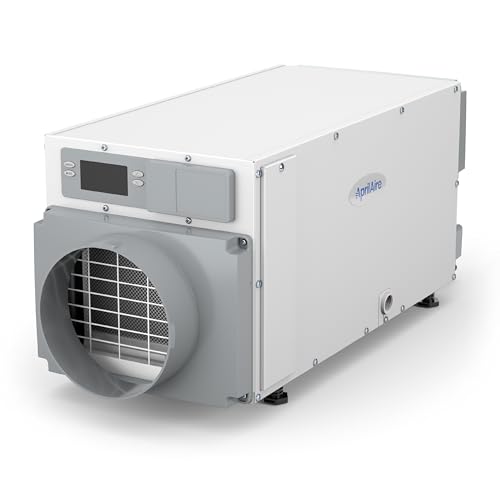 AprilAire E070 Pro 70-Pint Crawl Space Dehumidifier with500-2200 sq. ft.33 x 13.04 x 12.88 inches56 poundsCheck on Amazon
 ALORAIR 113 Pints Crawlspace Dehumidifier for Commercial19.2×12.2×13.3 in19.2 x 12.2 x 13.3 inches41.7 poundsCheck on Amazon
Buying a compact crawl space dehumidifier to control humidity across a whole basement is really two decisions made at once. The cabinet has to be short enough to pass through the crawl space access and sit under the joists, yet the pint rating and coverage figure still need to match the full below-grade footprint, not just the corner where the unit happens to sit. Height is the filter most buyers apply last and regret first.
This guide is for homeowners with low-clearance crawl spaces, sealed or vented, who want one compact unit to hold the whole basement at a steady humidity level. The three picks below were chosen from their Amazon listings by cabinet height, AHAM pint rating, stated coverage area and drainage method, and each one is a crawl-space-rated metal unit rather than a portable room dehumidifier with a bucket.
Quick Picks
As an Amazon Associate we earn from qualifying purchases.
| Product | Best for | Key spec from title |
|---|---|---|
| Santa Fe Compact70 | The lowest crawl spaces that still need whole-basement coverage | 70 pints per day, 12-inch-tall cabinet |
| AprilAire E070 Pro | Ducted layouts and a remote wall control | 70 pints per day, covers up to 2,200 sq. ft. |
| ALORAIR Sentinel HD55 | Smaller basements that need low-temperature running | 113 pints at saturation, covers up to 1,200 sq. ft. |
How to Choose
Match the AHAM pint rating to the whole footprint
Headline pint numbers on crawl space units are usually measured at saturation, in hot and very humid test air that a real basement rarely matches. The figure that predicts everyday performance is the AHAM rating, taken at 80 degrees and 60 percent relative humidity. A compact unit rated around 70 AHAM pints suits most sealed crawl spaces under a typical house, while a 53-pint AHAM model is better matched to a smaller or well-sealed footprint. Size for the entire below-grade area the air can reach, including any finished basement rooms that share air with the crawl space, and step up a class if the space is vented or the soil stays wet.
Check cabinet height against your lowest joist
Compact in this category means short, not small in capacity. Cabinets here range from 12 inches tall to just over 13 inches, and that inch decides whether the unit slides between joists or has to sit in the open centre of the crawl space where it blocks access. Measure the lowest obstruction on the route in, including plumbing runs and duct trunks, not just the height of the access door. Also leave working room above and beside the cabinet: the filter slides out from the side or end, and a unit wedged tight against a joist cannot be serviced without dragging it out.
Plan the drain route before the unit arrives
None of these machines has a bucket to empty, which is the point, but continuous drainage only works if the water has somewhere to go. Gravity models need a floor drain, sump pit or condensate line that sits lower than the unit outlet, with the hose sloping down along its whole run. Where the only drain point is above the unit or across the space, you need a model with a built-in pump or a separate condensate pump. Decide this before ordering, because a gravity unit placed in a low corner with no downhill route will shut down or spill exactly when the basement is wettest.
Look at ducting options for split spaces
A crawl space that wraps around a foundation in an L or U shape rarely dries evenly from one discharge point. Ductable units accept a collar and flexible duct on the supply side, which lets you push dried air toward the far end while the return draws from the dampest corner. Check the collar size on the listing and whether the duct kit is included or a separate purchase. Even without full ducting, a short supply run aimed down the longest leg of the space improves circulation more than raising the humidity setpoint ever will, and it keeps the discharge from blowing straight back into the intake.
Safety and Installation Checks
Treat the electrical side of the install as part of the purchase, not an afterthought. Run the unit from a GFCI-protected outlet, which is the standard safeguard for equipment sitting on or near damp ground, and plug it directly into the receptacle rather than through an extension cord or power strip that can overheat and that the manuals for this class of equipment warn against for permanent installation. Keep the cabinet clear of loose insulation and stored combustibles, with roughly a foot of open space around the intake so airflow is not restricted, and route the drain hose where it cannot kink, freeze at an exterior wall, or discharge against the foundation. Confirm the breaker for the circuit can carry the unit’s listed amp draw alongside anything else already on that circuit.
The 3 Best Options
Santa Fe Compact70
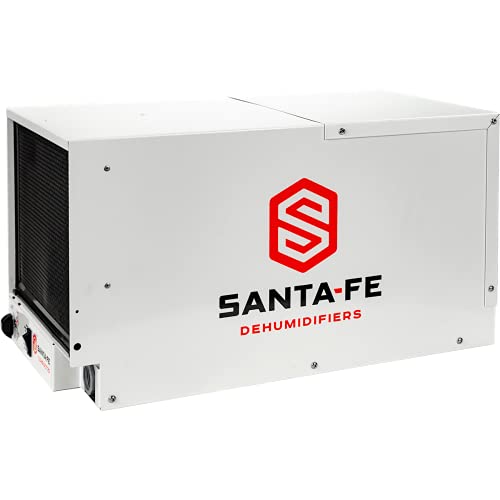
The Compact70 is the pick when headroom is the hard limit. Its cabinet is only 12 inches tall in a horizontal flow-through layout, so it fits below-grade spaces that reject taller machines, yet the listing still rates it for crawl spaces up to 2,600 square feet and basements up to 2,200 square feet. That combination of a short body and a full-size 70-pint AHAM rating is rare, and it suits a sealed crawl space under a mid-size house where the whole basement shares one air volume and the owner wants a set-and-forget knob control rather than an app.
Specs
- Capacity: 70 pints per day at 80°F and 60 percent RH (43.7 pints at 65°F and 60 percent RH)
- Coverage: crawl spaces 1,800–2,600 sq. ft.; basements 1,800–2,200 sq. ft.
- Dimensions: 12″W x 12″H x 21″D
- Weight: 55 lb
- Operating temperature range: 49°F to 95°F
- Drainage: gravity drain connection (no built-in pump)
- Model: 4044110
Best for: Sealed crawl spaces with about a foot of working height that still need whole-basement coverage.
Watch out for: There is no internal pump, so confirm a downhill drain route or plan on a separate condensate pump before ordering.
ASIN: B07HCLL7FY
AprilAire E070 Pro
The E070 Pro fits the same low-profile brief at 12.5 inches tall, and adds the ducting and control flexibility the other compact units charge extra to approximate. The listing includes a drain hose in the box, the cabinet takes duct collars so dried air can be sent to a far corner or tied into a whole-home layout, and the range offers a wall-mount control option so you are not crawling under the house to check the setpoint. For a basement that is partly finished, that remote readout is the difference between a unit you monitor and one you forget until something smells damp.
Specs
- Capacity: 70 pints per day
- Coverage: crawl space, basement or whole home up to 2,200 sq. ft.
- Dimensions: 12.5″W x 12.5″H x 25″L (cabinet)
- Weight: 56 lb
- Drainage: gravity, drain hose included; 3/4-inch MNPT threaded drain connection
- Ducting: designed for ducted installation with 8-inch collars
Best for: L-shaped or partly finished basements where ducted supply air and a remote control matter.
Watch out for: Duct collars and the wall control are configuration extras on some listings, so confirm exactly which bundle the listing includes.
ASIN: B094PR3HQ1
ALORAIR Sentinel HD55
The HD55 is the compact option for a smaller basement that runs cold. At 13.3 inches tall it is the tallest cabinet here, but it is also the lightest and shortest front-to-back, and its listing gives an operating range starting at 33.8 degrees with automatic defrost, which suits unheated crawl spaces where a unit that stops at 49 degrees would sit idle through the dampest shoulder seasons. The trade is coverage: the listing rates it to 1,200 square feet, so it is a whole-basement answer only for compact footprints, smaller homes and well-sealed spaces.
Specs
- Capacity: 113 pints per day at saturation; 53 pints per day at AHAM
- Coverage: up to 1,200 sq. ft.
- Dimensions: 19.2 x 12.2 x 13.3 in
- Drainage: continuous gravity drain, drain hose included, no internal tank
- Operating temperature range: 33.8°F to 104°F
- Features from listing: auto defrost, memory restart after power loss, side-sliding filter, cETL approved
Best for: Smaller, colder crawl spaces and basements up to about 1,200 sq. ft. with a drain below the unit.
Watch out for: Gravity drainage only, and the 1,200 sq. ft. rating leaves no headroom for a large or vented space.
ASIN: B08N6C4GPP
Which One Fits Your Situation
Your crawl space has barely a foot of clearance
Choose the Santa Fe Compact70. The 12-inch cabinet is the deciding figure, and its basement sizing still reaches 2,200 square feet, so you are not trading away whole-basement coverage to get through the access hatch. Measure your lowest joist run first; if even 12 inches will not clear once the drain hose is connected, the install location, not the model, is the problem to solve.
The basement is partly finished and partly crawl space
Choose the AprilAire E070 Pro. Duct collars let you deliver dried air into the finished side instead of hoping it drifts there, and the available wall control keeps the humidity readout in the living space. Its 2,200 square foot rating covers most split layouts, and the included drain hose simplifies the gravity run to a sump or floor drain.
The space is small, unheated and dries out slowly in spring
Choose the ALORAIR Sentinel HD55. Its low-temperature operating range and auto defrost keep it working through cold snaps that pause higher-minimum units, and the compact footprint suits a tight equipment corner near the sump. It is the wrong pick for a big footprint, but for a smaller home it covers the whole basement without oversizing the cabinet.
There is no drain lower than the unit
None of these three solves that on its own, because all drain by gravity. The honest fix is to pair the unit that fits your space with a condensate pump, or to look at a pump-equipped variant in the same model families. Do not buy a gravity unit and hope a flat hose run will behave; standing water in the line is the most common cause of a crawl space unit shutting down mid-season.
Common Mistakes
- Sizing by the saturation pint figure on the box instead of the AHAM rating, which overstates real-world removal.
- Measuring the access door but not the lowest joist, pipe or duct the unit must pass on the way in.
- Setting a gravity-drain unit in the lowest corner with no downhill route for the hose.
- Ignoring the minimum operating temperature, then finding the unit defrosts or idles through the cold, damp months.
- Sealing the unit in tight against joists and insulation so the filter cannot slide out for cleaning.
Frequently Asked Questions
Can one compact crawl space unit really dry a whole basement?
Yes, provided the pint rating and stated coverage match the full below-grade footprint and the air can circulate between the crawl space and the rest of the basement. Compact describes cabinet height here, not weakness: the 70-pint models above carry basement ratings above 2,000 square feet. Split or closed-off layouts may still need ducting to move dried air into every section.
What humidity level should I set in a crawl space?
A setpoint in the middle of the unit’s range, commonly around 50 percent relative humidity, is the usual target for below-grade spaces. Low enough to discourage mould growth on joists and stored items, without running the compressor constantly in summer. Use the unit’s built-in humidistat or a remote control, and verify with a separate hygrometer placed away from the discharge air for the first few weeks.
Do I need a pump, or is gravity drainage enough?
Gravity drainage is enough when a floor drain, sump pit or drain line sits lower than the unit and the hose can slope down to it without dips. If the only discharge point is higher than the outlet, or the run has to cross the space, a pump is required. All three units in this guide drain by gravity, so check the route before choosing between them.
How cold can a crawl space get before these units stop working?
It depends on the model, which is why the listed operating range matters. The Santa Fe Compact70 is rated down to 49 degrees, while the ALORAIR Sentinel HD55 lists a range starting at 33.8 degrees with auto defrost. In an unheated crawl space in a cold climate, that difference decides whether the unit protects the space through winter or only from spring to autumn.
More from Amazon
Programs that pair well with the guide above. Offers and eligibility are set by Amazon and may change.
Collect the home and kitchen items you want in one registry that guests can shop from.
Create a wedding registrySet up recurring deliveries of everyday items on eligible products. Terms and savings are set by Amazon.
Explore Subscribe & SaveFree shipping on eligible items, Prime Video and more. Eligible new members can start with a free trial.
Start a Prime free trialAudiobooks and podcasts to listen to on the go. Eligible new members can start with a free trial.
Try Audible freeAs an Amazon Associate we earn from qualifying purchases.