Our Top Picks
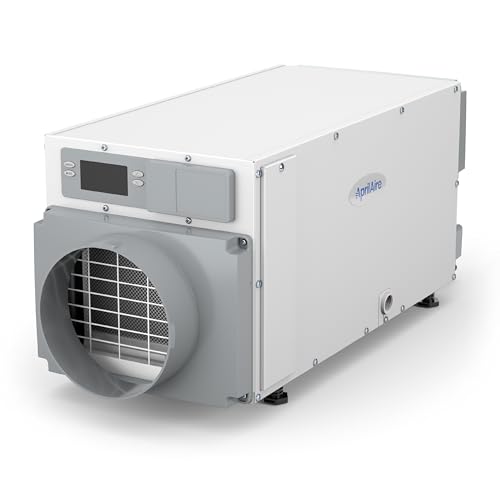 AprilAire E070 Pro 70-Pint Crawl Space Dehumidifier with500-2200 sq. ft.33 x 13.04 x 12.88 inches56 poundsCheck on Amazon
A crawl space dehumidifier bought for whole basement humidity control lives or dies on one question: can a single machine, parked under the floor, hold the entire below-grade volume at target humidity through the wettest month of the year? Everything else, from the control panel to the filter style, is secondary to capacity, coverage and drainage. Undersize the unit and it runs without pause while the far corners stay damp; oversize the drainage problem and it stops altogether.
The buyers this guide serves are owners of houses where the crawl space and basement form one connected air volume, whether that is a full crawl space under the whole house or a crawl section adjoining a finished basement. Each pick below comes from its Amazon listing, using the AHAM pint rating, the manufacturer’s stated coverage, cabinet dimensions and drain type as the comparison points, because those four figures decide whether the installation works.
Quick Picks
As an Amazon Associate we earn from qualifying purchases.
| Product | Best for | Key spec from title |
|---|---|---|
| ALORAIR Sentinel HD90 | Large footprints and very wet crawl spaces | 90 pints per day at AHAM, covers up to 2,600 sq. ft. |
| AprilAire E070 Pro | Mid-size homes that need ducting and remote control | 70 pints per day, covers up to 2,200 sq. ft. |
| Santa Fe Compact70 | Low headroom with full-size capacity | 70 pints per day, 12-inch-tall cabinet |
How to Choose
Start with AHAM pints, not the headline number
Two capacities appear on almost every crawl space listing: a saturation figure measured in hot, near-soaked air, and an AHAM figure measured at 80 degrees and 60 percent relative humidity. Only the second one resembles a real basement in summer. A unit advertised at 198 pints may be a 90-pint machine in AHAM terms, and a 113-pint headline can hide a 53-pint rating. Compare AHAM to AHAM across brands, then match that number to your moisture load: sealed and dry-ish spaces need less, while vented crawl spaces over bare soil sit at the demanding end of every sizing chart.
Coverage ratings assume a sealed space
The square footage on the box is not a guarantee; it is a best case that presumes a sealed or encapsulated crawl space with a vapour barrier and closed vents. An unsealed space of the same size leaks humid outdoor air all summer, and the same unit will fall behind. Read the coverage figure alongside the maker’s sizing notes where the listing gives them: Santa Fe, for instance, publishes separate ranges for crawl spaces and basements because ceiling height changes the air volume. If your footprint sits near the top of a unit’s range and the space is vented, move up one capacity class instead.
Gravity drain or pump is an installation decision
Crawl space dehumidifiers skip the bucket entirely and drain continuously, but the route matters more than the hose. Gravity models, which include every unit in this guide, must sit above their discharge point, with the hose falling steadily toward a sump pit, floor drain or exterior line. Where the drain sits uphill, or the only sump is on the far side of the foundation, a built-in condensate pump or a separate pump on the line becomes part of the real cost. Walk the route with a tape and a level before ordering, and count any dips where water would pool and freeze or block.
Ducting, filters and controls decide how livable it is
Whole-basement control often means the unit sits in the crawl space while the rooms that matter are elsewhere. Ductable cabinets with supply collars let you aim dried air into a finished section or down a long foundation leg, and a remote or wall-mounted control means adjustments happen from the living space instead of on your knees under the joists. Filter access matters for the same reason: a slide-out filter you can reach in the dark gets changed, while one that needs tools and clearance gets skipped until airflow drops and the coils ice over.
Safety and Installation Checks
Before the unit goes under the house, sort out the circuit it will live on. Plug it into a GFCI-protected receptacle, the appropriate protection for equipment running unattended in a damp below-grade space, and avoid extension cords or multi-outlet strips for a permanent installation, since a compressor load cycling for months deserves a direct connection. Check the listed amp draw against what else shares that breaker, keep loose insulation and stored items clear of the intake and discharge, and leave the clearance the manual specifies around the cabinet. Route condensate so it cannot back up into the unit, pool against foundation walls, or freeze where the line exits the building.
The 3 Best Options
ALORAIR Sentinel HD90

For a big footprint or a crawl space that stays wet, the HD90 is the capacity anchor of this guide. The listing rates it at 90 pints per day under AHAM conditions, the honest measure, with coverage to 2,600 square feet, which puts most full-house crawl spaces and combined crawl-and-basement layouts inside one machine. It is a substantial cabinet at over 70 pounds, so the installation is a two-person job, and in return you get headroom: the unit can absorb a bad season, a plumbing leak’s aftermath or a newly encapsulated space drying out without running at its limit every hour of the summer.
Specs
- Capacity: 90 pints per day at AHAM (80°F, 60 percent RH); 198 pints per day at saturation
- Coverage: up to 2,600 sq. ft.
- Dimensions: 23.2 x 15.2 x 17.7 in
- Weight: 70.5 lb
- Drainage: continuous gravity drain
- Features from listing: auto defrost, rare earth alloy tube evaporator
Best for: Large or persistently damp crawl spaces and whole basements up to the stated 2,600 sq. ft.
Watch out for: Confirm the current listing’s configuration and drain setup before ordering, and measure the access route, since the cabinet is tall and heavy for a crawl space.
ASIN: B0F1N43CG5
AprilAire E070 Pro
Where the HD90 wins on raw capacity, the E070 Pro wins on integration. Its 70-pint rating and 2,200 square foot coverage fit the middle of the market, and the design assumes ducted work: collars move dried air where it is needed, the drain hose is in the box, and the range supports a wall-mount control so the humidity setpoint lives upstairs. The low, 12.5-inch cabinet also threads through access openings and joist bays that exclude taller machines, which makes it the natural choice when part of the basement is finished and the crawl section is the only place the equipment can go.
Specs
- Capacity: 70 pints per day
- Coverage: crawl space, basement or whole home up to 2,200 sq. ft.
- Dimensions: 12.5″W x 12.5″H x 25″L (cabinet)
- Weight: 56 lb
- Drainage: gravity, drain hose included; 3/4-inch MNPT threaded drain connection
- Ducting: designed for ducted installation with 8-inch collars
Best for: Mid-size homes mixing finished basement and crawl space, especially with a ducted layout.
Watch out for: Listings vary between the bare unit and bundles with controls or duct parts, so check the contents list against what your install needs.
ASIN: B094PR3HQ1
Santa Fe Compact70
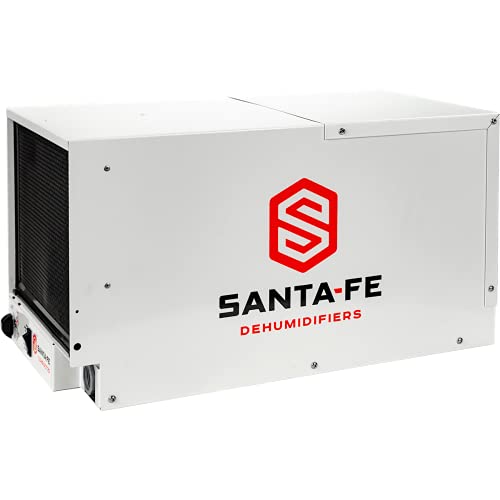
The Compact70 earns its place here on cabinet geometry. At 12 inches tall it slides into crawl spaces that the HD90 cannot enter, while still carrying a 70-pint AHAM rating and published sizing that reaches 2,600 square feet in a crawl space and 2,200 in a basement. Control is a simple dial rather than a digital panel, which some owners prefer for a machine that will be touched twice a year. Output does fall in cooler air, to 43.7 pints at 65 degrees per the manufacturer’s figures, so a cold-climate basement near the top of its range should weigh that against the alternatives.
Specs
- Capacity: 70 pints per day at 80°F and 60 percent RH (43.7 pints at 65°F and 60 percent RH)
- Coverage: crawl spaces 1,800–2,600 sq. ft.; basements 1,800–2,200 sq. ft.
- Dimensions: 12″W x 12″H x 21″D
- Weight: 55 lb
- Operating temperature range: 49°F to 95°F
- Drainage: gravity drain connection (no built-in pump)
- Model: 4044110
Best for: Low-clearance crawl spaces under mid-size homes that still need whole-basement control.
Watch out for: The 49-degree minimum operating temperature makes it a weaker fit for unheated spaces in cold climates.
ASIN: B07HCLL7FY
Which One Fits Your Situation
A full crawl space under a large house, always damp
Take the ALORAIR Sentinel HD90. Its 90-pint AHAM rating and 2,600 square foot coverage give it the reserve capacity that a big, wet footprint consumes in July and August, and the gravity drain keeps the mechanical side simple if your sump sits low. Just confirm the cabinet fits your access and joist height before committing, because returning a 70-pound machine from under a house is nobody’s idea of a good weekend.
A finished basement with a crawl space wing
Take the AprilAire E070 Pro. Ducting lets one unit serve both zones instead of drying the crawl space and hoping the finished rooms follow, and a wall control keeps daily checks upstairs. The 70-pint capacity suits the combined volume of most split layouts, and the included drain hose shortens the install if a floor drain or sump is already in the unfinished section.
A shallow crawl space you can barely sit up in
Take the Santa Fe Compact70. Height is the constraint that eliminates the other two, and this is the rare case where the shortest cabinet also brings full-size capacity and published basement sizing. Pair it with a well-planned gravity run, since there is no pump to forgive a flat hose, and set the dial once the space has had a few days to pull down.
A vented crawl space over bare soil
Fix the space before the machine, whichever model you choose. No unit in this guide is rated to defeat a constant inflow of humid air over wet ground indefinitely. A vapour barrier and closed vents move your footprint back inside the coverage figures these listings promise, and only then does stepping up to the HD90’s capacity make sense as insurance rather than as a permanent uphill fight.
Common Mistakes
- Comparing one brand’s saturation pints against another brand’s AHAM pints and buying the wrong size.
- Trusting the coverage figure for a vented, unsealed crawl space that the rating never assumed.
- Running a long, flat drain hose that pools water, instead of a short line with a steady fall.
- Choosing by capacity alone and discovering the cabinet cannot pass the access door or the lowest joist.
- Skipping filter changes because access is awkward, then blaming the unit for weak airflow and icing.
Frequently Asked Questions
How many pints per day does a whole basement need?
Most sealed crawl spaces and basements under typical homes land in the 70 to 90 AHAM pint range, which is where two of the three units here sit. Smaller, tight spaces can hold humidity with less, while vented or very wet footprints need more. Match the AHAM rating, not the saturation headline, to the maker’s sizing range for your square footage and ceiling height.
Can a crawl space dehumidifier replace a basement dehumidifier?
It can, when the two areas share air and the unit’s coverage rating spans the combined footprint. Crawl space models are built for exactly this duty: continuous drainage, low cabinets and controls that do not need daily attention. If the basement is sealed off from the crawl space by a closed door and separate air, treat them as two zones and consider ducting or a second unit.
Where should the condensate drain go?
The usual targets are a sump pit, a floor drain or a plumbed condensate line, always downhill from the unit for a gravity system. The hose should run with a continuous fall, without low spots where water can sit. Avoid discharging beside the foundation outdoors, which returns the moisture to the soil against the wall and can freeze at the outlet in winter.
Should the crawl space be sealed before installing one?
Sealing first makes every rating in this guide more honest. A ground vapour barrier and closed vents cut the moisture load dramatically, so the unit cycles normally instead of running flat out, and the coverage figures on the listings are written with a sealed space in mind. You can install the dehumidifier first and seal later, but expect longer pull-down times and higher running hours until the work is done.
More from Amazon
Programs that pair well with the guide above. Offers and eligibility are set by Amazon and may change.
Collect the home and kitchen items you want in one registry that guests can shop from.
Create a wedding registrySet up recurring deliveries of everyday items on eligible products. Terms and savings are set by Amazon.
Explore Subscribe & SaveFree shipping on eligible items, Prime Video and more. Eligible new members can start with a free trial.
Start a Prime free trialAudiobooks and podcasts to listen to on the go. Eligible new members can start with a free trial.
Try Audible freeAs an Amazon Associate we earn from qualifying purchases.