
Key takeaways
- Start with your heaviest impact, not your average one. Floors fail at the extreme. If a loaded barbell ever leaves your hands above knee height, you need rubber at least 3/4″ thick under that spot — and honestly, two layers stacked where the plates land.
- Check the subfloor for moisture before you cover it. Tape a 2 ft square of plastic sheeting to bare concrete overnight. Condensation underneath means you’ll trap water, and trapped water under mats grows mold no matter what the flooring is made of.
- Weigh the install against your own logistics. A single 4×6 stall mat is roughly 95 lb and does not bend politely around a stairwell corner. If your gym is in a basement with a tight turn, interlocking tiles you can carry one-handed will save your back and your drywall.
- Separate noise from shock. Thickness absorbs impact; mass and decoupling block sound transmission. Upstairs gyms need a soft underlayment beneath the hard surface, not just a thicker top layer.
- Budget by zone, not by room. Rubber under the rack, cheaper foam or turf everywhere else. Full-coverage premium flooring is the most common overspend in home gym builds.
What's inside
My first home gym lived on bare concrete, and I learned everything I know about flooring the hard way: a 45 lb plate slipped off the sleeve, bounced once, and left a crater in the slab plus a chip in the plate’s rim. The dumbbells rolled toward the floor drain. Every rep echoed through the house loud enough that my downstairs neighbor started texting. Flooring isn’t the fun purchase — nobody photographs it for their gym tour — but it’s the layer that decides whether your equipment survives, whether your joints stay happy on jump days, and whether anyone else in the building tolerates your 6 a.m. deadlifts.
The good news is that a genuinely solid gym floor costs less than a single decent barbell. Rubber stall mats run a few dollars a square foot. Foam tiles are cheaper still. The trick is matching material to what you actually do: a yoga-and-kettlebell corner has almost nothing in common with a platform where you drop loaded bars from overhead, and buying for the wrong one wastes money in both directions. Below is how the common options compare on cost, install difficulty, noise, and abuse tolerance, plus the specific configurations I’d recommend for typical basements, garages, and spare bedrooms.
As an Amazon Associate we earn from qualifying purchases at no extra cost to you. Product prices and availability are accurate as of the date shown and are subject to change.

#1 Pick

#2 Pick

#3 Pick

#4 Pick

#5 Pick

#6 Pick
#7 Pick

As an Amazon Associate we earn from qualifying purchases at no extra cost to you. Product prices and availability are accurate as of the date shown and are subject to change.
#1 Pick
Quick Comparison
| Flooring Type | Typical Thickness | Install Difficulty | Drop Tolerance | Best For |
|---|---|---|---|---|
| EVA foam interlocking tiles | 1/2″ – 3/4″ | Very easy — puzzle edges, no tools | Low (dents under plates) | Bodyweight, yoga, light dumbbells |
| Rubber horse stall mats | 3/4″ | Moderate — very heavy, needs trimming | Excellent | Garage gyms, racks, heavy lifting |
| Interlocking rubber tiles | 8mm – 1″ | Easy — manageable pieces | Very good | Basements, awkward room shapes |
| Rolled rubber flooring | 6mm – 10mm | Hard — heavy rolls, seams matter | Good | Large open spaces, cardio zones |
| Gym turf rolls | ~1/2″ with pad | Moderate | Moderate | Sled pushes, sprints, mobility work |
| Vinyl plank over foam underlayment | 5mm + 2mm pad | Moderate — click-lock rows | Poor | Multi-use rooms that must look nice |
How to Choose
- Start with your heaviest impact, not your average one. Floors fail at the extreme. If a loaded barbell ever leaves your hands above knee height, you need rubber at least 3/4″ thick under that spot — and honestly, two layers stacked where the plates land.
- Check the subfloor for moisture before you cover it. Tape a 2 ft square of plastic sheeting to bare concrete overnight. Condensation underneath means you’ll trap water, and trapped water under mats grows mold no matter what the flooring is made of.
- Weigh the install against your own logistics. A single 4×6 stall mat is roughly 95 lb and does not bend politely around a stairwell corner. If your gym is in a basement with a tight turn, interlocking tiles you can carry one-handed will save your back and your drywall.
- Separate noise from shock. Thickness absorbs impact; mass and decoupling block sound transmission. Upstairs gyms need a soft underlayment beneath the hard surface, not just a thicker top layer.
- Budget by zone, not by room. Rubber under the rack, cheaper foam or turf everywhere else. Full-coverage premium flooring is the most common overspend in home gym builds.
Top Picks Reviewed
3/4″ Rubber Horse Stall Mats — Best Overall Value
Nothing beats stall mats on dollars per pound of protection. They’re vulcanized rubber, dense enough that dropped plates thud rather than bounce, and they’ll outlast the equipment sitting on them. The two catches: they arrive with a strong rubber smell that takes a couple weeks of ventilation to fade, and cutting them requires a fresh utility blade, a straightedge, and patience. Lay them seam-to-seam without adhesive and their own weight keeps them put.
Interlocking Rubber Tiles — Best for Tricky Spaces
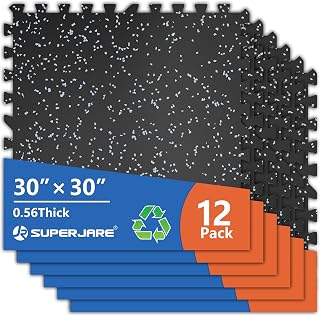
These give you most of the stall mat’s durability in pieces one person can actually carry downstairs. Puzzle edges mean no gaps opening up when you shuffle a bench around, and you can pull a single damaged tile instead of replacing a whole mat. Many kits include beveled edge ramps, which matters more than it sounds — a raw 1″ edge is a genuine trip hazard mid-set.
3/4″ High-Density EVA Foam Tiles — Best Budget Starter
The right answer for a spare bedroom used for kettlebell flows, planks, and dumbbell work under about 50 lb. Warm underfoot, quiet, and cheap enough to cover 100 square feet for the price of one rubber mat. Be realistic about limits: barbell knurling and rack feet will emboss permanent divots, so put a rubber square anywhere concentrated load lands.
8mm Rolled Rubber — Best for Large Open Rooms
Seamless coverage looks and feels like a commercial facility, and a single roll can span a whole cardio area without a joint for a treadmill to walk across. It is the hardest install here — rolls are unwieldy, need to relax flat for a day or two before trimming, and often want double-sided tape at the seams. Worth it above roughly 300 square feet.
Gym Turf Roll — Best for Sled and Sprint Work
Short-pile turf over a thin pad lets you push a sled, drag a strap, or do bear crawls without the friction burn of rubber. It also happens to be the most pleasant surface for stretching. Combine a 4 ft turf lane along one wall with rubber under the rack and you’ve covered nearly every training modality.
Vinyl Plank Over Foam Underlayment — Best for Shared Rooms
When the gym is also a guest room or a finished basement living space, click-lock vinyl over 2mm foam gives you a floor that looks residential and cleans easily. Add a portable rubber mat or a small lifting platform for the working area, then slide it aside. Do not drop anything on the vinyl directly; it dents and the dents don’t recover.
Frequently Asked Questions
How thick does my gym flooring really need to be?
For bodyweight and light dumbbells, 1/2″ of foam is fine. For a rack, bench, and moderate loads, 3/4″ rubber is the standard. For dropping deadlifts or Olympic lifts, use 3/4″ rubber plus a dedicated platform or a doubled section where the bar lands — one layer alone transmits enough force to crack a slab over time.
Will rubber mats damage or stain my existing floor?
Recycled rubber can leach oils onto vinyl, laminate, and some sealed hardwoods, leaving yellow-brown discoloration that doesn’t come out. On any finished floor, put down a moisture barrier or rosin paper first. On bare concrete, rubber directly is fine.
What’s the best way to reduce noise for people below me?
Layer for decoupling: closed-cell foam or a rubber-cork underlayment against the subfloor, then dense rubber on top, and lift with control rather than dropping. Weight drops on an upper floor transmit through the structure no matter the flooring, so plan around bumper-free variations like tempo work and single-leg lifts.
Can I install this over carpet?
Interlocking tiles over low-pile carpet work acceptably for light training, though the surface feels spongy and unstable for anything loaded. Over thick or padded carpet, don’t — a rack or bench will rock, which is a real injury risk. Pull the carpet in that zone or build a plywood-and-rubber platform to sit on top.
Final Thoughts
Buy for the heaviest thing you’ll drop, install in zones rather than wall-to-wall, and confirm your subfloor is dry before you cover it. Most people are best served by stall mats or interlocking rubber under the working area with something cheaper filling the rest — a setup you can complete in an afternoon for a couple hundred dollars, and then forget about entirely, which is exactly what good flooring should let you do.
FAQ
How thick does my gym flooring really need to be?
Will rubber mats damage or stain my existing floor?
What’s the best way to reduce noise for people below me?
Can I install this over carpet?
8 Best Gym Mats for Home: Rubber vs Foam Picks for Any Floor
Best gym mat for home choices come down to material density and...
8 Best Rowers for Home Gym: Air, Magnetic and Water Compared
Best rowers for home gym shortlists usually collapse once someone measures the...
8 Best Weight Home Gyms: 6 All-in-One Machines for Small Rooms
Best weight home gym decisions come down to two numbers before brand...
8 Best Home Gym Equipment for Beginners: The Starter Setup
Best home gym equipment for beginners is not a machine – it...

Best Treadmills for Home Gym: 5 Picks by Deck and Motor
Best treadmills for home gym decisions come down to two specifications and...
8 Best Home Gym Compact Setups: 6 Space-Saving Picks Ranked
Best home gym compact claims usually quote a stored footprint and stay...
Best Adjustable Bench for Home Gym: 5 Picks Ranked by Use
Best adjustable bench for home gym decisions turn on three numbers most...
Best Cable Machine for Home Gym: 5 Picks and Pulley Ratios
Best cable machine for home gym shortlists collapse quickly once you convert...
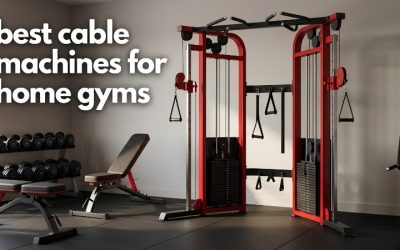
8 Best Cable Machines for Home Gym: 5 Types and Their Limits
Best cable machines for home gym use are not one product category...
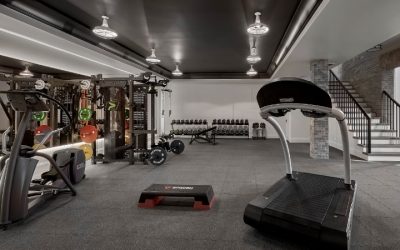
8 Best Home Gym Setups: Floors, Ceilings, Noise and Layout
Best home gym setup guides talk about equipment and skip the room,...
Write Your Review
No reviews yet. Be the first to share your experience!