Key takeaways
- Measure the available width, depth, ceiling height, and walking clearance before browsing styles.
- Compare interior seat dimensions, not just the outside basket size.
- Choose a stated weight capacity with a margin above the heaviest expected user.
- For outdoor seating, confirm UV resistance, drainage, rust-resistant hardware, and a care guide.
- For back comfort, look for firm cushioning, a removable lumbar pillow, and an upright enough back angle.
- For moving, confirm basket removal, frame weight, folded dimensions, and whether assembly needs two people.
- For ceiling mounting, verify the structural attachment method before buying the chair.
The best hanging egg chairs for most homes are freestanding models with a wide, weather-resistant basket, a 20–24 inch seat depth, and a frame rated for at least 250 pounds; choose a ceiling-mounted chair instead when you want a smaller footprint and have a properly reinforced installation point.
Freestanding vs. ceiling-mounted hanging egg chairs
These two designs can feel similar once you sit down, but they solve different space and installation problems.

SWITTE Egg Chair Outdoor with Stand, Indoor Wicker Hanging Egg Swing, Grey
Included for 'Best Hanging Egg Chairs for Comfortable Indoor and Outdoor Seating' because the listing specifies Indoor Wicker Hanging Egg Swing and Grey, details this guide uses to compare options.
View on Amazon
SWITTE Double Egg Chair Outdoor with Stand, Patio Hanging Swing, Grey
Included for 'Best Hanging Egg Chairs for Comfortable Indoor and Outdoor Seating' because the listing specifies Patio Hanging Swing and Grey, details this guide uses to compare options.
View on Amazon
Nicesoul Outdoor Hanging Egg Chair Without Stand, Patio Wicker Swing Egg Basket Chairs with Padded Cushion, 350 Lbs Comfy Cozy Ceiling Tree Swinging Egg-Shaped Chair No Stand for Indoor Balcony, Beige
Included for 'Best Hanging Egg Chairs for Comfortable Indoor and Outdoor Seating' because the listing specifies Patio Wicker Swing Egg Basket Chairs with Padded Cushion and Beige, details this guide uses to compare options.
View on Amazon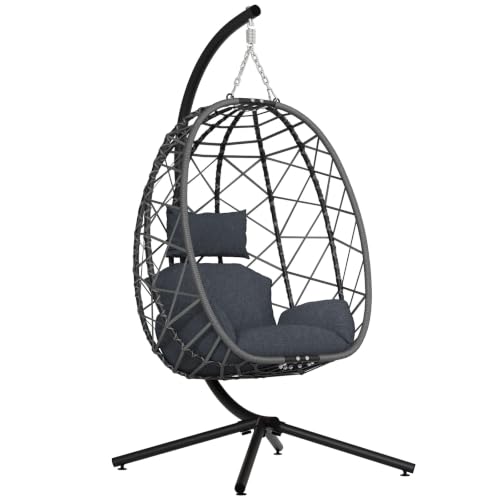
SWITTE Hanging Egg Chair with Stand Outdoor, Wicker Patio Swing, Grey
Included for 'Best Hanging Egg Chairs for Comfortable Indoor and Outdoor Seating' because the listing specifies Wicker Patio Swing and Grey, details this guide uses to compare options.
View on Amazon| Decision factor | Freestanding chair | Ceiling-mounted chair |
|---|---|---|
| Typical footprint | About 40–50 inches wide by 40–50 inches deep | About 30–40 inches wide; allow a 60–72 inch swing zone |
| Installation | Usually basic assembly; no structural drilling | Requires a joist, beam, or professionally installed blocking |
| Portability | Can move between rooms, patios, and porches | Remains in one location unless hardware is removed |
| Best for | Renters, apartments, seasonal use, and flexible layouts | Small rooms, covered porches, and a cleaner floor plan |
| Typical weight capacity | 250–350 pounds, depending on the frame | Often 250–350 pounds, but the building structure is the limiting factor |
A freestanding model needs roughly 24 inches of clearance on every side for safe movement, although 30 inches is more comfortable in a busy walkway. A ceiling-mounted chair needs less floor area, but its basket may swing outward by 12–18 inches. Keep that arc away from walls, railings, ceiling fans, glass doors, and low furniture.
Choose by room and household situation
| Your situation | Best choice | What to prioritize |
|---|---|---|
| Small apartment or 10 × 12 foot room | Compact freestanding chair or ceiling mount | 36–42 inch width, a narrow base, and at least 30 inches of walking clearance |
| Renter | Freestanding chair | Tool-light assembly, a removable cushion, and a base that fits through the doorway |
| Children or pets | Stable freestanding frame | Wide base, covered springs or chain, smooth edges, and a clearly stated load rating |
| Back discomfort | Deep, upright basket with firm cushions | 20–24 inch seat depth, lumbar pillow, supportive back angle, and a seat height that is easy to exit |
| Covered porch or sunroom | Powder-coated metal or treated outdoor frame | UV-resistant fabric, drainage, rust-resistant hardware, and protection from standing water |
| Frequent moves or seasonal storage | Folding or two-piece freestanding frame | Tool-free basket removal, manageable box dimensions, and a total weight below about 75 pounds |
Seat dimensions that affect comfort
Product photos can make an egg chair look spacious, but the usable seat is usually smaller than the outside basket. For one adult, look for at least 20 inches of interior seat width and 20 inches of seat depth. A 22–24 inch depth allows relaxed sitting with a pillow, while a deeper 26-inch seat is better for curling up but can leave shorter users without lower-back support.
Seat height matters as much as width. A cushion top around 17–20 inches from the floor feels familiar and makes standing easier. A very low 14–16 inch seat can be comfortable for lounging but may be difficult for anyone with knee or back problems. If you want to use a side table, select one around 20–24 inches high, or choose a table whose top is level with the chair’s cushion.
For reading or laptop use, avoid an excessively reclined basket. Your eyes should be roughly 15–20 inches from a book or screen, and a removable lumbar cushion can bring the torso forward without forcing the neck downward. Egg chairs are generally better for reading, conversation, and short laptop sessions than for a full workday because their curved sides restrict arm movement.
Materials: what lasts indoors and outdoors
| Material or construction | Advantages | Trade-offs |
|---|---|---|
| Powder-coated steel frame | Strong, relatively affordable, and stable | Can rust where the coating is chipped; heavier than aluminum |
| Aluminum frame | Light, corrosion-resistant, and easier to move | May flex more; quality depends on tube thickness and welds |
| Woven resin wicker | Outdoor appearance, easy cleaning, and resistance to ordinary humidity | Cheap strands can become brittle or fade in strong sun |
| Natural rattan | Warm texture and attractive indoor finish | Needs dry conditions and is less suitable for exposed outdoor use |
| Olefin or solution-dyed acrylic fabric | Better resistance to sunlight and moisture than ordinary cotton blends | Usually costs more; still benefits from cover and ventilation |
| Polyester fabric | Affordable and available in many colors | Can fade or absorb water unless specifically treated for outdoor use |
| Polyurethane foam cushion | Holds shape and provides predictable support | Low-density foam compresses quickly and may retain moisture |
For daily use, favor a welded metal frame, tightly secured basket, galvanized or stainless hardware, and cushions with removable, washable covers. Outdoor cushions should have drainage rather than a sealed underside that traps rain. Indoors, natural rattan and cotton-look fabrics can work well, but keep them away from damp porches and direct, intense sunlight.
Installation questions that should decide the purchase
Ceiling-mounted chairs must hang from structural material, not merely drywall, plaster, or a decorative ceiling panel. The attachment point needs to handle the chair, occupant, and repeated swinging forces. A ceiling joist may be suitable, but the exact hardware and load rating depend on the building structure. If you cannot positively identify a joist or beam, use a qualified installer rather than a hollow-wall anchor.
Measure the complete hanging height before ordering. Many baskets need approximately 84–96 inches of vertical clearance, and the suspension chain or spring may add several inches. Leave at least 12 inches between the basket and the ceiling, and check that the lowest point does not obstruct a door or walkway. Never assume that a hook rated for a static load is appropriate for a swinging chair.
Freestanding chairs avoid structural installation, but assembly quality still matters. Tighten every frame connection evenly, confirm that the base sits flat, and inspect the hanging spring, chain, carabiner, or swivel before use. A chair that rocks on an uneven floor may need a level indoor surface or a non-slip pad—not improvised spacers that can destabilize the base.
Moving, storage, and durability realities
Check more than the assembled dimensions. A freestanding chair may arrive in a box 45–55 inches long and weigh 45–80 pounds. Measure the narrowest doorway, stair landing, elevator, and patio gate. Some baskets detach from the stand; that feature can reduce the moving width to about 30–36 inches and is valuable in apartments.
The parts that usually show wear first are the cushion cover, suspension spring, woven strands exposed to sunlight, and paint around joints or feet. A cover, indoor storage during winter, and prompt drying after rain can extend service life. Do not drag a loaded chair across a deck or floor, and do not leave a freestanding frame where wind can tip it. On an exposed patio, use a sheltered position and follow the manufacturer’s instructions for anchoring.
How to compare the final candidates
- Measure the available width, depth, ceiling height, and walking clearance before browsing styles.
- Compare interior seat dimensions, not just the outside basket size.
- Choose a stated weight capacity with a margin above the heaviest expected user.
- For outdoor seating, confirm UV resistance, drainage, rust-resistant hardware, and a care guide.
- For back comfort, look for firm cushioning, a removable lumbar pillow, and an upright enough back angle.
- For moving, confirm basket removal, frame weight, folded dimensions, and whether assembly needs two people.
- For ceiling mounting, verify the structural attachment method before buying the chair.
Most well-made hanging egg chairs cost about $300–$600, while compact indoor models may cost less and larger weather-resistant designs with better cushions or aluminum frames may cost more. The best value is not the widest basket or most decorative weave; it is the chair whose dimensions, support, installation method, and maintenance demands match the way you will use it.