Our Top Picks
 Grand patio Outdoor Papasan Rocking Chair with ThickOversized40 x 38 x 34 inches37 poundsCheck on Amazon
The Short Answer
The best papasan chairs for most people are 45-inch round bowls mounted on either a kiln-dried hardwood base or a powder-coated steel base, fitted with a 6-inch high-resilience foam cushion rated between 2.0 and 2.5 lb/ft³, and sold with a stated weight limit of at least 300 lb. Everything below that spec flattens, squeaks, or cracks within two to three years; everything above it mostly buys you size rather than longevity. If you want one number to anchor the decision, it is the weight limit on the stand, not the bowl diameter on the marketing photo — the bowl is what you sit in, but the base is what fails.
This guide works through the eight variables that actually separate a papasan you keep for a decade from one you replace in eighteen months: frame material, cushion foam density, bowl diameter versus seat depth, weight rating, fabric abrasion resistance, cleaning method, footprint clearance, and moving logistics. It then walks through the best papasan chairs by type, each with real dimensions, so you can match a chair to a specific room rather than to a mood board.
Grand patio Outdoor Papasan Rocking Chair with Thick Cushion, Grey
Chosen because it specifies Grey.
View on Amazon
Bme 40" Wicker Papasan Chair, 360° Swivel, Onyx Stone - Black Base
Chosen because it specifies 360° Swivel and Onyx Stone.
View on Amazon
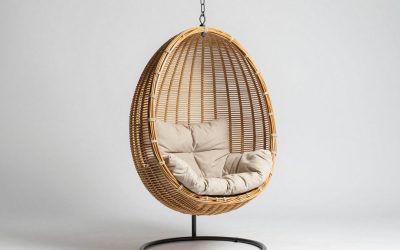
Dovov Papasan Rocking Chair, Oversized Outdoor Egg Chair with Thick Cushion
Chosen because it specifies Oversized Outdoor Egg Chair with Thick Cushion.
View on Amazon
KROFEM 46" Oversized Rattan Papasan Chair,Grey Frame with Black Cushion
Chosen because it specifies Grey Frame with Black Cushion.
View on AmazonQuick Picks by Type
| Type | Bowl Diameter | Frame | Typical Weight Limit | Market Range |
|---|---|---|---|---|
| Compact apartment papasan | 35–40 in | Steel or rubberwood | 250–300 lb | $150–$300 |
| Classic round papasan | 43–46 in | Kiln-dried hardwood | 300–350 lb | $250–$500 |
| Oversized / XL bowl | 50–55 in | Hardwood or welded steel | 350–400 lb | $400–$800 |
| Double (two-seat) papasan | 62–72 in wide | Steel with hardwood arms | 450–600 lb | $600–$1,300 |
| Swivel or rocker base | 43–46 in | Steel ring + hardwood | 300–350 lb | $300–$650 |
| Natural rattan bowl | 40–48 in | Rattan / willow | 250–300 lb | $200–$450 |
| All-weather resin wicker | 42–48 in | Aluminum core + resin | 300–350 lb | $350–$700 |
| Hanging papasan swing | 40–48 in | Steel C-stand | 250–330 lb | $250–$600 |
| Kids’ papasan | 24–30 in | Steel or plywood | 100–150 lb | $80–$200 |
Papasan Sizing: The Numbers That Decide Everything
Papasan marketing copy leads with cushion thickness and fabric names because those are visible. The dimensions that determine whether the chair works in your home are buried in a spec sheet, and there are only five that matter.
Bowl diameter versus seat depth
A 45-inch bowl sounds enormous, but roughly 12 to 15 inches of that diameter is backrest, so the usable seat depth lands between 24 and 28 inches. That is comfortable for most adults up to about 6 ft 1 in. If you are taller than that, the limiting factor is not bowl diameter but backrest height: a shallow 14-inch back pushes your shoulders above the rim and forces you to slouch. Look for a bowl with a backrest that rises at least 17 inches from the seat surface, which usually means a 50-inch bowl or larger.
- 35–40 in bowl: seat depth 20–24 in. Best for people under 5 ft 7 in, teens, and tight corners.
- 43–46 in bowl: seat depth 24–28 in. The default adult size; suits most people between 5 ft 2 in and 6 ft 1 in.
- 48–52 in bowl: seat depth 28–32 in. Needed for anyone over 6 ft, anyone who wants to sit cross-legged, and anyone who reads with a laptop on their lap.
- 55–60 in bowl: seat depth 32–36 in. Effectively a lounge chair; requires a large room and a wide door.
Seat height, recline clearance and walkways
Standard papasan seat height runs 15 to 18 inches from the floor to the lowest point of the cushion. That is 2 to 4 inches lower than a conventional armchair and about the same as a deep sofa. It matters because getting out of a 15-inch seat requires more leg strength than a 19-inch one — a real consideration for anyone with knee or hip issues.
Behind the chair you need recline clearance. Because the bowl tilts back on its base, the effective depth of a 45-inch papasan is closer to 60 inches, not 45. Plan on:
- 18–24 in of empty space behind the bowl so it can tilt without hitting a wall or windowsill.
- 30–36 in of walkway in front if people need to pass.
- Total floor zone for a 45-inch papasan: roughly 4 ft wide × 5.5 ft deep, about 22 sq ft.
In a 10 × 12 ft room (120 sq ft), a single papasan plus its clearance eats close to a fifth of the floor. Add a side table and a floor lamp and you are at a third. That is why the compact 35-to-40-inch bowls exist, and why they sell well into studio apartments.
Doorways, stairs and box weight
This is the section nobody reads until moving day. A 45-inch papasan bowl is a rigid, roughly circular object with a 45-inch diameter. A standard interior door in most homes is 30 to 32 inches wide, and a standard exterior door is 36 inches. A 45-inch one-piece rattan bowl will not pass through a 30-inch doorway at any angle — geometry does not allow it. Your options are a bowl that separates from the frame and flattens (rare), a bowl under 36 inches, or a doorway you are willing to remove the door from.
| Bowl Size | Fits 30 in Door? | Fits 36 in Door? | Typical Box Weight |
|---|---|---|---|
| 35 in | Yes, angled | Yes | 22–30 lb |
| 40 in | Usually not | Yes | 28–38 lb |
| 45 in | No | Yes, angled | 38–55 lb |
| 52 in | No | No | 55–75 lb |
| Double, 66 in | No | No | 75–110 lb |
Two shipping boxes are normal: one for the bowl and cushion, one for the base. The base box is heavier than it looks because the cast base ring or the star legs are solid metal or dense hardwood. If you live above the second floor without an elevator, assume two people for anything 45 inches and up.
Frame Materials: What Actually Holds You Up
Papasan frames divide into two parts — the bowl and the base — and they are frequently made of different materials. A rattan bowl on a steel base is the most common budget combination; a hardwood bowl on a hardwood base is the most durable; a resin bowl on an aluminum base is the only combination that survives a covered porch year-round.
| Material | Typical Cost | Weight Capacity | Humidity Behavior | Failure Mode | Expected Life |
|---|---|---|---|---|---|
| Kiln-dried hardwood (rubberwood, acacia, mango) | $$$ | 300–400 lb | Stable indoors; swells outdoors | Bolt holes elongate over years | 10–20 yr |
| Engineered wood (plywood, MDF) | $–$$ | 200–250 lb | Swelling at cut edges, delamination | Edge crumble at screw points | 3–7 yr |
| Powder-coated steel | $$ | 300–500 lb | Excellent; rust at chips only | Chip → rust bloom → paint flake | 10–15 yr |
| Aluminum | $$$ | 300–400 lb | Excellent; no rust | Bends rather than cracks; dents | 12–20 yr |
| Wrought iron | $$$ | 400–600 lb | Rusts unless well coated | Weld fatigue at joints | 15–25 yr |
| Natural rattan / willow | $$ | 250–300 lb | Below 40% RH it dries and cracks; above 65% it molds | Strand breakage at the rim | 5–12 yr |
| Resin wicker over aluminum | $$$ | 300–350 lb | Unaffected; hose-cleanable | UV fade and brittleness after 6–8 yr | 8–12 yr |
The trade-off is straightforward. Solid hardwood is the best indoor choice because it is heavy enough to resist tipping, repairable with wood filler and a clamp, and does not transfer cold the way metal does. Steel is stronger per pound and cheaper to ship, but a papasan base is a cantilever — all your weight is offset from the center post — so a steel base needs a wide, weighted footprint to feel stable. Cheap steel bases with a 26-inch ring feel tippy at 45 inches of bowl; good ones use a 30-to-34-inch ring.
Engineered wood is where budget papasans hide their cost. It is fine in a dry room and terrible near a humidifier or a bathroom door. If a listing says “wood” without naming a species, assume engineered.
Cushion Construction: Thickness Is the Least Useful Number
A 6-inch cushion made from 1.2 lb/ft³ foam will feel flat within a year. A 4-inch cushion made from 2.5 lb/ft³ high-resilience foam can outlast it by three times. Thickness tells you how the chair looks in a photo; density tells you how it behaves in year three.
Foam density
- 1.2–1.5 lb/ft³: budget polyurethane. Compresses permanently within 12–18 months at the seat contact point. Common in chairs under $200.
- 1.8 lb/ft³: mid-grade. Lasts 3–5 years with rotation. Acceptable if the cushion is replaceable.
- 2.0–2.5 lb/ft³: high-resilience (HR) foam. The threshold where a papasan still feels supportive after five years. This is the number to look for.
- 2.8–3.5 lb/ft³: memory foam or HR-plus. Slower to spring back, warmer to sit in, and heavier — a 45-inch cushion can weigh 12–18 lb on its own.
Indentation force deflection (IFD) matters as much as density but is almost never published. A comfortable papasan seat sits around 25–35 IFD: firm enough that you do not bottom out onto the frame, soft enough to sink in. If you cannot find IFD, use density as the proxy and lean toward 2.0 lb/ft³ or higher.
Fiber, shredded foam and “cloud” fills
Shredded memory foam and polyester fiber fills feel wonderful for the first month and require fluffing forever after. They migrate away from the seat and pile up behind your shoulders. They are also the easiest fills to top up yourself, which is their one genuine advantage: a $25 bag of shredded foam can restore a flattened cushion for another two years. If you buy a cloud-fill papasan, buy one with a zippered inner liner so you can add fill without opening the outer cover.
Cover construction and zippers
A hidden zipper is the single most valuable feature on a papasan cushion and the one most often omitted. Without it, every spill becomes a spot-cleaning project. With it, the cover goes in a machine on cold and the foam air-dries in a few hours. Check two things: whether the zipper runs the full circumference (partial zippers make covers nearly impossible to remove) and whether there is a separate inner liner protecting the foam. Foam without a liner absorbs sweat and odor permanently.
Fabric Durability and Cleaning
Abrasion resistance is measured in double rubs (Wyzenbeek). Residential furniture generally wants 15,000 or more; anything above 30,000 is effectively pet-and-kid territory. Fading resistance is separate, and it is the reason an indoor fabric fails on a porch even if it never wears through.
| Fabric | Double Rubs | Pet Claw Resistance | UV Fade Resistance | Cleaning |
|---|---|---|---|---|
| Cotton canvas | 15,000–20,000 | Poor — snags and pulls | Poor | Machine wash cold, line dry |
| Polyester microfiber | 30,000–50,000 | Good | Moderate | Machine wash; resists staining |
| Olefin (polypropylene) | 30,000+ | Good | Good | Solution-clean; very stain-resistant |
| Solution-dyed acrylic | 50,000+ | Good | Excellent | Soap and water; bleach-safe |
| Bouclé | 20,000–30,000 | Poor — loops catch | Moderate | Spot clean only; pills |
| Velvet / velour | 25,000+ | Moderate | Moderate | Vacuum; crushes and shows marks |
| Linen blend | 15,000–20,000 | Poor | Poor | Professional clean preferred |
| Faux leather (PU) | 50,000+ | Excellent | Moderate | Wipe down; peels in 3–5 yr if thin |
For households with cats, faux leather or a tight polyester weave beats bouclé and cotton every time — cats do not scratch fabric so much as hook and pull it, and looped weaves unravel. For a sunroom, solution-dyed acrylic is the only fabric that will hold color past three summers. For a rental where the chair may end up in three different rooms, polyester microfiber is the best all-round compromise: washable, cheap to replace, and tolerant of sunlight.
Room-Size Fit: Three Real Layouts
| Room | Recommended Bowl | Footprint With Clearance | Works? |
|---|---|---|---|
| 8 × 10 ft studio corner | 35–38 in | 3.5 × 4.5 ft | Yes, in a corner at 45° |
| 10 × 12 ft bedroom | 43–45 in | 4 × 5.5 ft | Yes, but it dominates |
| 5 × 7 ft reading nook | 38–42 in | 3.5 × 5 ft | Yes, with 24 in walkway |
| 12 × 14 ft living room | 48–52 in | 4.5 × 6 ft | Comfortably |
| Any room, double papasan | 62–72 in wide | 5.5 × 6.5 ft | Needs 14 ft of wall |
One placement rule saves a lot of frustration: put the papasan in a corner at roughly 45 degrees, with the base ring 6 to 8 inches off both walls. This uses the corner’s diagonal, which is the longest uninterrupted distance in the room, and it gives the bowl somewhere to tilt back into without hitting anything. Papasans placed flat against a wall always end up pulled 20 inches into the room anyway, so the corner placement wastes less floor than it appears to.
The Best Papasan Chairs by Type
1. Classic 45-Inch Round Papasan on a Hardwood Stand
This is the reference design and the one every other papasan is compared against. A 45-inch bowl, a 6-inch cushion, and a hardwood base with either four splayed legs or a round ring. Weight limit is typically 300 to 350 lb when the base is solid rubberwood or acacia, and the seat height lands at 16 to 17 inches.
- Bowl diameter: 45 in; seat depth 26 in; backrest height 16 in from seat
- Overall footprint: 45 in wide × 60 in deep with recline clearance
- Base ring diameter: 30–34 in
- Cushion: 6 in, ideally 2.0 lb/ft³ HR foam with a full-length zipper
- Weight: 40–55 lb total, split across two boxes
- Market range: $250–$500
Why it wins: the proportions are proven, replacement cushions are widely available in this size, and a hardwood base can be re-tightened and refinished rather than replaced. The failure point to watch is the joint where the base post meets the ring — that is where all the cantilevered load concentrates, so look for a metal plate or a through-bolt rather than screws driven straight into end grain.
2. Compact 38-Inch Papasan for Apartments and Nooks
The 38-inch bowl is the practical answer for studio apartments, dorm rooms, and any space where a 45-inch chair would block a walking path. Seat depth drops to about 22 inches, which is fine for people up to roughly 5 ft 9 in and cramped beyond that. Weight limits sit between 250 and 300 lb.
- Bowl diameter: 38 in; seat depth 22 in; seat height 15 in
- Footprint with clearance: 38 in × 52 in, about 14 sq ft
- Box weight: 28–34 lb
- Market range: $150–$300
The trade-off is real: a smaller bowl means a shallower seat, and a shallower seat means your head tilts forward when you lean back. If you plan to read for hours, test the backrest height before buying. The best compact papasans compensate with a steeper bowl angle — around 25 degrees of rake — so a shorter back still cradles the head.
3. Oversized 52-Inch Papasan for Tall and Heavy Users
Once you pass 6 ft or 220 lb, a standard 45-inch papasan starts to feel like a jacket that is one size small. The 52-inch bowl adds 6 inches of seat depth, raises the backrest to about 19 inches, and typically ships on a welded steel or heavy hardwood base rated 350 to 400 lb.
- Bowl diameter: 52 in; seat depth 30 in; seat height 17–18 in
- Footprint with clearance: 52 in × 68 in, about 25 sq ft
- Cushion: 6–8 in, 2.5 lb/ft³ foam recommended
- Box weight: 55–75 lb
- Market range: $400–$800
Two cautions. First, a 52-inch bowl will not pass through a 36-inch exterior door, so plan the delivery route before ordering. Second, oversized bowls on undersized bases tip — check that the base ring is at least 34 inches across and that the manufacturer publishes a weight limit for the assembled chair, not just the frame.
4. Papasan Chair-and-a-Half Bowl
The chair-and-a-half sits between the standard and the oversized at roughly 48 inches, with a wider seat that lets you tuck one leg under you. Seat depth runs 28 to 30 inches and the cushion is usually 6 to 7 inches thick. Weight limits land around 350 lb.
- Bowl diameter: 48 in; seat depth 28–30 in; backrest 17–18 in
- Footprint with clearance: 48 in × 64 in
- Market range: $350–$650
This is the sweet spot for anyone who wants to sit cross-legged while reading. It is also the largest bowl that still fits comfortably in a 10 × 12 ft room without crowding a sofa. If you have the wall space and not the floor space, this is the size to choose.
5. Two-Seat Double Papasan
A double papasan is an oval bowl 62 to 72 inches wide with a single long cushion. It is genuinely comfortable for two adults only if both are under about 5 ft 10 in; otherwise shoulders overlap. Weight limits run 450 to 600 lb on steel-framed models.
- Width: 62–72 in; seat depth 26–30 in
- Footprint with clearance: 66 in × 66 in, about 30 sq ft
- Box weight: 75–110 lb, usually two or three boxes
- Market range: $600–$1,300
Doubles are the hardest papasans to move and the hardest to clean, because the cushion is large enough that most home washing machines will not take the cover. They also need a wide base to prevent tipping when two people sit off-center — look for at least a 40-inch base span. The strongest argument for a double is not two people; it is one person plus a dog, or one person who wants to lie diagonally.
6. Swivel-Base Papasan
A swivel papasan replaces the fixed post with a bearing ring, letting the whole bowl rotate 360 degrees. It is excellent for a room where the chair serves two functions — reading toward a window and watching a television on the opposite wall. Weight limits stay in the 300-to-350-lb range.
- Bowl diameter: 43–46 in; base ring 30–34 in
- Swivel: full 360°, usually a steel ball-bearing race
- Market range: $300–$650
The swivel bearing is the part that wears. Cheap units use a nylon washer that grinds and flattens within two years; better ones use a sealed steel race. If the base wobbles side to side when empty, the bearing is already loose. Swivel bases also raise the seat by 1 to 2 inches, which is a small benefit for anyone who finds standard papasans hard to rise from.
7. Rocker-Base Papasan
A rocker base substitutes curved runners or a spring-mounted post for the fixed stand, letting the chair rock gently. It is the most relaxing version and the worst choice for anyone with balance issues, because the chair moves every time you shift weight.
- Bowl diameter: 43–46 in; seat height 16–18 in
- Rocker arc: 8–12 in of travel
- Market range: $300–$700
Rocker papasans need more clearance than fixed ones — allow 24 to 30 inches behind rather than 18 to 24 — because the bowl sweeps backward as it rocks. They also concentrate stress on the pivot, which is the first part to squeak. Silicone spray on the pivot, not oil, is the fix; oil attracts dust and turns into grit.
8. Powder-Coated Steel Frame Papasan
Steel papasans are the best value per pound of capacity. A welded steel bowl and base rated to 350 lb often costs less than a hardwood equivalent because the material is cheaper to form. The catch is thermal: steel feels cold in a way wood does not, which matters if the chair sits in an unheated room.
- Bowl: 43–48 in, welded steel tube, 1–1.25 in diameter
- Weight limit: 300–400 lb
- Finish: powder coat, 2–4 mil thickness
- Market range: $200–$450
Inspect the powder coat at the base ring where it contacts the floor. That is where chips start, and a chip on a steel base near a humid floor becomes a rust bloom within a season. A $10 bottle of matching enamel touch-up paint, applied the same week you notice the chip, adds years to the frame.
9. Folding Metal Papasan for Dorms and Guest Rooms
Folding papasans use a collapsible X-frame and a bowl that either folds flat or detaches into halves. They are the only papasan type that reliably fits through a 30-inch doorway without disassembly gymnastics. Weight limits are lower — usually 225 to 275 lb — because folding joints are inherently weaker than welded ones.
- Folded dimensions: typically 42 × 30 × 8 in
- Weight limit: 225–275 lb
- Weight: 20–30 lb
- Market range: $120–$280
The joint is the whole story here. A folding papasan with a steel locking pin and a secondary safety catch will hold up; one that relies on friction alone will loosen and start to collapse slightly under load within a year. If you can wobble the frame by hand while it is empty, do not buy it.
10. Natural Rattan Bowl Papasan
Rattan is the material most people picture when they hear “papasan.” A rattan bowl is lightweight, warm-looking, and about 40 percent lighter than a hardwood equivalent — a real advantage if the chair moves between rooms. It is also the most climate-sensitive option.
- Bowl diameter: 40–48 in; weight 12–20 lb for the bowl alone
- Weight limit: 250–300 lb
- Ideal indoor humidity: 40–60% RH
- Market range: $200–$450
Below 40 percent relative humidity — common in heated homes in winter — rattan dries, tightens, and eventually splits along the strand. Above 65 percent it can grow surface mold. Keeping a rattan papasan away from forced-air vents and radiators does more for its lifespan than any polish. For repairs, a broken strand at the rim can be wrapped with matching binder cane and secured with clear-drying craft glue; the rim is where breakage almost always starts because it takes the elbow and hand load.
11. Peeled Willow and Wicker Papasan
Willow and peeled wicker bowls are denser and heavier than rattan, with a tighter weave that resists snagging on clothing. They are usually finished with a clear lacquer, which helps with humidity but can crack and flake at flex points over time.
- Bowl diameter: 40–46 in; weight 18–28 lb
- Weight limit: 250–300 lb
- Market range: $250–$500
The tighter weave makes willow slightly stiffer than rattan, which some people find less giving under the cushion. On the other hand, it holds its shape better and does not develop the soft spots that rattan does after a few years of use. If a strand breaks, willow repairs are harder to hide because the weave pattern is more visible.
12. All-Weather Resin Wicker Papasan for Porches and Sunrooms
Resin wicker is high-density polyethylene extruded over an aluminum or steel core. It looks like natural wicker, weighs more, and is completely indifferent to rain, chlorine, and salt air. This is the only papasan type that belongs on an uncovered porch.
- Bowl diameter: 42–48 in; weight 25–40 lb
- Frame core: aluminum preferred over steel for coastal use
- Weight limit: 300–350 lb
- UV stabilizer: look for HDPE with UV inhibitors; unstabilized resin goes chalky in 2–3 years
- Market range: $350–$700
The cushion, not the frame, is the weak point outdoors. Any cushion left on a porch needs solution-dyed acrylic and a drainable foam (open-cell, fast-drying) or it will hold water and mildew from the inside. Store the cushion indoors when not in use and a resin papasan will last eight to twelve years in full sun.
13. Hanging Papasan Swing Chair with C-Stand
The hanging version suspends a 40-to-48-inch bowl from a steel C-stand or a ceiling beam. It is the most comfortable papasan motion — a gentle pendulum rather than a rock — and the most demanding to install.
- Bowl diameter: 40–48 in; stand footprint 40–46 in wide, 30–36 in deep
- Stand weight: 55–80 lb; total with bowl 90–130 lb
- Weight limit: 250–330 lb including the cushion and any occupant
- Ceiling mount: requires a beam or a rated joist; a drywall anchor is never sufficient
- Market range: $250–$600
Two numbers matter: the height from the floor to the bottom of the bowl when loaded, and the hang point’s rated capacity. Aim for 15 to 18 inches of clearance under the loaded bowl. Ceiling-hung versions need at least 8 ft of ceiling and a joist that will take a 1,000 lb pull-out load when the swing is in motion — a structural question, not a hardware question.
14. Papasan with Ottoman or Footstool
A matching ottoman raises the effective comfort of a papasan more than any other accessory, because the low seat angle leaves your feet dangling unless you prop them. Ottoman heights of 14 to 16 inches match a standard papasan seat height.
- Ottoman size: typically 24–30 in round, 14–16 in tall
- Added footprint: 2 ft × 2 ft, about 4 sq ft
- Market range: $80–$250 as an add-on; $350–$700 as a set
Check that the ottoman uses the same foam density as the chair. A 1.2 lb/ft³ ottoman flattens faster than the seat because all the load is concentrated on a smaller area. A round ottoman reads better with a round chair than a rectangular one, and a storage ottoman lets you keep a throw blanket inside — worth the extra $50 if the chair is in a living room.
15. Papasan with Integrated Side Table or Cup Holder
Some papasan bases include a small attached tray or a swing-out cup holder. This is a small feature with an outsized effect on daily use: without one, drinks end up on the floor or on a separate side table that eats another 2 sq ft of floor.
- Tray diameter: 9–12 in; weight capacity 5–10 lb
- Position: attached to the base post, usually at 22–24 in height
- Market range: $300–$600
Attached trays are only useful if they are level when the chair is loaded. Because the base post tilts slightly under load, a tray mounted rigidly to the post will tip. Look for a tray with a leveling collar or one that mounts to the ring rather than the post.
16. Molded Shell “Moon” Papasan
The molded version swaps the wicker bowl for a single-piece ABS or fiberglass shell with a deep dished seat. It is structurally the strongest papasan design because there are no joints in the bowl, and it is the least forgiving visually — no weave texture, no rattan warmth.
- Shell diameter: 40–50 in; seat depth 26–32 in
- Shell material: 4–6 mm ABS or 3–4 mm fiberglass composite
- Weight limit: 300–400 lb
- Market range: $300–$900
Because the shell does not breathe, the cushion matters more here than anywhere else — a non-removable cover on a solid shell becomes a moisture trap. Also check the shell’s edge finish; a molded rim that is not rolled or capped will eventually crack where it meets the base, since that is the point of maximum flex.
17. Shredded-Memory-Foam Cloud Papasan
The cloud style uses a loose fill of shredded memory foam rather than a solid block. It feels the softest of any papasan type and requires the most maintenance. Expect to redistribute the fill weekly for the first few months.
- Cushion thickness: 8–12 in uncompressed, 5–7 in when sat in
- Fill weight: 10–20 lb of shredded foam
- Market range: $250–$600
The advantage is adjustability: you can push fill to the back for lumbar support or pull it forward for a flatter seat. The disadvantage is that the fill compacts and the cushion loses roughly 20 percent of its loft in the first year. Buy one with a zippered inner liner so you can add a $20 bag of shredded foam annually rather than replacing the whole cushion.
18. Pet-Friendly Papasan with Removable Washable Cover
If you have cats or dogs, the papasan decision reduces to two questions: can the cover come off, and can the fabric survive claws? A solution-dyed acrylic or tight-weave polyester microfiber cover with a full-length zipper answers both.
- Cover: removable, machine washable, 30,000+ double rubs
- Inner liner: essential — protects the foam from dander and odor
- Bowl: rattan is a scratching target; steel or resin is safer
- Market range: $250–$600
Buy two covers if the chair will live with pets. A spare cover costs $60 to $120 and means the chair is never out of service while one cover dries. Also avoid loose-weave rattan bowls in pet households — cats treat the exposed strands as a scratching post, and a frayed bowl cannot be repaired invisibly.
19. Kids’ Papasan (24–30 Inch)
Children’s papasans scale the bowl down to 24 to 30 inches with a 3-to-4-inch cushion and a lower seat height of 10 to 12 inches. Weight limits run 100 to 150 lb, which covers most kids up to about 10 or 11 years old.
- Bowl diameter: 24–30 in; seat height 10–12 in
- Weight limit: 100–150 lb
- Market range: $80–$200
Stability matters more than anything else at this size, because children climb in and out from the side. Look for a base that is at least 70 percent of the bowl diameter and a bowl that is firmly bolted rather than slotted into the base. Avoid rocker bases for kids under six. Washable covers are effectively mandatory.
20. Floor Papasan with No Stand
A floor papasan is just the bowl, with a flattened base that sits directly on the ground. Seat height drops to 8 to 11 inches. It is the best option for a room where a full stand would be visually heavy, and the worst option for anyone who struggles to get up from a low seat.
- Bowl diameter: 38–46 in; seat height 8–11 in
- Weight limit: 250–300 lb
- Market range: $150–$400
Because there is no base to spread the load, a floor papasan needs a firm surface. On thick carpet it sinks and becomes unstable; on a rug over hardwood it is fine. Adding a 2-inch furniture riser under the rim is a common modification for anyone who wants the look without the very low seat.
21. Papasan Daybed and Lounger Conversion
A few papasan designs convert: the bowl flattens into a chaise by rotating the cushion or removing a backrest insert. These are effectively daybeds with a papasan profile, usually 70 to 80 inches long when flat.
- Flat length: 70–80 in; seated diameter 46–52 in
- Weight limit: 350–450 lb
- Market range: $500–$1,200
The conversion mechanism is the durability question. A hinged backrest insert that locks with a pin will hold up; one that relies on Velcro or friction straps will loosen. If you plan to use the flat mode regularly, this is a genuinely useful piece. If you plan to use it twice a year, buy a standard papasan and a separate ottoman.
22. Papasan with Lumbar Support Insert
Papasans are notorious for lower-back complaints because the bowl shape encourages a rounded spine. The fix is not a different chair but a different cushion: a cushion with a firmer lumbar zone, usually achieved with a denser foam insert or a removable bolster at the base of the backrest.
- Bolster: 4–6 in diameter, positioned 6–8 in above the seat surface
- Cushion: 2.5 lb/ft³ foam minimum, or a dual-density build
- Market range: $300–$700
If you already own a papasan and it hurts your back, a $30 cylindrical bolster placed behind the lumbar curve solves most of it. The other half of the fix is the ottoman: raising the feet to seat height levels the pelvis and takes the load off the lower spine. A papasan with a footstool is a materially different chair, biomechanically, from one without.
Decision Matrix: Match the Chair to Your Situation
| Your Situation | Bowl Size | Frame | Cushion | Fabric |
|---|---|---|---|---|
| Small apartment, one walkway | 35–38 in | Steel or hardwood | 5 in, 1.8 lb/ft³ | Polyester microfiber |
| Kids and pets in the house | 40–45 in | Steel (not rattan) | 6 in, 2.0 lb/ft³, zippered | Faux leather or microfiber |
| Renter, moves every 2 years | 38–40 in | Folding steel | 5 in, replaceable | Any washable cover |
| Chronic lower-back pain | 45–48 in | Hardwood, stable base | 2.5 lb/ft³ + bolster | Firm weave, no stretch |
| Tall user, over 6 ft | 50–52 in | Welded steel, 34 in ring | 6–8 in, 2.5 lb/ft³ | Any |
| Heavy user, over 250 lb | 45–52 in | Steel or wrought iron, 350 lb+ | 2.5 lb/ft³ or memory foam | Tight weave |
| Covered porch or sunroom | 42–48 in | Resin wicker on aluminum | Drainable open-cell foam | Solution-dyed acrylic |
| Reading nook, 5 × 7 ft | 38–42 in | Hardwood or steel | 6 in, 2.0 lb/ft³ | Any |
| Two people or one plus a dog | 62–72 in wide | Steel, 40 in+ base span | 6 in, 2.0 lb/ft³ | Washable, two covers |
| Dorm or guest room | 35–40 in | Folding steel | 4–5 in | Microfiber |
Assembly, Moving and What Wears Out First
Assembly is typically four to eight bolts and takes 15 to 30 minutes with the included hex key. The important step most people skip is re-tightening after the first week. Wood compresses under load, so a joint that felt solid on day one will be a quarter turn loose by day seven. Re-check at one month, then annually.
- Tools needed: hex key (usually included), a Phillips screwdriver, and occasionally a 10 mm or 13 mm wrench for the base post
- Two-person steps: attaching a bowl over 45 in to the base, and carrying the base box up stairs
- Floor protection: felt pads under the base ring; a 30-inch steel ring concentrates roughly 100 psi per contact point on hardwood
- Disassembly for moving: always separate bowl and base; the assembled chair is top-heavy and awkward in a stairwell
What wears first, in order: the cushion foam at the seat contact point (12–36 months depending on density), the fabric at the front rim where hands and elbows land, the base joint where the post meets the ring, and finally the bowl weave or shell at the rim. Understanding that order tells you where to spend money. Buying a chair with a replaceable cushion and a bolted base joint means the two most likely failures are both fixable for under $80.
Cleaning Routines That Add Years
- Weekly: vacuum the cushion with an upholstery attachment. Grit works into foam like sandpaper and accelerates wear at the seat.
- Monthly: rotate the cushion 180 degrees if the chair is used daily. Even pressure distribution roughly doubles foam life.
- Quarterly: wipe rattan or wicker with a barely damp cloth, then dry immediately. Never soak natural fiber.
- Twice a year: check every bolt and touch up any chip in a powder-coated or painted frame before rust starts.
- As needed: wash removable covers in cold water on a gentle cycle, then line dry. Never machine dry a cover with a foam insert inside — the foam will crumble.
For a non-removable cover, a handheld upholstery cleaner with a low-moisture setting is the safest tool. Over-wetting a papasan cushion is worse than leaving a stain, because the foam core takes days to dry and can develop mildew in the middle, where you cannot see it.
FAQ
How much floor space does a papasan chair really need?
A 45-inch papasan needs a floor zone of about 4 ft wide by 5.5 ft deep once you include 18 to 24 inches of recline clearance behind it, plus a walkway. That is roughly 22 sq ft. A 38-inch version needs about 14 sq ft, and a 52-inch version needs about 25 sq ft.
What is a realistic weight limit for a papasan?
Natural rattan and willow bowls top out around 250 to 300 lb. Hardwood and steel frames typically rate 300 to 350 lb. Reinforced steel or wrought iron doubles and oversized models reach 400 to 600 lb. Always use the lower of the two numbers if the bowl and base have separate ratings.
Are papasan chairs bad for your back?
The bowl shape encourages a rounded spine, so an unmodified papasan is not ideal for long sitting if you have lower-back issues. The fixes are practical: choose a cushion with 2.5 lb/ft³ foam, add a 4-to-6-inch bolster behind the lumbar curve, and add an ottoman to raise your feet to seat height. Those three changes make a papasan roughly comparable to a soft armchair for support.
How long does a papasan cushion last?
Budget foam at 1.2 to 1.5 lb/ft³ compresses noticeably in 12 to 18 months of daily use. High-resilience foam at 2.0 to 2.5 lb/ft³ lasts 4 to 6 years with quarterly rotation. Shredded-foam cloud cushions lose about 20 percent of their loft in the first year and need topping up annually.
Can a papasan chair go outside?
Only a resin wicker bowl on an aluminum core with a solution-dyed acrylic cushion belongs outdoors. Natural rattan, willow, hardwood, and powder-coated steel all degrade in weather — steel rusts at chips, wood swells and cracks, and natural fiber mildews. A covered porch with low humidity is the one exception where a hardwood papasan can survive.
Will a 45-inch papasan fit through my door?
Not through a standard 30-to-32-inch interior door at any angle, because the bowl is a rigid 45-inch disc. It will pass a 36-inch exterior door when angled. If you live in an older building with narrow doors, choose a 35-to-38-inch bowl or a folding model whose bowl splits in half.
Should I buy a swivel or a fixed base?
Swivel if the chair needs to serve two directions in one room, such as a window and a television. Fixed if you want maximum stability and the longest service life. The swivel bearing is the wear item on a swivel base, and a nylon-washer unit will develop wobble within about two years.
Final Recommendations
For the majority of homes, the best papasan chairs are 45-inch round bowls on kiln-dried hardwood or welded steel bases, with a 6-inch high-resilience cushion at 2.0 lb/ft³ or better and a full-length zipper on the cover. That combination hits the point where size, durability, and cost stop fighting each other: large enough for adults up to about 6 ft 1 in, stable enough for daily use, and repairable when something eventually fails.
Adjust from there by situation. Go smaller — 35 to 40 inches — if a walkway or a narrow doorway is the constraint. Go larger — 50 to 52 inches — if you are tall or want to sit cross-legged. Choose steel over rattan if you have pets, resin wicker if the chair lives outdoors, a folding frame if you move often, and a firmer cushion plus a bolster if your lower back is the priority. In every case, check the weight limit on the base before you check the color of the cushion, because the base is the part you cannot fix.