Key takeaways
- Pro: Chemical-free oxidation effectively tackles iron, manganese, and rotten-egg odor together
- Pro: Maintains strong whole-house flow without the constant cartridge changes of inline systems
- Con: Requires proper backwash drainage and space for a tank system compared to compact cartridges
After years of testing well water systems in homes where the water runs orange, smells like rotten eggs, and stains every fixture it touches, we know iron is not just a nuisance. Low levels leave metallic taste and faint discoloration, while heavier concentrations clog pipes, ruin water heaters, and make well water undrinkable. The difference between a filter that actually solves the problem and one that just polishes the water comes down to oxidation method, media capacity, and whether the system is sized for whole-house flow.
We have run these systems on wells with varying combinations of ferrous iron, manganese, and hydrogen sulfide to see what holds up under daily use. The best iron filters oxidize and trap contaminants without constant chemical dosing or filter babysitting, maintain pressure when multiple taps are open, and keep maintenance predictable. The worst restrict flow, exhaust quickly, or pass dissolved iron straight through. Below are the systems that proved most effective and most practical for real well water conditions.
Our top picks


As an Amazon Associate we earn from qualifying purchases at no extra cost to you.
Quick Picks
| Product | Best for | Price |
|---|---|---|
| DuraWater Air Injection Iron Eater Filter 1.0 | Best for moderate iron and sulfur on a mid-size home | $810 |
| DuraWater Fleck 5600 SXT Air Injection 1.5 cu ft | Best for heavy iron and larger households | $899 |
| iSpring WGB21BM | Best two-stage cartridge system for iron and manganese | $192.99 |
| PUREPLUS 1-Stage Whole House Filter | Best ultra-budget entry filter | $78.99 |
| H&G lifestyles Hose Iron Filter | Best for filling pools and spot use | $89.99 |
| Waterdrop WHF3T-FG | Best three-stage well water system | $329.99 |
| Waterdrop WHF21-FG | Best simple two-stage for sediment and taste | $125.99 |
| iSpring WCFM400K | Best automatic air injection with digital control | $1097.25 |
How We Picked
We prioritized oxidation and filtration effectiveness for ferrous iron, manganese, and hydrogen sulfide rather than just particulate capture, then weighed flow performance and pressure drop under whole-house demand, long-term maintenance and media or cartridge replacement effort, and build quality and valve reliability for daily well use.
The 8 Best Iron Filters For Well Water in 2026
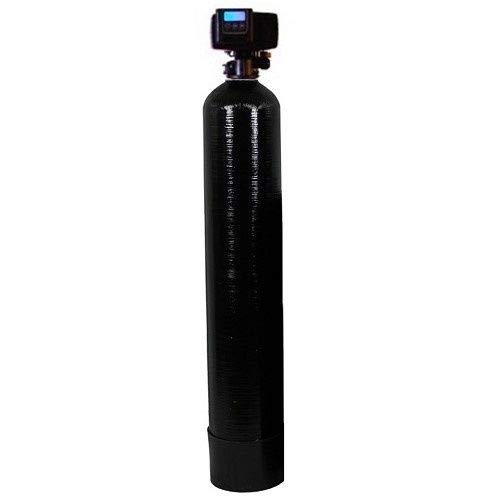
1. DuraWater Air Injection Iron Eater Filter 1.0
This system is for well owners who need whole-house removal of iron, manganese, and hydrogen sulfide without chemicals. Using air injection to oxidize dissolved contaminants makes it effective on clear-water iron that cartridge filters miss, and it handles the sulfur odor that often comes with iron-heavy wells. It is sized for typical family homes where a compact tank is preferred over industrial-scale media beds.
- Pro: Chemical-free oxidation effectively tackles iron, manganese, and rotten-egg odor together
- Pro: Maintains strong whole-house flow without the constant cartridge changes of inline systems
- Con: Requires proper backwash drainage and space for a tank system compared to compact cartridges
Skip it if you need a simple under-sink or rental-friendly install with no drain or if your iron issue is very light and sediment-based only.
2. DuraWater Fleck 5600 SXT Air Injection Iron Eater Filter 1.5 cu ft, Black
Built around the proven Fleck 5600 SXT valve and a larger 1.5 cu ft media bed, this version is for larger households or wells with consistently higher iron and sulfur loads. The extra capacity extends service intervals and provides more contact time for oxidation and filtration, which helps keep pressure stable during peak use. The digital SXT control makes programming backwash cycles straightforward.
- Pro: Larger media volume improves handling of heavier iron and sulfur and extends time between maintenance
- Pro: Fleck 5600 SXT valve is reliable, efficient, and easy to program for well-specific conditions
- Con: Bigger footprint and higher upfront cost than compact cartridge alternatives
Skip it if your well has only mild staining or you lack space and a suitable drain for an air injection tank system.
3. iSpring WGB21BM 2-Stage Whole House Water Filtration System, 10” x 4.5” Carbon Block and Iron & Manganese Reducing Filters, 1″ Ports
This two-stage cartridge system is ideal for wells where iron and manganese cause staining and metallic taste but you want to avoid a full tank system. The 10” x 4.5” large cartridges with 1-inch ports are designed to keep flow restriction low while the dedicated iron and manganese reducing stage plus carbon block improve clarity and taste. It is a practical whole-house polish for moderate well water issues.
- Pro: Dual large-format cartridges target iron and manganese while also improving taste and odor
- Pro: 1-inch ports help preserve household water pressure better than standard narrow housings
- Con: Cartridge replacement is recurring and it lacks air injection for high levels of dissolved iron
Skip it if your water has strong hydrogen sulfide odor or very high dissolved iron that needs active oxidation.
4. PUREPLUS 1-Stage Whole House Water Filter, for Well Water
For buyers who want the lowest-cost entry point to reduce well water sediment and staining, this single-stage housing is a straightforward starting filter. It is best as a first line of defense or a pre-filter to protect plumbing and appliances when the iron load is relatively light. Installation is simple and cartridge swaps take minutes, which suits renters or budget-focused homes.
- Pro: Very affordable upfront price with simple installation and maintenance
- Pro: Compact single-stage design fits easily where tank systems cannot
- Con: Limited single-stage filtration struggles with dissolved iron, manganese, and sulfur odor
Skip it if you have confirmed dissolved iron or noticeable sulfur smell that requires oxidation rather than simple filtration.
5. H&G lifestyles Hose Iron Filter for Filling Pool 3/4 GHT 20,000 Gallons
This is a specialty hose-end filter, not a whole-house solution, built for filling pools, hot tubs, or tanks with well water that would otherwise stain liners and surfaces. With a 3/4 GHT connection and rated capacity of 20,000 gallons, it reduces iron on the way in so you are not fighting rust-colored water from the start. It is disposable and highly portable for seasonal use.
- Pro: Prevents iron staining when filling pools directly from a well source
- Pro: Easy hose-thread setup with no tools, plumbing, or backwash needed
- Con: Not designed for continuous whole-house or drinking water filtration
Skip it if you need daily indoor filtration for taps and showers; choose a permanent whole-house system instead.
6. Waterdrop WHF3T-FG 3-Stage Whole House Water Filter System for Well Water
Designed specifically for well water with mixed contaminants, this three-stage system adds depth beyond basic sediment filtering. It layers sediment and chemical reduction with finer polishing to address iron-related discoloration along with taste and odor issues common to private wells. The multi-stage approach makes it more versatile than single or two-stage cartridge units for households with variable well quality.
- Pro: Three stages provide broader protection for sediment, taste, odor, and iron-related staining
- Pro: Purpose-built for well water rather than adapted city-water housings
- Con: More cartridges to track and replace than simpler one or two-stage systems
Skip it if you need true air injection oxidation for heavy dissolved iron and sulfur; this remains a cartridge-based solution.
7. Waterdrop WHF21-FG 2-Stage Whole House Water Filter System, 5 Micron
This two-stage system with 5 micron filtration is for well owners whose main complaints are sediment, cloudiness, and off tastes that accompany iron-heavy water. It is not an oxidizer, but it excels at capturing fine particulates and improving clarity before water reaches fixtures and appliances. It works well as a standalone for milder wells or as a pairing with a dedicated iron oxidizer upstream.
- Pro: 5 micron staged filtration noticeably improves clarity and reduces sediment-related staining
- Pro: Straightforward cartridge system with lower maintenance complexity than tank-based filters
- Con: Does not oxidize dissolved iron or remove hydrogen sulfide odor on its own
Skip it if your lab results show high dissolved ferrous iron or sulfur gas that needs an air injection or chemical-free oxidation stage.
8. iSpring WCFM400K Whole House Iron and Manganese Water Filter System, Digital Control with Automatic Regeneration & Air Injection, Set & Forget Design
This is the set-and-forget option for wells where iron and manganese need consistent, automated handling. Air injection oxidizes dissolved metals and the digital control manages automatic regeneration without manual dosing or frequent cartridge swaps. It is built for homeowners who want a permanent whole-house fix with minimal hands-on upkeep after the initial setup.
- Pro: Automatic regeneration and air injection reduce hands-on maintenance substantially
- Pro: Digital control allows precise cycle adjustment for changing well conditions
- Con: Highest price in this roundup and requires drain access and proper install space
Skip it if you are looking for a low-cost cartridge fix or only need occasional treatment like pool filling.
Buying Guide
Air Injection vs. Cartridge Filtration
Well water often contains dissolved ferrous iron that looks clear in a glass but turns orange after standing. Cartridge filters alone can catch oxidized particles but cannot convert dissolved iron efficiently. Air injection systems draw in air to oxidize iron, manganese, and hydrogen sulfide into filterable particles, then trap them in media and backwash them away, making them far more effective for moderate to heavy dissolved loads. Choose cartridges when staining is light and mainly particulate, and choose air injection when you have clear-water iron or sulfur odor.
Sizing, Flow, and Media Capacity
Undersized systems cause pressure drop when showers, laundry, and kitchen taps run together. Tank size and media volume, such as the difference between compact and 1.5 cu ft beds, determine contact time and how long the system runs before backwashing. Larger beds handle higher loads and family-scale demand more gracefully, while large-diameter cartridge housings with full-port connections help cartridges keep pressure loss low. Match the system to household size and peak demand, not just average use.
Maintenance Reality
Every iron filter trades upfront cost for ongoing effort differently. Cartridge systems need regular filter changes, with frequency driven by sediment and iron load, while air injection tanks need a drain for backwash, occasional media checks, and valve care but spare you frequent cartridge purchases. Consider where you will install the unit, whether you have a suitable drain and space, and how much hands-on work you will tolerate. For well owners, automatic regeneration and proven valves reduce the chance of missed maintenance leading to breakthrough staining.
Our Verdict
Our top pick is the DuraWater Fleck 5600 SXT Air Injection Iron Eater Filter 1.5 cu ft for its combination of larger media capacity and a dependable digital valve that handles real-world well conditions for families with ongoing iron, manganese, and sulfur. Our budget pick is the iSpring WGB21BM, which delivers meaningful iron and manganese reduction with large cartridges and 1-inch ports at a fraction of a tank system price. If you mainly need to fill a pool or spa from a well without staining the liner, the H&G lifestyles Hose Iron Filter wins despite not being a whole-house solution.
FAQ
Do I need a water test before choosing an iron filter?
Yes. Knowing whether your iron is dissolved ferrous or particulate ferric, plus manganese and hydrogen sulfide levels, determines whether you need oxidation or just filtration. A comprehensive well lab test prevents buying a cartridge system when you actually need air injection.
Will an iron filter also fix rotten-egg smell?
Only systems that oxidize and filter hydrogen sulfide will reliably stop the odor. Air injection iron filters are designed to address sulfur gas alongside iron, while basic sediment or carbon cartridges may reduce taste but leave the smell.
How do I know if I need a tank system or a cartridge system?
Choose a tank-based air injection system for clear-water iron, combined iron and sulfur, or high staining across the whole house. Choose a multi-stage cartridge system for lighter, mainly particulate issues or when you lack space and drain access for backwash.
Do iron filters affect water pressure?
Any filter adds some restriction, but properly sized systems minimize it. Tanks with adequate media volume and cartridge housings with large ports maintain pressure better during high demand than small, undersized housings.