Key takeaways
- High back with head support: Back height should be at least 12 to 14 inches from seat base to top edge. This prevents the head from flopping backward on the backswing.
- T-bar plus 3-point harness: A fixed T-bar between the legs with an adjustable waist/shoulder strap is far more secure than a rope or single waist strap alone. It stops submarining where a child slides down and out.
- Contoured seat depth: 10 to 12 inches deep and 9 to 11 inches wide. Too shallow and the child pitches forward; too narrow and hips are pinched with a cloth diaper or winter clothes.
- Rope or chain length for low swing arc: For outdoor A-frames or swing sets with 7 to 8-foot beams, rope length of 50 to 66 inches places the seat 12 to 18 inches off the ground when occupied, which is the right fall height for this age when over mulch, grass, or rubber matting.
- Weight limit with margin: Choose a swing rated to at least 35 to 50 pounds, even if your child is 22 pounds now. It gives you stability and another year of use before transitioning to an open toddler seat.
What's inside
- What Makes a Swing Safe for a 12-Month-Old Outdoors
- Bucket Swing Specs Compared: Real Measurements
- Indoor-to-Outdoor Portability: The Trade-Off Most Listings Hide
- Decision Matrix: Which Swing Fits Your Situation
- Installation, Clearance, and Durability Realities
- How to Use a Bucket Swing Safely at 12 Months
- When to Move On From the Bucket
The best outdoor swing for 1 year old is a high-back bucket swing with a T-bar and crotch restraint, 10 to 12-inch seat depth, and shoulder-height back support, with models like the Little Tikes 2-in-1 Snug ‘n Secure and Step2 Infant to Toddler Swing representing the most widely available designs that meet this spec in 2026.
- What Makes a Swing Safe for a 12-Month-Old Outdoors
- Bucket Swing Specs Compared: Real Measurements
- Indoor-to-Outdoor Portability: The Trade-Off Most Listings Hide
- Decision Matrix: Which Swing Fits Your Situation
- Installation, Clearance, and Durability Realities
- How to Use a Bucket Swing Safely at 12 Months
- When to Move On From the Bucket
For a 12-month-old who cannot pump or stabilize independently, a full bucket is non-negotiable. Flat strap swings, disc swings, and open toddler swings without a T-bar allow too much lateral movement and forward slump. A proper bucket for this age wraps around the torso, supports the head when leaning back, and locks the child in with both a waist strap and a front T-bar or cross-bar so they cannot slide out or tip forward.

Little Tikes Snug 'n Secure Blue Swing with Adjustable Straps, 2-in-1 for Baby and Toddlers Ages 9 Months - 4 Years
Included for 'Best Outdoor Swing for 1 Year Old: Gentle Swings With Full Support' because the listing specifies 2-in-1 for Baby and Toddlers Ages 9 Months and 4 Years, details this guide uses to compare options.
View on Amazon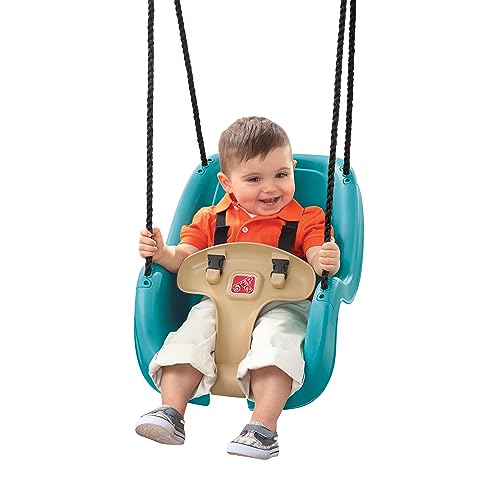
Step2 Infant to Toddler Swing, Baby Outdoor Swing, Backyard Bucket Style Swing Seat, Secure Harness, Outside Weather-Resistant Rope, Attach to Playset, For Toddlers 9 Months -3 Years Old
Included for 'Best Outdoor Swing for 1 Year Old: Gentle Swings With Full Support' because the listing specifies Baby Outdoor Swing and Backyard Bucket Style Swing Seat, details this guide uses to compare options.
View on Amazon
Swurfer Coconut Toddler Swing Comfy Baby Outdoor, 3- Point Adjustable Safety Harness, Secure, Safe Quick Locking System, Blister-Free Rope, Easy Installation, Ages 9 Months and Up, Ivo, White
Included for 'Best Outdoor Swing for 1 Year Old: Gentle Swings With Full Support' because the listing specifies 3- Point Adjustable Safety Harness and Secure, details this guide uses to compare options.
View on Amazon
Swing-N-Slide WS 4001-G Plastic Infant Swing with Nylon Rope Swing Set Attachment, Green w/Yellow
Included for 'Best Outdoor Swing for 1 Year Old: Gentle Swings With Full Support' because the listing specifies Green w/Yellow, details this guide uses to compare options.
View on AmazonWhat Makes a Swing Safe for a 12-Month-Old Outdoors
At one year, most children weigh 18 to 26 pounds and are still developing core balance. The swing needs to do the stabilizing work for them. Look for these non-negotiable features before considering color or portability:
- High back with head support: Back height should be at least 12 to 14 inches from seat base to top edge. This prevents the head from flopping backward on the backswing.
- T-bar plus 3-point harness: A fixed T-bar between the legs with an adjustable waist/shoulder strap is far more secure than a rope or single waist strap alone. It stops submarining where a child slides down and out.
- Contoured seat depth: 10 to 12 inches deep and 9 to 11 inches wide. Too shallow and the child pitches forward; too narrow and hips are pinched with a cloth diaper or winter clothes.
- Rope or chain length for low swing arc: For outdoor A-frames or swing sets with 7 to 8-foot beams, rope length of 50 to 66 inches places the seat 12 to 18 inches off the ground when occupied, which is the right fall height for this age when over mulch, grass, or rubber matting.
- Weight limit with margin: Choose a swing rated to at least 35 to 50 pounds, even if your child is 22 pounds now. It gives you stability and another year of use before transitioning to an open toddler seat.
Bucket Swing Specs Compared: Real Measurements
Not all bucket swings fit the same child or the same swing set. Dimensions affect comfort, safety, and whether the swing will actually hang correctly on your frame.
| Model Type | Seat Dimensions (W x D x Back Height) | Weight Limit | Rope / Chain Length | Installed Seat Height Range | General Market Range |
|---|---|---|---|---|---|
| Little Tikes 2-in-1 Snug ‘n Secure (bucket mode) | 11 in x 10.5 in x 13.5 in | 50 lbs | 54 in ropes (adjustable) | 14 – 18 in off ground on 7.5 ft beam | usually $30–$55 |
| Step2 Infant to Toddler Swing | 10.5 in x 11 in x 14 in | 50 lbs | 56 in ropes | 13 – 17 in off ground on 7.5 ft beam | usually $35–$60 |
| Eastern Jungle Gym High-Back Full Bucket | 11.5 in x 10 in x 13 in | 50 lbs | 66 in coated chains | 12 – 20 in off ground (more adjustable) | usually $35–$65 |
| Generic Commercial Full Bucket (no T-bar, waist strap only) | 12 in x 9 in x 11 in | 35 lbs | 60 in ropes | 15 – 22 in off ground | usually $25–$40 |
For a 1-year-old, the first three options provide full support. The last type, often sold as a budget full bucket without a T-bar, is not recommended for 12-month-olds even if the listing says infant, because the low back and single strap allow forward tipping.
Indoor-to-Outdoor Portability: The Trade-Off Most Listings Hide
Many parents want one swing that moves from a living room doorway frame to a backyard tree or swing set. That portability comes with compromises in safety and durability that should drive your decision.
| Swing Construction | Weight of Swing | Portability | Weather Durability | Best For |
|---|---|---|---|---|
| Blow-molded plastic bucket with rope (Little Tikes, Step2 type) | 4.5 – 6.5 lbs | High – easy to unclip and move | High – UV-stabilized plastic, rinse clean, ropes need seasonal replacement | Families who want one swing for indoor doorway jumper frame and outdoor A-frame |
| Plastic bucket with coated chain + carabiners | 7 – 9 lbs | Moderate – heavier, needs S-hooks | Very high – chain outlasts rope outdoors | Permanent outdoor installation where wind and sun degrade rope |
| Fabric / canvas infant swing with padded insert | 3 – 4 lbs | Very high – folds flat | Low – fabric fades, absorbs water, mildews if left outside | Indoor use only or covered porch with daily bring-inside routine |
If you plan to leave the swing outside all season, choose coated chain over rope and blow-molded plastic over fabric. Rope stretches slightly when wet and can fray at the knot points after one season of full sun. Chain maintains consistent seat height and does not require re-tying. If you need true portability for apartment living or travel to grandparents, the light rope bucket is easier to carry and fits both an indoor doorway support bar and an outdoor frame without tools, but you must store it indoors between uses.
Decision Matrix: Which Swing Fits Your Situation
All 1-year-olds need the same safety geometry, but your space dictates the best mounting and model choice.
| Your Situation | Recommended Setup | Why |
|---|---|---|
| Small yard or patio, no full swing set | Rope bucket on single-point tree branch or freestanding metal A-frame with 6.5 to 7 ft height | Requires only 6 ft of side clearance and 4 ft front-to-back clearance. A-frame footprint is about 5 x 5 ft and can be stored upright in winter. |
| Standard backyard swing set (7 to 8 ft beam) | Bucket with coated chains and carabiners, hung on existing swing hangers 18 to 20 in apart | Chains resist tangling and keep spacing correct. Check beam weight rating – most residential beams are rated 150 to 200 lbs per swing position, fine for a 50 lb child + swing. |
| Apartment / renter without drilling or tree access | Lightweight rope bucket hung on tension-mounted indoor doorway frame for daily use, moved to portable outdoor stand on weekends | No permanent hardware. Doorway frames usually support 35 lbs max – verify your frame’s limit and never use pressure-mounted bars for swinging. |
| Child on the smaller side (under 20 lbs) or low muscle tone | Highest back option (14 in) with full T-bar and shoulder straps, installed low at 12 to 14 in off ground | Extra back height prevents slumping and lower seat height reduces fall energy. Add rubber mulch or a 1-inch thick play mat extending 4 ft in all directions. |
Installation, Clearance, and Durability Realities
Product photos never show the space you actually need. Before you buy, measure for safe swing arc.
- Clearance around the swing: Allow at least 6 feet of open space on both sides and 6 to 8 feet front and back from the seat edge. At 1 year old the push is gentle, but an older sibling may push harder than intended.
- Ground surface: Grass alone is not impact-absorbing enough over hard-packed soil. 4 to 6 inches of engineered wood mulch, pea gravel, or a 3/4-inch rubber mat rated for fall height makes a measurable difference. Extend surfacing at least 3.5 feet beyond the front and rear swing arc.
- Beam and doorway height: Most indoor doorways are 80 inches high. A rope bucket hung from a doorway bar will sit only 8 to 12 inches off the floor after knots, which limits arc but is correct for indoor containment. Outdoors, a beam under 7 feet makes longer ropes drag, while over 8.5 feet requires shortening ropes to keep the 12 to 18 inch seat height.
- Assembly and moving: These swings ship in boxes of 16 x 13 x 11 inches and weigh 5 to 9 pounds, so they fit through any doorway. Assembly is threading rope through the bucket and tying figure-eight knots or clipping carabiners – 10 to 15 minutes with no tools except for chain models which need pliers to close S-hooks.
- What wears first: On rope models, the rope at the top knot and the plastic around the rope holes. On chain models, the powder coating on the chain near the hanger. On all plastic buckets, the harness buckle and the T-bar snap – rinse off sand and sunscreen to prevent grit from stiffening the buckle. Replace ropes every 12 to 18 months if left outside year-round.
How to Use a Bucket Swing Safely at 12 Months
Even the best swing is only safe with the right setup and supervision. Follow this sequence every time:
- Place the child fully back in the bucket with back against the support, legs through the leg holes, T-bar between thighs.
- Buckle the waist strap snug enough that you can fit one flat finger under it, but not a fist. Twisted straps or loose slack allow sliding.
- Push from the front with light, open-palm pushes at hip level, not overhand from behind. Keep pushes under 12 inches of travel for the first few sessions.
- Stay within arm’s reach. A 1-year-old can lurch sideways unexpectedly as they learn to balance with motion.
- Stop use if the child’s chin cannot clear the T-bar when sitting upright or if shoulders rise above the back of the bucket – usually around 30 to 33 inches standing height, which is the signal to convert a 2-in-1 type to the open toddler mode or switch to a toddler swing.
When to Move On From the Bucket
Most children outgrow the full bucket between 18 and 24 months when they can sit upright without support, follow simple instructions like hold on, and weigh over 30 pounds. Signs you need the next stage are complaints about leg holes being tight, trying to climb out over the T-bar, or the harness becoming too snug over a jacket. A convertible 2-in-1 bucket solves this by removing the T-bar and front section to become a half-bucket toddler swing rated to the same 50 pounds, usually for $15 to $25 less than buying two separate swings.
FAQ
Can a 1-year-old use a regular toddler swing with a chain in the front?
No. The open chain front provides no pelvic restraint for a child who cannot grip or brace. Use only a full high-back bucket with T-bar at this age.
How low should the swing be off the ground?
12 to 18 inches from the bottom of the occupied seat to the ground surface is ideal for a 1-year-old. Higher increases fall distance; lower allows feet to drag and tip the bucket.
Are indoor doorway swings safe to use outdoors on a tree?
Only if the model is specifically blow-molded plastic with outdoor-rated rope or chain. Fabric doorway-only swings should not be left outside, and doorway support bars must never be used as tree mounts.