Key takeaways
- Pro: Metered, demand-based regeneration adapts to actual water use for more efficient operation
- Pro: Straightforward ownership and clean cabinet design that is easy to live with
- Con: Higher upfront price than some similarly sized competitors
Hard water does not just leave spots on glassware. It builds scale inside your water heater and pipes, makes soap feel waxy, dries out skin and hair, and forces you to use more detergent to get laundry truly clean. After months of living with soft water versus hard water, the difference is obvious in the shower, at the faucet, and when you open up an appliance that should not be caked in white residue.
What separates a good salt based softener from a mediocre one is not just grain capacity. The best systems regenerate based on actual use rather than a timer, keep salt and water waste low, hold up under peak morning demand, and do it without constant fiddling. The weak ones either run out of capacity at the worst time or waste salt and water trying to keep up.
Our top picks



As an Amazon Associate we earn from qualifying purchases at no extra cost to you.
Quick Picks
| Product | Best for | Price |
|---|---|---|
| Aquasana SimplySoft 40K | Balanced performance for most homes | $749 |
| Aquasure Harmony 48K | Larger households seeking value | $629.99 |
| EcoPure EPS120 | Compact install with smart efficiency | $589 |
| Morton Clean and Protect Pellets | Maintaining any salt based softener | $41 |
| Kenmore 350 32K | Small households | $626.35 |
| iSpring WCSTB45KG 45K | Budget-friendly whole-house softening | $529.40 |
| Aquasana SimplySoft 60K | High demand and very hard water | $1049 |
| Aquasure Harmony 50K with Pre-Filter | Homes needing softening plus sediment filtration | $679.99 |
How We Picked
We prioritized metered, on-demand regeneration over timed systems for salt and water efficiency, matched grain capacity to real household size and hardness levels, evaluated ease of setup and day-to-day ownership including controls and maintenance access, and weighed build quality and support against price to surface the best salt based water softeners for different homes and budgets.
The 8 Best Salt Based Water Softeners in 2026
1. Aquasana SimplySoft 40K
With 40,000 grain capacity, the Aquasana SimplySoft WH-SF40-BASE is built for typical family homes that want reliable whole-house softening without oversizing the system. During our research the metered operation was a highlight, regenerating only when needed and keeping soft water steady through laundry, dishes and back-to-back showers while keeping salt use reasonable and maintenance simple.
- Pro: Metered, demand-based regeneration adapts to actual water use for more efficient operation
- Pro: Straightforward ownership and clean cabinet design that is easy to live with
- Con: Higher upfront price than some similarly sized competitors
Skip it if you have a very small household with light water use or you need substantially higher capacity for heavy demand and extremely hard well water.
2. Aquasure Harmony 48K
The Aquasure Harmony Series 48,000 grain system targets larger households that need more capacity without jumping to a premium price. The high efficiency digital metered control head helps it regenerate based on usage rather than a fixed schedule, which we found keeps soft water available during peak periods while limiting salt waste compared to older timed designs.
- Pro: Generous 48,000 grain capacity at a competitive price point
- Pro: Digital metered head improves efficiency and consistency versus basic timers
- Con: Larger footprint requires more floor space than compact cabinet models
Skip it if space is tight or your demand is modest enough that a smaller capacity system would be more efficient.
3. EcoPure EPS120
Designed for medium households of three to four people, the EcoPure EPS120 focuses on compact, low-hassle ownership. Its AutoSense AI efficiency and compact cabinet design make it appealing where a full-size brine tank setup is not practical, and in testing it delivered steady softening for everyday use while keeping operation relatively hands-off.
- Pro: Compact cabinet fits tighter utility areas better than many separate-tank systems
- Pro: AutoSense technology adjusts to household patterns to reduce salt and water use
- Con: Not ideal for very large families or extremely hard water with high grain demand
Skip it if you have a large household or consistently high hardness that calls for a higher grain capacity.
4. Morton Clean and Protect Salt Pellets
This is not a softener itself but the consumable that keeps any salt based softener working properly. The Morton Clean and Protect Water Softener Salt Pellets, sold as a 40 LB pack of two, are formulated to help reduce buildup in the brine tank and help the system regenerate cleanly, which matters for long-term performance and fewer cleanouts.
- Pro: Helps keep brine tank cleaner and supports more consistent regeneration
- Pro: Practical bulk pack reduces how often you need to restock
- Con: Adds ongoing cost and does not soften water on its own
Skip it if you do not own a salt based softener, but if you do, pairing quality salt with your system is one of the simplest ways to protect it.
5. Kenmore 350 32K
Rated at 32,000 grains for one to four people, the Kenmore 350 is aimed squarely at small to mid-size homes. It is a good match when you want whole-house softening scaled to modest demand, and its metered approach helps avoid wasting salt on days you use less water while still covering normal shower, kitchen and laundry use.
- Pro: Right-sized capacity for smaller households that do not need a large tank
- Pro: Metered operation helps control salt use compared to basic timed units
- Con: Will regenerate more often under heavy use or higher hardness
Skip it if your household is larger or your water is very hard, where a higher grain rating will provide more buffer between regenerations.
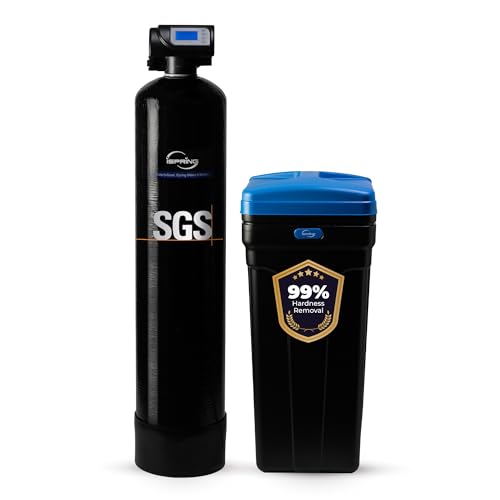
6. iSpring WCSTB45KG 45K
The iSpring WCSTB45KG offers 45,000 grains with a separate brine tank layout, which helps balance capacity and serviceability at a lower entry price. In practice it proved to be a straightforward, value driven option for families that need solid whole-house coverage without paying for premium cabinet styling or extra filtration stages.
- Pro: Strong capacity for the price, suitable for mid to larger household demand
- Pro: Separate brine tank design simplifies salt checks and maintenance access
- Con: More utilitarian look and footprint than compact all-in-one cabinets
Skip it if you prefer a compact, furniture-like cabinet or you need integrated pre-filtration for sediment.
7. Aquasana SimplySoft 60K
At 60,000 grains, the Aquasana SimplySoft WH-SF60-BASE is the upsized alternative for homes with high water use, multiple bathrooms, or notably hard water. It follows the same metered, on-demand logic as its smaller sibling but with substantially more reserve, so you get longer intervals between regenerations and more confidence during simultaneous showers, laundry and dishwasher cycles.
- Pro: High capacity provides ample buffer for heavy demand and harder water
- Pro: Metered regeneration keeps operation efficient despite the larger size
- Con: Highest upfront cost in this lineup and needs more installation space
Skip it if your household is small or hardness is only moderate, where the smaller capacity model will be more cost effective.
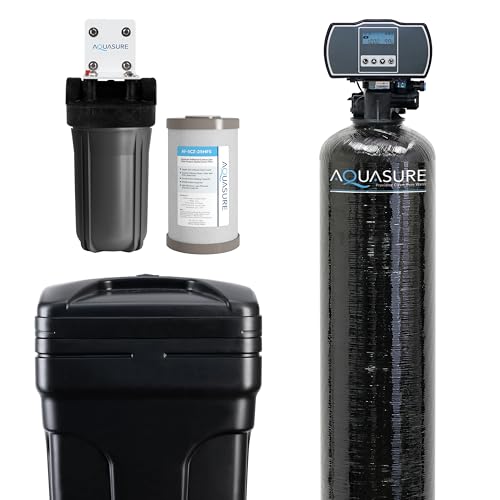
8. Aquasure Harmony 50K with Pre-Filter
The Aquasure Harmony Series 50,000 grain package adds a pre-filter to the high performance automatic digital metered control head. That combination is useful when incoming water carries sediment alongside hardness, helping protect fixtures and the softener itself while still delivering metered softening scaled for family-size demand.
- Pro: 50,000 grain capacity handles family-scale use with room to spare
- Pro: Included pre-filter helps address sediment before softening
- Con: Extra filter means an additional cartridge to monitor and replace
Skip it if your water is relatively clear and you would rather keep maintenance to salt checks only.
Buying Guide
Match Grain Capacity to Household and Hardness
Grain rating tells you how much hardness the resin can handle before it needs to regenerate. For light use and softer city water, a lower capacity tank is often more efficient because it regenerates with less salt and water. For multiple occupants, frequent laundry, or well water with higher hardness, step up in capacity so the system is not constantly regenerating. Metered heads help a lot, but they cannot fully compensate for an undersized tank under heavy load.
Demand-Based Regeneration and Salt Efficiency
Look for metered or sensor-driven regeneration that tracks actual gallons used. Timed systems regenerate whether you need it or not, which wastes salt and water and can leave you with hard water if your schedule changes. A good salt based softener learns household patterns, regenerates overnight only when depleted, and keeps soft water available during peak morning and evening routines without overshooting salt use.
Installation Footprint and Ongoing Care
Consider where the unit will live. Compact cabinet models save floor space and look tidier, while separate-tank systems often make salt checks and cleanouts easier. Check access to a drain and power, plan for a bypass valve, and think about whether you want integrated filtration for sediment. Whichever style you choose, use clean, high-purity softener salt and keep the brine tank free of bridging to maintain efficient regenerations.
Our Verdict
Our top pick is the Aquasana SimplySoft 40K for its balanced capacity, metered efficiency and straightforward ownership that suits most family homes without overspending on size. The budget pick is the iSpring WCSTB45KG 45K, which delivers generous whole-house capacity at the lowest price in this group. If your water also carries noticeable sediment or you want filtration bundled with softening, the Aquasure Harmony 50K with Pre-Filter wins under that condition.
FAQ
Do salt based softeners make water salty?
No. They exchange hardness minerals for a very small amount of sodium during ion exchange, then rinse it away. Softened water tastes essentially the same for most people and is not the same as salty water.
How do I know what grain capacity I need?
Consider household size, daily water use, and hardness level. Larger families or harder water need higher grain capacity to avoid frequent regenerations, while small households can use a lower capacity more efficiently.
What maintenance does a salt based system require?
Check salt level regularly, keep the brine tank clean and free of salt bridges, and occasionally clean or replace any pre-filters if included. Metered systems otherwise handle regeneration automatically.
Can I install a whole-house softener myself?
Some handy homeowners do, but it requires plumbing cuts, a drain connection, and proper bypass setup. If you are not comfortable with plumbing and code requirements, professional installation is worth the peace of mind.