
Key takeaways
- Count usable steps: Five tubes give far more than five settings once you stack, but only if the individual ratings differ. Duplicate tubes waste rungs.
- Check the gaps: Jumps larger than about ten pounds stall progress. Look for a set whose lightest tubes let you fine-tune the middle of the range.
- Anchor height changes tension: The same band anchored high, low, or underfoot delivers noticeably different resistance curves. That is extra ladder rungs for free.
- Hardware limits stacking: Carabiners and handles only accept so many clips. Four tubes is usually the practical ceiling regardless of what the box claims.
- Stretch length matters: Rated tension is measured at a set extension. Standing further from the anchor increases resistance more than adding a light tube would.
What's inside
Resistance band listings advertise numbers that mean almost nothing on their own. A set described as 150 lb is not offering you a 150 lb bench press equivalent — it is adding together five tubes, and the figure assumes you clip all of them to the same handle at once. Meanwhile the stated rating is measured at some specific stretch length that nobody tells you, so the tension you feel at the bottom of a curl and at the top are two different numbers entirely.
What actually matters is the ladder: how many discrete tension levels you can produce, how evenly spaced they are, and whether stacking gives you useful intermediate steps or just three heavy options and a gap. A man training seriously wants roughly five to eight usable settings across the range he presses and rows in, and he wants the jumps between them small enough to progress without stalling. The sets below are compared on that basis, plus the practical limits of stacking multiple tubes onto one handle.
As an Amazon Associate we earn from qualifying purchases at no extra cost to you. Product prices and availability are accurate as of the date shown and are subject to change.


Quick Comparison
| Product | Best For | Standout Feature | Watch Out For |
|---|---|---|---|
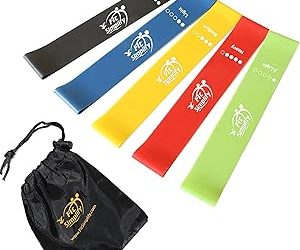
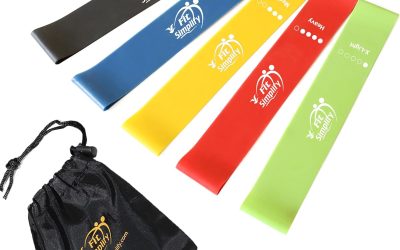
| WHATAFIT Resistance Bands with Handles | Building a clean tension ladder | Five tubes from 10 lb to 50 lb, stackable | Combined stack crowds the carabiner |
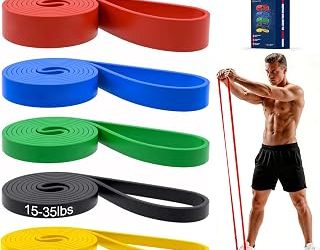
| 5-Level Bands, 5–125 lb | Very light through very heavy | Bottom step low enough for shoulder work | Wide gaps between the upper levels |
| HPYGN Resistance Bands with Handles | Adding anchor points to the ladder | Door anchor and ankle straps included | Anchor position changes effective tension |
| Heavy Duty Bands with Handles, 300 lb | Heavy pressing and rowing | Highest combined rating in the group | Top of the range is impractical to stack |
| Dapofajo Anti-Snap Silicone Bands | Consistent tension over time | Silicone construction resists fatigue | Different feel from latex at equal rating |
| Resistance Bands Set with Handles | A straightforward starting ladder | Complete set with no extras to manage | Fewer intermediate steps than premium sets |
How to Choose
- Count usable steps: Five tubes give far more than five settings once you stack, but only if the individual ratings differ. Duplicate tubes waste rungs.
- Check the gaps: Jumps larger than about ten pounds stall progress. Look for a set whose lightest tubes let you fine-tune the middle of the range.
- Anchor height changes tension: The same band anchored high, low, or underfoot delivers noticeably different resistance curves. That is extra ladder rungs for free.
- Hardware limits stacking: Carabiners and handles only accept so many clips. Four tubes is usually the practical ceiling regardless of what the box claims.
- Stretch length matters: Rated tension is measured at a set extension. Standing further from the anchor increases resistance more than adding a light tube would.
Top Picks Reviewed
Best Tension Ladder: WHATAFIT Resistance Bands with Handles
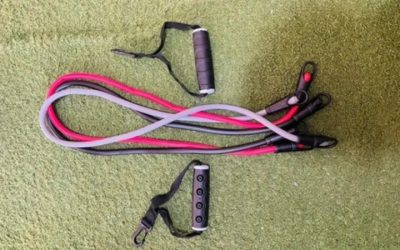
Five natural latex tubes rated individually from 10 lb through 50 lb is the layout that produces the most usable settings. Because the ratings differ across the set, stacking generates genuine intermediate steps rather than duplicates — you can land close to almost any target between the lightest tube and the full stack.
The practical limit is the connection point. Clipping four or five tubes to one carabiner makes a bulky bundle that twists under load and can pinch. Two or three at a time keeps the setup clean and covers most of the range you will actually train in.
Widest Span: 5-Level Bands, 5 to 125 lb
Starting at 5 lb matters more than the headline number. A genuinely light tube is what makes external rotations, face pulls and rehab-style shoulder work possible, and most sets skip that end entirely in favour of impressive top figures.
The gaps at the top are the tradeoff. Once you are stacking the heavier tubes, the steps between available combinations get coarse, so progressing on rows and presses means jumping further than you would like.
Best Anchoring Options: HPYGN Resistance Bands with Handles
Including a door anchor and ankle straps effectively multiplies the ladder, because anchor position changes both the resistance curve and the exercise available. High anchor gives you pulldowns and face pulls; low anchor gives you curls and rows; ankle straps open up leg work.
Just be aware that moving the anchor changes the effective load at the same tube rating. If you log your training, note the anchor height alongside the tubes used, or your numbers will not compare week to week.
Heaviest Option: Heavy Duty Bands with Handles, 300 lb
For men who already press and row meaningful weight, a set rated to a combined 300 lb is the only one here with the headroom to be challenging on compound movements. Heavy tubes also hold their shape better under moderate load, which makes lighter work feel more controlled.
The top of that rating is theoretical for most people. Reaching it requires stacking every tube, which produces a bundle that is awkward to hold and hard to anchor safely. Treat the number as a ceiling, not a training target.
Most Consistent Tension: Dapofajo Anti-Snap Silicone Bands
Silicone construction resists the gradual fatigue that makes latex tubes soften over months of use, which means the rung you trained on in month one is still the same rung in month eight. For anyone who logs progression, that consistency is worth more than a higher peak rating.
The feel differs from latex at the same nominal rating — often a little stiffer at the start of the stretch. Expect to recalibrate your sense of the numbers if you are switching from a latex set.
Frequently Asked Questions
Can I really add up the ratings when stacking?
Roughly, yes — two 20 lb tubes give about 40 lb at the same stretch. But the total only holds at the extension where each was rated, so the practical figure varies through the range of motion.
How many tubes can I stack safely?
Three or four is the sensible ceiling for most handles and carabiners. Beyond that the bundle twists, the clips crowd each other, and the setup becomes the weak point rather than the bands.
Do bands build real strength?
They build strength effectively in the middle and upper portion of a movement, where tension is highest. What they cannot replicate is heavy loading at the bottom of a lift, which is why bands complement free weights rather than replace them for maximal work.
Why does the same band feel heavier some days?
Usually anchor distance. Standing a foot further back adds meaningful tension without changing tubes. Marking your foot position gives you far more consistent sessions than most people expect.
Final Thoughts
Judge these sets by the number of usable rungs, not by the biggest figure on the packaging. The WHATAFIT tubes from 10 lb to 50 lb produce the cleanest ladder, the 5–125 lb set covers the light end that others ignore, and the 300 lb heavy duty option is the only one with real headroom for compound work. Add a door anchor, note your foot position, and the ladder gets finer without spending anything more.
Write Your Review
No reviews yet. Be the first to share your experience!