
Key takeaways
- Layered beats molded for anything heavy. Layered latex is built from bonded sheets, so a nick in the outer layer doesn’t propagate into a snap. Molded or dipped bands are cheaper and fine for warm-ups, but they fail catastrophically once the surface cracks — and a band under 100 lb of tension recoils fast.
- Buy for overlap, not for range. A set spanning 10 to 150 lb in four huge jumps leaves you stuck: the next band up doubles the load. Look for sets where adjacent bands overlap by roughly 30–40 percent so you can actually progress.
- Judge the hardware, not the rubber. On tube systems, failures happen at the crimp where the tube meets the metal, and at plastic carabiners. Want steel clips, a sleeved crimp, and handles with a rotating ring so the cable doesn’t twist under a row.
- Match the anchor to your space. Door anchors need a door that opens away from you and a frame that isn’t hollow trim. If you rent, a foam-cored door anchor and a wide nylon strap for post or tree anchoring cover nearly everything without hardware.
- Fabric for anything against skin. Latex mini loops roll and pinch on hip abduction work. Woven fabric with silicone grip lines stays put through 30 reps and doesn’t wax your leg hair off.
What's inside
A resistance band lies to you about its weight, and that’s the most useful thing to understand before you buy one. A tube labeled “30 lb” pulls almost nothing in the first few inches of travel and closer to its rated tension only when stretched to two or three times its resting length. Iron does the opposite: a dumbbell curl is hardest at the bottom and coasts at the top. That ascending resistance curve is why bands feel easy on the setup and brutal at lockout, and why they pair so well with movements where you’re strongest at the end of the range — hip thrusts, presses, rows, lateral raises, triceps extensions.
The gear below covers five formats that actually earn shelf space, chosen on the criteria that decide whether a band survives a year: layered construction versus molded, anchor options, handle hardware, and honest resistance overlap between sizes. I’ve also flagged where each format falls short, because no single band trains a full body well, and a set that ignores your weakest link is just an expensive rubber band.
As an Amazon Associate we earn from qualifying purchases at no extra cost to you. Product prices and availability are accurate as of the date shown and are subject to change.

#1 Pick

#2 Pick

#3 Pick

#4 Pick

#5 Pick

#6 Pick

#7 Pick

Quick Comparison
| Pick | Format | Best For | Typical Resistance | Anchoring | Packed Size |
|---|---|---|---|---|---|
| Layered-Latex Loop Set | Continuous loop, 41″ | Pull-up assist, heavy lower body, squat/bench overload | ~5–175 lb across 4–5 bands | Bar, rig, tree, door frame | Fist-sized per band |
| Clip-Handle Tube System | Tubes + carabiners | Stacking resistance for presses, rows, curls | ~10–150 lb stacked | Door anchor, wall mount | Shoebox |
| Fabric Hip Circle Trio | Woven mini loop | Glutes, abduction, warm-ups | Light / medium / heavy | None needed | |
| Figure-Eight Band | Dual-loop, fixed grips | Upper back, rear delts, travel circuits | ~15–40 lb | None needed | |
| Portable Bar + Band Kit | Sectional bar, plate-style bands | Squats, deadlifts, overhead press patterns | ~20–200 lb | Under-foot platform | Small duffel |
How to Choose
- Layered beats molded for anything heavy. Layered latex is built from bonded sheets, so a nick in the outer layer doesn’t propagate into a snap. Molded or dipped bands are cheaper and fine for warm-ups, but they fail catastrophically once the surface cracks — and a band under 100 lb of tension recoils fast.
- Buy for overlap, not for range. A set spanning 10 to 150 lb in four huge jumps leaves you stuck: the next band up doubles the load. Look for sets where adjacent bands overlap by roughly 30–40 percent so you can actually progress.
- Judge the hardware, not the rubber. On tube systems, failures happen at the crimp where the tube meets the metal, and at plastic carabiners. Want steel clips, a sleeved crimp, and handles with a rotating ring so the cable doesn’t twist under a row.
- Match the anchor to your space. Door anchors need a door that opens away from you and a frame that isn’t hollow trim. If you rent, a foam-cored door anchor and a wide nylon strap for post or tree anchoring cover nearly everything without hardware.
- Fabric for anything against skin. Latex mini loops roll and pinch on hip abduction work. Woven fabric with silicone grip lines stays put through 30 reps and doesn’t wax your leg hair off.
Top Picks Reviewed
Layered-Latex Loop Set — the backbone of a band-only program
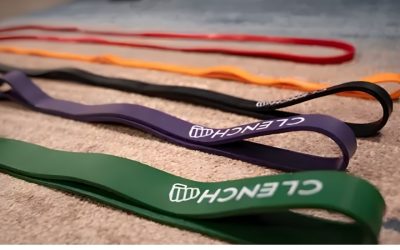
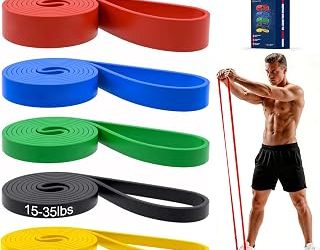
If you own one thing, own a graduated set of 41-inch continuous loops. They assist pull-ups and dips, add tension to barbell lifts, and anchor to a squat rack or a sturdy door for pull-aparts, pull-throughs, face pulls, and monster walks. The practical test is the seam: run your thumb along the edge and look for clean, even lamination rather than a bulging glue line. A four-band set covering roughly 10, 30, 60, and 100 lb handles both a 200 lb lifter’s pull-up assist and a beginner’s first row. Downside: loops are awkward for isolation work where you want two independent handles.
Clip-Handle Tube System — closest thing to a cable stack
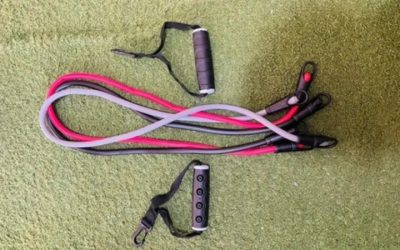
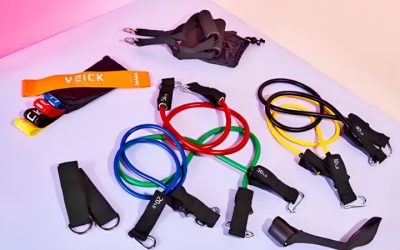
Tubes with carabiners let you stack two or three at once, which is how you get real progression without buying new gear. Clip both handles to a low door anchor and you have cable curls; clip high and you have lat pulldowns and triceps rope work. Ankle straps turn the same kit into hip extensions and cable kickbacks. Inspect for a metal sleeve over the crimp and molded handles with a knurled or ribbed surface — smooth plastic handles get slick within one set of high-rep rows.
Fabric Hip Circle Trio — small purchase, disproportionate payoff
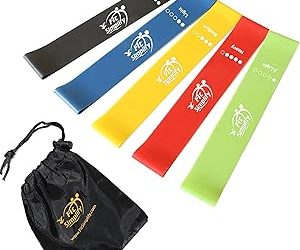
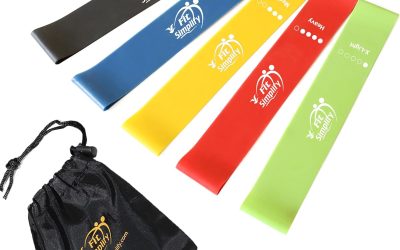
Three woven loops in light, medium, and heavy cover glute activation before squats, banded walks, seated abduction, and the clamshells that fix a lazy gluteus medius. They also make bodyweight squats and hip thrusts meaningfully harder by resisting knee collapse. Sizing matters more than resistance here: measure your mid-thigh and check the flat length, because a circle that’s too long slides toward the knee and turns every rep into a lower-leg exercise.
Figure-Eight Band — the one that goes in the carry-on
Two loops joined at a center bridge, with sewn or molded grips at each end. It excels at horizontal pulling and rear-delt work, which is exactly what most band kits neglect: pull-aparts, single-arm rows against a doorframe, and external rotations. Resistance tops out modestly, so treat it as high-rep upper-back insurance rather than a strength driver. It weighs a few ounces and fits in a jacket pocket.
Portable Bar + Band Kit — squats and deadlifts without a rack
A sectional bar plus loop bands anchored under a platform reproduces the compound lifts bands normally can’t touch. Because tension climbs as you stand up, the top of a squat is the hardest part — the reverse of a barbell, and a genuinely useful stimulus for lockout strength. Check the collar design where bar sections join; twist-lock joints hold better than pin-and-detent under uneven loading. The tradeoff is bulk: this is the only pick here you can’t stuff in a drawer.
Frequently Asked Questions
Can bands actually build muscle, or just tone?
They build muscle. Hypertrophy responds to mechanical tension and reps taken close to failure, not to the material producing the tension. The real limitation is loading the bottom of a range — a band squat is easy in the hole — so pair bands with tempo work, pauses, and unilateral variations to keep hard positions hard.
How do I know what resistance to buy if I lift free weights?
Rate bands by how the top of a movement feels, not by the printed number. A band advertised at 50 lb might deliver 15 lb at the start of a press and 55 lb at lockout. Start one tier lighter than your instinct; you can always double up two lighter bands, but you can’t make a heavy one easier.
How long do resistance bands last?
With ordinary use, layered latex commonly runs several years; molded tubes tend to degrade sooner. Heat, UV, oils, and dry storage against concrete accelerate breakdown. Keep them in a drawer or bag, wipe off sweat, never stretch beyond about 2.5 times resting length, and retire any band with visible cracks or a milky, chalky patch.
Are bands safe for shoulders and knees?
Generally yes, and often gentler than free weights because the load lightens as the joint approaches its most vulnerable flexed position. The failure mode to respect is the snap — always check the anchor point, never aim a stretched band at your face, and use a wrap-through choke rather than a knot, since knots create a stress riser.
Final Thoughts
A complete band setup costs less than one adjustable dumbbell and covers pushing, pulling, hinging, squatting, and the small stabilizer work most people skip. Buy the layered loop set first, add clip handles when you want independent-arm work, and keep a fabric circle in your bag for warm-ups. Skip the twenty-piece bundles padded with door anchors you’ll never use and thin molded tubes that will strand you mid-set. Two or three well-built formats, stored out of the sun and progressed deliberately, will train a full body for years.
Write Your Review
No reviews yet. Be the first to share your experience!