Key takeaways
- Backing material: Natural rubber and food-grade silicone are the safe bets on sealed hardwood. Avoid cheap adhesive-style PVC or plasticized vinyl, which can soften a finish over time and leave a shadow you can’t buff out.
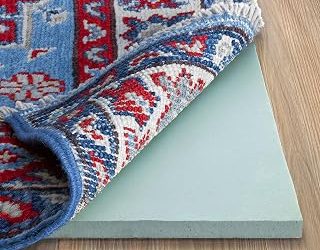
- Thickness for the room: A 1/4″ felt-and-rubber pad is the sweet spot for living and dining spaces, adding real underfoot give without swallowing your baseboards or fighting a door swing. Drop to 1/8″ or a thin gripper under low-clearance doors and in high-traffic entry runs.
- Grip versus cushion: Dual-surface pads combine a dense felt core for comfort with a rubber underside for hold. If your rug is already thick and only wandering slightly, a grip-focused pad does the job with less bulk.
- Breathability: Solid, non-porous sheets trap moisture, which is a genuine concern in sunrooms, three-season porches, and anywhere near a door. Look for open or waffle construction that allows airflow and lets spills dry rather than sit against the boards.
- Sizing and trimming: Order roughly one inch smaller than your rug on each side so the pad disappears at the edges. Felt-core pads cut cleanly with heavy shears, so a slightly oversized pad is easy to tailor to an odd alcove or angled hearth.
What's inside
Hardwood is the finish everyone wants and the one that punishes the smallest oversight. Spend a season moving between a covered porch, a sunroom, and an open-plan living area and you learn the pattern fast: a bare rug slides underfoot, grit works its way beneath the weave, and by spring there’s a haze of fine scratches tracing exactly where traffic flows. Worse, the wrong backing can react with a floor finish and leave discoloration or a tacky residue that no amount of cleaning lifts. The rug itself is rarely the culprit. What sits underneath it is.
A good rug pad does four jobs at once: it anchors the rug, cushions footfall, lets the floor breathe, and keeps aggressive latex or PVC off your polyurethane. This guide breaks down the specs that actually matter for hardwood in 2026, then reviews the pads worth your money across a range of room sizes, from a full 8×10 living room layout down to a runner-width entry mat where wet boots come off.
As an Amazon Associate we earn from qualifying purchases.




How to Choose a/an Rug Pad For Hardwood Floor (2026)
- Backing material: Natural rubber and food-grade silicone are the safe bets on sealed hardwood. Avoid cheap adhesive-style PVC or plasticized vinyl, which can soften a finish over time and leave a shadow you can’t buff out.
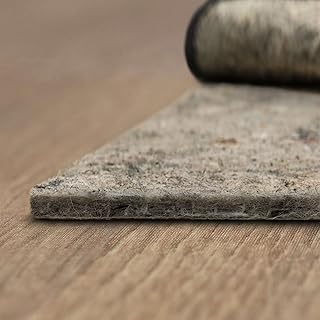
- Thickness for the room: A 1/4″ felt-and-rubber pad is the sweet spot for living and dining spaces, adding real underfoot give without swallowing your baseboards or fighting a door swing. Drop to 1/8″ or a thin gripper under low-clearance doors and in high-traffic entry runs.
- Grip versus cushion: Dual-surface pads combine a dense felt core for comfort with a rubber underside for hold. If your rug is already thick and only wandering slightly, a grip-focused pad does the job with less bulk.
- Breathability: Solid, non-porous sheets trap moisture, which is a genuine concern in sunrooms, three-season porches, and anywhere near a door. Look for open or waffle construction that allows airflow and lets spills dry rather than sit against the boards.
- Sizing and trimming: Order roughly one inch smaller than your rug on each side so the pad disappears at the edges. Felt-core pads cut cleanly with heavy shears, so a slightly oversized pad is easy to tailor to an odd alcove or angled hearth.
The Best Rug Pad For Hardwood Floor (2026)s Reviewed
RUGPADUSA Dual Surface 8’x10′ 1/4″
This is the benchmark for a reason: a dense recycled felt core bonded to natural rubber, with no plasticizers or adhesives to interact with a sealed finish. It holds a large rug flat through daily traffic and furniture shifting, and the 1/4″ profile adds noticeable warmth and sound damping in rooms with a lot of hard surface.
Veken Cushioned Rug Pad Gripper 8×10
Veken pairs felt with a silicone-dot backing rather than a solid rubber sheet, so air and moisture move through freely, a real advantage in sunrooms and rooms that catch afternoon condensation. Grip is excellent on smooth-finished planks, and it lifts cleanly without leaving marks.
BAGAIL Felt and Natural Rubber 5×7
A well-built mid-size option that punches above its price, with the same felt-over-natural-rubber construction as premium pads in a footprint suited to bedrooms, offices, and seating nooks. It trims easily and stays put under lighter flat-weave rugs that tend to creep.
Mohawk Home Non Slip Rug Pad 8′ x 10′
Made in the USA with a latex-rubber gripper and a firm felt top, this pad is the practical choice for dining rooms where chair legs drag daily. It’s a touch denser than plush alternatives, which means less rug distortion when furniture moves across it.
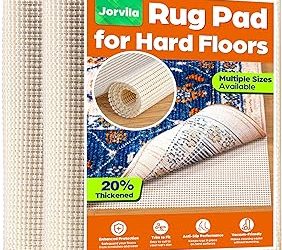
Jorvila Non-Slip Rug Pad Gripper 8×10
A budget-friendly cushioned pad that solves the core problem, keeping a large rug anchored and adding a soft layer between weave and wood. Best suited to lower-traffic rooms where you want protection without a premium spend.
Frequently Asked Questions
Will a rug pad damage my hardwood finish?
Natural rubber and silicone-backed pads are safe on properly cured, sealed floors. Trouble comes from adhesive-backed or plasticized PVC pads, which can leach into a finish, especially under sunlight and heat.
What thickness should I choose?
1/4″ for living, dining, and bedroom rugs where comfort matters. Go thinner for entryways, under doors, and beneath low-clearance furniture, or when your rug is already substantial.
Can I use one under an outdoor or covered-porch rug?
Only if it breathes. Choose an open silicone-dot or waffle construction, skip dense felt in damp settings, and lift the rug periodically to let both surfaces dry fully.
How do I stop the pad itself from shifting?
Size it about an inch smaller than the rug per side, vacuum the floor before laying it, and let it relax flat for a day. Rubber needs clean, dry wood to grip properly.
Final Thoughts
For most hardwood rooms, the RUGPADUSA Dual Surface pad is the safest long-term investment, with the Veken silicone-backed pad the smarter pick where airflow and moisture are in play. If your rug lives under a dining table, the Mohawk Home pad’s firmer build handles chair traffic better than anything else here, and the GORILLA GRIP gripper covers the small entry mats that slide the most.