
Key takeaways
- Match increments to the movement. Triceps isolation lives in small jumps. Kickbacks and cross-body extensions progress in 2.5 to 5 lb steps, so a set that only offers 10 lb gaps will stall you for weeks.
- Check the handle diameter and knurling. Anything above 1.3 inches forces your hand open during overhead extensions, and aggressive knurling turns a 12-rep set into a palm-tolerance test rather than a triceps one.
- Look at the end-cap profile. For lying extensions and close-grip floor presses, flat hex or flat-faced round ends let you rest the dumbbell on your chest or thigh between reps without chasing it across the floor.
- Confirm the bench decline setting, not just incline. Most budget benches tilt up only. Decline is what lets you take the long head through its full lengthened range with a single dumbbell held overhead.
- Weigh adjustment speed against durability. Dial mechanisms are fast but include plastic housings that dislike being dropped. If you train to failure and set weights down hard, fixed or plate-loaded steel will outlive them.
What's inside
The long head of the triceps is a stubborn piece of anatomy. It crosses the shoulder joint, which means it only gets fully stretched when your upper arm is behind or above your torso — and that is exactly the position a barbell bench press never puts you in. Dumbbells fix this. A pair of dumbbells lets you press overhead, drop into a deep decline extension, and rotate your palms mid-set, and each of those variations hits a slightly different slice of the muscle. That is why lifters who have plateaued on pushdowns often add half an inch to their arms within a training block simply by switching to seated overhead extensions with a single heavy dumbbell.
The catch is that dumbbell triceps work is unforgiving about equipment. Skull crushers with knurled cast iron shred the inside of your elbow crease. Kickbacks with dumbbells that jump in ten-pound increments leave you stranded between too easy and impossible. And overhead extensions on a flat bench put your shoulders in a compromised spot if the backrest will not tilt. The six picks below are the pieces that actually change how your triceps sessions feel: two dumbbell styles, a loading system, a bench, a grip modifier, and the joint support that keeps heavy extension work sustainable.
As an Amazon Associate we earn from qualifying purchases at no extra cost to you. Product prices and availability are accurate as of the date shown and are subject to change.

#1 Pick
#2 Pick

#3 Pick

#4 Pick

#5 Pick

#6 Pick

#7 Pick
As an Amazon Associate we earn from qualifying purchases at no extra cost to you. Product prices and availability are accurate as of the date shown and are subject to change.
#1 Pick
Quick Comparison
| Pick | Best For | Typical Range | Key Advantage |
|---|---|---|---|
| Dial-Adjustable Dumbbell Pair | Home lifters short on space | 5–52.5 lb per hand | Swap weights between supersets in seconds |
| Rubber Hex Dumbbell Pair | Skull crushers and floor presses | Fixed, 15–50 lb | Flat faces will not roll off your chest |
| Spin-Lock Loadable Handles | Micro-loading progression | 2.5 lb increments | Cheapest path to a wide weight range |
| Adjustable FID Bench | Decline and incline extensions | Decline to 80° incline | Unlocks stretched-position angles |
| Thick-Grip Sleeves | Forearm and grip carryover | Fits 1″–1.3″ handles | Reduces knurling bite on the palms |
| Neoprene Elbow Sleeves | Heavy overhead and lying work | 5–7 mm thickness | Warmth and compression for cranky joints |
How to Choose
- Match increments to the movement. Triceps isolation lives in small jumps. Kickbacks and cross-body extensions progress in 2.5 to 5 lb steps, so a set that only offers 10 lb gaps will stall you for weeks.
- Check the handle diameter and knurling. Anything above 1.3 inches forces your hand open during overhead extensions, and aggressive knurling turns a 12-rep set into a palm-tolerance test rather than a triceps one.
- Look at the end-cap profile. For lying extensions and close-grip floor presses, flat hex or flat-faced round ends let you rest the dumbbell on your chest or thigh between reps without chasing it across the floor.
- Confirm the bench decline setting, not just incline. Most budget benches tilt up only. Decline is what lets you take the long head through its full lengthened range with a single dumbbell held overhead.
- Weigh adjustment speed against durability. Dial mechanisms are fast but include plastic housings that dislike being dropped. If you train to failure and set weights down hard, fixed or plate-loaded steel will outlive them.
Top Picks Reviewed
1. Dial-Adjustable Dumbbell Pair (5–52.5 lb)
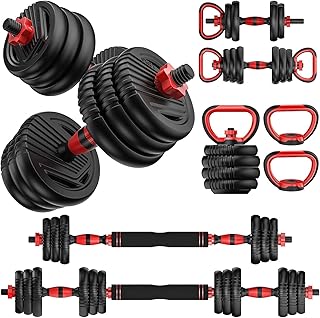
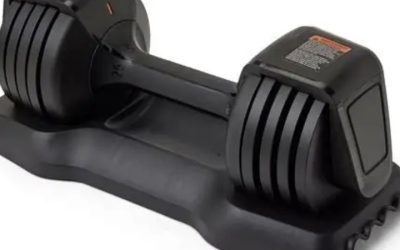
These are the most practical option for anyone training triceps in a spare bedroom. A single pair replaces roughly fifteen sets of fixed dumbbells, and the dial lets you drop from a 40 lb overhead extension to a 20 lb kickback without leaving the bench — which matters, because triceps respond well to descending drop sets. Expect the adjustment to take three or four seconds per side. The tradeoff is bulk: the sleeve housing makes the dumbbell longer than a fixed equivalent, so single-arm overhead extensions can feel unbalanced until you dial in your grip position.
2. Rubber-Encased Hex Dumbbell Pair
If you only buy one style for triceps, buy hex. The six flat faces mean the dumbbell parks where you leave it, which changes everything about lying extensions: you can set the weight on your forehead-side path, reset your elbows, and go again without a spotter. Rubber encasement also protects your shins during the hip-hinge setup of a kickback and keeps floor noise down. Buy two or three specific weights rather than a full rack — a moderate pair for overhead work and a lighter pair for kickbacks covers most of what triceps training demands.
3. Spin-Lock Loadable Dumbbell Handles
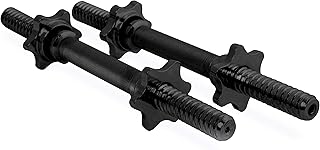
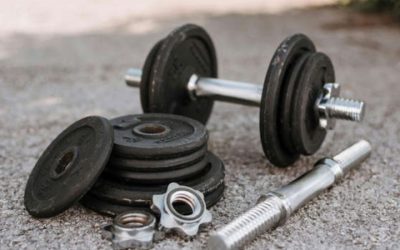
Loadable handles are the unglamorous value pick. You buy two handles and a stack of plates, then add 1.25 lb per side when a lift stalls — the finest progression available on any home setup. For triceps this is genuinely useful, because a 5 lb jump on an overhead extension is a 15 to 20 percent load increase, which is far too aggressive. The drawback is time: swapping plates mid-workout takes real minutes, and collars need re-tightening. Best for lifters running a fixed set-and-rep scheme rather than long drop-set chains.
4. Adjustable Flat/Incline/Decline Bench
A bench that only inclines cuts you off from half the useful dumbbell triceps library. Decline seated extensions place the arms further behind the torso and load the long head in a deeper stretch, while a 30-degree incline lets you do lying extensions with a slight angle that keeps tension off the shoulder capsule. Look for a four-position ladder or pop-pin backrest, a pad at least ten inches wide, and a stated capacity well above your bodyweight plus dumbbells. Wobble at the pivot point is the main failure mode on cheap models.
5. Thick-Grip Handle Sleeves
These rubber cylinders slide over a dumbbell handle to increase its diameter, and they solve two problems at once. First, they blunt the knurling that digs into your palm during high-rep extension work. Second, the wider grip forces more forearm and hand engagement, giving your grip work you would otherwise have to program separately. Use them for kickbacks, cross-body extensions, and lighter pressing. Skip them on your heaviest single-dumbbell overhead sets, where a secure conventional grip on a stable handle is worth more than the extra forearm stimulus.
6. Neoprene Elbow Sleeves
Elbow discomfort is the most common reason people abandon dumbbell triceps work, and a 5 mm sleeve is the cheapest countermeasure. The compression and retained warmth make the first few reps of a lying extension noticeably less sharp, particularly if you train in a cold garage. Sleeves are not a fix for tendinopathy, and they will not make bad exercise selection safe — but paired with a proper warmup set and controlled tempo, they let most lifters keep skull crushers in rotation. Size by forearm circumference, and expect a snug fit that loosens slightly with use.
Frequently Asked Questions
Which dumbbell triceps exercise builds the most size?
Seated or lying overhead extensions, because they load the long head in a stretched position and the long head accounts for the largest share of triceps mass. Kickbacks and close-grip presses are useful supplements, but if you had to pick one movement to run for a full training block, make it an overhead variation.
How heavy should my dumbbells be for triceps work?
Lighter than you expect. Most intermediate lifters find their working overhead extension weight is roughly a quarter to a third of what they use for dumbbell bench pressing. Choose a load you can control for eight to twelve reps with two reps left in reserve, then add small increments as the reps come easier.
Do I actually need a bench?
You can train triceps effectively from the floor. Floor-based lying extensions and close-grip floor presses work well, and the floor limits your range in a way that some cranky elbows appreciate. A bench simply widens your options, and the decline setting in particular offers a stretch angle you cannot replicate lying on the ground.
How often should I train triceps directly?
Two sessions per week with four to eight hard sets each is a reasonable target for most people. The triceps also get significant work from any pressing you do, so count those sets toward your weekly total. If your elbows ache during warmups, reduce frequency before reducing load.
Final Thoughts
Effective dumbbell triceps training does not require much: one pair of flat-faced dumbbells you can control overhead, a way to add weight in small steps, and a bench that tilts in both directions. Everything else on this list — the grip sleeves, the elbow support — earns its place by removing the reasons people quit doing the exercises that work. Start with the hex pair and the adjustable bench, run overhead extensions for eight to ten weeks with genuine attention to the stretched position, and add the rest as your training volume grows into it.
FAQ
Which dumbbell triceps exercise builds the most size?
How heavy should my dumbbells be for triceps work?
Do I actually need a bench?
How often should I train triceps directly?
8 Best Ab Workouts with Dumbbells: 6 Support Picks Compared
Best ab workouts with dumbbells are limited more often by position than...
Best Budget Adjustable Dumbbell: 6 Picks and Trade-Offs
Best budget adjustable dumbbell shopping is really a question about what you...
Best Abs Exercise with Dumbbells: 6 Picks by Coating Type
Best abs exercise with dumbbells movements rest the weight against your chest,...
Best Abs Workout with Dumbbells: 6 Picks for Fast Circuits
Best abs workout with dumbbells formats are almost always circuits, and circuits...
Best at Home Dumbbells: 6 Picks for Sharing a Household
Best at home dumbbells guides assume one user. Most households have two,...
Best Dumbbells Home Gyms Use: 6 Picks Ranked by Delivery
Best dumbbells home buyers compare weight ranges and then discover the real...
8 Best Ab Exercises with Dumbbells: 6 Floor-Friendly Picks
Best ab exercise with dumbbells options are mostly done lying down, which...
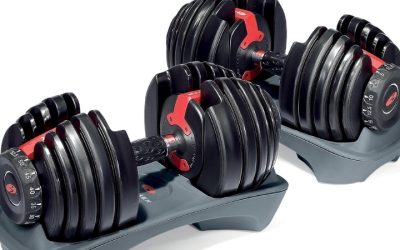
Best Dumbbell Set for Home Gym: 5 Picks Ranked by Space
Best dumbbell set for home gym shopping starts with a definition problem....
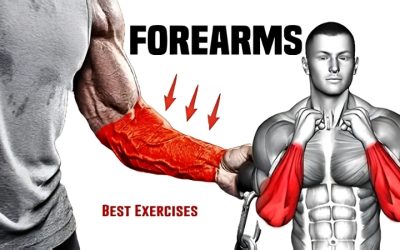
8 Best Workouts for Forearms with Dumbbells: 5 Gear Choices
Best workout for forearms with dumbbells depends less on the exercise list...
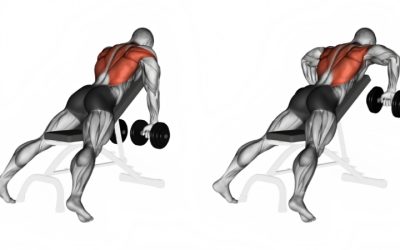
Best Lat Exercises Dumbbells: 6 Picks for Heavy Row Work
Best lat exercises dumbbells face a problem arm work never does: the...
Write Your Review
No reviews yet. Be the first to share your experience!