Key takeaways
- Carbon filtration: Look for activated carbon or a dedicated carbon blend with meaningful filter mass. HEPA media captures particles, but carbon is the component intended to adsorb many gaseous pollutants.
- Room size: Match the purifier to the room where it will run most often, not an optimistic whole-home estimate. Open floor plans, high ceilings, and frequent door openings can reduce real-world performance.
- Particle protection: VOC-focused filtration should still include a quality particle filter. Smoke, dust, and fine outdoor pollution often accompany the gases you are trying to reduce.
- Air exchange: Purifiers complement, rather than replace, source control and ventilation. Open windows when outdoor conditions are suitable, use exhaust fans, and remove or seal the source whenever possible.
- Maintenance: Check replacement-filter availability, expected service intervals, and filter cost before buying. A purifier with excellent media is less useful if its filter is difficult to replace or routinely neglected.
What's inside
Volatile organic compounds (VOCs) can come from paint, flooring, upholstery, cleaning products, pressed-wood furniture, and even air fresheners. Unlike visible dust, these gases may be present without an obvious warning sign, which makes choosing an effective purifier more complicated than simply looking for a high airflow number or a True HEPA label.
This guide focuses on the features that matter most for VOC reduction in real homes: substantial activated-carbon media, room coverage, filtration design, noise, and practical placement. We also consider how each model fits into everyday outdoor-minded living, from ventilating a workshop-adjacent room to freshening a bedroom after wildfire smoke or a home renovation.
As an Amazon Associate we earn from qualifying purchases.


How to Choose a/an Air Purifier For Vocs (2026)
- Carbon filtration: Look for activated carbon or a dedicated carbon blend with meaningful filter mass. HEPA media captures particles, but carbon is the component intended to adsorb many gaseous pollutants.
- Room size: Match the purifier to the room where it will run most often, not an optimistic whole-home estimate. Open floor plans, high ceilings, and frequent door openings can reduce real-world performance.
- Particle protection: VOC-focused filtration should still include a quality particle filter. Smoke, dust, and fine outdoor pollution often accompany the gases you are trying to reduce.
- Air exchange: Purifiers complement, rather than replace, source control and ventilation. Open windows when outdoor conditions are suitable, use exhaust fans, and remove or seal the source whenever possible.
- Maintenance: Check replacement-filter availability, expected service intervals, and filter cost before buying. A purifier with excellent media is less useful if its filter is difficult to replace or routinely neglected.
The Best Air Purifier For Vocs (2026)s Reviewed
Airpura V700
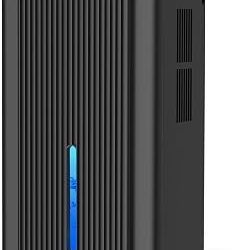
The Airpura V700 is the most specialized choice here for homes dealing with chemicals, VOCs, or wildfire-related air concerns. Its design places greater emphasis on gas-phase filtration than compact bedroom units, making it a strong fit for a workshop, renovation zone, or larger living area where carbon capacity matters more than a small footprint.
Austin Air Bedroom Machine C100CC1
The Austin Air C100CC1 combines a portable format with a VOC-focused carbon wrap, making it well suited to a bedroom, office, or other single room. It is a sensible pick for shoppers who want a dedicated personal purifier and prefer a straightforward design over app-heavy controls.
Dyson Purifier Big+Quiet Formaldehyde BP03
The Dyson Purifier Big+Quiet Formaldehyde BP03 is a polished option for larger living spaces, with strong airflow and a design intended to distribute purified air across the room. Its formaldehyde-focused sensing and filtration make it especially appealing in homes with newer furnishings or composite-wood products, although buyers should compare its premium cost with their actual VOC priorities.
LEVOIT Core 300-P
The LEVOIT Core 300-P is a compact, quiet bedroom purifier with broad appeal for dust, smoke, pollen, and pet-related odors. It is not the strongest dedicated VOC solution in this group because its small form factor limits carbon capacity, but it works well as an affordable particle-and-odor companion in a sleeping area.
HAP603 Large-Room Air Purifier
The HAP603 stands out for shoppers who want wide stated coverage, automatic operation, an air-quality display, and quiet sleep mode. Its large-room format can help manage everyday particles and odors in an open living area, but buyers specifically targeting VOCs should verify the amount and type of activated carbon in the replacement filter.
Frequently Asked Questions
Do HEPA filters remove VOCs?
Not reliably on their own. HEPA filters are designed primarily for airborne particles, while VOC reduction generally depends on activated carbon or another gas-phase sorbent. A combination of particle and carbon filtration is usually more practical.
Where should a VOC air purifier be placed?
Place it in the room with the likely source or where people spend the most time. Leave clearance around the intake and outlet, avoid hiding it behind furniture, and position it near—but not directly against—the source so air can circulate freely.
Can an air purifier remove paint or furniture odors?
It may reduce odors and some airborne compounds, particularly when the unit has substantial carbon media, but it cannot eliminate an ongoing source. Ventilation, low-emission materials, proper curing, and removing contaminated items remain important.
How often should the filter be replaced?
Replacement timing depends on the model, usage, pollution load, and indoor conditions. Follow the manufacturer’s guidance, inspect the filter when practical, and replace it sooner if airflow drops, odors return, or the unit operates in heavy smoke or renovation dust.
Final Thoughts
For serious VOC and chemical concerns, the Airpura V700 is the most purpose-built choice, while the Austin Air C100CC1 is a practical single-room alternative. The Dyson BP03 is the premium large-space pick; for everyday bedroom particles and lighter odor control, the LEVOIT Core 300-P remains an approachable option.