Key takeaways
- Clean blades before vacuuming or mopping so fallen dust is removed at the end.
- Use a pillowcase over a blade for a low-mess alternative: slide it over gently, wipe, then turn the case inside out before taking it away.
- Wash microfiber heads separately from lint-producing laundry and let them air-dry fully before storage.
- Mark the fan’s normal blade position with a removable piece of tape if you need to rotate it by hand repeatedly; never force a stationary blade.
What's inside
Ceiling fans do more than move air: on covered patios, porches, sunrooms, and open-plan rooms, they collect pollen, fine dust, cooking residue, and the occasional insect nest. Once the fan starts, that buildup can scatter through the room, leave streaks on the blades, and reduce the clean, comfortable feel you want from an outdoor-living space.
This guide explains the safest, least-messy way to clean ceiling fan blades in 2026, including which tools are worth buying, when a simple microfiber cloth is enough, and how to avoid bending blades or getting moisture near the motor. The method works for indoor fans and suitable damp-location fans beneath covered outdoor areas.
As an Amazon Associate we earn from qualifying purchases.


Recommended Picks
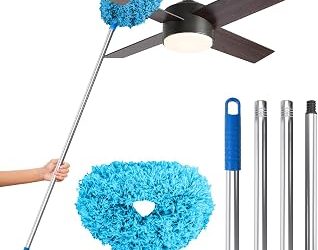
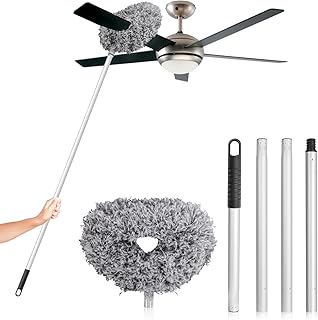
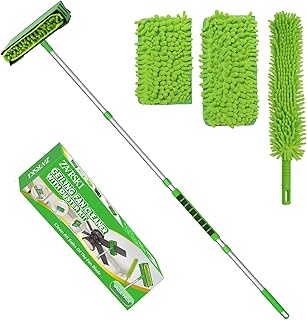
A dedicated fan duster is usually more practical than balancing on a chair with a household cloth. The DRQ Ceiling Fan Cleaner Duster and SetSail Ceiling Fan Cleaner Duster both use washable microfiber heads with adjustable poles, making them useful for standard ceiling heights and nearby shelves or wall corners. The similarly designed Ceiling Fan Cleaner Duster with a 13-to-49.7-inch pole is another flexible choice for routine dusting.
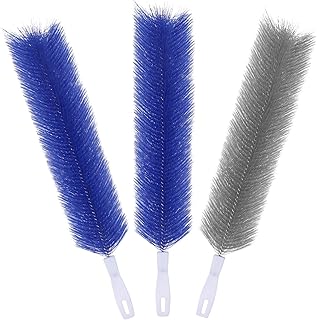
For higher ceilings, the FONUNO Ceiling Fan Cleaner Duster extends to 50 inches, while the Ceiling Fan Cleaner Duster with a 6 Ft/72” Extension Pole is better suited to tall rooms where a short handle will not reach comfortably. If you want a compact multi-purpose option, the 3 Pcs Fan Cleaning Brush Bendable Cobweb Duster set can handle fan blades, vents, curtains, and cobwebs. Select by reach, washable head design, and how securely the pole locks rather than by appearance alone.
Prepare the Fan and the Area
Switch the fan off at the wall control and wait until every blade has stopped. For the most cautious approach, turn off the fan’s circuit at the breaker, particularly if you will use any damp cloth nearby. Do not rely on a remote control alone, since another person could activate the fan accidentally.
Place a drop cloth, old sheet, or large towel beneath the fan. This matters especially on a porch, where dust can settle into outdoor cushions, and indoors, where fine debris can mark flooring. Move furniture out of the immediate area and use a stable step ladder only when necessary. Never stand on a chair, tabletop, or wheeled furniture. If the fan is too high to reach without stretching, use a longer tool or arrange professional cleaning.
Remove Loose Dust Without Spreading It
Begin with a dry microfiber fan duster. Slide the sleeve gently over one blade, supporting it rather than pressing down, and draw the duster from the motor housing toward the tip. The sleeve should surround the blade so dust falls into the tool instead of drifting across the room. Clean one blade at a time and rotate the fan by hand only when the power is off.
Adjustable tools such as the DRQ or SetSail models are helpful because you can shorten the pole for control or extend it for reach. A bendable brush can follow slightly curved blades and reach around brackets, but use light pressure. Excessive force may flex the blade, loosen a fastener, or pull dust into the motor housing.
Wash Away Stubborn Film
Dry dusting will not remove greasy residue, pollen stuck to moisture, or grime from a kitchen-adjacent fan. Mix a small amount of mild dish soap with warm water, then dampen a microfiber cloth and wring it almost dry. The cloth should feel moist, never wet enough to drip.
Wipe the upper and lower surfaces of each blade, followed by the blade brackets and accessible housing. Keep liquid away from the motor, switch, light kit, and electrical seams. A removable washable duster head is convenient for maintenance, but it is not a substitute for careful moisture control. After washing, use a clean, dry cloth to prevent water marks and leave the fan switched off until all surfaces are completely dry.
Inspect, Reassemble, and Maintain
While cleaning, check for loose screws, cracked blades, peeling finishes, wobbling, or unusual staining. Tighten accessible fasteners with the correct screwdriver, but do not overtighten them. A fan that wobbles after cleaning may need blade balancing or a closer inspection before continued use. Outdoor fans deserve extra attention: look for corrosion, water intrusion, and insect activity around the canopy or light fixture.
For most rooms, dust every two to four weeks and wash the blades every few months. In homes near busy roads, beaches, fields, or pollen-heavy landscaping, clean more often. Covered outdoor fans may need a quick dry dusting weekly during high-use seasons because open-air circulation brings in more debris than a typical bedroom.
Tips
- Clean blades before vacuuming or mopping so fallen dust is removed at the end.
- Use a pillowcase over a blade for a low-mess alternative: slide it over gently, wipe, then turn the case inside out before taking it away.
- Wash microfiber heads separately from lint-producing laundry and let them air-dry fully before storage.
- Mark the fan’s normal blade position with a removable piece of tape if you need to rotate it by hand repeatedly; never force a stationary blade.
Frequently Asked Questions
How often should ceiling fan blades be cleaned?
Dust them every two to four weeks in ordinary rooms. Fans used on patios, porches, kitchens, or near open windows may need weekly dusting and a damp clean whenever a visible film develops.
Can I clean fan blades while the fan is running?
No. Turn the fan off completely before touching the blades. A moving blade can injure you, damage the duster, or throw loosened debris around the room. For maximum safety, isolate power at the breaker.
What is the best tool for a high ceiling fan?
Choose a microfiber duster with a pole long enough to reach the blades while you remain firmly on the floor. The 6 Ft/72” model is designed for greater reach, while 48-to-50-inch tools suit many standard and moderately high ceilings. Always prioritize control over maximum extension.
Can I use glass cleaner or a strong household spray?
It is better to use mild soapy water on a nearly dry cloth. Strong cleaners may damage painted, wooden, or coated blades, and spraying directly toward the fan can drive liquid into electrical components. Apply cleaner to the cloth, not the fan.
Conclusion
The best way to clean ceiling fan blades is a controlled two-stage process: dry microfiber dusting first, followed by a barely damp wipe for stuck-on residue. Use a washable duster with a secure extension pole, protect the area below, keep moisture away from the motor, and inspect the fan as you work. Regular light cleaning is safer and faster than waiting for a thick layer of grime to build up—especially on outdoor-living fans exposed to pollen, humidity, and airborne dust.